Boost Testosterone? Here's How to Do It Naturally
|
|
Leesduur: 26 min

Cart

Your cart is empty
|
|
Leesduur: 26 min
More and more men are looking for ways to increase their testosterone levels. Average testosterone levels have been declining for years in the Western world.
A healthy testosterone level helps you to:
However, many people do not know that you can do a lot yourself to produce more testosterone.
That's why I'll teach you in this article what you can do to increase your testosterone level with diet and lifestyle.
Testosterone regulates muscle mass, energy, libido, and body fat percentage; a deficiency can lead to fatigue, depression, muscle breakdown, and loss of motivation.
Boost testosterone with strength training, a high-protein diet, healthy fats, stress reduction, adequate sleep, and limiting alcohol and sugar intake.
Supplements such as vitamin D3, magnesium, zinc and ashwagandha support testosterone production, but lifestyle and diet remain the most important factors.
Testosterone is also called the male hormone. It's responsible for male sexual characteristics such as muscle mass, deepening of the voice, and body hair.
Women also produce testosterone, but in smaller quantities. Men produce about 10 to 20 times more testosterone than women.
Testosterone is produced in the testicles in males, while in females it is produced in the ovaries.
Did you know... Testicles were originally ovaries? During embryonic development, the gonads are the same. Under the influence of sex hormones, these develop into testicles in males and ovaries in females.
The hormone testosterone has a significant influence on men's physical and mental well-being. It also plays a significant role in libido and fertility.
A testosterone deficiency can impact your life and have significant consequences for your health. But how do you recognize a testosterone deficiency?
A testosterone deficiency can be recognized by various symptoms.
If you recognize yourself in 3 or more of these complaints , then there is a chance that you have a testosterone deficiency.
If you think you have a testosterone deficiency, it is also a good idea to contact a medical specialist.
They can use a blood test to determine whether you actually have a testosterone deficiency.
In addition, you could use the tips in this article or the test plan to see in what ways you could make progress.
Fortunately, there's a lot you can do yourself with lifestyle, diet, and supplements. For example, a testosterone booster can also support the body's own testosterone production.
For years, I've been reading about testosterone and how it affects men's lives. I also regularly have my testosterone levels measured to see which factors work (for me).
Using my background knowledge (as a biobased chemist), insights from scientific studies, and experiences of myself and others, I have created a step-by-step plan that will help you achieve results quickly.
The steps are generally listed in order of priority, but there's certainly some overlap. This gives you a starting point.
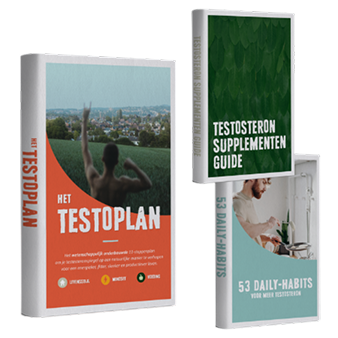
If you want the extended version of this plan, you can check out my test plan .
One of the first things I look at in someone who wants to increase their testosterone levels is body fat percentage.
Body fat affects the amount of testosterone in your body. Fat cells contain the enzyme aromatase, which partially converts testosterone into estrogen.
Not only does this lower your testosterone levels, but too much estrogen can also cause feminine characteristics, such as breast growth (man boobs) and love handles in men. So, lower your body fat percentage to increase your testosterone.(1)(32)
The optimal body fat percentage for testosterone production is between 10-15% . A small study showed that a too low
Everyone knows what you need to do in broad terms to lose weight: eat less than you burn.
However, it is not that simple, because you also want to stay satiated and retain muscle mass as much as possible.
That's why I recommend that you follow these 4 tips when lowering your body fat percentage, so that you retain as much muscle mass as possible and also maintain it more easily.
Want to learn more about man boobs and love handles in men? Then read my articles on "love handles" and "man boobs."
Intensive training is essential if you want to (quickly) increase your testosterone levels. Most people do this with weights at the gym, but you can also do this with HIIT workouts or other high-intensity training methods.
If you're not currently going to the gym, I recommend starting your fitness routine as soon as possible. Focus as much as possible on exercises that train multiple muscle groups at once: compound exercises.
It's been shown that (heavy) compound exercises have the greatest effect on testosterone levels. Use weights that allow you to do 3-15 repetitions (reps) and rest for 2-3 minutes in between for optimal effect.(2)
Bonus tip: I actually recommend everyone train together (especially in the beginning). The competition between men has a positive effect on testosterone levels. You can also help each other do "extra repetitions" (also called forced reps), which can help you progress faster.
Consuming large amounts of sugar from ultra-processed products (candy, soda, etc.) is very bad for your testosterone levels. These products rapidly raise your blood sugar. However, a rapid rise in blood sugar lowers testosterone levels.(3)
The sugar itself isn't the problem, but the speed at which it raises blood sugar levels is. That's why I specifically mention soda and candy, because people often snack on these on an empty stomach.
With a modified diet, you can significantly reduce the impact of sugar and fast carbohydrates on your blood sugar levels. Eating something sweet isn't a problem, as long as you do it in moderation and follow my tips:
Make sure 20-30% of your calories come from fats and that you eat a variety of fats. That might sound strange, because I mentioned earlier that too much body fat lowers testosterone.
However, it has been shown that a low-fat diet leads to lower testosterone levels. The main building block of testosterone is cholesterol, a fatty substance.
Here I have outlined the different types of fat for you(4):
Extra tip: I recommend getting your fats from unprocessed products as much as possible and also varying your fat intake. This way, you'll get the right balance of fats.
Alcohol negatively affects testosterone levels in 3 ways:
Of course, I understand that alcohol is a part of life for many people. That's why I have some tips for you on how to minimize the effect of alcohol on your testosterone levels.
A prolonged calorie deficit can slow your metabolism and trigger a stress response in your body, which inhibits testosterone production. (6)
If you want to lower your body fat percentage, you ideally want to be 10-20% below your calorie needs.
Personally, I like to go for a 10% calorie deficit when I want to lose some fat, so that the negative effect on my testosterone levels (and mood, haha) is as low as possible.
It will take a little longer, but it will be easier to maintain and the weight loss will be sustainable.
Helpful tip: Track your calories accurately for a month with the "My Fitness Pal" app. This will give you a sense of how many calories a meal contains. Some foods are very healthy, but also very high in calories. Understanding this will make it easier to consume fewer calories in the future.
Stress is one of the biggest testosterone killers.
During stressful situations and periods, hormones are released that cause muscle breakdown and lower testosterone levels.
These are also called catabolic hormones, which is the opposite of building (anabolic) hormones.
By relaxing sufficiently between workouts, your body recovers better and you increase your testosterone level.
To help you with this, I have a few more tips for you:
Fun fact: Many activities people consider "relaxation," like watching (exciting) shows, listening to podcasts, and scrolling through social media, aren't perceived as relaxing by our brains. You think you're relaxing, but in reality, it creates more stress. In fact, any activity that involves processing new information doesn't promote relaxation. So what does? Walking/cycling leisurely (without music/podcasts), daydreaming during breaks, engaging in creative activities, or visiting a spa.
High-intensity cardio is healthy, but don't overdo it.
With (high-intensity) cardio exercises that last longer than 45 minutes, your body (on average) produces more cortisol, which can lead to lower testosterone levels (7).
So keep your workouts short but intense. Cycling or walking at a low intensity can certainly last longer than 45 minutes, and it's also great for your health, mental well-being, and your testosterone levels.
Example: You can clearly see the difference in muscle mass (and testosterone levels) between professional endurance athletes and sprinters. Sprinters train short, explosively, and have a lot of muscle mass and strength. Endurance athletes have little muscle mass and strength (and often don't look healthy either).
This may sound like a bit of a no-brainer, but I still want to emphasize it.
High-quality food (organic, grass-fed, etc.) contains more nutrients than mass-produced food. Choose unprocessed foods like oily fish, grass-fed meat, shellfish, organic vegetables, fruit, nuts, and seeds.
Magnesium, zinc and the fat-soluble vitamins (ADKE) are particularly important for hormonal balance.
The less ultra-processed junk you eat (low in micronutrients), the greater your chances of getting enough nutrients through your diet.
Soluble fiber (found in vegetables, fruit, potatoes, and legumes, among others) is converted in the intestines into "short-chain fatty acids," which are known for their anti-inflammatory properties.
These short-chain fatty acids help to keep blood sugar levels healthy and are also good for the intestinal flora (bacteria in your intestines), which can help support testosterone levels.(8)
Flirting and being more intimate together is a good idea for many reasons, but it also has a direct boosting effect on your testosterone.
Scientific research shows that positive social interactions such as smiling, eye contact, and compliments can increase testosterone production.(9)
This hormonal boost is not only good for your testosterone, it's also a nice boost for your self-confidence and mood!
Nutritional supplements that can support your testosterone levels are also called testosterone boosters.
You should not see this as a miracle cure, but as the icing on the cake alongside a healthy lifestyle and varied diet.
These supplements can help you replenish deficiencies and manage stress. Supplements can also support sleep, which can help maintain healthy testosterone levels.
Ashwagandha ( Withania somnifera ) is an ancient herb used in traditional Ayurvedic medicine. It is particularly known for its adaptogenic properties that can help you relax.
Ashwagandha helps during stressful times (10) and can also help naturally support testosterone (11). This well-researched supplement also supports hormonal balance and helps keep cortisol levels in check, which contributes to muscle building and strength (12).
Our recommendation: Studies show that you need at least 300 mg of Ashwagandha KSM-66® for optimal results. Ashwagandha KSM-66® extract is a patented form of Ashwagandha, with a consistent dose of active ingredients. This testosterone booster contains the recommended dosage of 300 mg of Ashwagandha KSM-66®.
Vitamin D3 plays a role in the production of male sex hormones, including testosterone. Sufficient D3 is therefore important for healthy testosterone levels.
According to the Dutch Information Center for Nutrition & Supplements (IVG), 9 out of 10 Dutch people do n't get enough vitamin D. Especially during the winter months, it's impossible to produce enough vitamin D because sunlight isn't strong enough.
Research shows that men with vitamin D3 deficiency may benefit from a vitamin D3 supplement.(13)
Our advice: We recommend 2000–3000 IU (50–75 mcg) of vitamin D3 daily. Choose vitamin D3 as this form is more stable and better absorbed than vitamin D2 (from plants and fungi).
By converting vitamin D to its active form, magnesium indirectly contributes to testosterone production.
Magnesium can therefore help naturally increase testosterone levels, especially in men with a magnesium deficiency. This deficiency is common in the elderly and athletes, as magnesium is lost through sweat.
Magnesium also supports sleep and can help during stressful periods.
Our advice: Ensure you get at least 550 mg per day, as this offers the most health benefits. Primarily through food, but supplementation is also possible via a dietary supplement. We recommend taking 200–350 mg per day via a magnesium supplement. Make sure you only use organically bound forms such as magnesium citrate, magnesium bisglycinate, or magnesium taurate.
Take a magnesium supplement, preferably before bed. It can also help improve the quality of your sleep.
Zinc only affects testosterone levels if there's a zinc deficiency . If you're getting enough zinc, supplementing with zinc will have little to no effect on your testosterone levels.
Research also shows that zinc supplements may help keep testosterone levels stable during intense physical exertion in athletes, such as wrestlers and cyclists. (14)
Our advice: As a vegetarian or vegan, you may need zinc supplements. A daily dose of 15-25 mg is often sufficient. Athletes may need a slightly higher dose: 25 mg per day.
Extra tip: Take your zinc supplement after eating to prevent nausea.
Antioxidants may have an indirect effect on testosterone levels through several mechanisms, including healthy blood flow to the testicles and protecting body cells.
That's because they help neutralize free radicals that can cause oxidative stress in the testicles. Oxidative stress can damage the cells of the testicles, including the cells that produce testosterone (Leydig cells).(15)
By reducing this damage, antioxidants can protect Leydig cell function and thereby support testosterone production.
Our advice: A varied diet (lots of fruits and vegetables) should provide you with sufficient antioxidants. Smoking, drinking alcohol, getting little sleep, eating junk food, and not exercising all increase oxidative stress. Therefore, try to eat as healthily as possible and minimize your "unhealthy habits" as much as possible.
It's good to know how to increase low testosterone, but it's equally essential to know how to prevent your testosterone levels from dropping! These factors lower your testosterone:
Are you overweight? Then losing weight (to a healthy weight) is a good starting point for increasing your testosterone. Especially for men in middle age and older!
Several studies have shown that there is a link between men's weight and their testosterone levels.(16)
If you want to boost the amount of testosterone in your body, you will have to limit your consumption of alcoholic beverages as much as possible.
Serious drops (6.8%) in testosterone levels have been measured after drinking just 2 glasses of alcohol for 3 weeks.(17) So moderate your alcohol consumption for a huge impact!
Avoid (chronic stress) to maintain your testosterone levels.
Stress is the body's response to challenges, both physical and mental. It produces hormones like cortisol, adrenaline, and noradrenaline to make you alert and increase your reaction time. It's a good and healthy mechanism, but in excess, it can lower your testosterone.(18)
An occasional drop won't do any harm, but if you want to increase your testosterone, it's best to skip the drop jar.
The substance glycyrrhizin in licorice (more abundant in pure varieties) is known for its negative effects on blood pressure, cortisol, and testosterone levels. While more research is needed, we already know that eating large amounts of licorice daily has no beneficial effect on testosterone and cortisol levels in your body.(19)
Get moving! Every little bit helps, because even if you normally get very little exercise, any form of movement can boost your testosterone levels.
Scientists have also demonstrated this difference by comparing the testosterone levels of both active men and men with little exercise. This showed that men with little exercise had lower testosterone levels than men who were active.(20)
A good night's sleep is crucial, as even a few nights of poor sleep can lead to significant drops (10-20%) in testosterone levels!(21)
Young adults with busy lifestyles, in particular, have much to gain by taking their sleep seriously. Numerous studies have demonstrated the impact of sleep on hormonal balance and overall health.
In addition to the many other reasons to avoid highly processed foods, you'll want to avoid items like fried snacks, cookies, and margarine if you want to boost your testosterone.
The unhealthy trans fats created during cooking negatively affect hormones and testicular health, which can lead to lower testosterone production.(22)
Stable blood sugar levels help maintain your testosterone levels. Choose fiber-rich foods like whole grains, legumes, and vegetables so your blood sugar rises gradually, which is good for your testosterone.
Highly processed carbohydrates, such as cookies and chips, cause rapid swings in your blood sugar levels and can lower your testosterone.(23)
Are you taking medications? Discuss their potential effects on your testosterone levels with your doctor. Certain medications, such as corticosteroids (24) and opiates (25), are known to lower testosterone levels.
This effect has not yet been proven for other types of medications, but it is strongly suspected. For example, the effects of antidepressants on testosterone levels are conflicting: some studies report an increase, others a decrease or no effect.(26)
You don't always have control over the amount of testosterone in your body. (Congenital) testicular conditions such as undescended testicles, orchitis, cancer treatments, or Klinefelter syndrome (genetic) can also lead to low testosterone levels.(27)
Please note: If you have any medical conditions, always consult your GP or medical specialist first.
Exercise is good, but overtraining isn't! Exercising too much can lead to low testosterone levels, so it's important to respect your limits and get plenty of rest between workouts.
Moderate exercise, such as walking or cycling, can actually increase testosterone levels. Research shows that men with an active lifestyle produce more testosterone than less active men (28).
As you age, your body produces less and less testosterone. This is because the Leydig cells, responsible for testosterone production, decrease in number annually.
Testosterone reaches its highest level around the age of 18. After the age of 30, the amount of usable testosterone decreases by 2-3% annually(29). One of the factors that can help you recognize a testosterone deficiency is male hot flashes.
The good news is that you can counteract this natural decline by making adjustments to your lifestyle.
By optimizing your strength training schedule, eating healthier, getting enough rest, and going to bed on time, you can naturally increase your testosterone levels and keep them healthy.
This isn't all that different from increasing testosterone in younger men, but I still want to emphasize this. Maintaining a lower body fat percentage and training intensively becomes more difficult as you get older. Here's what you need to do:
Testosterone helps you to build more muscle mass and feel better about yourself.
But did you know this hormone has many more benefits? We've listed the most important ones for you.
Testosterone boosters are natural supplements that contain one or more ingredients that support testosterone production.
However, there are many products on the market that don't work, but are very expensive. However, there are several ingredients that have a beneficial effect on testosterone levels.
Please consider it a tool , not a complete solution. Lifestyle and nutrition remain paramount.
The Naturally Performing TestoBooster product works in the following ways:
Jochum Smid
Jochum Smid is a biobased chemist specializing in orthomolecular nutrition. He develops and selects the nutritional supplements at Natuurlijk Presteren and has a passion for biohacking, science, and healthy eating.