Natural slimming products
Natural weight loss supplements contain herbs, vitamins, minerals, and other natural ingredients. These supplements offer gentle support for weight management.
They work best when combined with a healthy diet and regular exercise. For best results, it's important to follow a holistic approach.
Types of slimming products
There are various weight-loss products available. What works best varies from person to person and also depends heavily on why you want or need to lose weight.
- Natural slimming products, based on natural ingredients
- Medicinal slimming products that you can only obtain with a doctor's prescription
- Fiber-rich products that contribute to a feeling of satiety
- Diet products, such as meal replacements, with a limited number of calories
The best natural weight loss products
Losing weight is more than just eating fewer calories. Your body needs essential micronutrients, and healthy hormone balance plays a key role in successful weight loss.
The best slimming products therefore offer support on several fronts, including:
- Fat Burning and Metabolism: Ingredients that help you burn fat more efficiently and support your metabolism.
- Normal blood sugar levels: Supplements that help stabilize your blood sugar levels, which helps you to have fewer cravings for unhealthy snacks.
- Energy Levels: Products that support your energy levels so you can stay more active and perform better during your workouts.
- Protection against oxidative damage: Ingredients that help protect your body from harmful free radicals.
- Hormone Balance: Supplements that contribute to healthy hormone balance, which is important for effective weight management.
Active ingredients in natural slimming products
If you're looking for a weight-loss supplement, you should pay attention to the active ingredients. Each has its own specific properties. They're often used in combination for a comprehensive approach, or because they complement each other's effects.
These are some common natural substances you will encounter:
Green Tea
Green tea has been used for years to support fat burning* and is therefore popular in natural fat burners. Antioxidants also protect the body from free radicals, which are released during all kinds of stress, such as weight loss or exercise.
Chilli
Chili peppers are spicy and support fat burning.* This is all due to the substance capsaicin, which provides the heat in spicy dishes. Chili peppers also contain vitamins and other antioxidants, such as carotenoids, which are responsible for their red color.
Banaba Leaf
Banaba leaf is the leaf of the Banaba plant, which is primarily used in the Philippines. It's used to make tea to support blood sugar levels. This means Banaba can help with weight management.* Stable blood sugar levels are important for curbing cravings for unhealthy foods.
Chinese Willow Tree
An extract of the Chinese willow tree is very rich in polyphenols (protective substances from plants) and is often used abroad in natural fat burners and fat blockers. However, due to new European regulations, we are not allowed to comment on the exact effects of this plant extract.
Grape seed (95% OPC)
Grape seeds contain a group of super healthy antioxidants. Because of these substances, grape seed extract is good for blood circulation and helps protect body tissues.
Iodine and Chromium
These minerals play a role in hormone support. For example, chromium helps regulate blood sugar levels and fat metabolism, while iodine is essential for thyroid hormones.
Vitamins: B-complex, C, K1, Folic acid
Many vitamins indirectly support bodily functions that play a role in weight loss. Vitamins B1 and B3, for example, help release energy from food, while folic acid helps reduce tiredness and fatigue. Vitamin K1, for example, plays a role in maintaining strong bones.
Please note: Claims marked with (*) are health claims awaiting European approval.
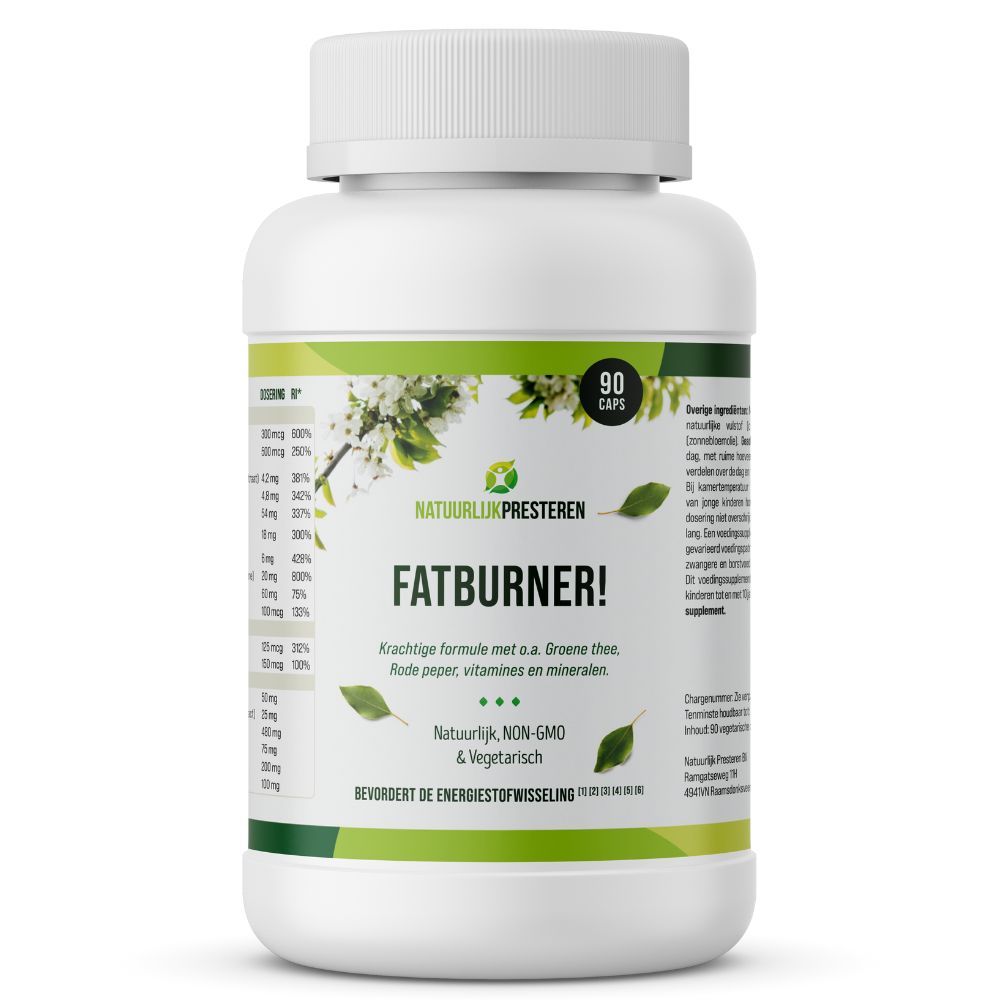
The Natural Performance Fat Burner
A favorite in our collection of natural weight loss products, it contains 18 natural ingredients in one capsule.
This comprehensive natural fat burner is the ideal, safe fat burner that can provide that extra boost during weight loss. It contains almost no caffeine (4.8 mg from 480 mg of green tea extract) and no other stimulants, so you won't feel rushed.
Gerelateerde blogartikelen

15 Ways to Beat Hunger!
Sound familiar? You just ate, but your stomach quickly growls again. Or maybe you're hungry all day long. Super frustrating, especially if you're trying to eat healthier or lose a few pounds. In this blog post, you'll discover why you're always hungry and how to curb it. I'll share a step-by-step plan with quick tips you can implement immediately, as well as lasting, long-term solutions. But first, I'll briefly explain the function of two important hormones that determine your hunger: leptin and ghrelin. The hormones leptin and ghreline determine your hunger: disruption of this balance leads to a constant feeling of hunger. Immediate solutions: Drink water before meals, eat more slowly, and add protein for longer-lasting satiety. Long term: Adequate sleep, fiber, and mindful eating stabilize hormones and reduce hunger, especially with a hearty breakfast. Table of contents The 2 Appetite-Regulating Hormones: Leptin and Ghrelin Leptin (the "appetite-suppressing hormone") Ghrelin (the "hunger-inducing hormone") What causes a constant feeling of hunger? 1. Hormonal influences 2. Leptin resistance 3. Food choices 4. Age 5. Higher BMI 6. Stress 7. A fast metabolism 8. Light meals and small portions Step-by-step plan to effectively suppress your hunger 1. Drink 1-2 glasses of water before your meal 2. Add more protein to your meals 3. Eat more slowly 4. Eat enough (different) fiber 5. Sleep at least 7-8 hours per day 6. Eat mindfully 7. Have a good breakfast 8. Eat after exercising Conclusion The 2 appetite regulating hormones: Leptin and Ghrelin The hormones leptin and ghrelin play a key role in regulating your hunger and eating behavior. Leptin (the 'appetite-suppressing hormone') Leptin is a hormone produced by your fat cells . It signals your brain to stop eating when your body has enough energy stored.(1) Did you know? You have a fixed number of fat cells that develop as you grow? After adulthood, the number of fat cells doesn't change much. What does change is the amount of fat these cells store. When you gain weight, the cells fill with fat, and with weight loss, the fat decreases, but the number of cells usually stays the same. Ghrelin (the 'hunger-inducing hormone') Ghrelin is primarily produced in your stomach and is known as the hunger hormone. When your stomach is empty, ghrelin levels in your blood increase. This increases your hunger and encourages you to eat. After eating, ghrelin production decreases again, making you feel full. In short: the higher the ghrelin levels, the stronger your hunger.(2) In short: Leptin helps suppress your appetite by telling your brain you have enough energy, while ghrelin stimulates your appetite when your body needs energy. The interplay between these hormones helps keep your energy intake balanced. What causes constant hunger? Do you often feel hungry, even after you've just eaten? There can be several factors that cause constant hunger, and many of them have to do with how your body regulates hunger. Let's look at the main causes: 1. Hormonal influences Your hormones play a major role in hunger. As you read in the previous chapter, the hormone ghrelin stimulates your appetite, while leptin makes you feel full. If these hormones are out of balance, you may experience constant cravings. Factors such as age, BMI, and eating habits influence how these hormones work.(1) 2. Leptin resistance Leptin is a hormone that makes you feel full. But sometimes your body becomes resistant to leptin, meaning your brain doesn't receive the signal properly. The result? You still feel hungry, even if you have sufficient reserves. Leptin resistance is common with obesity, poor eating habits, or prolonged stress, which can lead to overeating and weight gain.(2) 3. Food choices What you eat affects how quickly you get hungry. Meals high in carbohydrates can increase ghrelin levels, making you feel hungry faster, especially if you haven't eaten in a while. Sugary snacks can cause your blood sugar levels to rise and fall quickly, which can also increase your hunger. On the other hand, fiber-rich meals and proteins ensure a longer feeling of satiety, so you are less likely to get hungry again quickly.(1) 4. Age As you age, your body changes, and so does your appetite. Younger adults often have a stronger ghrelin response, meaning they get hungrier more quickly. Older adults often experience less hunger, which may be related to changes in stomach or intestinal function.(1) 5. Higher BMI Research shows that people with a higher BMI are often more sensitive to hunger. They experience the urge to eat more quickly, even when their bodies don't actually need nourishment. This can be especially difficult when they have difficulty controlling their eating behavior, for example in stressful situations. This constant hunger can ultimately contribute to weight gain.(3) 6. Stress Stress also affects your hunger. It temporarily increases your ghrelin levels, especially immediately after a stressful situation (such as an important presentation or a conflict). This effect is stronger in overweight people.(4) In addition, stress makes you less likely to crave healthy options and more likely to crave comfort foods like chips or chocolate.(5) So your body often doesn't really need more energy when you're stressed, but your brain looks for quick rewards. 7. A fast metabolism People with a fast metabolism burn calories faster and therefore get hungry more often. Because their bodies use energy more quickly, their blood sugar levels drop more quickly, and they feel hungry again sooner. People who exercise a lot in particular have a faster metabolism, but you can also naturally have a faster metabolism.(6) 8. Light meals and small portions Unsatisfying meals, such as liquid meals or meals low in fiber, don't leave you feeling full for as long. In addition, portions that are too small reduce your energy intake, making you feel hungry more quickly. Solid food stays in your stomach longer, giving your body more time to send signals of fullness. This makes you feel fuller for longer.(7) In short: A constant feeling of hunger can be caused by various factors, such as hormonal changes, your food choices, stress, your metabolism, and even the way you eat. It's good to be aware of these factors so you can adjust your eating habits and better manage your hunger. Step-by-step plan to effectively suppress your hunger There are many tricks that promise to suppress your hunger, but not all of them actually work. Fortunately, there are proven methods that are effective. In this step-by-step plan, I share the best ways to reduce your hunger. All scientifically proven! We start with quick fixes (steps 1-3) that you can implement immediately, and then move on to more sustainable long-term strategies. 1. Drink 1-2 glasses of water before meals Research shows that drinking a large glass of water (about 350ml) before a meal can help reduce your hunger. The water fills your stomach, making you feel full faster, even before you start eating. So try a big glass of water before your meal – a simple way to suppress your hunger!(8)(9) 2. Add more protein to your meals Adding protein to your meals, such as Greek yogurt, eggs, lean meat, fish, quinoa, and legumes, can help you better control your appetite and stay full longer. Proteins are digested slowly, which keeps your stomach full for longer and keeps you from feeling hungry as quickly. Research confirms that proteins effectively help to suppress your hunger.(10) Good to know: The exact amount of protein you need depends on your goals (such as losing weight, building strength, etc.). As a guideline, you can eat at least 0.8 grams of protein per kilogram of body weight daily. For added satiety, you can increase this to 1.0-1.3 grams per kilogram. For someone weighing 75 kg, this means between 60 and 97 grams of protein per day. 3. Eat slower Scientific studies show that eating more slowly makes you eat less during a meal, but it doesn't make you hungrier later in the day. So, if you eat more slowly, you won't automatically feel hungrier afterwards. It's a smart way to change your eating habits without feeling hungry afterwards.(11) In addition, 29 studies with a total of 465,155 participants showed that eating more slowly can help reduce the risk of metabolic syndrome. People who eat faster are more likely to have health problems such as belly fat, high blood pressure, low cholesterol and high triglyceride levels.(12) The following steps are more long-term, so you'll need to maintain these actions for a while to see results. 4. Eat enough (different) fibers Fiber can help you feel full longer, reducing hunger. It slows stomach emptying and keeps you feeling full longer. Research shows that different fibers have different effects, and a combination of fibers may therefore work even better.(13) Increase your fiber intake by eating a mix of natural sources of soluble fiber, such as: Oats – An excellent source of β-glucan Legumes – Beans, lentils, chickpeas and peas are packed with soluble fiber Fruits – Especially apples, pears, berries and citrus fruits such as oranges, which are high in pectin Vegetables – Think carrots, sweet potatoes and kale Whole grains – Such as barley and rye 5. Sleep at least 7-8 hours a day Sleep at least 7-8 hours per night, as too little sleep can increase your hunger. Short sleep duration, such as less than 7 hours, is associated with increased levels of ghrelin (the hunger hormone) and decreased levels of leptin (the satiety hormone). This can lead to increased appetite and a decreased ability to regulate your hunger. Therefore, it is important to get enough sleep regularly to better control your appetite and avoid hunger pangs.(14) 6. Eat mindfully Mindfulness, or paying attention, helps reduce feelings of hunger that arise from stress. By eating more mindfully and avoiding distractions such as your phone or TV while eating, you become more aware of your body and emotions. This will help you learn to better distinguish between hunger and cravings, and you will be less likely to reach for food when you are stressed.(15) One of the best mindful eating exercises is the "5-Sense Exercise." This involves focusing completely on your food by consciously experiencing every aspect. Follow these steps: Look - Look closely at your food. What stands out about the colors, shapes, and textures? Smell - Take a deep breath and notice the aroma of your food. Taste - Take a small bite and pay full attention to the taste, temperature and texture. Hearing - Pay attention to the sound of the food, for example, the crunch of a piece of fruit. Feel - Feel the food in your mouth and notice the sensations you experience. Through this exercise, mindfulness helps you improve your eating habits and become more aware of your hunger feelings. 7. Have a good breakfast Research shows that a good breakfast can help you feel less hungry throughout the day. Participants who consumed most of their calories in the morning had fewer cravings compared to those who ate mostly in the evening. This suggests that a hearty morning meal can be a good way to curb your hunger and make it easier to stick to your diet.(16) 8. Eat after exercising If you want to avoid feeling hungry for the rest of the day, it's important to eat a meal after exercising . An analysis of 23 studies found that people who ate nothing after exercise felt hungrier both immediately after exercise and later in the day, even if they consumed fewer calories. While it's also helpful to eat before exercising, it's especially important to eat a meal after your workout to reduce hunger for the rest of the day.(17) Conclusion Many people experience hunger regularly, even after eating, and this can be frustrating if you're trying to eat healthier or lose weight. The main factors influencing hunger are the hormones leptin and ghrelin. Leptin helps suppress your appetite, while ghrelin stimulates hunger. When these hormones get out of balance, for example due to stress, poor eating habits or being overweight, you may feel constantly hungry. There are both immediate and long-term strategies that can help you curb hunger: Quick Fixes - Drink water before meals, add protein to your meals, and eat slower. Long-term solutions : Increase your fiber intake, get enough sleep, eat mindfully, and eat a good breakfast. Also, eat a healthy meal after your workout. Ebrina van der Bijl Ebrina is a nutritionist with a deep commitment to healthy eating and a sustainable lifestyle, based in beautiful Portugal. Her passion for natural and organic products is at the heart of her work. With a background in Nutrition & Dietetics and experience in product development and writing, she translates complex scientific information into practical advice for a balanced lifestyle. Read more Sources used Anderson, K.C., Hasan, F., Grammer, E.E., & Kranz, S. (2023). Endogenous Ghrelin Levels and Perception of Hunger: A Systematic Review and Meta-Analysis. Advances in Nutrition , 14 (5), 1226–1236. https://doi.org/10.1016/j.advnut.2023.07.011 Bouillon-Minois, J., Trousselard, M., Thivel, D., Benson, A.C., Schmidt, J., Moustafa, F., Bouvier, D., & Dutheil, F. (2021). Leptin as a Biomarker of Stress: A Systematic Review and Meta-Analysis. Nutrients, 13(10), 3350. https://doi.org/10.3390/nu13103350 Dakin, C., Beaulieu, K., Hopkins, M., Gibbons, C., Finlayson, G., & Stubbs, R. J. (2022). Do eating behavioral traits predict energy intake and body mass index? A systematic review and meta‐analysis. Obesity Reviews , 24 (1). https://doi.org/10.1111/obr.13515 Bouillon-Minois, J., Trousselard, M., Thivel, D., Gordon, B.A., Schmidt, J., Moustafa, F., Oris, C., & Dutheil, F. (2021). Ghrelin as a Biomarker of Stress: A Systematic Review and Meta-Analysis. Nutrients , 13 (3), 784. https://doi.org/10.3390/nu13030784 Hill, D., Conner, M., Clancy, F., Moss, R., Wilding, S., Bristow, M., & O'Connor, D. B. (2021). Stress and eating behaviors in healthy adults: a systematic review and meta-analysis. Health Psychology Review , 16 (2), 280–304. https://doi.org/10.1080/17437199.2021.1923406 Caudwell, P., Finlayson, G., Gibbons, C., Hopkins, M., King, N., Näslund, E., & Blundell, J. E. (2012). Resting metabolic rate is associated with hunger, self-determined meal size, and daily energy intake and may represent a marker for appetite. American Journal Of Clinical Nutrition , 97 (1), 7–14. https://doi.org/10.3945/ajcn.111.029975 Leidy, H. J., Apolzan, J. W., Mattes, R. D., & Campbell, W. W. (2009). Food Form and Portion Size Affect Postprandial Appetite Sensations and Hormonal Responses in Healthy, Nonobese, Older Adults. Obesity , 18 (2), 293–299. https://doi.org/10.1038/oby.2009.217 Phyo, Ei & Mya, Kyaw Swa. (2020). Effect of Water on Obesity: Systematic Review and Meta-analysis. Camps, G., Veit, R., Mars, M., De Graaf, C., & Smeets, P. A. (2018). Just add water: Effects of added gastric distention by water on gastric emptying and satiety related brain activity. Appetite , 127 , 195–202. https://doi.org/10.1016/j.appet.2018.04.023 Kohanmoo, A., Faghih, S., & Akhlaghi, M. (2020). Effect of short- and long-term protein consumption on appetite and appetite-regulating gastrointestinal hormones, a systematic review and meta-analysis of randomized controlled trials. Physiology & Behavior , 226 , 113123. https://doi.org/10.1016/j.physbeh.2020.113123 Robinson, E., Almiron-Roig, E., Rutters, F., De Graaf, C., Forde, C. G., Smith, C. T., Nolan, S. J., & Jebb, S. A. (2014b). A systematic review and meta-analysis examining the effect of eating rate on energy intake and hunger. American Journal Of Clinical Nutrition , 100 (1), 123–151. https://doi.org/10.3945/ajcn.113.081745 Yuan, S., Liu, Y., Liang, W., Li, F., Zeng, Y., Liu, Y., Huang, S., He, Q., Quach, B., Jiao, J., Baker, J. S., & Yang, Y. (2021). Association Between Eating Speed and Metabolic Syndrome: A Systematic Review and Meta-Analysis. Frontiers in Nutrition , 8 . https://doi.org/10.3389/fnut.2021.700936 Salleh, SN, Fairus, AAH, Zahary, MN, Raj, NB, & Jalil, AMM (2019). Unraveling the Effects of Soluble Dietary Fiber Supplementation on Energy Intake and Perceived Satiety in Healthy Adults: Evidence from Systematic Review and Meta-Analysis of Randomized-Controlled Trials. Foods , 8 (1), 15. https://doi.org/10.3390/foods8010015 Lin, J., Jiang, Y., Wang, G., Meng, M., Zhu, Q., Mei, H., Liu, S., & Jiang, F. (2020). Associations of short sleep duration with appetite‐regulating hormones and adipokines: A systematic review and meta‐analysis. Obesity Reviews , 21 (11). https://doi.org/10.1111/obr.13051 Torske, A., Bremer, B., Hölzel, B. K., Maczka, A., & Koch, K. (2024). Mindfulness meditation modulates stress-eating and its neural correlates. Scientific Reports , 14 (1). https://doi.org/10.1038/s41598-024-57687-7 Ruddick-Collins, LC, Morgan, PJ, Fyfe, CL, Filipe, JA, Horgan, GW, Westerterp, KR, Johnston, JD, & Johnstone, AM (2022). Timing of daily calorie loading affects appetite and hunger responses without changes in energy metabolism in healthy subjects with obesity. Cell Metabolism , 34 (10), 1472-1485.e6. https://doi.org/10.1016/j.cmet.2022.08.001 Frampton, J., Edinburgh, R. M., Ogden, H. B., Gonzalez, J. T., & Chambers, E. S. (2021). The acute effect of fasted exercise on energy intake, energy expenditure, subjective hunger and gastrointestinal hormone release compared to fed exercise in healthy individuals: a systematic review and network meta-analysis. International Journal Of Obesity , 46 (2), 255–268. https://doi.org/10.1038/s41366-021-00993-1
Lees meer
Do Probiotics Help You Lose Weight and Belly Fat?
Probiotics have been incredibly popular lately! Losing weight and belly fat simply by taking probiotics is a miracle cure, you might think. But is that true? In this blog post, we'll take a closer look at probiotics. What exactly are probiotics, what effect do they have on your body, and their effects on weight loss. (1) Probiotics are live bacteria that support gut health and may influence weight and belly fat. Certain strains promote weight loss or prevent weight gain, but effects vary by individual and strain of bacteria. When combined with a healthy diet and exercise, probiotics can help, but they are not a miracle cure for weight loss. Table of contents What is Probiotics The influence of Probiotics on body weight The other side of the story Final score - Use or a myth Frequently asked questions What is Probiotics In short, probiotics are living microorganisms, also known as living bacteria, that you ingest through food. Think of supplements or fermented foods. Probiotics only have a positive effect on health when consumed in sufficient quantities. A daily intake of 1 to 10 billion of these healthy bacteria is considered the minimum amount needed to achieve an effect. I prefer a supplement with at least 20 billion bacteria. Much has been said and written about the use of probiotics. They are said to improve the immune system and digestion. Several studies also suggest that probiotics can help with weight loss and belly fat reduction. But is this true? The influence of Priobiotica on body weight There are two main families of beneficial bacteria in the intestines: Bacteroidetes and Firmicutes . Body weight appears to be related to the balance of these two families. Most of these are friendly bacteria that produce several important nutrients, including vitamin K and certain B vitamins. In addition, these good bacteria also help break down fibers that the body cannot digest, turning them into beneficial fatty acids such as butyrate. Studies in both humans and animals have shown that people of average weight have different gut bacteria than people who are overweight or obese. (2) When someone is obese, they will generally have less diverse gut bacteria than people who are not overweight. This makes them more likely to gain weight than when these bacteria are in balance. (3) The precise way in which probiotics affect body weight and abdominal fat is not yet fully understood. However, several studies have shown that probiotics can influence appetite and energy expenditure through the production of three fatty acids: acetate, propionate, and butyrate.( 4 , 5) The other side of the story Not all probiotics have a positive effect. Various studies show that different probiotic strains lead to weight gain. This depends on the type and strain of microorganism used in the diet and how an individual responds to it.( 7) In addition, using probiotics does not necessarily lead to losing excess pounds and fat. It can also prevent weight gain, which makes the fight against excess weight a little more bearable. (8) Final Score - Use or a Fable Probiotics offer a wide range of health benefits. Their effects on weight and fat loss vary and depend on the type of probiotic and how each individual responds to it. Certain types of probiotics may have a small effect on weight, but only when combined with a healthy diet and active lifestyle. This doesn't change the fact that it's only for weight loss. Probiotics support digestion and can even help support mental health. Lars Keijzers Lars is a biobased chemist with an insatiable interest in nutrition and science. He also enjoys exploring personal development and can be found regularly at the local gym. Read more
Lees meer constant hongergevoel
13 Ways to Suppress Your Hunger
Are you always hungry, and does that make you snack or overeat? Constant hunger feels unpleasant and also increases your risk of being overweight. When you're constantly hungry, temptations are much harder to resist. There are several reasons why you might constantly feel hungry. In this blog post, we explore the causes of hunger and explain how to suppress it. Constant hunger is often caused by a lack of protein, fiber or healthy fats, fast carbohydrates, stress or lack of sleep. Eating too quickly or distractedly disrupts satiety signals, as does high liquid food intake, certain medications, hormonal imbalances, or a lack of exercise. Suppress hunger by eating calmly and mindfully with sufficient protein, fiber, water, daily exercise and stress reduction. Table of contents 14 Reasons Why You're Always Hungry 1. You're eating too many fast carbs 2. Not enough healthy fats 3. Your diet lacks fiber 4. You're not eating enough protein 5. High stress levels 6. Distractions while eating 7. You're eating too fast 8. Always hungry? You're not drinking enough water! 9. Lack of sleep 10. Exercising too much 11. You're drinking too many calories. 12. The use of certain types of medication 13. Always hungry due to an underlying condition 14. You drink too much alcohol 13 ways to suppress hunger 1. Eat 'solider' and 'more solid' foods 2. Eat foods that contain a lot of fiber 3. Get enough sleep 4. Eat mindfully to suppress hunger 5. Eat enough protein 6. Use smaller tableware 7. Learn to deal with stress 8. Drink more water 9. Choose snacks that are filling 10. Don't deny yourself too much 11. Eat calmly and mindfully 12. Exercise every day 13. Ginger can help if you are always hungry Conclusion - How to suppress your appetite if you are always hungry 14 Reasons Why You're Always Hungry It's normal to feel hungry when it's time to eat. It's your body's way of telling you more food is needed. If you don't eat on time, your stomach will growl and you may feel irritable. Your body is designed to cope with not eating for several hours. But some people feel constantly hungry and struggle to bridge the gap between meals. There are several reasons for this, ranging from a diet lacking protein, fat, or fiber to excessive stress, insufficient sleep, and eating too quickly. Below, you'll find all the 14 reasons why you're constantly hungry. 1. You eat too many fast carbohydrates Fast carbohydrates, such as those found in white bread, cookies, and white pasta, can be the reason you're always hungry. They're digested very quickly by the body, meaning the food leaves the stomach quickly, leaving you hungry again in no time. Furthermore, products with fast carbohydrates contain little fiber, vitamins, and minerals. Therefore, they don't make you feel full. 2. Too few healthy fats You might not be eating enough fat if you're constantly feeling hungry. Fats stay in your stomach for a relatively long time because they take longer to digest. In addition, fats may also trigger the production of certain hormones that signal you're full [1] . 3. Your diet contains too little fiber Fiber is also an important factor in feeling hungry. Fiber plays a role in reducing appetite and providing a feeling of fullness. Eating foods rich in fiber slows down the emptiness of your stomach, making it take longer for food to digest. Like fats, fiber also helps release hormones that signal fullness [2] . 4. You're not eating enough protein Protein, such as that found in eggs, meat, or yogurt, is important for controlling appetite. Protein helps suppress hunger, making it easier to limit the number of calories you eat in a day [3] . Proteins also stimulate the production of hormones that let your body know you are full and they inhibit the production of the hunger hormone ghrelin. 5. High levels of stress Stress causes the body to produce stress hormones, and one of those stress hormones is cortisol. It turns out that this hormone can trigger feelings of hunger. So, if you're experiencing a lot of stress, it can make you feel hungry all the time [4] . 6. Distraction while eating Do you watch TV or play games while eating? If so, this could be a reason you're constantly feeling hungry. If you're distracted while eating, you won't notice how much you're eating and won't feel your body's fullness signals. Research shows that people who are very distracted feel hungrier than people who eat mindfully [5] . Did you know? It turns out it's important to consciously focus on your food. This creates a memory that you've eaten, which prevents you from feeling hungry later. 7. You eat too fast Eating too quickly can be a major reason you're always hungry. Several studies show that fast eaters have a larger appetite and also tend to overeat. People who eat more slowly are less likely to experience this problem. By taking your time with your meal, including chewing well, you give your body and brain time to produce the hormones that signal that you are no longer hungry and are full. 8. Always hungry? You're not drinking enough water! Not drinking enough water can make you feel more hungry. Water makes you feel full and can help curb your appetite before a meal. It's also possible that in some cases you might confuse thirst with hunger. So it's a good idea to drink a glass of water before eating. This prevents you from overeating and also ensures you drink enough. 9. Lack of sleep How much you sleep can also play a role in managing your appetite. When you don't get enough sleep, your body produces more of the hunger hormone ghrelin. So it's no wonder that lack of sleep leaves you feeling constantly hungry [6] . So, good sleep is important. When you get enough sleep, your body produces sufficient leptin, the hormone that makes you feel full. 10. Lots of sports If you exercise regularly, you likely have a faster metabolism. As a result, you burn more calories than people who don't exercise as intensively and, for example, sit a lot. This could be a reason you're hungrier than average. 11. You drink too many calories. Solid food makes you feel fuller than liquid food. Do you enjoy smoothies or shakes, or do you often eat soup (for example, when dieting)? If so, you'll feel hungry more quickly. These meals pass through the stomach faster than when you eat bread or vegetables and meat. 12. The use of certain types of medication Several types of medications can stimulate appetite. The most common are antipsychotics, such as clozapine and olanzapine. Antidepressants, mood stabilizers, anti-seizure medications, and corticosteroids can also increase your appetite, making you feel hungrier. Furthermore, diabetes medications, such as insulin and thiazolidinediones, are also known to cause hunger. 13. Always hungry due to an underlying condition Certain conditions or illnesses can also be a reason you're always hungry. Hunger is a common symptom of diabetes. It's caused by elevated blood sugar levels and can be accompanied by thirst and fatigue. An overactive thyroid could also be the underlying cause of feeling constantly hungry. This is because too much thyroid hormone is produced, which causes your appetite to increase [7] . Furthermore, low blood sugar can be the reason you feel hungry. Low blood sugar can occur if you don't eat for a while. It can also accompany illnesses such as type 2 diabetes, kidney failure, and an overactive thyroid. Excessive hunger can also occur with several other conditions, such as PMS, anxiety, depression, and stress. If you're constantly hungry, it might be a good idea to see your doctor. 14. You drink too much alcohol Many people know it: alcohol stimulates the appetite. Research shows that alcohol interferes with the production of hormones that suppress appetite, such as leptin. This happens especially when you drink it before or with food. That's why you can feel very hungry when you drink too much alcohol [8] . 13 Ways to Suppress Hunger Your body gives you signals that it's time to eat (hunger) or that you've eaten enough. However, you can also experience these hunger signals when you're trying to lose weight, for example, or when you're trying to snack less. Even with intermittent fasting, your body has to get used to fewer meals a day and you may experience hunger. Appetite is a rather complex process, influenced by both internal and external factors. Fortunately, you can help yourself suppress your hunger. Below are 13 ways to do so. 1. Eat 'solider' and 'more solid' foods As mentioned earlier in the article, liquid food is digested much faster than solid food. Liquid and solid food also affect your appetite and the brain's reward system in different ways. If you are always hungry, it is a good idea to choose solid, texture-rich foods as much as possible, so that you feel less hungry after a meal. 2. Foods high in fiber To avoid hunger, choose foods that are high in fiber. This helps slow digestion and positively influences the release of hormones that signal that you've eaten enough [9] . Foods high in fiber include fruits, nuts, seeds, vegetables, and beans. Beans and nuts also contain protein. Protein and fiber work well together and ensure optimal satiety when you get hungry quickly. 3. Get enough sleep A good night's sleep can be an important tool for suppressing hunger and may even help prevent weight gain. When you suffer from sleep deprivation, this can lead to an increase in the hunger hormone ghrelin. This hormone signals to your body that you are hungry and can encourage you to overeat. Research shows that lack of sleep can also give people the subjective feeling of being hungry, even when they are not actually hungry [10] . So try to get an undisturbed night's sleep every night. Are you having trouble sleeping? Perhaps it's due to what you're eating, or perhaps you could make some adjustments in your bedroom that will help you sleep better. 4. Mindful eating to suppress hunger Mindful eating is a good way to regulate your hunger. By eating mindfully, you're more aware of what you're consuming and your body has time to respond to hunger and satiety hormones. You feel more satisfied after a meal, which can help prevent hunger pangs soon after eating. By eating mindfully, you become more aware of your own internal sense of hunger and satiety. Research shows that mindful eating is particularly effective for people who eat in response to their emotional states and for impulsive eaters. Emotions and cravings for a specific type of food influence the feeling of hunger. Mindfulness helps you learn to manage this better. By practicing mindfulness, you become more aware of food and your own body. Mindfulness is most effective when combined with regular exercise and a healthy diet. 5. Eat enough protein Eating more protein helps you feel full for longer and suppresses your hunger. This makes it easier to hold out until your next meal and can even help you eat less throughout the day. It's not just proteins from animal products, such as meat and eggs, that help reduce hunger. Proteins from plant sources, such as beans and peas, are just as effective in this regard. Research shows that protein is a good way to curb hunger pangs. The study involved 20 healthy adults who ate eggs instead of cereal for breakfast [11] . They reported feeling full after breakfast and having lower levels of hunger hormones in their blood than those who had eaten grains. It's recommended to get at least 20 to 30% of your daily calories from protein. This equates to 45 to 55 grams per kilogram of body weight. 6. Use smaller dishes Are dishes important in managing hunger, you wonder? It might be. When you use a large plate and end up with more food on it, you unconsciously overeat. Eating from a small plate allows you to eat less without feeling deprived. If you put a smaller amount of food on a large plate, you might think you're not eating enough and feel hungrier as a result. So you could avoid feeling hungry by eating from a smaller plate. Did you know? Your cutlery can also make a difference in your appetite. Use a smaller spoon or fork, which will force you to take smaller bites and eat more slowly. Eating slowly helps you feel more satisfied. 7. Learn to deal with stress When you're under a lot of stress, you produce more stress hormones, such as cortisol. People react to this differently, but in general, high levels of this hormone cause cravings and increased hunger [12] . If you're constantly hungry and stressed, it's helpful to learn to manage stress differently. You can reduce stress by using some of the techniques below: Exercise regularly Relax with yoga or t'ai chi Limit alcohol and coffee consumption Healthy eating with products that can reduce stress Meditation or mindfulness 8. Drink more water Drinking water can help suppress your hunger. Research shows that 500ml of water can help stretch your stomach, sending signals to your brain that you're full [13] . Water is quickly eliminated from the stomach, so it's helpful to do this just before eating. By drinking water (or other low-calorie beverages) before your meal, you'll eat fewer calories throughout the day, while also preventing hunger pangs. 9. Choose snacks that are filling Eating a snack can help bridge the gap until your next meal. However, it's important to choose a snack that's rich in protein, fiber, healthy fats, or complex carbohydrates. So, grab a healthy bowl of yogurt, rich in protein, or a handful of nuts, which are packed with protein, fiber, and fat. These will be more filling than an easily digestible cracker or a sugary cookie. Eating a bowl of yogurt in the late afternoon will help you feel full and may even help you limit the number of calories you eat later that day. 10. Don't deny yourself too much Hunger, appetite, and cravings are complex processes that scientists don't yet fully understand. It's also not entirely clear what exactly happens when you deny yourself certain foods, such as sugar, carbohydrates, or refined fats. They also don't yet know whether this is a good way to reduce cravings for these types of foods. Some people experience these cravings intensely, while others don't. If you don't suffer from allergies, it's usually not necessary to eliminate your favorite foods from your diet forever. It's actually good to be able to indulge occasionally. However, try to do this in moderation. P.S. If you know you can't eat certain foods in moderation, it might be wise to avoid them altogether. See if you crave those foods less after eating them and if it helps suppress your hunger. Consciously managing cravings can help you manage them better and is likely more effective than cutting them out altogether. Did you know? Do you find it hard to stop yourself from snacking? Grab a few snacks and then put the bag away. Keep them out of sight, too, so you're not constantly reminded of them. 11. Eat calmly and mindfully When you eat and you are very hungry, you tend to eat quickly and therefore it is easy to overeat [14] . Despite a strong feeling of hunger, it is wise to eat calmly and mindfully. You'll feel better when you're full, and it also helps you feel satisfied after a meal. This also appears to be a good way to limit your calorie intake. 12. Exercise every day Research shows that physical activity can reduce activation of the areas of the brain responsible for food cravings, making you less motivated to eat unhealthy snacks and more likely to crave healthy foods [15] . Exercise also reduces the production of the hunger hormone ghrelin and increases feelings of satiety. Therefore, exercise appears to have a positive effect on appetite. However, different studies in this area show different results. People respond differently to hunger, satiety, and even exercise. If you want to exercise more, you can do both cardio and strength training. 13. Ginger can help if you are always hungry Ginger is known to have a positive effect on appetite. Pregnant women benefit from it when they're nauseous, and cancer patients use it when their appetite is reduced. Recent research shows that ginger can also help with appetite: it can help suppress feelings of hunger. This was studied in rats. They were given a mixture of herbs, including ginger and peppermint, as well as whey protein. The mixture seemed to promote a feeling of fullness and help regulate appetite. But of course, it's impossible to say for sure that ginger alone was responsible for this result. Try it and see what it does for you! Conclusion - How to curb your appetite if you're always hungry Broadly speaking, you can say that "always being hungry" stems from an unbalanced lifestyle: lack of exercise, stress, and hyper-processed foods. In this article, we've shared all sorts of tips and tricks on how to solve this. The fastest way to get back into balance is: Exercise vigorously every day – walking, cycling and occasional intensive training. A varied diet of unprocessed foods - vegetables, low-sugar fruits (berries) and good quality animal products. Learn to deal with stress - meditation, exercise and say "no" more often. Eat consciously and control yourself. Miriam Mirjam felt a connection with nature from a young age. This has led to a deep passion for health, natural remedies, and healthy eating. She also loves reading, yoga, and writing. When the weather is nice, she enjoys exploring new hiking trails. Read more
Lees meer