What are serotonin boosters?
Serotonin boosters are supplements that support the production of serotonin . Serotonin, also known as the "happiness hormone ," is a neurotransmitter, a substance that transmits messages in your brain and body. It plays an important role in regulating your mood, sleep, and appetite.
Your body produces serotonin itself, so you can't take it directly in a supplement. Instead, you can use supplements that stimulate serotonin production.
In short, when someone talks about a serotonin supplement, they actually mean a serotonin booster.
Serotonin or Serotine?
Many people ask us what the difference is between serotonin and serotonin. We will answer that question very briefly and concisely: serotonin is the same as serotonin , only these names are often used interchangeably. The term "serotine" does not officially exist because it is a misspelling or confusion with the word "serotonin." Serotonin is the correct, scientifically recognized term.
Characteristics of a serotonin deficiency
A serotonin deficiency can manifest itself in symptoms such as a depressed mood, anxiety, sleep problems and difficulty concentrating. This deficiency can occur when serotonin does not function properly or is not produced in sufficient quantities.
Please note: These symptoms can also have a completely different cause! It is not easy to determine a serotonin deficiency. (1)
Our advice
Before you buy a serotonin booster, it is important to first determine if you actually have a deficiency. Consult with a health care provider for a proper diagnosis and use supplements as a complement to a healthy diet and lifestyle.
How is serotonin produced?
Serotonin is produced in your body through a number of steps, which require a number of auxiliary substances.
This is a simplified explanation of how serotonin is produced and what substances are needed:
-
Proteins (with L-tryptophan)
Proteins from your food are broken down in your stomach and intestines into amino acids, the so-called building blocks. These building blocks are then absorbed into the bloodstream in your intestinal wall. L-tryptophan is the amino acid that plays the main role in this process.
-
L-Tryptophan
L-tryptophan is an essential amino acid that your body needs to make serotonin. After being absorbed into your bloodstream, L-tryptophan is transported to the brain. There, it is converted into 5-HTP.
For this conversion, your body needs, among other things, folate (vitamin B11), iron, calcium, and vitamin B3 (niacin) as auxiliary substances.
-
5-HTP
5-HTP is an intermediate product in the process. Now a second conversion is needed, in which 5-HTP is converted into serotonin. The auxiliary substances vitamin B12, B6 and zinc are indispensable here.
-
Serotonin
The 'end product' serotonin is now ready and is stored in the brain cells.
Did you know : The entire process takes place 95% in the intestines and 5% in your brain?! (2)
What is a good serotonin booster
Your body can only produce serotonin if there are sufficient auxiliary substances present.
Effective serotonin pills therefore contain a combination of all these essential substances:
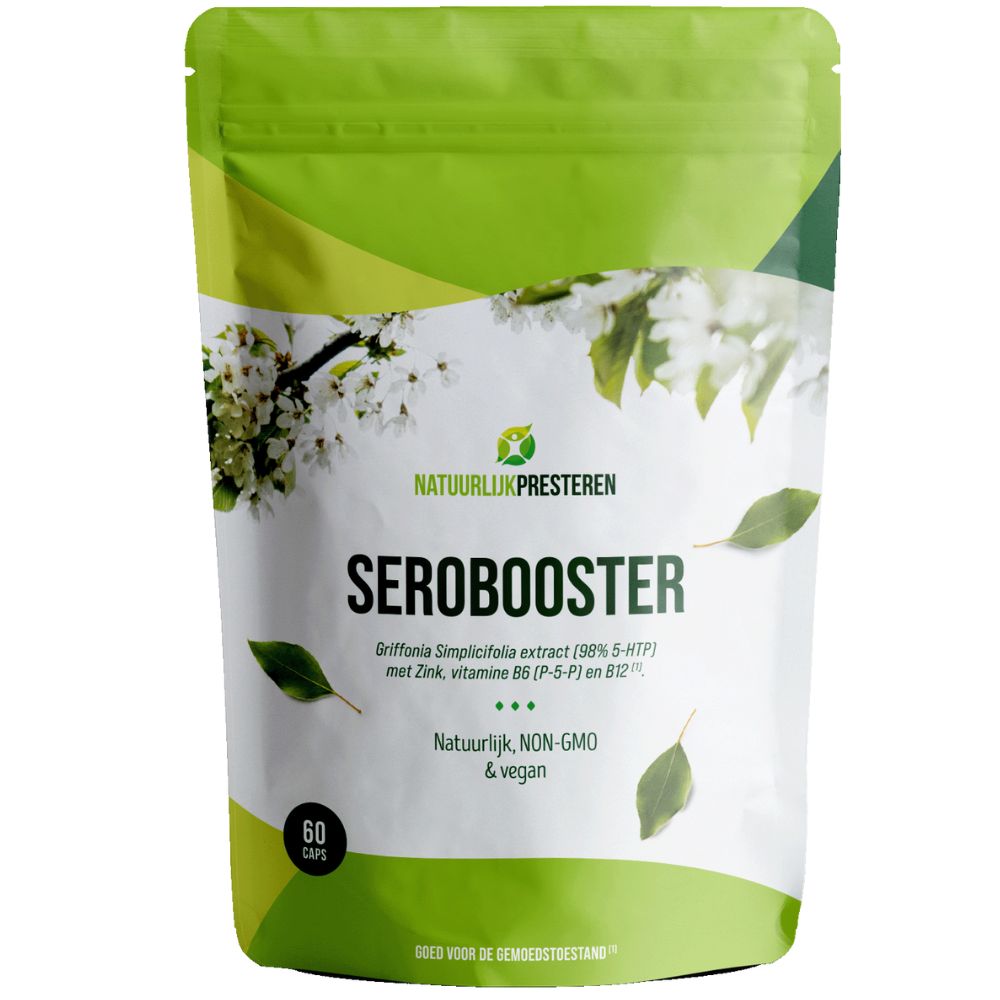
- 5-HTP from a natural source (often from the Griffonia plant). It is the direct precursor of serotonin. Without 5-HTP no serotonin!
- Vitamin B6 plays a key role in the conversion of 5-HTP to serotonin
- Vitamin B12 plays an important role in the production and function of serotonin, although its effect is less direct than that of vitamin B6
- Zinc plays a role in the second step of the serotonin production process, namely the conversion of 5-HTP to serotonin
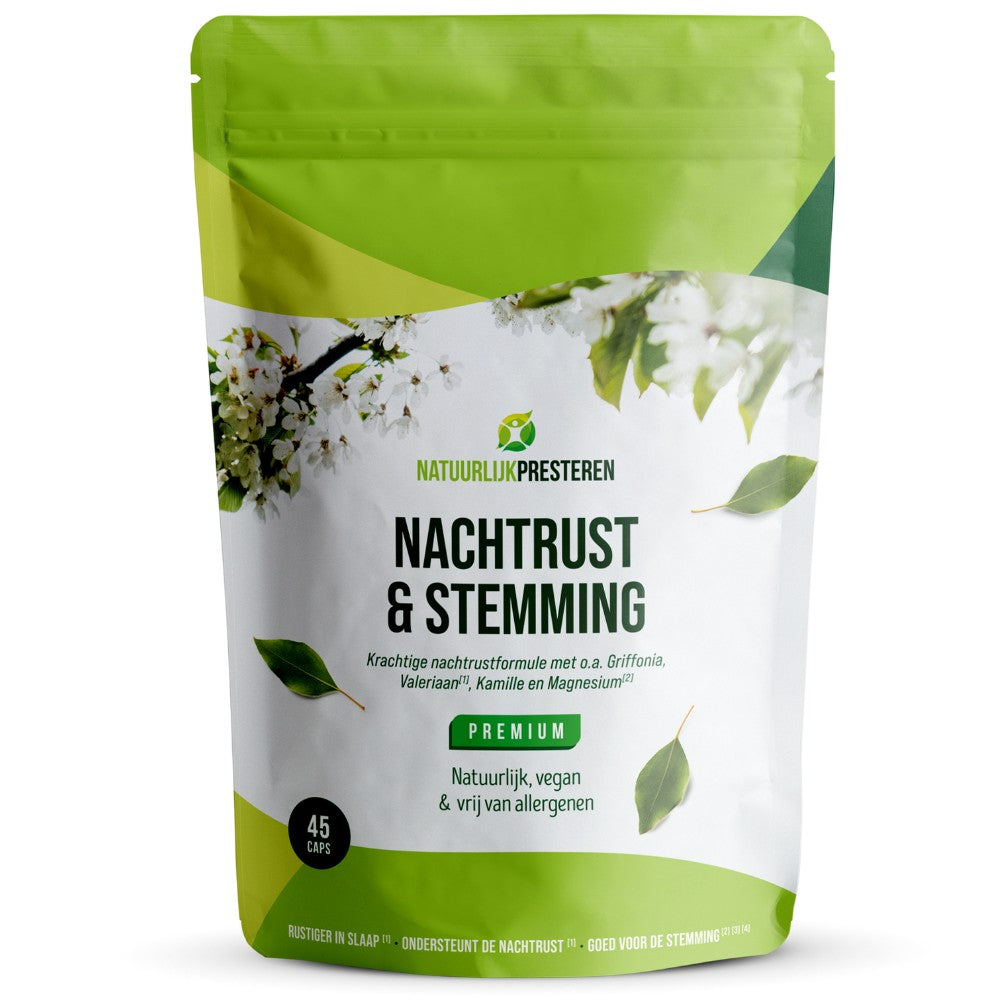
Our natural serotonin booster contains all these substances in a powerful dose. The perfect support for mood and mood.
Tips to increase serotonin naturally:
1. More often in sunlight
Try to spend at least 15-30 minutes outside in natural light every day, especially in the morning. There is clear evidence that sunlight and daylight stimulate the production of serotonin and are good for your sleep-wake rhythm. (3)
2. Exercise
Aim for at least 30 minutes of moderate to vigorous exercise, such as walking, running, or cycling, at least 3-4 times per week. Studies have shown that both aerobic exercise, such as running and cycling, and strength training can help increase serotonin levels. (4)
3. Tryptophan-rich foods
Eat foods rich in tryptophan, such as turkey, chicken, eggs, nuts, seeds, and tofu. Tryptophan allows your body to make 5-HTP, which is needed to produce serotonin.
4. Relax more often
Practice relaxation techniques regularly, such as yoga, meditation, or deep breathing exercises. Chronic stress can lead to a decrease in serotonin levels in the brain. (5)
5. A carbohydrate-rich meal (unprocessed)
Choose complex, unprocessed carbohydrates like whole grains, oats, and sweet potatoes. In response, your body will produce more insulin, which allows amino acids (tryptophan!) to be better absorbed into the cells. (6)
6. Optimize intestinal flora
Increase your intake of fiber, antioxidants, and healthy fats, and avoid junk food. Eat probiotic foods like yogurt and kefir for healthy gut flora (since a large portion of serotonin is produced in the gut!).
Used sources
- Bamalan, OA, Moore, MJ, & Khalili, YA (2023, July 30). Physiology, serotonin . StatPearls - NCBI Bookshelf. https://www.ncbi.nlm.nih.gov/books/NBK545168/
- Terry, N., & Margolis, K. G. (2016). Serotonergic Mechanisms Regulating the GI Tract: Experimental Evidence and Therapeutic Relevance. Handbook Of Experimental Pharmacology , 319–342.https://doi.org/10.1007/164_2016_103
- Harrison, S. J., Tyrer, A. E., Levitan, R. D., Xu, X., Houle, S., Wilson, A. A., Nobrega, J. N., Rusjan, P. M., & Meyer, J. H. (2015). Light therapy and serotonin transporter binding in the anterior cingulate and prefrontal cortex. Acta Psychiatrica Scandinavica , 132 (5), 379–388. https://doi.org/10.1111/acps.12424
- Basso, J. C., & Suzuki, W. A. (2017). The Effects of Acute Exercise on Mood, Cognition, Neurophysiology, and Neurochemical Pathways: A Review. Brain Plasticity , 2 (2), 127–152. https://doi.org/10.3233/bpl-160040
- Kumar, A., Rinwa, P., Kaur, G., & Machawal, L. (2013). Stress: Neurobiology, consequences and management. Journal Of Pharmacy And Bioallied Sciences , 5 (2), 91. https://doi.org/10.4103/0975-7406.111818
- Jenkins, T., Nguyen, J., Polglaze, K., & Bertrand, P. (2016). Influence of Tryptophan and Serotonin on Mood and Cognition with a Possible Role of the Gut-Brain Axis. Nutrients , 8 (1), 56. https://doi.org/10.3390/nu8010056
Gerelateerde blogartikelen

Meditation: 12 Scientifically Proven Benefits at a Glance
The benefits of meditation are now well known to many: it's the method for lowering stress levels and distancing yourself from thoughts and emotions. It helps you feel more grounded and centered. The technique of meditation is thousands of years old. In fact, prayer is even a form of meditation. Meditation itself isn't difficult to learn. You can start right away. All you need is a space where you won't be disturbed for a while. Start meditating today, because it has many benefits for your physical and mental health. Below are 12 scientifically backed benefits of meditation. Meditation reduces stress and promotes emotional health by reducing negative thoughts and increasing self-awareness. Regular meditation helps you sleep better, lowers blood pressure, reduces pain and supports addiction management. It can be used everywhere, takes little time and increases kindness, concentration and body awareness in a lasting way. Table of contents 1 - Meditation reduces stress 2 - It improves emotional health 3 - Meditation increases self-awareness 4 - Meditation helps with anxiety 5 - Meditation helps with addiction and impulse control 6 - It helps you sleep better 7 - Meditation helps you concentrate better 8 - Helps lower blood pressure 9 - Reduces memory loss in later life 10 - Meditation helps you be kinder 11 - Meditation helps with pain 12 - You can meditate anytime, anywhere Conclusion 1 - Meditation reduces stress Stress-related complaints are common these days, whether due to high workloads or problems that simply come your way. Stress can cause unpleasant symptoms, which can manifest both physically and mentally. It leads to high levels of the hormone cortisol, which increases low-grade inflammation in your body. Stress undermines your health, disrupts your sleep, and can lead to depression and fatigue. That's why it's good to address it. Meditation is a good technique for this. Simply withdrawing for a moment and sitting in silence is healing for both body and mind. During meditation, you try to let go of your thoughts, which can help interrupt rumination and emotional reactions. Meditation is used to treat PTSD. A study [1] of several studies shows that meditation and yoga are good complementary treatments to address symptoms. There are also nutritional supplements that can help you balance the stress hormone (cortisol). A product containing Ashwagandha KSM-66 and Bioperine® is one such product. 2 - It improves emotional health Meditation can help improve your self-image and outlook on life. A review of treatments given to over 3,500 adults found that mindfulness meditation can improve symptoms of depression [2] . Similar results emerged from a review of 18 studies. People who received therapy that included meditation experienced fewer depressive symptoms, compared to the control group. Another study shows that meditation helps to weaken negative thoughts and pay less attention to them. [3] 3 - Meditation increases self-awareness Certain forms of meditation can help you understand yourself better. They increase your self-awareness, helping you understand why you react in certain ways, how your thoughts drive your emotions, and how events impact you. Meditation that involves self-inquiry is specifically designed to develop a greater understanding of yourself. Other forms of meditation teach you to observe your thoughts, so you can recognize harmful thoughts that lower your self-esteem. Being aware of your thought patterns can help you work on more constructive thoughts. A study involving 153 adults who used a mindfulness meditation app for two weeks reported feeling less lonely and seeking more social connections [4] . Did you know? By becoming more self-aware, you can change your behavior patterns. This can be the impetus for making positive changes in your life. 4 - Meditation helps against fears Because meditation helps lower stress levels, it also helps reduce anxiety. Research shows that meditation can help people who suffer from anxiety. In one study, people with generalized anxiety disorder practiced mindfulness meditation for 8 weeks. This reduced their anxiety symptoms, helped them think more positively about themselves, and helped them manage stress better [5] . Another study followed 47 people with chronic pain. They practiced meditation for 8 weeks and experienced noticeable improvements in depression, pain, and anxiety for 1 year [6] . Meditation can also be applied in the workplace. It's not uncommon for people to experience anxiety (including performance anxiety) at work. If there's a meditation room, people can meditate at work. This can help reduce stress and anxiety levels. 5 - Meditation helps with addiction and impulse control Meditation is often used for relaxation, but it's also a great way to learn self-discipline. Simply making time for it every day is a prime example. Increased self-awareness and observation of your thoughts and emotions can help you break free from addictions. Research shows that meditation can help people learn to redirect their thoughts, as well as better control their emotions and impulses. It also increases their self-awareness [7] . In a study of 60 people receiving treatment for alcohol abuse, Transcendental Meditation reduced their stress (both physical and mental) and their cravings for alcohol [8] . 6 - It helps you sleep better If you're struggling with sleep, you're not alone. Meditation can be a solution. A study was conducted comparing different meditation programs. It showed that people who meditated were able to sleep longer. In people who did suffer from insomnia, the severity of their symptoms decreased [9] . It's obvious that meditation can be beneficial for sleep problems. Meditation can help you manage worry and relax more effectively. Both physically and mentally, you'll likely find it easier to unwind and fall asleep. There are also nutritional supplements that can help support your sleep. These aren't medications for sleep problems, but they are safe aids with scientifically proven effectiveness. This is one such product: 7 - Meditation helps you concentrate better You can train your concentration, and meditation is one way to do that. It helps you concentrate better and for longer. Research has been conducted on the ability of meditators to concentrate. It turns out that these people can perform better on a visual task. They were able to concentrate for longer than those who did not meditate [10] . It even appears that meditation can reverse thought patterns that contribute to mind wandering, worrying, and being easily distracted. Did you know? Vedic Hinduism is the oldest religion in which people practice meditation to achieve enlightenment. 5,000-year-old scriptures have been discovered in India describing meditation. 8 - Helps lower blood pressure Meditation is not only good for the mind, but also for the body. If you suffer from high blood pressure, your heart has to work increasingly harder to pump blood. Over time, this puts too much strain on the heart, which can lead to problems. High blood pressure can be the underlying cause of a heart attack or stroke. Scientists analyzed 12 studies involving nearly 1,000 people. These studies showed that meditation helped lower blood pressure. This had the greatest effect in people who already had high blood pressure before participating in the study [11] . It doesn't matter what type of meditation you do. Meditation appears to influence blood pressure by increasing relaxation of the nerves that control the heart and initiate the fight-or-flight response [12] . 9 - Reduces memory loss in later life Certain forms of meditation help you focus your attention and maintain a clear mind. Kirtan Kriya is one such form of meditation. It involves chanting a mantra with repetitive finger movements to focus your thoughts. In research on people with late-life memory loss (Alzheimer's), this form of meditation has been shown to improve performance on neuropsychological tests [13] . 10 - Meditation helps you be kinder Some forms of meditation focus on developing positive feelings toward yourself and others. During metta meditation (also called loving-kindness meditation), you focus on kindness and forgiveness, both toward friends and strangers, and even enemies. A meta-analysis of 22 studies on this form of meditation found that it increases people's compassion towards themselves and others [14] . Another study of 100 people found that this depended on the time spent meditating. So the more you meditated, the more positive feelings you experienced [15] . Did you know? If you struggle to meditate, there are apps that can help. These are guided meditations. These make it easier to concentrate because someone guides you through the meditation. 11 - Meditation helps with pain How you experience pain depends on how you feel. Research from 2016 shows that meditation can help manage pain. Thirty-eight studies were analyzed, concluding that mindfulness meditation can reduce pain, improve quality of life, and reduce feelings of depression in people suffering from chronic pain [16] . Both meditators and non-meditators experienced the same pain-causing symptoms. However, those who meditated were better able to manage the pain and even experienced a decrease in pain sensation. 12 - Meditation can be done anytime, anywhere Whatever type of meditation you do, you can do it anywhere. You don't need much. If you're new to meditation, start with a few minutes a day and gradually increase. Choose a form of meditation that appeals to you and suits your goals. There are two forms of meditation: Focusing - In this form of meditation, you focus your attention on an object or thought. It helps you learn to concentrate better and avoid distractions. You can focus on a candle flame, your breathing, or a mantra. Mindfulness meditation - In this form of meditation, you become aware of yourself and your surroundings. You observe your thoughts and feelings (and then let them go). Find a time during the day when you can retreat. It might help to get up fifteen minutes earlier or take a short break at work. If you can't find the time or concentrate, you could also take a class. Meditation can help you in so many ways, it's worth spending some time on it every day. Conclusion The benefits of meditation are endless. It helps you improve both your mental and physical health and has scientifically proven effects. What's more, meditation is free and can be done anytime, anywhere. It takes some getting used to at first, but you'll quickly get used to it and become increasingly better at it. You can start meditating for just 3 minutes a day. Just getting started is the key. You'll quickly notice the benefits of meditation: deeper sleep, improved concentration, reduced stress, and a more positive outlook on life. Jochum Smid Jochum Smid is a biobased chemist specializing in orthomolecular nutrition. He develops and selects the nutritional supplements at Natuurlijk Presteren and has a passion for biohacking, science, and healthy eating. Read more
Lees meer bloggle
Forest Bathing: 7 Scientifically Proven Benefits
Forest bathing is healthy for you, both mentally and physically, and it's no wonder. Humans have a built-in desire to connect with nature. And conversely, nature has remarkable, positive effects on health. Unfortunately, in recent centuries, people have increasingly moved to cities. There's a modern condition called "Nature Difficulty Disorder" in English. People are surrounded by concrete and asphalt every day and are addicted to electrical devices. We're missing out on nature. Forest bathing can help strengthen your connection with nature and boost your health at the same time. Forest bathing reduces stress through mindfulness, lowers stress hormones and helps strengthen the immune system through phytoncides, natural oils from trees with antimicrobial properties. Phytoncides improve focus, creativity and relaxation, while forest walks reduce anxiety and contribute to deeper, restorative sleep. More oxygen and natural substances in forests reduce fatigue, increase vitality and help alleviate feelings of depression and anxiety. Table of contents What is forest bathing? The benefits of forest bathing : 1. Forest bathing helps with stress 2. Boosts your immune system 3. Relaxation through mindfulness 4. Forest bathing promotes concentration 5. Wonderful relaxation 6. Forest bathing: recharging your batteries under the trees 7. Positive effect on mood What is forest bathing? Forest bathing originated in Japan, but in recent years it has become increasingly popular in the West. In Japanese, it's called Shinrin-yoku, which translates as "absorbing the medicine of the forest." Forest bathing became popular because many people experienced complaints related to an increasingly technological society and the ubiquitous stress. People felt depressed and unmotivated. Sleep problems, anxiety and a sense of meaninglessness are common in our modern society. It turns out that forest bathing can offer a wide range of health benefits, both mentally and physically. Forest bathing involves much more than simply taking a walk in nature. It's all about total immersion in nature, using all your senses. You can walk leisurely, but you can also sit or lie down. You'll connect directly with the forest around you and become aware of what you see, hear, taste, smell, and feel. You can feel leaves, smell flowers, and touch the bark of trees. You feel the wind on your skin and admire the colors of leaves and moss, or the play of light on the ground. You hear birds singing, the wind whispering between the trunks, and insects scurrying about. Forest bathing is similar to mindfulness. You become fully immersed in the present moment. You can let go of your daily worries. You're not preoccupied with time, you follow your own natural rhythm, and you don't feel rushed. Forest bathing allows you to create a (new) connection with nature and yourself. At the same time, you'll experience various benefits of forest bathing, which can help support your health. The benefits of forest bathing In Japan, forest bathing is encouraged by the government because it can offer numerous health benefits. Research shows that forest bathing can reduce stress, strengthen the immune system, and improve blood pressure. It can also help with mental health issues, such as depression and anxiety. Below are 7 benefits. 1. Forest bathing helps against stress Mindful forest walks can help alleviate stress. Research shows that people who practice forest bathing have lower levels of stress hormones like adrenaline and noradrenaline in their blood. This can help reduce feelings of anxiety and restlessness. Forest bathing not only has a short-term effect, but can also help reduce chronic stress. Regularly retreating to the forest helps to lower blood pressure [1] . You can use forest bathing as a technique to combat chronic stress. This could potentially prevent stress-related health problems. 2. A boost for your resistance When you're out in the woods, it's not just the fresh air you breathe. Trees and plants secrete substances called phytoncides. These are essential oils that trees and plants produce to protect themselves from insects and pathogens. Phytoncides, however, have antimicrobial properties, and we humans can benefit from them. Inhaling forest air stimulates our bodies to produce more natural killer cells. These cells help fight infections and cancer, among other things [2] . Research in Japan showed that people who practice forest bathing had more natural killer cells and that these were also more active. 3. Relaxation through mindfulness Forest bathing is essentially a form of mindfulness and offers the same benefits. Being in the forest and mindfully present brings you fully into the present moment. This means you're free from distractions like screens and social media updates, as well as your own thoughts. You focus on your senses, your breathing, and nature. You stop worrying and worrying. Mindful walking gives you a break and time to recharge. This gives your body and mind the energy they need. By practicing mindfulness in the forest, you benefit twice: from the tranquility of nature and from the practice of mindfulness. Mindfulness can also help reduce stress and has a positive effect on your mood. Did you know? Forest bathing is most effective when you take your time and give it your full attention. A brisk walk or stroll while listening to music isn't mindful and therefore not as effective. 4. Forest bathing stimulates concentration Being mindful in the forest has even more benefits. For example, it can improve your concentration. This is partly because you're practicing mindfulness. You don't want to exert yourself to focus on the here and now. But it's beneficial to try to quiet your thoughts and gently direct your focus to your senses. The trees and plants around you also help with this. The substance they produce, phytoncides, has a positive effect on concentration and creativity. 5. Wonderfully relaxing Forest bathing is a wonderful way to unwind. Research has long shown that being in a natural environment has a relaxing effect on people. It helps you relax and can therefore also reduce anxiety. Recently, research has also been conducted on the effects of forest bathing in this area. Participants in the study were office workers from Tokyo who suffered from high levels of stress, leading to sleep problems. These people switched the time they would normally spend walking in an urban environment to walking in a forest. It turned out that after walking in nature, they were much less anxious and slept better and longer [3] . It is also possible that the phytoncides that plants and trees produce have a positive effect. These have calming properties and promote sleep [4] . Did you know? Forest bathing is also very beneficial for children. Research shows that children with ADHD can concentrate better in nature than in an urban environment. 6. Forest bathing: gain energy under the trees By practicing forest bathing, you may notice an increase in physical and mental energy. This is due to two unique mechanisms. First, there is a higher oxygen concentration in the forest compared to an urban environment. This will supply your organs with all the oxygen they need and will make you feel fitter and more alive. Secondly, phytoncides also play a major role in providing energy. These essential oils, produced by conifers, promote a feeling of fitness and combat fatigue [5] . 7. Positive effect on mood Walking has a positive effect on mood in general. Forest bathing enhances this even further and can help with depression, anxiety, and negative moods, such as anger. A 2019 study found that forest bathing is good for mental health. 155 participants were studied, 37% of whom had depressive tendencies [6] . Before forest bathing, the depressed people scored significantly higher on depressive traits in a test. After forest bathing, it appeared that people with depressive tendencies experienced significant improvements in their mood. In some cases, there were no differences between those who had previously suffered from depression and those who had not. Forest bathing offers many benefits for both your body and mind. It's definitely worth planning a regular forest bathing session. You don't need a large forest for this. You can also enjoy forest bathing in a park or even in your own garden. Be sure to set aside some time for it, and make sure you won't be disturbed. Immerse yourself in nature and reap a sense of peace, well-being, and renewed energy. Miriam Mirjam felt a connection with nature from a young age. This has led to a deep passion for health, natural remedies, and healthy eating. She also loves reading, yoga, and writing. When the weather is nice, she enjoys exploring new hiking trails. Read more
Lees meer
Want to improve your memory? These 14 tips will help you quickly.
Improving memory might seem like something you'd consider complicated or demanding. The brain is arguably the most complex organ in the human body. It consists of a vast network of billions of interconnected nerve cells. The cells communicate with each other via electrical signals, which allow you to think, feel, and remember things. Memory is an important part of the brain. There are three types of memory: the sensory memory - which processes everything you perceive with your senses. the short-term memory - in which very recent information is briefly stored. the long-term memory - in which all important facts and experiences are stored for a long time Keeping your brain cells healthy is, of course, crucial. This means preventing inflammation and ensuring good blood flow to the brain. Your brain also needs sufficient nutrients. If you want a well-functioning memory, it's important to pay attention to these things. With the 14 tips below, you can improve your memory and keep your brain in top condition. Limit sugar and alcohol, eat anti-inflammatory foods, enjoy dark chocolate daily and get 7-9 hours of sleep. Meditate, read, train your memory, and learn new skills to strengthen brain connections. Do strength training, stay socially active, and get enough vitamins for healthy brain function. Table of contents 1 - Limit refined sugar 2 - Meditate daily 3 - Avoid nutritional deficiencies 4 - Read more for better memory 5 - Get enough sleep 6 - Lose excess weight 7 - Improve your memory by continuing to learn 8 - Limit alcohol 9 - Do a daily "brain dump" 10 - Take advantage of social contacts 11 - Train your memory 12 - Do weight training 13 - Eat anti-inflammatory foods 14 - Improve your memory with 85% dark chocolate 1 - Limit refined sugar It's a well-known fact that sugar is unhealthy. But not everyone realizes that it also has a negative effect on the brain. Sugar can damage your memory, impair your learning ability, and increase the risk of brain disorders like Alzheimer's and dementia. Research shows that a diet high in sugars can lead to poorer memory and a decrease in brain volume, the latter of which has a negative effect on the area of the brain used for short-term memory [1] . If you want to keep your brain healthy, it's important to limit your refined sugar intake. Also, limit carbohydrates in general if you're less active. 2 - Meditate every day Meditating daily is also a good way to improve your memory. Meditation isn't just relaxing (it can help lower blood pressure and reduce stress). While these effects are also beneficial, it appears that meditation can increase gray matter in the brain. Gray matter contains the cell bodies of neurons. As you age, the amount of gray matter decreases, which causes your memory to decline. Meditation and other relaxation techniques can contribute to healthy memory. Meditation has a positive effect on short-term memory in both young and old people. There are many different ways to meditate, so there's sure to be one that suits you. You can practice mindfulness meditation, focus on your breathing, or do a body scan. You can even meditate while moving, like while walking or dancing. Choose a form that works for you and make time for it every day. 3 - No nutrient deficiencies Human memory is incredibly complex. For your memory to function normally, you also need the right nutrients. Even if you eat a varied diet, you may still not get enough of some nutrients. For example, if you eat few animal products, you're at risk for zinc, iron, and B12 deficiencies . Conversely, you may have deficiencies in other vitamins if you eat too few fruits and vegetables. If you suspect that you are not eating a varied diet, a good quality multivitamin can help you get all the important vitamins and minerals in their active form. 4 - Read more often for a better memory Reading isn't such a popular activity these days, which is a shame. Because reading can have a positive effect on your brain, and especially your memory. Using MRI scans, scientists have discovered that reading involves a complex network of nerve cells. The more often you read and the better you become at reading, the more powerful and developed these networks become. Reading therefore creates more connections between brain cells, making it easier to recall stored information. Reading can prevent cognitive decline and memory loss with age. Did you know? When you read, you use much more than just your memory. To be able to read, you also need phonetic awareness, understanding connections, vocabulary, and your brain processes visual stimuli. So reading is a good way to keep your brain active. 5 - Adequate sleep Your sleep also affects your memory. A lack of sleep or disturbed sleep can cause poorer memory. This is because a good night's sleep is important for permanently storing information in long-term memory (a process called consolidation). Deep sleep is particularly important for this process. Therefore, if you often sleep poorly, it can negatively impact your memory. If you want to improve your memory, try to get 7 to 9 hours of sleep every night. Also, make sure you don't eat for at least 3 hours before bedtime so your deep sleep phase isn't disrupted by digestion. Also read our tips to improve your bedroom and what the causes of poor sleep can be. 6 - Lose excess pounds Research shows that being overweight affects your brain. Obesity is linked to an increased risk of cognitive impairment, primarily manifesting as impaired memory and concentration. An analysis of several studies found that when overweight people lost weight, it had a positive effect on their brains. Their memory and concentration improved, and there were also improvements in language and task performance [2] . So losing weight is a good idea if you want to improve your memory. However, do it in a healthy way. Avoid crash diets; they're unhealthy and almost always cause the yo-yo effect. Take your time losing weight and choose a healthy diet, consuming a maximum of 500 to 700 fewer calories per day. 7 - Improve your memory by continuing to learn Memory forms a network of connections in the brain. When you use your memory, different parts of this network are active, in both hemispheres of the brain. That's why it's important to keep learning, regardless of your age. By learning new things, your brain creates new connections and strengthens existing ones. If you don't use certain connections often, they weaken and eventually disappear. This is called brain plasticity. As we age, brain plasticity declines. That's why learning new skills later in life requires more energy. However, it's important to stay mentally active. By learning new things, you stimulate the brain and, in turn, its plasticity [3] . This may help improve your brain health and reduce the risk of brain damage. Learning is always possible, even as you get older. And there are plenty of interesting things to challenge you. Take advantage of the internet, where you'll find many great courses. For example, check out udemy.com, where you can find a course or training for just €10 to €20. 8 - Limit alcohol If you want to improve your memory, it's advisable to limit your alcohol consumption. Many people know that alcohol is unhealthy, but did you know it's one of the most damaging substances for the brain? Scientists recently discovered that even small amounts of alcohol are harmful to the brain. Just one drink a day is enough to cause brain shrinkage. This is because alcohol reduces the amount of gray and white matter in the brain. This makes it more difficult for the different parts of the brain to communicate with each other, which in turn causes both your memory and concentration to deteriorate. Therefore, try to limit your alcohol consumption. Save it for special occasions, for example, or only have a drink on the weekend. 9 - Daily "brain dumping" Are you familiar with the brain dumping technique? It's a very simple way to clear your head. When you have to work or study, you often have all sorts of distracting thoughts pop into your head, such as other tasks you still have to complete. It certainly makes it difficult for you to concentrate. If that's the case, do a brain dump. Take a pen and paper and write down everything that comes to mind. There's no censorship; you write down absolutely everything. By doing this, you free up space in your mind: you know you've put everything important on paper. As a result, these things won't bother you anymore. Your mind is less cluttered, and you have more capacity for optimal memory function. You can concentrate better and therefore absorb information effectively again. 10 - Take advantage of social contacts It might not be something you immediately think of, but social connections have a significant impact on maintaining a healthy brain and therefore on your memory. Maintaining social connections, especially later in life, can protect against cognitive decline. This is also evident from research on mice. Mice kept in groups showed less inflammation in their brains compared to mice living alone. As a result, the brains of the social mice appeared less aged. If you want to improve your memory, it's advisable to engage in regular social activities. Join a club (read books, go for a walk, play cards), exercise together, sing, or dance. Doing activities together helps you relax, reduce stress, and keep your brain young. 11 - Memory training Memory training is a fun and effective way to keep your memory sharp. The more you work on your memory, the stronger the connections between brain cells and areas within the brain become. Memory training can improve your mental performance, attention, and concentration. There are many different ways to train your memory. You can regularly try to remember all sorts of things. Think about which movies you've recently seen and which actors starred in them. Try to recall past events. What year was it, where were you, and what were you doing? This can help keep your brain sharp. But you can also use modern technology. You can download fun memory games via your smartphone or computer. Check Google Play or the Apple Store, or search online for games. 12 - Weight Training Regularly doing a muscle-strengthening workout also has positive effects on your memory. So you not only develop stronger muscles but also a better memory. Researchers at the University of Sydney conducted a study with a group of people aged 55 to 68. They had mild memory complaints. The study showed that strengthening the muscles was associated with an improvement in memory [4] . If you also want to benefit from this effect, it's important to train regularly, at least twice a week. The training should be sufficiently strenuous, at 80% of your maximum capacity. 13 - Eat anti-inflammatory foods Chronic inflammation can be linked to the development of brain disorders, such as depression and Alzheimer's disease. Several studies have shown that certain components in food and beverages have anti-inflammatory properties. Regularly including these foods in your diet can help reduce inflammation and thus reduce the risk of chronic illness and memory problems. The list of healthy foods includes: Blueberries Strawberries Eggs Green tea Coffee Green leafy vegetables, nuts, and olive oil can also be good for memory. All these foods are rich in antioxidants and polyphenols, substances that can help protect the body. So make sure you regularly include healthy fruit, nuts, vegetables, green tea or coffee on the menu. Did you know? The Mediterranean diet is a diet rich in anti-inflammatory foods. It's not so much a weight-loss diet, but rather a diet designed to support your overall health. 14 - Improve memory with 85% dark chocolate And finally, a tip that will make everyone happy: regularly eat chocolate with a cocoa content of 85% or more. Cocoa contains cocoa flavonols, substances that occur naturally in the cocoa bean. It has been scientifically proven that flavonols promote blood flow to the brain. They therefore have a positive effect on the brain, particularly on cognition, attention, information processing speed, and memory. If you love dark chocolate, you're in luck. You can enjoy a delicious piece of dark chocolate (85% or higher) every day to support your brain health. Just be aware that if you eat chocolate with a lower cacao percentage, you won't reap these health benefits. Miriam Mirjam felt a connection with nature from a young age. This has led to a deep passion for health, natural remedies, and healthy eating. She also loves reading, yoga, and writing. When the weather is nice, she enjoys exploring new hiking trails. Read more
Lees meer