What are natural tranquilizers?
Natural tranquilizers are supplements based on herbs or herbal extracts that help you relax.
Most of these herbs have a calming effect on the nervous system, which means they can support you during periods of stress and tension.
For example, when you have had a difficult day and therefore have difficulty falling asleep, or you are very nervous about a certain event.
What types of natural tranquilizers are there?
There are several types of natural tranquilizers, including herbal extracts, essential oils, and herbal supplements.
These are some soothing herbs that are widely used for their calming effect:
1. Valerian
Valerian is a plant with a root that has been used for thousands of years for its calming properties. It grows in North America, Asia, and Europe and has light pink, purple, or white flowers.
The root helps with a healthy night's sleep, falling asleep more easily, and relaxation during stressful periods. (1)
2. Chamomile
The flowers of the chamomile plant are often used in teas and supplements for their calming and relaxing properties. The active ingredient in chamomile is the antioxidant apigenin. This substance helps calm the mind and relax muscles, making it easier to fall asleep.
3. Passion flower
The flowers and leaves of the passion flower are used in teas and supplements for their calming and anti-anxiety properties.
The active ingredients in passion flower are flavonoids and alkaloids, which influence neurotransmitters in the brain and can have a calming effect. These substances help calm the mind and thus contribute to a natural sleep. (2)
4. Hop
Hops are a plant best known as a key ingredient in beer, where they are used for flavoring and preservation. Hop cones, the plant's female inflorescences, contain substances such as lupulin, which have calming and soothing properties. These properties also make hops suitable for use in herbal supplements aimed at supporting relaxation and sleep.
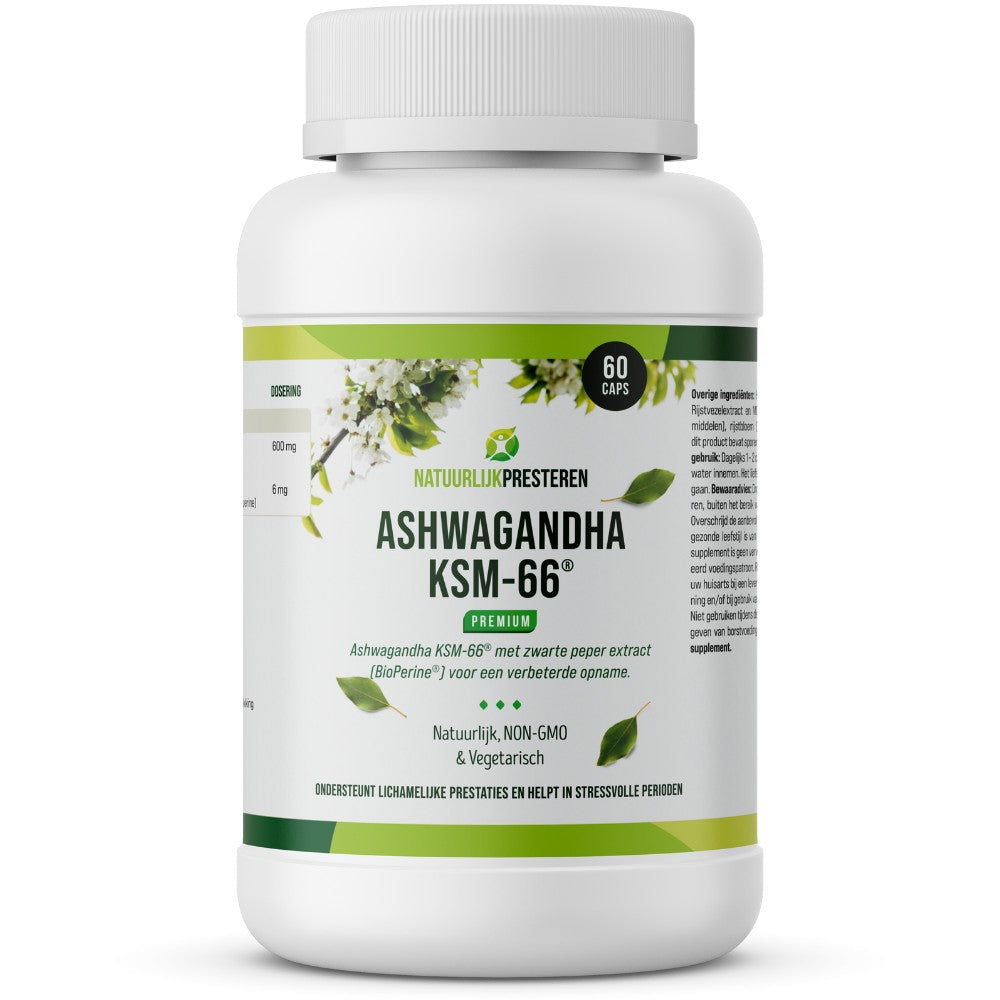
5. Ashwagandha KSM-66
Ashwagandha KSM-66 is a potent extract of the ancient ashwagandha root, used in traditional Ayurvedic medicine. It is a patented extract known for its consistency and high concentration of active ingredients.
Ashwagandha has adaptogenic properties that aid relaxation and keep cortisol levels stable, contributing to a good night's sleep.
6. GABA
GABA (gamma-aminobutyric acid) is a natural neurotransmitter that helps relax the nervous system by calming it and reducing external stimuli.
Due to legislation, it is not permitted to provide complete information about the effects of GABA.
7. L-theanine (from green tea)
L-theanine is a substance found in green tea leaves that gives the tea its bitter taste. It's often used in products aimed at relaxation and sleep.
Due to legislation, we are also not allowed to provide any further information about the effects of L-theanine.
8. Rhodiola Rosea
Rhodiola is known as one of the world's most potent adaptogens. This means it has a calming effect on fatigue and a relaxing effect during times of stress. It supports mental balance.
In our products we use top-quality Rhodiola Rosea extract with 3% rosavins and 1% salidroside for optimal results.
Our natural tranquilizers
1. Ashwagandha KSM-66
Ashwagandha KSM-66 is a premium dietary supplement based on a high-quality, patented and clinically studied Ashwagandha extract (600 mg).
Thanks to a unique extraction process, the full spectrum of active ingredients (such as withanolides) is preserved and standardized to 5%. This ensures consistent quality.
Ashwagandha KSM-66 stands out for its superior purity and potency, making it superior to regular ashwagandha. It helps manage stress and supports testosterone levels in men.
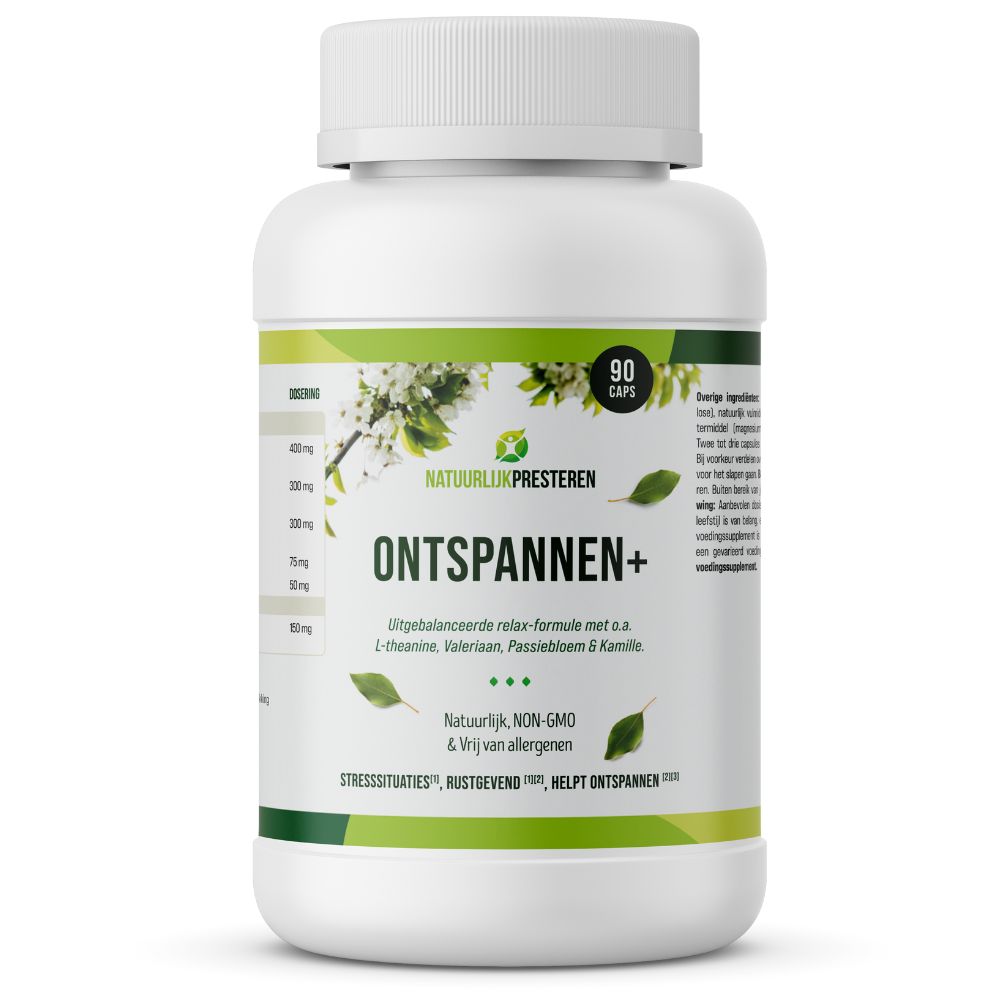
2. Relax+
This supplement contains six powerful ingredients in a single capsule: Rhodiola Rosea (300 mg), Valerian (400 mg), L-theanine (150 mg), Hops (50 mg), Chamomile (75 mg), and Passionflower (300 mg). In addition to its calming effect, Rhodiola Rosea also has adaptogenic properties (supporting energy levels ).
NOTE: While the RelaxComplex of calming plant extracts helps with relaxation, Rhodiola Rosea can have a stimulating effect. This can increase alertness and disrupt your natural sleep hormone, making it less suitable for use just before bed .
Relax+ works within 45 minutes.
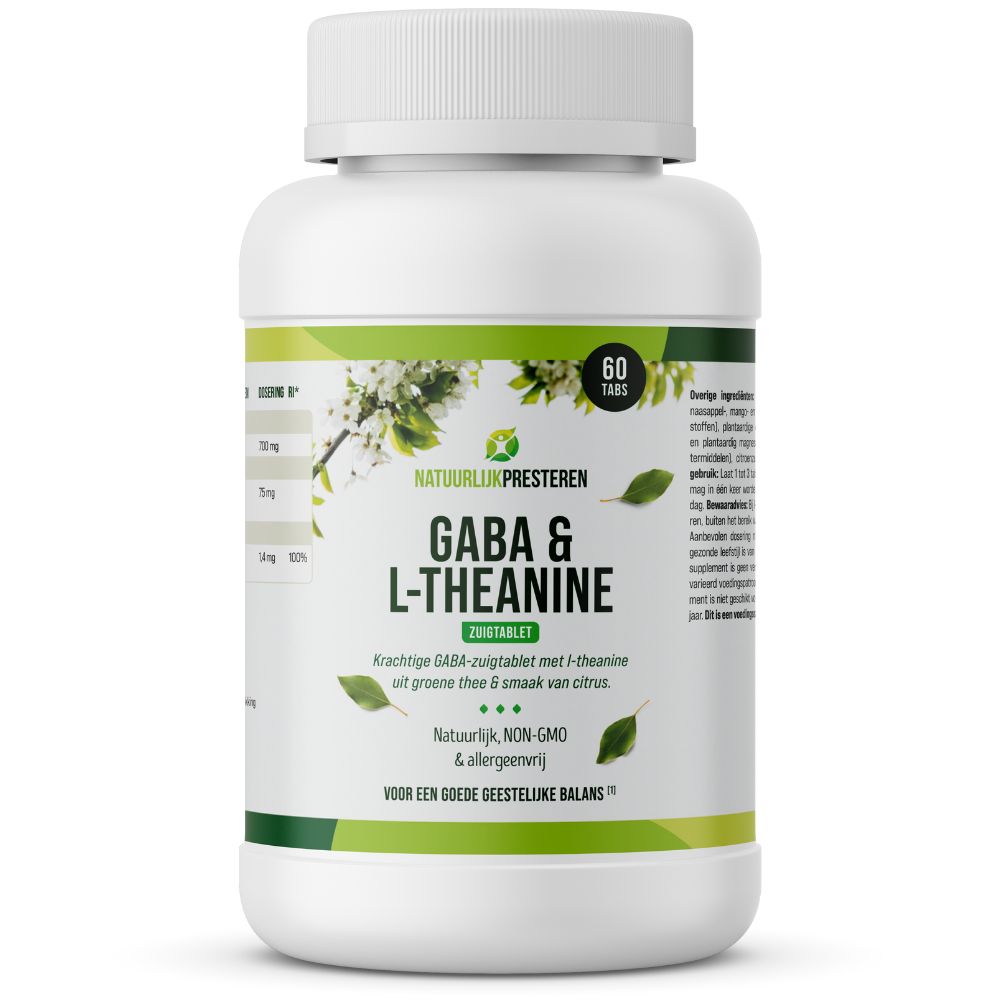
3.GABA & L-theanine
This 3-in-1 formula is ideal for sleep and offers a calming effect on the nervous system. It combines GABA (700 mg), L-theanine (75 mg), and active vitamin B6 (P5P) (1.4 mg) for a synergistic effect on mental balance.
GABA, a neurotransmitter, helps relax and reduces the impact of external stimuli . L-theanine, an amino acid found in green tea, supports this effect and promotes a restful night's sleep . Active vitamin B6 contributes to mental resilience .
Natural tranquilizers for fear of flying
Let us first state that nutritional supplements are not a medicine for fear of flying.
However, these can help you relax, as there are various supplements that provide support during stressful periods.
Want to relax before your flight? We recommend the following tips.
- Avoid caffeine as it can increase anxiety and make you restless.
- Prepare yourself well - this will prevent unnecessary stress and allow you to leave for the airport more relaxed.
- Valerian or Ashwagandha - if you need a little extra to help you relax, we recommend valerian (product: relax+) or ashwagandha (product: Ashwagandha KSM-66).
- Make sure you get enough sleep beforehand – good sleep helps you manage stress better and feel less anxious.
Tips to calm down naturally
Finding peace in a busy life is possible with a few conscious changes. By implementing these tips, you can lower your stress levels and bring more balance to your life.
Discover how to calm down naturally.
1. Daily exercise (cycling or walking gently)
Get outside every day and exercise at your own pace. This helps calm your mind and reduces stress. (3)
Make exercise a daily ritual.
2. Occasionally seek out a strong stress stimulus
Try a sauna, HIIT training, or cold showers. This strengthens your resistance to stress and makes your body more resilient to pressure.
Dare to take the challenge!
3. Sufficient magnesium in your diet
Make sure you get enough magnesium in your diet. This mineral helps your body relax and reduces stress.
Add magnesium-rich foods to your diet.
4. At least 7 hours of sleep per night
Aim for at least 7 hours of sleep per night for optimal rest. This reduces your sensitivity to cortisol and contributes to your resilience to stress.
Make sleep a priority.
5. Don't drink too much caffeine per day (max 2-3 cups of coffee)
Limit your caffeine intake to 2-3 cups per day to prevent anxiety. Too much caffeine can disrupt your sleep and relaxation. (4)
Watch your coffee consumption.
6. Schedule time to relax
Make relaxation just as important as your work and other commitments. Schedule regular time for yourself to truly unwind.
Put relaxation on your agenda.
7. Be aware that the following activities do not help you relax:
Avoid scrolling on your phone, processing new information, watching exciting TV shows, and drinking alcohol or drugs when you want to relax. These activities can increase your stress levels instead of reducing them.
Make conscious choices about relaxing activities.
Sources Used
- Shinjyo, N., Waddell, G., & Green, J. (2020). Valerian Root in Treating Sleep Problems and Associated Disorders—A Systematic Review and Meta-Analysis. Journal Of Evidence-based Integrative Medicine , 25 , 2515690X2096732. https://doi.org/10.1177/2515690x20967323
- Harit, M. K., Mundhe, N., Tamoli, S., Pawar, V., Bhapkar, V., Kolhe, G., Mahadik, S., Kulkarni, A., & Agarwal, A. (2024). Randomized, Double-Blind, Placebo-Controlled, Clinical Study of Passiflora incarnata in Participants With Stress and Sleep Problems. Cureus . https://doi.org/10.7759/cureus.56530
- Caplin, A., Chen, F., Beauchamp, & Puterman, E. (2021). The effects of exercise intensity on the cortisol response to a subsequent acute psychosocial stressor. Psychoneuroendocrinology , 131 , 105336. https://doi.org/10.1016/j.psyneuen.2021.105336
- Gardiner, C., Weakley, J., Burke, L.M., Roach, G.D., Sargent, C., Maniar, N., Townshend, A., & Halson, S.L. (2023). The effect of caffeine on subsequent sleep: A systematic review and meta-analysis. Sleep Medicine Reviews , 69 , 101764. https://doi.org/10.1016/j.smrv.2023.101764
Gerelateerde blogartikelen

Natural tranquilizers? These remedies provide peace of mind.
Natural tranquilizers are a great way to support your body and mind during stressful times. Many people suffer from chronic stress, anxiety, restlessness, and tension. This can, in turn, lead to sleep and concentration problems, headaches, and fatigue. Fortunately, there are several natural tranquilizers that can help. These are herbs, active plant compounds, and minerals with properties that can promote calm and relaxation. In this blog post, we'll discuss 10 natural tranquilizers you can use for stress, anxiety, and inner turmoil. Natural tranquilizers support relaxation, sleep, stress, anxiety and insomnia without being addictive. Effective natural remedies such as valerian, passion flower, lavender, ashwagandha and magnesium help with relaxation and sleep. They stimulate GABA, help regulate serotonin and melatonin, and have adaptogenic effects without causing drowsiness or dependency. Table of contents Valerian Passionflower Lavender Ashwagandha Hops Rhodiola Chamomile L-theanine Magnesium Relax Plus Valerian Valerian has been used for centuries as a sleep aid. Research suggests it may help promote healthy, high-quality sleep [1] . Valerian produces these effects because the compounds in the plant promote the production of GABA (gamma-aminobutyric acid). GABA is a neurotransmitter that has an inhibitory effect on the nervous system. Research shows that having higher levels of GABA in the brain helps you fall asleep faster and sleep better. Valerian can also help during stressful times. It acts as a natural tranquilizer, offering support during restless periods. The substance valeric acid is responsible for these effects [2] . You can take valerian as a capsule or drink valerian tea. To maximize its calming effect, it's best to take this natural sedative before bed or when you're feeling tense. Passion flower Passionflower is a natural tranquilizer, contributing to normal resistance to stress. It can also offer support when feeling restless or tense. A study published in the Journal Anesthesia and Analgesia examined the effects of passion flower in people who were scheduled to undergo surgery. Those who received the supplement reported that it helped them relax prior to surgery. Those who received the placebo did not report these effects [3] . Passion flower is also good for sleep. In a double-blind, placebo-controlled study published in Phytotherapy Research, participants were given a daily dose of passion flower tea. After 7 days, those who received the passion flower tea reported that it helped support sleep [4] . Passionflower's calming properties appear to arise from its ability to support GABA concentration in the brain. You can take a passionflower supplement (extract, capsules, or tablets) or make a tea from the dried leaves. Lavender Many people know lavender as the plant that smells so wonderful in summer. But lavender has more benefits than just a pleasant scent. This plant, with its beautiful purple flowers, can help promote sleep and relaxation. Several studies seem to indicate that the active ingredients in lavender can help you relax. This makes it good for your mood and sleep [5] . Interestingly, inhaling the scent of lavender generally appears to be more effective than ingesting it in any other way. Therefore, aromatherapy with lavender is also popular for supporting sleep. A 2015 study involved 158 women who had just given birth. They inhaled lavender scents four days a week for eight weeks. The women who received real lavender experienced improved sleep [6] . Ashwagandha Are you familiar with ashwagandha as a natural sedative? Officially, it's not a sedative, but it's an adaptogen. This means it adapts to your body's needs. It helps you relax during stressful moments, while it boosts your energy levels when you're tired. Several studies have shown that ashwagandha supplements can help during stressful times. A small study included 58 people, who received either 250 or 600 mg of ashwagandha extract daily for eight weeks. Those who received the real drug reported that it helped them manage stress. Those who received a placebo did not report these benefits. Another benefit was that it helped support sleep [6] . Hop Hops are best known as one of the ingredients in beer, but they're also one of the natural sedatives on our list. They've been used in herbal medicine in Europe since the 9th century. Even today, there is still interest in the properties of hops, particularly their effects on anxiety and sleep. Research shows that hops can act as a natural sedative and support a good night's sleep. In a 2012 study, women were given non-alcoholic beer with hops with dinner. The women who drank it found it helped them sleep better. If you're planning to use hops to address sleep problems, for example, be careful how you do it. Don't drink extra beer before bed. Drinking too much alcohol can negatively impact the quality of your sleep, even if it might help you fall asleep faster. Did you know? Hops may also help with menopausal symptoms, as the plant contains phytoestrogens. It seems that hops may alleviate some of these symptoms, but more research is needed to clarify this. Rhodiola Rhodiola is also an adaptogen, which can help during stressful times. It provides your body with exactly what you need at that moment: it has a calming effect during times of stress, but also supports your energy levels during times of fatigue. Taking rhodiola if you suffer from tension can help you cope better with stress. Stress can also negatively impact other aspects of your life. For example, you may experience fatigue, both mentally and physically. Thanks to rhodiola's adaptogenic properties, it may also offer relief from this. 100 people who were given 400 mg of rhodiola daily for 8 weeks in a study indicated that it provided support during stressful periods[ 7] . Researchers also suspect that rhodiola is good for mood. Chamomile Chamomile is one of those natural sedatives that almost everyone knows. Traditionally, it's recommended to drink a cup of chamomile tea before bed. Chamomile helps you relax and sleep well. Chamomile's calming effect is due to its antioxidant apigenin . This binds to certain receptors in the brain, promoting drowsiness and potentially helping with insomnia. Furthermore, the relaxing effects are also beneficial for feelings of anxiety and tension. Chamomile is a good remedy to use during stressful times. Did you know? Chamomile is also known in herbal medicine as a remedy for digestive problems. It has been prescribed for centuries for diarrhea, loss of appetite, nausea, and abdominal pain. L-theanine L-theanine is an amino acid found primarily in green and black tea, as well as in some types of mushrooms. Do you enjoy a nice cup of hot tea and feel relaxed afterward? That might be true; it's L-theanine that helps you relax. The advantage of this substance is that it produces this effect without making you sluggish or sleepy. The substance influences various neurotransmitter systems and supports the production of GABA. This substance can slow down the activity of the nervous system, which can help you relax. Did you know? Taking L-theanine in combination with caffeine can potentially have a positive effect on your concentration. So, if you need sharper focus, it might be a good idea to have a cup of coffee after your cup of tea. Magnesium Magnesium can also function as a natural sedative. Many people use magnesium supplements to support sleep. This is because magnesium helps produce serotonin and melatonin, among other things. [8] Magnesium can also be very beneficial during stressful times. It's good for stress resistance and can help during stressful times. Relax Plus The Relax+ dietary supplement is one of the natural sedatives you can use to manage stress. It's specially formulated as a natural relaxant and contains calming herbs like chamomile, hops, passionflower, valerian, rhodiola, and L-theanine. Relax+ has an adaptogenic effect and helps you relax better when you're stressed, but also provides an uplifting effect when you're tired. This supplement is ideal for use during stressful periods, as it supports resilience. Do you suffer from disturbed sleep, often feel tense or stressed, worry a lot, and experience anxiety? Try Relax+, which naturally promotes relaxation and calm. With Relax+, you have all the supplements you need to promote more peace and increased resistance to stress. Take two or three capsules daily and benefit from what nature has to offer. Choose a natural way to relax. Natural remedies work in harmony with your body. They don't cause drowsiness or lethargy, and they're not addictive. They're safe for long-term use. Miriam Mirjam felt a connection with nature from a young age. This has led to a deep passion for health, natural remedies, and healthy eating. She also loves reading, yoga, and writing. When the weather is nice, she enjoys exploring new hiking trails. Read more
Lees meer taurine
Rhodiola rosea: werking, voordelen en dosering
In een tijd waarin prikkels en drukte zich blijven opstapelen, zoeken veel mensen naar manieren om hun balans te bewaren. Misschien ben je daarom uitgekomen bij rhodiola rosea. Je ziet het steeds vaker voorbijkomen. Maar wat is het precies? En wat kun je er wel (en niet) van verwachten? In dit artikel neem ik je stap voor stap mee. Zo krijg je een helder en eerlijk beeld van wat rhodiola rosea is, hoe het werkt en hoe je het kunt gebruiken. Rhodiola rosea wordt vaak genoemd in de context van stress, mentale druk en vermoeidheid, maar effecten kunnen verschillen per persoon en per extract. Een gestandaardiseerd extract met rosavinen en salidroside maakt de samenstelling inzichtelijker en zorgt voor meer consistentie tussen producten. Begin bij voorkeur laag, neem rhodiola vroeg op de dag en overleg bij zwangerschap, borstvoeding of antidepressivagebruik. Inhoudsopgave Wat is rhodiola rosea? Hoe werkt rhodiola rosea? Rosavinen Salidroside Wat kun je merken van rhodiola rosea? Bij stress en mentale druk Bij vermoeidheid Bij concentratie Bij sport en herstel Antioxidanten Rhodiola rosea en stress: hoe werkt dat? Dosering: hoeveel rhodiola rosea per dag? Hoe en wanneer neem je rhodiola supplementen? Rhodiola en ginseng: waarom combineren? Rhodiola en ashwagandha Bijwerkingen en veiligheid Wanneer moet je extra opletten? Welke rhodiola kies je? Gebruik deze checklist Rhodiola rosea kopen: welke supplementen zijn er? 1. Rhodiola & Ginseng 2. Concentratieboost 3. Ontspannen plus Ervaringen: wat kun je verwachten? Veel gestelde vragen over Rhodiola rosea 1. Wat is rhodiola rosea? 2. Hoe verschilt het van ashwagandha? 3. Hoe snel werkt het? 4. Mag je het combineren met antidepressiva? 5. Hoeveel moet je nemen? 6. Is het veilig op lange termijn? Tot slot Wat is rhodiola rosea? Rhodiola rosea, ook wel rozenwortel genoemd, is een plant die groeit in koude, bergachtige gebieden op grote hoogte, zoals Siberië, Scandinavië en delen van de Himalaya (waaronder Tibet). Door deze omstandigheden ontwikkelt de plant een sterk aanpassingsvermogen. Vooral de wortel wordt gebruikt. Als je die doorsnijdt, komt er een lichte rozengeur vrij. Daar komt de naam vandaan. Traditioneel werd rhodiola gebruikt in situaties waarin veel gevraagd werd van het lichaam, zoals bij fysieke inspanning en mentale belasting. Om die reden valt rhodiola onder de zogenoemde adaptogenen. Dit zijn planten die worden onderzocht vanwege hun mogelijke rol in hoe het lichaam zich aanpast aan stress (1, 2). Hoe werkt rhodiola rosea? De werking van rhodiola hangt samen met stoffen die van nature in de wortel voorkomen. De twee belangrijkste groepen zijn: rosavinen salidroside Deze stoffen worden gebruikt om extracten te standaardiseren. Dat betekent dat een supplement met zo´n extract een vaste hoeveelheid van deze bestanddelen bevat (1). Praktisch: kies bij voorkeur een gestandaardiseerd extract waarin zowel rosavinen als salidroside aanwezig zijn. Zo weet je dat je een consistente samenstelling gebruikt. Rosavinen Rosavinen zijn een groep stoffen (rosavin, rosine en rosarin) die specifiek voorkomen in rhodiola rosea (en dus niet in andere rhodiola varianten). Ze worden vaak gebruikt als maat voor de kwaliteit van een extract. In onderzoek wordt gekeken naar de rol van rosavinen in hoe het lichaam reageert op verschillende vormen van belasting.* De resultaten zijn wisselend en lijken onder andere afhankelijk van dosering en samenstelling van het extract. Goede supplementen zijn meestal gestandaardiseerd op ongeveer 3% rosavinen (3). Salidroside Salidroside is een andere belangrijke stof die van nature voorkomt in rhodiola rosea. In onderzoek wordt salidroside onder andere bekeken in relatie tot processen in het zenuwstelsel. Dit gebeurt vooral in laboratorium- en dierstudies, en in mindere mate bij mensen. De resultaten zijn wisselend en afhankelijk van factoren zoals dosering, type extract en de context waarin het wordt gebruikt. Een kwalitatief rhodiola-extract bevat meestal rond de 1% salidroside (4). (*) Goed om te weten: deze claim wordt op dit moment nog beoordeeld door de EFSA. Hij is dus nog niet goedgekeurd, maar ook niet afgekeurd. Wat kun je merken van rhodiola rosea? Rhodiola wordt vaak gebruikt in periodes waarin je veel vraagt van jezelf. Denk aan drukte, stress of momenten waarop je merkt dat je energie of focus minder wordt. Goed om te weten: wat je merkt kan per persoon verschillen en hangt onder andere af van de dosering, het type extract en je persoonlijke situatie. Hieronder zie je in welke situaties rhodiola vaak wordt gebruikt: Bij stress en mentale druk Merk je dat je snel overprikkeld raakt of dat je hoofd blijft doorgaan? Rhodiola wordt vaak gebruikt in periodes van stress en mentale druk.* Sommige mensen ervaren dat ze zich wat veerkrachtiger voelen en rustiger blijven, ook als het druk is (5, 6). Bij vermoeidheid Voel je je vaak moe, ook als je genoeg slaapt? Rhodiola wordt vaak gebruikt bij aanhoudende vermoeidheid.* Sommige mensen gebruiken het wanneer hun energie laag is, bijvoorbeeld na drukke of intensieve periodes (7). In plaats van een korte, snelle boost zoals bij koffie, kiezen mensen rhodiola vaker wanneer ze zich langere tijd moe voelen. Bij concentratie Heb je moeite om je aandacht erbij te houden als het druk is? Rhodiola wordt vaak gebruikt op momenten waarop je langdurig moet focussen.* Sommige mensen gebruiken het bijvoorbeeld tijdens drukke werkdagen of wanneer ze veel moeten nadenken (8, 9). Bij sport en herstel Vraag je veel van je lichaam, bijvoorbeeld met sporten of fysiek werk? Rhodiola wordt ook gebruikt in periodes van intensieve fysieke belasting.* In onderzoek wordt gekeken naar het effect van rhodiola op prestaties en hoe het lichaam omgaat met inspanning en herstel. De resultaten laten een wisselend beeld zien (10, 11, 12, 13). Antioxidanten Rhodiola bevat naast rosavinen en salidroside ook andere natuurlijke stoffen, zoals flavonoïden. Deze stoffen staan bekend om hun antioxidatieve eigenschappen (14).. (*) Goed om te weten: deze claim wordt op dit moment nog beoordeeld door de EFSA. Hij is dus nog niet goedgekeurd, maar ook niet afgekeurd. Rhodiola rosea en stress: hoe werkt dat? Wil je beter begrijpen wat er in je lichaam gebeurt bij stress en welke rol rhodiola daarin speelt? Zo zit het: In je lichaam speelt de zogenoemde HPA-as een belangrijke rol. Dit is een samenwerking tussen de hypothalamus, hypofyse en bijnieren, drie systemen die samen je stressreactie aansturen. Wanneer je stress ervaart, geeft dit systeem signalen door waardoor je lichaam in actie komt. Zo worden er stresshormonen vrijgemaakt, zoals cortisol. Soms blijft dit systeem langer actief dan nodig. Je lichaam blijft dan als het ware “aan” staan, ook als de prikkel al voorbij is. Dat kan ervoor zorgen dat je moeilijker tot rust komt. Rhodiola wordt onderzocht in relatie tot dit systeem. Daarbij kijken onderzoekers onder andere naar hoe het lichaam met stress omgaat en hoe het daarna weer terugkeert naar een meer ontspannen balans. Goed om te weten: dit soort processen worden deels onderzocht in laboratorium- en dierstudies. Onderzoek bij mensen laat een wisselend beeld zien. Dosering: hoeveel rhodiola rosea per dag? De meeste supplementen liggen tussen de 100 en 600 mg extract per dag. De exacte hoeveelheid hangt samen met de concentratie en standaardisatie van het extract. Let daarbij goed op de vorm die wordt gebruikt: poeder of extract. Dit maakt namelijk een groot verschil in dosering. Gestandaardiseerd extract – is geconcentreerd en bevat een vaste hoeveelheid werkzame stoffen (zoals rosavinen en salidroside). Gedroogd poeder – is de gemalen wortel, waarbij de hoeveelheid werkzame stoffen kan variëren. Een extract is geconcentreerder dan poeder. Daardoor heb je er meestal minder van nodig om tot een vergelijkbare inname te komen. Hoe en wanneer neem je rhodiola supplementen? Hoe je rhodiola gebruikt, draait vooral om twee dingen: de dosering en het moment van innemen. Beide kunnen invloed hebben op hoe je rhodiola ervaart. Dosering opbouwen – begin rustig, zodat je kunt aanvoelen wat bij je past. Start met een lage dosering (bijvoorbeeld 100–200 mg per dag) en kijk hoe je reageert. Verhoog dit eventueel stap voor stap. Moment van innemen – neem rhodiola bij voorkeur in de ochtend of vroege middag. Sommige mensen ervaren het als licht activerend, waardoor innemen later op de dag minder prettig kan zijn. Vanuit daar kun je eventueel ook kijken naar andere vormen of combinaties. Rhodiola wordt bijvoorbeeld vaak gecombineerd met kruiden zoals ginseng of ashwagandha. Rhodiola en ginseng: waarom combineren? Rhodiola en ginseng worden vaak samen gebruikt, omdat ze elk op hun eigen manier passen binnen momenten waarop je veel van jezelf vraagt. In combinatie zie je ze daarom vaak terug in één formule, zodat je niet hoeft te kiezen en ze eenvoudig samen kunt gebruiken: Rhodiola – kies je bijvoorbeeld wanneer je veel van jezelf vraagt en overdag scherp wilt blijven. Ginseng – wordt vaker gebruikt op momenten waarop energie en vitaliteit meer op de voorgrond staan. Zo kun je met één combinatie inspelen op verschillende momenten in je dag, zonder meerdere losse supplementen te gebruiken. Rhodiola en ashwagandha Naast ginseng wordt rhodiola ook vaak genoemd in combinatie met ashwagandha. Ashwagandha is, net als rhodiola, een kruid dat vaak wordt ingedeeld bij de zogenoemde adaptogenen. Ze worden soms gecombineerd in supplementen, maar worden ook vaak los van elkaar gebruikt, afhankelijk van het moment en waar je behoefte ligt. Rhodiola – vaak gekozen in periodes waarin je veel van jezelf vraagt, bijvoorbeeld wanneer je overdag scherp en actief wilt blijven. Ashwagandha – vaker gebruikt op momenten waarop ontspanning en rust meer op de voorgrond staan. Vraag jezelf dus eerst af: wil je vooral overdag scherp blijven? Of merk je juist dat je behoefte hebt aan meer rust en ontspanning? Persoonlijk kies ik er bijvoorbeeld voor om rhodiola met ginseng in de ochtend te gebruiken en ashwagandha los in de avond. Wat voor jou prettig werkt, kan natuurlijk anders zijn, het is vooral iets om zelf te ontdekken. Bijwerkingen en veiligheid In de meeste studies wordt rhodiola gebruikt in doseringen van ongeveer 100 tot 600 mg extract per dag. Binnen deze range wordt het over het algemeen goed verdragen. Soms worden milde klachten gemeld, zoals: een droge mond een licht gevoel in het hoofd Dit lijkt vaker voor te komen bij hogere doseringen, maar de resultaten uit studies zijn niet volledig eenduidig. Goed om te weten: wat je merkt, verschilt per persoon. Je gevoeligheid, leefstijl en het type extract spelen daarbij een rol. Het advies blijft dus: begin met een lage dosering, kijk hoe je reageert en bouw eventueel op in dosering. Wanneer moet je extra opletten? In deze situaties is het verstandig om extra advies in te winnen: Zwangerschap of borstvoeding – overleg met je verloskundige of arts. Er is op dit moment te weinig onderzoek om het gebruik goed te kunnen beoordelen. Gebruik van antidepressiva – overleg ook dan met je arts, vooral bij middelen zoals MAO-remmers. Welke rhodiola kies je? Gebruik deze checklist Sta je op het punt om rhodiola te proberen? Dan helpen deze punten je om een keuze te maken: Dosering – kies een product waarmee je rond de 100–600 mg extract per dag kunt doseren, zodat je flexibel kunt opbouwen. Gestandaardiseerd extract – hiermee weet je dat de samenstelling per capsule of dosering gelijk is. Werkzame stoffen (bijv. 3% rosavinen / 1% salidroside) – dit zijn veelgebruikte verhoudingen bij kwalitatieve extracten. Zuiverheid en transparantie – kijk of de dosering en samenstelling duidelijk op het etiket staan en of het merk informatie geeft over herkomst of testen. Geen onnodige toevoegingen – kies bij voorkeur een product met een korte ingrediëntenlijst, zonder onnodige vulstoffen. Vorm (capsule of druppel) – capsules zijn makkelijk en precies, terwijl druppels meer flexibiliteit geven in dosering. Samenstelling – kies je voor rhodiola los, of voor een combinatie met bijvoorbeeld ginseng of ashwagandha? Wat bij je past, hangt af van je voorkeur en situatie. Rhodiola rosea kopen: welke supplementen zijn er? Overweeg je een rhodiola rosea supplement of een gestandaardiseerd rhodiola extract? Dan kom je al snel verschillende formules tegen. Binnen onze collectie rhodiola supplementen vind je varianten met elk een andere samenstelling, zodat je kunt kiezen wat het beste past bij jouw moment en voorkeur. 1. Rhodiola & Ginseng Een combinatie van rhodiola rosea extract en Siberische ginseng in één formule. Deze combinatie wordt vaak gekozen door mensen die beide kruiden in één supplement willen gebruiken. gestandaardiseerd rhodiola-extract (3% rosavinen, 1% salidroside) – 400 mg per dagdosering gecombineerd met Siberische ginseng – 200 mg per dagdosering eenvoudige samenstelling 2. Concentratieboost Een formule met rhodiola rosea, gecombineerd met ingrediënten die vaak worden gebruikt op momenten waarop je langdurig geconcentreerd wilt blijven. gestandaardiseerd rhodiola-extract (3% rosavinen, 1% salidroside) – 100 mg per dagdosering combinatie met L-theanine en cafeïne (100 mg cafeïne en 200 mg L-theanine) aangevuld met vitamine B6 en B12 3. Ontspannen plus Een bredere formule met rhodiola rosea en verschillende plantenextracten. Deze combinatie wordt vaak gekozen als je merkt dat je meer behoefte hebt aan rust, bijvoorbeeld in de avond of na een drukke dag. gestandaardiseerd rhodiola-extract (3% rosavinen, 1% salidroside) – 300 mg per dagdosering aangevuld met kruidenextracten zoals valeriaan, passiebloem, kamille en hop brede samenstelling Ervaringen: wat kun je verwachten? Rhodiola is geen snelle oplossing. Als je iets merkt, gebeurt dat meestal pas na een paar weken en bij consistent gebruik. Tegelijk geldt: niet iedereen merkt verschil. Hoe het voor jou uitpakt, hangt af van je situatie, leefstijl en hoe je lichaam reageert. Zie het daarom vooral als een mogelijke aanvulling op de basis, zoals voldoende slaap, goede voeding en een duidelijke dagstructuur. Veel gestelde vragen over Rhodiola rosea 1. Wat is rhodiola rosea? Rhodiola rosea is een plant die groeit in koude, bergachtige gebieden. De wortel wordt gebruikt in supplementen en vaak ingedeeld bij de zogenoemde adaptogenen. Onderzoek richt zich vooral op stress, vermoeidheid en mentale belasting. 2. Hoe verschilt het van ashwagandha? Rhodiola wordt vaak gekozen in situaties waarin je energie en focus onder druk staan. Ashwagandha wordt juist vaker gebruikt wanneer ontspanning en rust meer centraal staan. 3. Hoe snel werkt het? Dat verschilt per persoon. Als je iets merkt, gebeurt dat meestal na een paar weken en bij consistent gebruik. 4. Mag je het combineren met antidepressiva? Overleg dit altijd eerst met je arts, vooral als je medicatie gebruikt zoals MAO-remmers. 5. Hoeveel moet je nemen? De dosering ligt meestal tussen de 100 en 600 mg extract per dag, afhankelijk van het product en de samenstelling. 6. Is het veilig op lange termijn? Binnen gangbare doseringen wordt rhodiola over het algemeen goed verdragen. Over langdurig gebruik is nog niet alles bekend, dus het is verstandig om het bewust en afgestemd te gebruiken. Tot slot Voel je je vaak moe, zelfs als je voldoende slaapt? Of heb je het idee dat je hoofd maar blijft doorgaan? Misschien is rhodiola rosea iets om je eens in te verdiepen. Niet als snelle oplossing, maar als een mogelijke aanvulling naast de basis: rust, voeding en een ritme dat bij je past. Wil je ermee beginnen? Houd het dan simpel. Je kunt starten met een enkelvoudig rhodiola-supplement of kiezen voor een combinatie, zoals met ginseng. Vanaf daaruit kun je verder kijken wat bij jou past. Ebrina van der Bijl Ebrina is voedingsdeskundige met een diepe toewijding aan gezonde voeding en een duurzame levensstijl, gevestigd in het prachtige Portugal. Haar passie voor natuurlijke en biologische producten vormt de kern van haar werk. Met een achtergrond in Voeding & Diëtetiek en ervaring in productontwikkeling en tekstschrijven, vertaalt ze complexe wetenschappelijke informatie naar praktische adviezen voor een gebalanceerde levensstijl. Lees meer Gebruikte bronnen Panossian, A., & Wikman, G. (2010). Effects of Adaptogens on the Central Nervous System and the Molecular Mechanisms Associated with Their Stress—Protective Activity. Pharmaceuticals, 3(1), 188–224. https://doi.org/10.3390/ph3010188 Todorova, V., Ivanov, K., Delattre, C., Nalbantova, V., Karcheva-Bahchevanska, D., & Ivanova, S. (2021). Plant Adaptogens—History and Future Perspectives. Nutrients, 13(8), 2861. https://doi.org/10.3390/nu13082861 Wang, S., Feng, Y., Zheng, L., He, P., Tan, J., Cai, J., Wu, M., & Ye, X. (2023). Rosavin: Research Advances in Extraction and Synthesis, Pharmacological Activities and Therapeutic Effects on Diseases of the Characteristic Active Ingredients of Rhodiola rosea L. Molecules, 28(21), 7412. https://doi.org/10.3390/molecules28217412 Zhang, N., Nao, J., & Dong, X. (2023). Neuroprotective Mechanisms of Salidroside in Alzheimer’s Disease: A Systematic Review and Meta-analysis of Preclinical Studies. Journal Of Agricultural And Food Chemistry, 71(46), 17597–17614. https://doi.org/10.1021/acs.jafc.3c06672 Panossian, A., Wikman, G., & Sarris, J. (2010). Rosenroot (Rhodiola rosea): Traditional use, chemical composition, pharmacology and clinical efficacy. Phytomedicine, 17(7), 481–493. https://doi.org/10.1016/j.phymed.2010.02.002 Stojcheva, E. I., & Quintela, J. C. (2022). The Effectiveness of Rhodiola rosea L. Preparations in Alleviating Various Aspects of Life-Stress Symptoms and Stress-Induced Conditions—Encouraging Clinical Evidence. Molecules, 27(12), 3902. https://doi.org/10.3390/molecules27123902 Ishaque, S., Shamseer, L., Bukutu, C., & Vohra, S. (2012b). Rhodiola rosea for physical and mental fatigue: a systematic review. BMC Complementary And Alternative Medicine, 12(1), 70. https://doi.org/10.1186/1472-6882-12-70 Mueller, J. K., & Müller, W. E. (2024). Multi-target drugs for the treatment of cognitive impairment and fatigue in post-COVID syndrome: focus on Ginkgo biloba and Rhodiola rosea. Journal Of Neural Transmission, 131(3), 203–212. https://doi.org/10.1007/s00702-024-02749-3 Dou, Y., Wang, Y., Zhang, W., Jiang, Y., Zhang, J., Yang, T., Han, Z., Li, Y., Liu, C., & Ren, D. (2026). Effects of Rhodiola rosea on Physical and Decision-Making Performance in Football Players: A Randomised Controlled Trial. Nutrients, 18(5), 724. https://doi.org/10.3390/nu18050724 Wang, X., Yang, X., Gao, Z., Zeng, J., & Liu, Y. (2025). The effect of Rhodiola rosea supplementation on endurance performance and related biomarkers: a systematic review and meta-analysis. Frontiers in Nutrition, 12, 1645346. https://doi.org/10.3389/fnut.2025.1645346 Koozehchian, M. S., Newton, A. T., Mabrey, G., Bonness, F. M., Rafajlovska, R., & Naderi, A. (2025). Dose–Response Effects of Short-Term Rhodiola rosea (Golden Root Extract) Supplementation on Anaerobic Exercise Performance and Cognitive Function in Resistance-Trained Athletes: A Randomized, Crossover, Double-Blind, and Placebo-Controlled Study. Nutrients, 17(23), 3736. https://doi.org/10.3390/nu17233736 Tinsley, G. M., Jagim, A. R., Potter, G. D. M., Garner, D., & Galpin, A. J. (2023). Rhodiola rosea as an adaptogen to enhance exercise performance: a review of the literature. British Journal Of Nutrition, 131(3), 461–473. https://doi.org/10.1017/s0007114523001988 Marcos-Frutos, D., Leban, Ž., Li, Z., Zhang, X., Lara, P. M., Alix-Fages, C., Jiménez-Martínez, P., Zebboudji, N., Caillet, A., Redondo, B., Vera, J., Janicijevic, D., & García-Ramos, A. (2025). The Impact of Rhodiola Rosea Extract on Strength Performance in Alternative Bench-Press and Bench-Pull Exercises Under Resting and Mental Fatigue Conditions: A Randomized, Triple-Blinded, Placebo-Controlled, Crossover Trial. Nutrients, 17(6), 940. https://doi.org/10.3390/nu17060940 Zhang, S., Jiang, S., Deng, N., Zheng, B., Li, T., & Liu, R. H. (2022). Phytochemical Profiles, Antioxidant Activity and Antiproliferative Mechanism of Rhodiola rosea L. Phenolic Extract. Nutrients, 14(17), 3602. https://doi.org/10.3390/nu14173602
Lees meer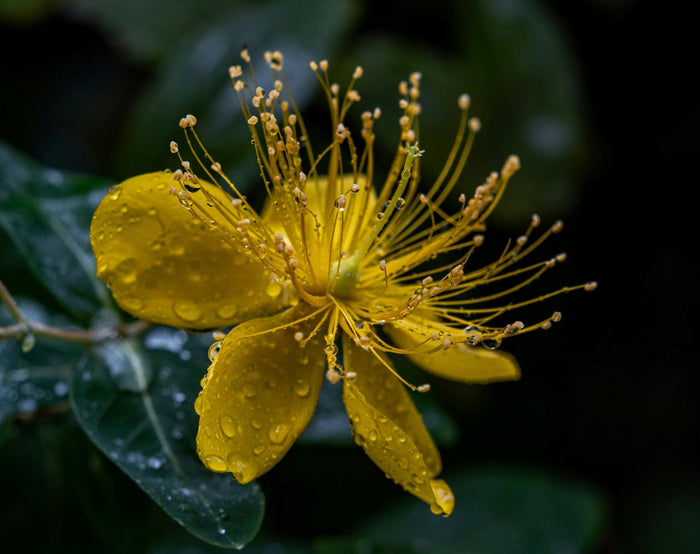
Sint-janskruid: werking, bijwerkingen en natuurlijke alternatieven
Sint-janskruid is al eeuwen een van de bekendste kruiden die traditioneel worden gebruikt bij periodes van somberheid en innerlijke onrust (1, 2). Het staat vooral bekend vanwege de invloed die het lijkt te hebben op neurotransmitters zoals serotonine (3, 4). Tegelijk is sint-janskruid ook een kruid met veel bekende interacties met medicijnen (5, 6). En juist die interacties kunnen serieus zijn. Daarom is het belangrijk om goed te weten hoe en wanneer je dit kruid gebruikt. In dit artikel lees je onder andere wat sint-janskruid eigenlijk is, waar het voor gebruikt wordt, welke bijwerkingen er mogelijk zijn en waar je op moet letten als je medicatie gebruikt. Ook bespreek ik natuurlijke alternatieven voor wie liever geen sint-janskruid wil of kan gebruiken. Sint-janskruid wordt traditioneel gebruikt bij somberheid en innerlijke onrust en wordt onderzocht in relatie tot stemming, stress en prikkelverwerking. Het kruid kan bijwerkingen geven en veel medicijnen beïnvloeden, waaronder antidepressiva, anticonceptie, bloedverdunners en hartmedicatie. Voor wie sint-janskruid niet kan gebruiken, bespreekt het artikel alternatieven zoals saffraan, magnesium, valeriaan en ashwagandha. Inhoudsopgave Wat is sint-janskruid? Hoe herken je sint-janskruid? Waar groeit sint-janskruid? Verschil tussen sint-janskruid en jacobskruiskruid Werkzame stoffen in sint-janskruid Waar wordt sint-janskruid voor gebruikt? Hoe werkt sint-janskruid? Waarom wordt sint-janskruid soms vergeleken met antidepressiva? Welke vorm van sint-janskruid past het beste bij jou? Waar let je op bij een goed supplement? Waarom verschillen sint-janskruidproducten zo sterk? Hoeveel sint-janskruid neem je per dag? Hoe neem je sint-janskruid het beste in? Hoe snel werkt sint-janskruid? Bijwerkingen van sint-janskruid Kun je sint-janskruid langdurig gebruiken? Sint-janskruid en medicatie: belangrijke interacties Wanneer mag je sint-janskruid niet gebruiken? Sint-janskruid en dieren Natuurlijke alternatieven voor sint-janskruid Sint-janskruid combineren met andere supplementen Veelgestelde vragen over het gebruik en de werking van sint-janskruid Tot slot Wat is sint-janskruid? Sint-janskruid (Hypericum perforatum) is een plant uit de hertshooifamilie. In Nederland wordt de plant daarom ook wel hertshooi genoemd. Het verschil tussen hertshooi en sint-janskruid zit dus vooral in de naam, want meestal wordt dezelfde plant bedoeld. Hoe herken je sint-janskruid? De plant is herkenbaar aan de felgele bloemen en de kleine doorschijnende puntjes in het blad. Houd je een blaadje tegen het licht, dan lijken er kleine perforaties zichtbaar. Daar verwijst de Latijnse naam perforatum ook naar: ‘geperforeerd’. Waar groeit sint-janskruid? Sint-janskruid groeit vooral op zonnige, droge plekken zoals bermen, graslanden en dijken. De plant bloeit meestal rond eind juni, vlak rond Sint-Jansdag op 24 juni. Daar komt ook de naam sint-janskruid vandaan. Verschil tussen sint-janskruid en jacobskruiskruid Sint-janskruid en jacobskruiskruid worden vaak met elkaar verward, maar het zijn twee verschillende planten. Sint-janskruid wordt gebruikt in supplementen en kruidengeneesmiddelen, terwijl jacobskruiskruid bekendstaat om stoffen die schadelijk kunnen zijn voor de lever en daarom niet door mensen wordt gebruikt. De verwarring ontstaat vooral doordat beide planten gele bloemen hebben en vaak langs bermen en graslanden groeien. Zo herken je het verschil: Sint-janskruid heeft ovale blaadjes met kleine doorschijnende puntjes en bloemen met lange uitstekende meeldraden. Jacobskruiskruid heeft meer schermvormige bloemgroepen, diep ingesneden bladeren en geen doorschijnende puntjes in het blad. Werkzame stoffen in sint-janskruid De belangrijkste onderzochte stoffen in sint-janskruid zijn: hyperforine hypericine flavonoïden Vooral hyperforine wordt vaak genoemd als een van de belangrijkste onderzochte stoffen in moderne extracten (3). Goed om te weten: sint-janskruid wordt al sinds de oudheid gebruikt, maar moderne supplementen zijn meestal gestandaardiseerd op hypericine of hyperforine. Dat betekent dat ze een vaste en vaak geconcentreerde hoeveelheid werkzame stoffen bevatten. Daardoor weet je beter wat je binnenkrijgt dan bij zelfgemaakte thee of zelfgeplukte planten. Waar wordt sint-janskruid voor gebruikt? Sint-janskruid wordt al lange tijd traditioneel gebruikt in periodes van somberheid, spanning en mentale onrust (1, 2). Dit is ook het gebied waar het meeste onderzoek naar gedaan wordt. Somberheid en emotionele disbalans – dit is de bekendste toepassing van sint-janskruid en ook het onderwerp waar het meeste onderzoek naar gedaan is (1, 7, 8, 9). Stress en innerlijke onrust – sommige mensen gebruiken sint-janskruid in tijden van mentale drukte of wanneer ontspannen moeilijker voelt (10). Piekeren en slaapproblemen – sint-janskruid wordt soms gebruikt bij veel piekeren, vooral wanneer je daardoor moeilijker in slaap komt of onrustig slaapt (11). Stemmingswisselingen rond de menstruatie of overgang – sommige vrouwen gebruiken sint-janskruid tijdens hormonale schommelingen die invloed kunnen hebben op hoe ze zich voelen (12). Uitwendig gebruik op de huid – sint-janskruidolie, zalf en crème worden traditioneel gebruikt als verzorgend product voor de huid en gevoelige spieren (13). Disclaimer: sint-janskruid wordt in Europa al lange tijd gebruikt als traditioneel kruidengeneesmiddel bij milde stemmingsklachten. Merk je dat klachten ernstig worden of lang aanhouden, of heb je suïcidale gedachten? Neem dan altijd contact op met een arts of andere zorgverlener. Hoe werkt sint-janskruid? Onderzoekers denken dat vooral hyperforine een belangrijke rol speelt in de werking van sint-janskruid (3). Deze stof lijkt invloed te hebben op de communicatie tussen zenuwcellen, onder andere via neurotransmitters zoals serotonine, dopamine en noradrenaline (4,14). Deze boodschapperstoffen spelen een rol bij: stemming prikkelverwerking stressreacties Waarom wordt sint-janskruid soms vergeleken met antidepressiva? Dat komt doordat sint-janskruid waarschijnlijk invloed heeft op meerdere neurotransmitters tegelijk, waaronder serotonine, dopamine en noradrenaline (4). Veel andere kruiden worden vooral gebruikt voor één bepaald doel, zoals slaap of ontspanning. Sint-janskruid wordt juist onderzocht vanwege de mogelijke invloed op meerdere systemen tegelijk. Ook wordt onderzocht of sint-janskruid invloed heeft op receptoren die betrokken zijn bij ontspanning en stressreacties. Daarom wordt het in onderzoeken soms vergeleken met bepaalde antidepressiva, al werkt het waarschijnlijk niet op precies dezelfde manier (7, 8, 9). Welke vorm van sint-janskruid past het beste bij jou? Sint-janskruid is verkrijgbaar in verschillende vormen. Welke variant het beste bij je past, hangt vooral af van waarvoor je het wilt gebruiken én wat jij prettig vindt in gebruik. Dit zijn de meest voorkomende opties: Capsules en tabletten (pillen) – sint-janskruid wordt het vaakst verkocht als capsule of tablet. Deze supplementen bevatten meestal een gestandaardiseerd extract met een vaste hoeveelheid hypericine of hyperforine, waardoor de dosering consistent is (15). Tinctuur en druppels – een tinctuur of druppelvorm is een alcoholisch extract van de plant. Sommige mensen kiezen hiervoor omdat vloeibare extracten vaak sneller worden opgenomen. Het nadeel is dat nauwkeurig doseren lastiger kan zijn. Thee – sint-janskruidthee is de mildste vorm. De werking kan wisselen afhankelijk van de kwaliteit van het kruid, de hoeveelheid en de trektijd. Thee wordt meestal meer gebruikt als rustgevend ritueel dan als supplement. Olie, zalf en crème – sint-janskruidolie, zalf en crème zijn bedoeld voor uitwendig gebruik. Ze worden gebruikt op de huid en zijn niet bedoeld om in te nemen. Waar let je op bij een goed supplement? Niet elk sint-janskruid-supplement bevat dezelfde hoeveelheid werkzame stoffen. Let daarom niet alleen op het merk, maar vooral op de kwaliteit van het extract en de dosering per dag. Kijk vooral naar: Gestandaardiseerd extract – dit is het belangrijkst. Zo weet je dat elke dosering ongeveer dezelfde hoeveelheid actieve stoffen bevat. Dosering per dag – kijk niet alleen naar wat er op het etiket staat, maar ook naar hoeveel sint-janskruid je daadwerkelijk per dag binnenkrijgt. Sommige producten bevatten maar een kleine hoeveelheid per capsule. Type extract – een extractverhouding zoals 10:1 of 20:1 laat zien hoe geconcentreerd het extract is. Bij een verhouding van 10:1 is voor 1 gram extract ongeveer 10 gram van de plant gebruikt. Hoe hoger de verhouding, hoe geconcentreerder het extract meestal is. Geregistreerd kruidengeneesmiddel – dit geeft extra zekerheid over de kwaliteit, veiligheid en consistente samenstelling van het product (15). Waarom verschillen sint-janskruidproducten zo sterk? Fabrikanten gebruiken verschillende extracten, concentraties en doseringen. Daardoor kan de hoeveelheid werkzame stoffen per capsule behoorlijk verschillen tussen producten van bijvoorbeeld Kruidvat, Etos, Holland & Barrett, Lucovitaal of Lamberts. Kijk daarom niet alleen naar het merk, maar vooral naar de hoeveelheid werkzame stoffen per dagdosering. Het komt ook voor dat sint-janskruid tijdelijk minder goed verkrijgbaar is of uit het assortiment verdwijnt. Dat heeft onder andere te maken met strengere regelgeving rondom kruidensupplementen en de classificatie als kruidengeneesmiddel. Goed om te weten: sint-janskruid valt onder strengere controle dan veel andere kruiden, vooral vanwege de bekende interacties met medicatie. Kies bij twijfel liever voor een geregistreerd kruidengeneesmiddel dat voldoet aan de Europese HMPC-/EMA-richtlijnen voor kruidengeneesmiddelen (15). Hoeveel sint-janskruid neem je per dag? De meest gebruikte dosering van sint-janskruid ligt tussen 600 en 1.800 mg gestandaardiseerd extract per dag (1, 2). In veel onderzoeken wordt ongeveer 900 mg per dag gebruikt. Daarom wordt deze dosering vaak aangehouden in supplementen. Wat voor jou een geschikte dosering is, hangt af van: het type extract de concentratie je persoonlijke situatie het doel waarvoor je het gebruikt Hoe neem je sint-janskruid het beste in? De meeste mensen nemen sint-janskruid verdeeld over 1 tot 3 momenten per dag. Gebruik het bij voorkeur tijdens of na een maaltijd. Dat is vaak prettiger voor de maag. Gebruik je een tinctuur of druppels? Volg dan altijd de aanwijzingen op de verpakking. Sint-janskruidolie is bedoeld voor uitwendig gebruik en wordt meestal 1 tot 3 keer per dag op de huid aangebracht. Hoe snel werkt sint-janskruid? Sint-janskruid werkt meestal niet direct. Geef het een aantal weken de tijd. Onderzoekers denken dat dit komt doordat het kruid invloed lijkt te hebben op neurotransmitters zoals serotonine, dopamine en noradrenaline. Veranderingen in deze systemen lijken tijd nodig te hebben (3, 4). In studies wordt daarom vaak gekeken naar dagelijks gebruik gedurende 2 tot 4 weken (1). Goed om te weten: er bestaat geen officiële aanbevolen dagelijkse hoeveelheid voor sint-janskruid. Begin daarom liever laag en bouw rustig op. Gebruik hogere doseringen niet zonder advies van een arts of deskundige. Bijwerkingen van sint-janskruid Sint-janskruid wordt over het algemeen goed verdragen, vooral wanneer je het gebruikt volgens de aanbevolen dosering. Toch kunnen er bijwerkingen voorkomen (16). Mogelijke bijwerkingen van sint-janskruid zijn: Maagklachten – vooral bij hogere doseringen of gebruik op een lege maag. Hoofdpijn – meestal mild en tijdelijk. Vermoeidheid – sommige mensen voelen zich juist wat slomer of minder energiek. Droge mond – komt af en toe voor bij langdurig gebruik. Duizeligheid – vooral bij gevoelige mensen of hogere doseringen. Rusteloosheid – bij sommige mensen kan sint-janskruid juist een onrustig gevoel geven. Fotosensibilisatie – de huid kan gevoeliger worden voor zonlicht, vooral bij hoge doseringen of een lichte huid. Wees daarom voorzichtig met fel zonlicht en zonnebanken. Huiduitslag of allergische reactie – zeldzaam, maar mogelijk bij gevoeligheid voor kruidenextracten (16). Veel mensen vragen zich af of sint-janskruid giftig is. Voor mensen wordt sint-janskruid in normale doseringen niet als giftig beschouwd. Het label “giftig” gaat meestal over dieren, zoals paarden en schapen. Daar vertel ik verderop in het artikel meer over. Kun je sint-janskruid langdurig gebruiken? Onderzoeken naar sint-janskruid kijken meestal naar gebruik tot ongeveer twaalf maanden. Binnen die periode lijkt het over het algemeen goed verdragen te worden (1). Over gebruik op de lange termijn is nog relatief weinig bekend. Sint-janskruid en medicatie: belangrijke interacties Dit is veruit het belangrijkste aandachtspunt bij sint-janskruid. Het kruid kan namelijk de werking van veel medicijnen beïnvloeden. Dat komt doordat sint-janskruid bepaalde systemen in de lever en darm activeert die helpen bij het afbreken en afvoeren van medicijnen (vooral het enzym CYP3A4 en de zogeheten P-glycoproteïne-pomp). Hierdoor worden sommige medicijnen sneller afgebroken of afgevoerd, waardoor ze minder goed kunnen werken (5). Medicijnen waarmee sint-janskruid kan interacteren zijn onder andere: Antidepressiva (zoals SSRI’s, MAO-remmers of tricyclische antidepressiva) – combineer sint-janskruid en antidepressiva niet op eigen initiatief. De combinatie kan het risico op een serotoninesyndroom verhogen: een potentieel ernstige reactie waarbij te veel serotonine-activiteit ontstaat (6). Anticonceptiepil – sint-janskruid kan de pil minder betrouwbaar maken. Daardoor neemt de kans op een ongewenste zwangerschap toe. Dit is een van de bekendste interacties van sint-janskruid (5). Bloedverdunners – bij medicijnen zoals acenocoumarol of fenprocoumon (Marcoumar) kan sint-janskruid de werking beïnvloeden. Daardoor kan de bescherming tegen bloedstolsels minder voorspelbaar worden (5). Immuunsuppressiva – gebruik je medicijnen na een transplantatie, zoals ciclosporine of tacrolimus? Dan is extra voorzichtigheid belangrijk, omdat deze medicijnen minder goed kunnen werken in combinatie met sint-janskruid (5). HIV-medicatie – vooral bij proteaseremmers kan sint-janskruid ervoor zorgen dat de medicatie minder goed werkt (6). Hartmedicatie – sint-janskruid kan invloed hebben op hartmedicijnen zoals digoxine, waardoor de werking kan veranderen (5). Antipsychotica en anti-epileptica – sint-janskruid kan invloed hebben op medicijnen zoals aripiprazol en sommige medicijnen tegen epilepsie. Daardoor kan de hoeveelheid werkzame stof in het lichaam veranderen (5). Kankermedicatie en statines – ook bij bepaalde kankermedicatie en cholesterolverlagers is voorzichtigheid belangrijk, omdat sint-janskruid de werking van deze medicijnen kan beïnvloeden (5). Goed om te weten: gebruik je medicijnen? Overleg dan altijd eerst met je huisarts of apotheker voordat je sint-janskruid gebruikt. Sint-janskruid heeft veel bekende interacties met medicijnen vergeleken met andere vrij verkrijgbare kruiden. Wanneer mag je sint-janskruid niet gebruiken? In sommige situaties wordt sint-janskruid afgeraden of is extra voorzichtigheid belangrijk. Gebruik sint-janskruid liever niet: Tijdens zwangerschap of borstvoeding – er zijn onvoldoende betrouwbare gegevens over de veiligheid (15). Bij gebruik van medicatie zonder overleg – sint-janskruid kan de werking van veel medicijnen beïnvloeden. Bij een bipolaire stoornis – het kruid kan bij gevoelige mensen manische episodes uitlokken (6). Bij ernstige depressie of suïcidale gedachten – professionele begeleiding en reguliere zorg zijn dan belangrijk. Vlak voor een operatie – stop minimaal vijf dagen vóór een ingreep waarbij narcose wordt gebruikt. Bij kinderen en jongeren onder de 18 jaar – gebruik wordt meestal afgeraden vanwege onvoldoende onderzoek naar de veiligheid (15). Goed om te weten: sint-janskruid is niet bedoeld als vervanging van reguliere medische of psychologische zorg. Twijfel je of het veilig is in jouw situatie? Overleg dan altijd met een arts of apotheker. Sint-janskruid en dieren Voor mensen wordt sint-janskruid in normale doseringen niet als giftig beschouwd, maar voor dieren ligt dat anders. Vooral paarden, schapen, geiten en runderen kunnen gevoelig reageren op de plant. Bij deze dieren kan de huid extra gevoelig worden voor zonlicht. Daardoor kunnen huidirritatie, roodheid en verbranding ontstaan wanneer ze grote hoeveelheden sint-janskruid eten en daarna in fel zonlicht staan (17). Om die reden verwijderen boeren en paardeneigenaren sint-janskruid vaak uit weilanden waar dieren grazen. Goed om te weten: het gaat hierbij om dieren die grote hoeveelheden van de plant binnenkrijgen, niet om normaal gebruik van sint-janskruid-supplementen door mensen. Natuurlijke alternatieven voor sint-janskruid Niet iedereen kan of wil sint-janskruid gebruiken, bijvoorbeeld omdat je medicatie gebruikt, of zwanger bent. In dat geval kun je kijken naar andere supplementen die onderzocht worden in relatie tot stemming, stress, ontspanning of slaap: Saffraan-extract – een van de best onderzochte kruiden in relatie tot stemming en emotioneel welzijn. In vergelijking met sint-janskruid zijn er minder bekende interacties met medicatie (8). 5-HTP – een directe voorloper van serotonine (een neurotransmitter die betrokken is bij stemming en slaap). Daarom wordt het vaak gebruikt in zogenaamde serotonine boosters: supplementen gericht op ontspanning, stemming en nachtrust. * L-theanine – dit aminozuur uit groene thee wordt vaak gebruikt bij mentale spanning, onrust en een “vol hoofd”. Veel mensen omschrijven het effect als mild en subtiel. Rhodiola rosea – wordt onderzocht in relatie tot stress en mentale vermoeidheid. Sommige mensen kiezen voor een combinatieproduct met rhodiola en ginseng tijdens drukke of stressvolle periodes (8). Ashwagandha (KSM-66) – een zogenoemd adaptogeen: een kruid dat wordt onderzocht vanwege de mogelijke rol bij stress en het stresshormoon cortisol. KSM-66 is een veelgebruikte en gestandaardiseerde vorm van ashwagandha (8). Magnesium – speelt een belangrijke rol bij ontspanning, het zenuwstelsel en de normale psychologische functie. Een tekort kan samengaan met vermoeidheid, spanning of slecht slapen. Valeriaan – wordt vooral gebruikt in periodes van onrust, spanning of wanneer je moeilijk in slaap komt. Minder mensen kiezen het specifiek voor stemming. GABA en glidkruid – worden vaak gebruikt bij momenten van spanning, piekeren of een onrustig gevoel. Wat bij je past, hangt vooral af van waar je ondersteuning bij zoekt, zoals stemming, onrust, stress of slaap. Ook eventuele medicatie speelt mee. Vooral bij supplementen die invloed hebben op serotonine is voorzichtigheid belangrijk. (*) Let op: combineer 5-HTP niet met antidepressiva of sint-janskruid vanwege het risico op een serotoninesyndroom. Sint-janskruid combineren met andere supplementen Sommige supplementen worden regelmatig gecombineerd met sint-janskruid, terwijl andere combinaties juist worden afgeraden. Dit zijn drie veelvoorkomende combinaties: Sint-janskruid met valeriaan – de combinatie valeriaan en sint-janskruid komt vaak voor in supplementen gericht op ontspanning, stemming en slaap. Veel mensen verdragen dit goed, al kan bij sommige mensen wat sufheid of minder alertheid de volgende ochtend optreden. Sint-janskruid met 5-HTP, L-tryptofaan of SAM-e – deze combinatie wordt meestal afgeraden. Al deze stoffen hebben invloed op serotonine, waardoor het risico op een serotoninesyndroom kan toenemen (6). Sint-janskruid met magnesium en B-vitamines – deze combinatie wordt doorgaans beter verdragen en past vaak binnen een bredere leefstijlgerichte aanpak. Probeer liever niet meerdere supplementen voor stemming tegelijk te combineren zonder begeleiding. Dat maakt het namelijk lastiger om het effect, de dosering en mogelijke bijwerkingen goed in te schatten. Bij twijfel kun je het beste overleggen met een arts of deskundig advies inwinnen. Veelgestelde vragen over het gebruik en de werking van sint-janskruid 1. Wat doet sint-janskruid met je lichaam? Onderzoekers kijken onder andere naar de invloed van sint-janskruid op neurotransmitters zoals serotonine, dopamine en noradrenaline. Deze boodschappers spelen een rol bij stemming, stressreacties en prikkelverwerking. 2. Hoe snel werkt sint-janskruid? Sint-janskruid werkt meestal geleidelijk. De meeste mensen merken na een aantal weken dagelijks gebruik verschil, vooral wanneer ze het consequent gebruiken. 3. Hoeveel sint-janskruid mag je per dag innemen? In onderzoeken worden meestal doseringen tussen de 600 en 1.800 mg sint-janskruidextract per dag gebruikt. Veel supplementen zitten daarom rond de 900 mg per dag. Welke dosering passend is, hangt af van het type extract en je persoonlijke situatie. 4. Wat zijn de bijwerkingen van sint-janskruid? Mogelijke bijwerkingen zijn maagklachten, hoofdpijn, duizeligheid, vermoeidheid en een verhoogde gevoeligheid voor zonlicht. 5. Mag je sint-janskruid combineren met antidepressiva? Nee, deze combinatie wordt afgeraden. Beide kunnen invloed hebben op serotonine, waardoor het risico op een serotoninesyndroom kan toenemen. 6. Mag je sint-janskruid gebruiken tijdens de zwangerschap? Tijdens zwangerschap en borstvoeding wordt gebruik meestal afgeraden. Er is nog te weinig betrouwbaar onderzoek naar de veiligheid. 7. Is sint-janskruid giftig? Voor mensen wordt sint-janskruid in normale doseringen niet als giftig beschouwd. Voor sommige dieren, zoals paarden en schapen, kan de plant wel schadelijk zijn. 8. Beïnvloedt sint-janskruid de anticonceptiepil? Ja, sint-janskruid kan de werking van de anticonceptiepil verminderen. Overleg daarom altijd met je arts of apotheker als je de pil gebruikt. 9. Wat is het verschil tussen sint-janskruid en hertshooi? Er is geen verschil. Hertshooi is een andere naam voor sint-janskruid, dezelfde plant: Hypericum perforatum. 10. Wat is het verschil tussen sint-janskruid en jacobskruiskruid? Dat zijn twee verschillende planten. Sint-janskruid wordt gebruikt in supplementen en kruidengeneesmiddelen, terwijl jacobskruiskruid bekendstaat om stoffen die schadelijk kunnen zijn voor de lever en daarom niet door mensen wordt gebruikt. 11. Welke vorm van sint-janskruid werkt het beste — capsules, thee of olie? Capsules of tabletten met een gestandaardiseerd extract geven meestal de meest consistente dosering. Olie is bedoeld voor uitwendig gebruik. 12. Mag je sint-janskruid lang gebruiken? Gebruik tot ongeveer twaalf maanden lijkt in studies meestal goed verdragen te worden. Overleg bij langdurig gebruik wel altijd met een deskundige. Tot slot Sint-janskruid is een van de best onderzochte kruiden in relatie tot stemming en mentale balans. Tegelijk is het ook een kruid waarbij voorzichtigheid belangrijk is, vooral vanwege de vele bekende interacties met medicijnen. Voor sommige mensen kan sint-janskruid passen binnen een bredere leefstijlgerichte aanpak, mits je kiest voor een kwalitatief supplement, een passende dosering en realistische verwachtingen hebt. Gebruik je medicatie of twijfel je of het veilig is in jouw situatie? Overleg dan altijd eerst met je huisarts of apotheker. Wil je liever een alternatief bekijken? Lees dan ook meer over serotonine-supplementen, de rol van de drie gelukshormonen of verschillende natuurlijke kalmeringsmiddelen. Ebrina van der Bijl Ebrina is voedingsdeskundige met een diepe toewijding aan gezonde voeding en een duurzame levensstijl, gevestigd in het prachtige Portugal. Haar passie voor natuurlijke en biologische producten vormt de kern van haar werk. Met een achtergrond in Voeding & Diëtetiek en ervaring in productontwikkeling en tekstschrijven, vertaalt ze complexe wetenschappelijke informatie naar praktische adviezen voor een gebalanceerde levensstijl. Lees meer Gebruikte bronnen Ng, Q. X., Venkatanarayanan, N., & Ho, C. Y. X. (2017b). Clinical use of Hypericum perforatum (St John’s wort) in depression: A meta-analysis. Journal Of Affective Disorders, 210, 211–221. https://doi.org/10.1016/j.jad.2016.12.048 Linde, K., Berner, M. M., & Kriston, L. (2008). St John’s wort for major depression. Cochrane Database Of Systematic Reviews, 4, CD000448. https://doi.org/10.1002/14651858.cd000448.pub3 Butterweck, V., & Schmidt, M. (2007). St. John’s wort: Role of active compounds for its mechanism of action and efficacy. Wiener Medizinische Wochenschrift, 157(13–14), 356–361. https://doi.org/10.1007/s10354-007-0440-8 Müller, W. (2003). Current St. John’s wort research from mode of action to clinical efficacy. Pharmacological Research, 47(2), 101–109. https://doi.org/10.1016/s1043-6618(02)00266-9 Izzo, A. A., & Ernst, E. (2009). Interactions Between Herbal Medicines and Prescribed Drugs. Drugs, 69(13), 1777–1798. https://doi.org/10.2165/11317010-000000000-00000 Hammerness, P., Basch, E., Ulbricht, C., Barrette, E., Foppa, I., Basch, S., Bent, S., Boon, H., & Ernst, E. (2003). St. John’s Wort: A Systematic Review of Adverse Effects and Drug Interactions for the Consultation Psychiatrist. Psychosomatics, 44(4), 271–282. https://doi.org/10.1176/appi.psy.44.4.271 Zheng, Y., & Cui, Y. (2016). A meta-analysis on the efficacy and safety of St John's wort extract in depression therapy in comparison with selective serotonin reuptake inhibitors in adults. Neuropsychiatric Disease And Treatment, Volume 12, 1715–1723. https://doi.org/10.2147/ndt.s106752 Whiskey, E., Werneke, U., & Taylor, D. (2001). A systematic review and meta-analysis of Hypericum perforatum in depression: a comprehensive clinical review. International Clinical Psychopharmacology, 16(5), 239–252. https://doi.org/10.1097/00004850-200109000-00001 Zhao, X., Zhang, H., Wu, Y., & Yu, C. (2022). The efficacy and safety of St. John’s wort extract in depression therapy compared to SSRIs in adults: A meta-analysis of randomized clinical trials. Advances in Clinical And Experimental Medicine, 32(2), 151–161. https://doi.org/10.17219/acem/152942 Sarris, J. (2007). Herbal medicines in the treatment of psychiatric disorders: a systematic review. Phytotherapy Research, 21(8), 703–716. https://doi.org/10.1002/ptr.2187 Sharpley, A. L., McGavin, C. L., Whale, R., & Cowen, P. J. (1998). Antidepressant-like effect of Hypericum perforatum (St John’s wort) on the sleep polysomnogram. Psychopharmacology, 139(3), 286–287. https://doi.org/10.1007/s002130050718 Liu, Y., Jiang, Y., Huang, R., Yang, J., Xiao, B., & Dong, J. (2013). Hypericum perforatum L.preparations for menopause: a meta-analysis of efficacy and safety. Climacteric, 17(4), 325–335. https://doi.org/10.3109/13697137.2013.861814 Wölfle, U., Seelinger, G., & Schempp, C. (2013). Topical Application of St. Johnʼs Wort (Hypericum perforatum). Planta Medica, 80(02/03), 109–120. https://doi.org/10.1055/s-0033-1351019 Merk, V. M., Boonen, G., & Butterweck, V. (2025). St. John’s Wort for Depression: From Neurotransmitters to Membrane Plasticity. International Journal Of Molecular Sciences, 26(24), 11925. https://doi.org/10.3390/ijms262411925 Committee on Herbal Medicinal Products (HMPC). (2022). European Union herbal monograph on Hypericum perforatum L., herba. https://www.fitoterapia.net/archivos/202302/final-european-union-herbal-monograph-hypericum-perforatum-l-herba-revision-1_en.pdf? Knüppel, L., & Linde, K. (2004). Adverse Effects of St. John’s Wort. The Journal Of Clinical Psychiatry, 65(11), 1470–1479. https://doi.org/10.4088/jcp.v65n1105 Klemow, K. M., Bartlow, A., Crawford, J., Kocher, N., Shah, J., & Ritsick, M. (2011). Medical Attributes of St. John’s Wort (Hypericum perforatum). Herbal Medicine - NCBI Bookshelf. https://www.ncbi.nlm.nih.gov/books/NBK92750/
Lees meer