What are menopause supplements?
Menopause supplements are tablets or capsules that provide support during the menopause (also called 'the menopause').
This natural transition, which usually occurs between the ages of 45 and 55, marks the transition from a fertile phase to a period without periods.
During menopause, the balance of hormones involved in reproduction, such as estrogen and progesterone, changes. This can lead to symptoms such as hot flashes, night sweats, and mood swings.
Not every woman experiences these hormonal changes as unpleasant. The intensity can vary considerably from person to person.
Natural menopause supplements
Do you suffer from hormonal fluctuations during menopause?
By eating healthily, sleeping well, reducing stress and exercising enough, you can significantly reduce the symptoms of menopause.
You can also use natural supplements to support menopause. These supplements are made entirely from natural ingredients such as vitamins, minerals, plants, and herbs.
Well-known active ingredients during menopause
In general, chasteberry, black cohosh, and Chinese angelica are popular choices for women looking for a natural way to manage hormonal changes:
1. Monk's Pepper - Vitex Agnus Castus
This herb is also called Vitex Agnus Castus and can help with menstrual discomfort and helps reduce menopausal symptoms. *
2. Black cohosh – Cimicifuga Racemosa
This plant, native to the Netherlands, is also called black cohosh . The roots of this plant were already used by women in Northern India. It helps alleviate menopausal symptoms and promotes normal, regular menstruation. *
3. Chinese Angelica (Dong Quai)
Chinese angelica (Angelica Sinensis) is also called Don Quai or female ginseng. It is rich in folic acid, vitamin B12, and magnesium, among other nutrients. This herb can also help with menopausal symptoms. *
4. Isoflavones – from Hops
Hops are rich in isoflavones (phytoestrogens), substances that resemble the body's own estrogen and which help with menopausal symptoms.
5. Vitamins
Certain vitamins can also provide support during the menopause.
For example, the active form of vitamin B6 (P-5-P) is good for mood and helps regulate hormonal activity.
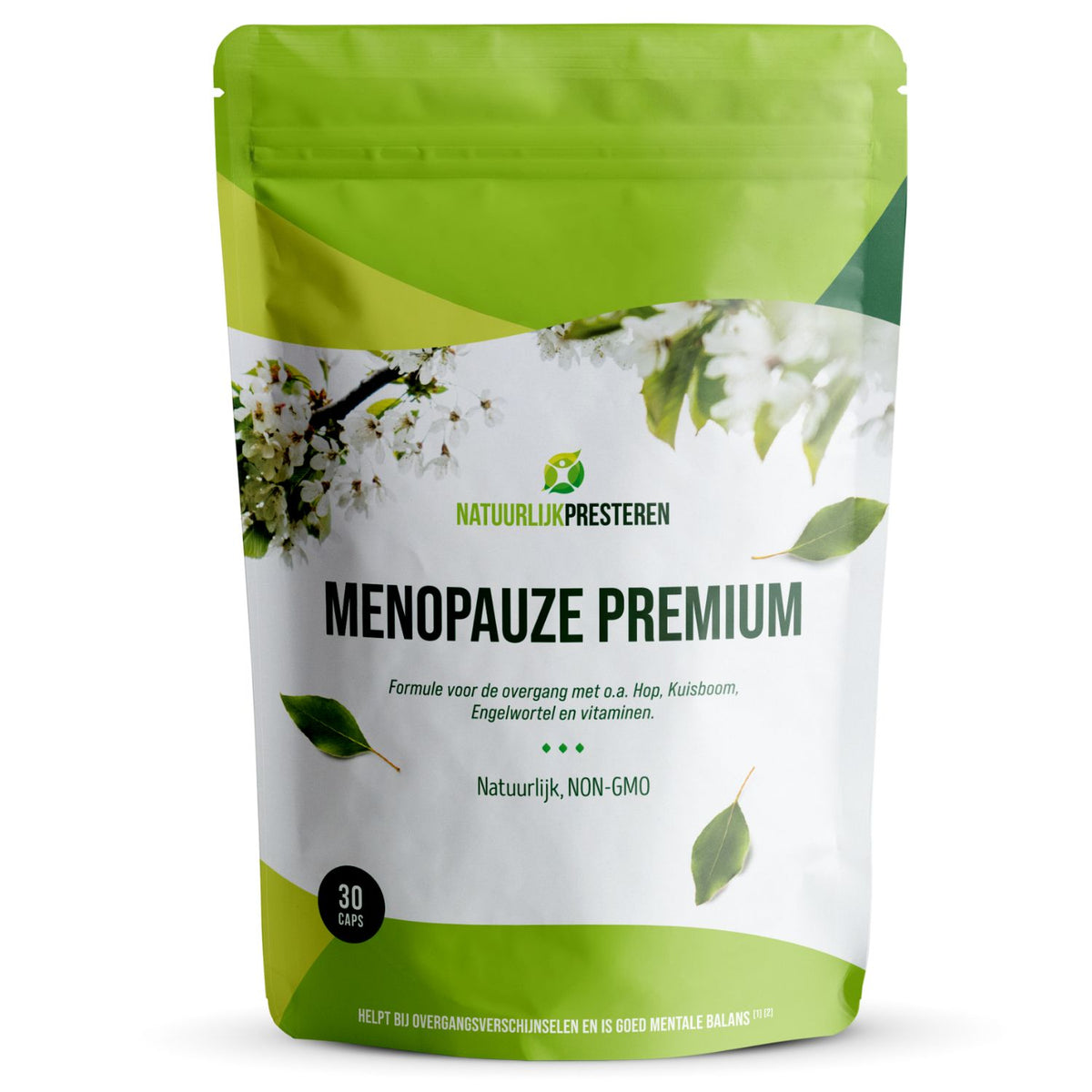
Menopause Premium
We designed this natural supplement to help you alleviate menopausal symptoms. It contains an 8-in-1 formula with herbs like chasteberry, black cohosh, and Chinese angelica, supplemented with vitamins like B6, D3, and folic acid.
This product supports mood, mental balance and bone strength, and is intended to help with symptoms such as hot flashes and mood swings.
Gerelateerde blogartikelen
 bloggle
Hot flashes during menopause: What causes them and what can you do about them?
During menopause, a woman's body gradually stops producing sex hormones, which means that eggs no longer mature and menstruation eventually stops. The hormonal fluctuations during this period can cause both physical and mental complaints, of which hot flashes are one of the most well-known symptoms. In this article I will tell you step by step what you can do to reduce hot flashes during menopause. Hot flashes during menopause are caused by hormonal fluctuations, which disrupt body temperature and cause sudden hot flashes. Reduce hot flashes by avoiding triggers, drinking enough water, seeking cool environments, and wearing breathable clothing. Natural supplements such as phytoestrogens, black cohosh, and chasteberry may help, while hormone therapy and SSRIs are available as medical options. Table of contents What are hot flashes? Hot flash symptoms The cause of hot flashes Confused temperature sensor Hot flash triggers How long do menopausal hot flashes last? Unpredictable What helps with menopausal hot flashes? Step-by-step plan: Tips against hot flashes Step 1: Minimize potential triggers as much as possible Step 2: Avoid warm rooms Step 3: Don't use synthetic substances Step 4: Drink a glass of water every hour Step 5: Prepare yourself beforehand Step 6: Go to bed on time Step 7: Laugh about it! Natural remedies for hot flashes 1. Phytoestrogens 2. Black cohosh (Cimicifuga racemosa) 3. Chasteberry (Vitex agnus castus) 4. Chinese angelica (Angelica sinensis) Menopause Premium Hot flashes and Serotonin Natural serotonin boosters What if nothing works? Antidepressants Hormone therapy What are hot flashes? You recognize hot flashes as a sudden heat wave that comes and goes. They often start in your chest and quickly spread to your neck and head. These attacks can last from seconds to minutes and are often accompanied by sweating and palpitations. Did you know that about 80% of women experience hot flashes during menopause? (1) Hot flashes most commonly occur during perimenopause, the stage when menopause begins, but can also continue into postmenopause, when menstruation has stopped completely. Symptoms of hot flashes Besides the sudden onset of heat, there are other symptoms that characterize this annoying, but natural phenomenon: A red face Excessive sweating Chills Nausea Dizziness Palpitations Did you know? Men can also experience hot flashes during menopause? The cause of hot flashes The exact cause of hot flashes isn't fully understood, but it appears to be related to a decrease in estrogen production. This hormone plays a key role in regulating your body temperature. During the first phase of menopause, the amount of estrogen fluctuates and decreases further in the later phase. Confused temperature sensor Researchers suspect that these hormonal changes confuse the temperature sensor in your hypothalamus, a part of your brain. It receives the signal that your body is warmer than it actually is. In response, your body tries to get rid of the "excess heat" by sweating and dilating the blood vessels in your skin, leading to the sudden warmth and redness you experience during a hot flash. Various types of triggers Certain factors can trigger hot flashes. Although the causes of these hot flashes can vary from person to person, most women recognize these triggers: Caffeine (2) Lots of sugar and fat (3) Alcohol Spicy food Smoking Stress Drinking too little water Tight, synthetic clothing How long do hot flashes last during menopause? Unfortunately, I can't give a clear answer to the question of how long hot flashes last. It varies considerably from woman to woman. While one person may only experience occasional mild warmth, another may experience intense, long-lasting hot flashes. Unpredictable One thing everyone will recognize is the unpredictability of hot flashes. They're often impossible to understand. Days or even weeks can go by without a hot flash, and then suddenly you have 10 a day. The period during which you experience hot flashes is also different for everyone. Some women stop having them after a few months, while others struggle with them for years even after menopause. The good news is that both intensity and frequency usually decrease over time. What helps against hot flashes during menopause? (step-by-step plan) Although you can't completely prevent hot flashes (after all, they are a natural hormonal response of your body), there are ways to alleviate the symptoms that come with them. With this step-by-step plan you can reduce hot flashes during menopause: Step 1: Limit potential triggers as much as possible Identify what triggers your hot flashes and see where you can make adjustments. Small changes can make a big difference. Research shows that many women are sensitive to caffeine and it triggers hot flashes, so consider reducing your coffee and tea intake.(2) Also watch your sugar and fat consumption, as high intakes can worsen hot flashes.(3) Step 2: Avoid warm areas Avoiding warm spaces can also really help reduce hot flashes. When you're in a cool environment, your body regulates its temperature better, which can help prevent those annoying hot flashes. Get some fresh air and open a window in your workspace and bedroom. You can also install a fan or place a tabletop model on your desk. Step 3: Don't use synthetic fabrics Choose clothing made of lightweight, natural fabrics like cotton and linen, and avoid synthetics. Cotton is breathable, preventing body heat from building up (unlike synthetics). This also applies to bedding! Only cotton. Step 4: Drink a glass of water every hour If you don't drink enough water, your body becomes less efficient at regulating its temperature. This causes the nervous system to overreact more often, worsening hot flashes. Hot flashes and night sweats also cause extra moisture loss, which can lead to a vicious circle: the more you sweat, the more dehydrated you become, and the worse the hot flashes become. Therefore, drink a glass of water every hour instead of a large amount at once. This way, your body can absorb the fluid better and you'll stay well-hydrated. Step 5: Prepare yourself for your trip The annoying thing about hot flashes is that they come on very suddenly and usually at the most inconvenient times, such as during an important meeting. Therefore, make sure you wear several layers (natural and airy fabrics) so you can quickly take something off if you get warm. It's also handy to always keep an extra shirt in your bag so you can change in between. Step 6: Go to bed on time Create a bedtime routine that helps you fall asleep relaxed, and above all, go to bed on time. Getting enough rest helps your body better cope with hot flashes. They're more likely to occur when you're tired. Step 7: Make it a topic of discussion If you feel embarrassed during a hot flash, try to laugh about it. Worrying about what others will think will only make it worse. That's why it's good to bring it up for discussion, so others are aware. Less shame leads to less stress. Natural remedies for hot flashes Eating healthy, getting enough sleep, reducing stress and exercising regularly can significantly alleviate menopausal symptoms in most women. In addition, there are also natural remedies that can provide support for hot flashes during menopause. These are supplements based on plant extracts, supplemented with vitamins and minerals. Examples include: 1. Phytoestrogens Phytoestrogens are natural substances found in plants like soy, flaxseed, and whole grains that resemble the hormone estrogen. They can help balance hormonal fluctuations during menopause and sometimes provide relief from hot flashes. However, the effect varies from woman to woman, depending on factors such as your estrogen levels, diet, how your body absorbs the substances, and your personal reaction. Still, it's definitely worth a try! (4) 2. Black cohosh (Cimicifuga racemosa) Cimicifuga, or "black cohosh," is a plant that helps with menopausal symptoms* such as hot flashes and irritability. The active ingredients, especially triterpene glycosides, support hormones and neurotransmitters. This herb is becoming increasingly popular as a supplement for menopausal women in the Netherlands. 3. Monk's pepper (Vitex agnus castus) Chasteberry is an herb with blue-purple flowers, also known as vitex agnus castus. This herb grows primarily in areas around the Mediterranean and is especially popular with women. It can help with menstrual discomfort and supports the woman's hormonal system . * 4. Chinese Angelica (Angelica sinensis) The Chinese angelica, also called Dong Quai or female ginseng, is rich in folic acid, B12 and magnesium. This plant contains phytoestrogens that resemble the body's own estrogen and therefore helps with menopausal symptoms, such as hot flashes .* In addition, Chinese angelica works synergistically with other herbs, such as hops, meaning that the combination of these ingredients enhances its effect. All-in-1 supplement: Menopause Premium A combination of different natural ingredients often works more effectively. That's why we developed Menopause Premium, a natural supplement with seven different plant extracts and vitamins. This supplement contains herbs such as Chasteberry, Black Cohosh, Chinese Angelica and Hop Extract, supplemented with vitamins B6, D3 and folic acid. Black cohosh and chasteberry can help alleviate menopausal symptoms, such as hot flashes. In addition, the other ingredients support hormonal balance and mood. Hot Flashes and Serotonin As I explained earlier, the balance of neurotransmitters, including serotonin, is disturbed by the drop in estrogen levels during menopause. Serotonin normally helps regulate body temperature, but when serotonin is deficient, this system becomes oversensitive, leading to overreactions in the form of hot flashes. Natural serotonin boosters You can support your serotonin production in a natural way. Now, you cannot take extra serotonin yourself through your diet or supplements, but you can make sure you get enough vitamin B6 and tryptophan/5-HTP (5-hydroxytryptophan). Your body needs these two substances to produce serotonin. Our product Serobooster has been specially developed to support the natural production of serotonin. Medicines for hot flashes Have you tried everything and are the hot flashes significantly affecting your daily life? Then I recommend discussing this with your doctor. Hormone therapy and antidepressants are two options often prescribed for menopausal hot flashes. But be careful, this does carry some risks and it is good to consider these options as a stopgap measure. Antidepressants SSRIs (selective serotonin reuptake inhibitors) are medications used to increase the level of serotonin in the brain. They ensure that serotonin stays in the brain longer, which improves your mood and reduces certain symptoms, such as hot flashes during menopause. (5) These medications are classified as antidepressants and although they are usually used to treat depression and anxiety, doctors sometimes prescribe them in low doses to women who suffer severely from hot flashes. Hormone therapy Another option that you may want to discuss with your doctor is Hormone Replacement Therapy. Hormone therapy is a treatment in which hormones are administered to supplement the hormones that the body no longer produces in sufficient quantities. Menopause primarily involves estrogen and progesterone. It can be administered in various forms, such as pills, patches, or gels. Disclaimer: It's important to discuss with a doctor whether hormone therapy is right for you, given the potential side effects and risks. There appears to be an increased risk of breast cancer, blood clots, and heart disease, especially with long-term use. (6)(7) Ebrina van der Bijl Ebrina is a nutritionist with a deep commitment to healthy eating and a sustainable lifestyle, based in beautiful Portugal. Her passion for natural and organic products is at the heart of her work. With a background in Nutrition & Dietetics and experience in product development and writing, she translates complex scientific information into practical advice for a balanced lifestyle. Read more Sources used Bansal, R., & Aggarwal, N. (2019). Menopausal hot flashes: A concise review. Journal Of Mid-life Health, 10(1), 6. https://doi.org/10.4103/jmh.jmh_7_19 Faubion, S.S., Sood, R., Thielen, J.M., & Shuster, L.T. (2014b). Caffeine and menopausal symptoms. Menopause The Journal Of The North American Menopause Society, 22(2), 155–158. ttps://doi.org/10.1097/gme.0000000000000301 Herber-Gast, G. M., & Mishra, G. D. (2013). Fruit, Mediterranean-style, and high-fat and -sugar diets are associated with the risk of night sweats and hot flushes in midlife: results from a prospective cohort study. American Journal Of Clinical Nutrition, 97(5), 1092–1099. https://doi.org/10.3945/ajcn.112.049965 Chen, M., Lin, C., & Liu, C. (2014). Efficacy of phytoestrogens for menopausal symptoms: a meta-analysis and systematic review. Climacteric, 18(2), 260–269. https://doi.org/10.3109/13697137.2014.966241 Shams, T., Firwana, B., Habib, F., Alshahrani, A., AlNouh, B., Murad, MH, & Ferwana, M. (2013). SSRIs for Hot Flashes: A Systematic Review and Meta-Analysis of Randomized Trials. Journal Of General Internal Medicine , 29 (1), 204–213. https://doi.org/10.1007/s11606-013-2535-9 Støer, N. C., Vangen, S., Singh, D., Fortner, R. T., Hofvind, S., Ursin, G., & Botteri, E. (2024). Menopausal hormone therapy and breast cancer risk: a population-based cohort study of 1.3 million women in Norway. British Journal Of Cancer , 131 (1), 126–137. https://doi.org/10.1038/s41416-024-02590-1 Type and timing of menopausal hormone therapy and breast cancer risk: individual participant meta-analysis of the worldwide epidemiological evidence. (2019). The Lancet , 394 (10204), 1159–1168. https://doi.org/10.1016/s0140-6736(19)31709-x
Lees meer bloggle
Trouble sleeping during menopause? Here's what you can do (step by step)
One of the common complaints during menopause is sleep problems. Hormonal fluctuations can cause hot flashes, sleep apnea, and altered circadian rhythms, which can significantly disrupt your sleep. Menopause is already a challenging time for many women, and sleep problems make it even harder. They can make you feel even more tired, emotional, and irritable. Are you having trouble sleeping during menopause? You're certainly not alone: up to 79% of women experience it.(1) In this article, you'll learn why you sleep poorly during menopause. I'll also explain step-by-step what you can do to sleep better. Sleep problems during menopause are caused by hot flashes, sleep apnea, hormonal fluctuations and changes in the biorhythm, which affect sleep. Improve sleep quality with a cool bedroom, regular bedtimes, a healthy diet, relaxation techniques, exercise, and natural supplements such as magnesium. Supplements such as magnesium, vitamin B6, 5-HTP and valerian can help with serotonin production, relaxation and sleep. Table of contents Causes of poor sleep during menopause Step by step to better sleep during menopause Natural supplements that help with poor sleep 1. Magnesium: Support for your sleep 2. Vitamin B6 and 5-HTP (serotonin) 3. Valerian Causes of poor sleep during menopause These are the causes of poor sleep during menopause: Hot flashes - Hot flashes can disrupt your sleep because the sudden heat and sweating wake you up or make it harder to fall back asleep. This can lead to sleepless nights and daytime fatigue. Sleep Apnea - You also have an increased risk of sleep apnea during menopause, especially in the postmenopausal period. (1) With sleep apnea, your breathing temporarily stops during sleep, causing you to wake up frequently and often feel tired and irritable during the day. This is caused by the changing hormones during menopause, which lead to lower muscle tension in the airways, which can cause sleep apnea. Changes in hormones Not only your estrogen, but also progesterone and serotonin levels drop during menopause. All three hormones influence your mood and sleep. When your body suddenly produces fewer of these hormones, it affects your mood. It can make you feel more emotional and unstable than before, and you're more susceptible to stress and anxiety, which can affect your sleep. Changing your internal clock Serotonin also plays a role in the production of melatonin, the hormone that helps you fall asleep at night. And less melatonin leads to a change in your internal biological clock mechanism. So your wake and sleep rhythm changes! Step by step to better sleep during menopause Fortunately, by prioritizing exercise, nutrition, and rest, you can reduce or even prevent your sleep problems. With these tips you will learn step by step how to sleep better during menopause. Step 1. Ensure a quiet and cool bedroom Ensure a dark, cool, and quiet bedroom with blackout curtains and a comfortable temperature of around 18 degrees Celsius. Ventilation is also essential. This will help you sleep better and prevent hot flashes.(2). Wear breathable cotton nightwear and use cotton sheets to help your body dissipate heat. Step 2. Go to bed at the same time every day Try to go to bed and get up at the same time every day, even on weekends. This helps regulate your biological clock and can improve sleep quality. Step 3. Limit caffeine, alcohol and sugar Caffeine keeps you awake, while alcohol disrupts REM sleep, and sugary foods cause fluctuations in your blood sugar levels. Avoiding these foods before bed can therefore help you fall asleep more easily. Additionally, caffeine, alcohol, and sugar are hot flash triggers for many women, which also keep you awake at night.(3) Step 4. Relax before going to bed Take time to relax before bed, for example through meditation, deep breathing exercises, reading or a warm bath. When you relax, you lower your heart rate and blood pressure, which signals to your body that it's time to sleep. Relaxation also helps reduce stress and tension, which can otherwise disrupt your sleep. What works best for you? Make it a regular ritual. The product below can help you naturally relax before bed. Step 5. Exercise for at least 30 minutes every day Exercise can significantly improve sleep quality.(4) It doesn't have to be intense; walking or cycling are also effective. Aim to exercise for at least 30 minutes every day. And have you ever tried yoga? To build muscle strength, I recommend Ashtanga yoga, a traditional yoga style that follows a fixed series of poses. Or Vinyasa yoga, a dynamic style where movements are synchronized with the breath. Preferably do your training in the morning, but certainly not just before going to bed. Step 6. Support your body with natural supplements During menopause, your body's needs change. Ideally, you'd get all the nutrients you need from a varied and healthy diet. But sometimes that's not possible. Natural supplements can be a valuable addition in that case. Examples of supplements that contribute to a better night's sleep and mood during menopause are: Magnesium and vitamin B6 and certain herbal extracts such as Valerian. There is a lot of choice and it can sometimes feel overwhelming to make a choice. I'm happy to help you on your way: Natural supplements that help with poor sleep There are several nutritional supplements that can provide natural and gentle support for sleep problems during menopause, including vitamins, minerals and herbal extracts. 1. Magnesium: Support for your sleep Magnesium can help you sleep better in several ways: It helps your muscles relax, which contributes to a better night's sleep. It supports the production of serotonin , which regulates your mood and helps produce melatonin. Together, they are essential for good sleep and a stable mood. It helps maintain your body's electrolyte balance . During the night, you can lose significant fluid and minerals, such as magnesium, due to night sweats or hot flashes. This loss can cause muscle cramps and fatigue. If you choose to take extra magnesium in the form of a supplement, the maximum safe dosage is 250 mg per day. A good example of a high-quality magnesium supplement is Magnesium & Taurine. It contains two easily absorbable types of magnesium in optimal dosage: Magnesium bisglycinate (better absorbed in the brain); and Magnesium citrate (better absorbed in muscles) To maximize magnesium absorption, we combine these two forms of magnesium with Taurine, active vitamin B6 and D3. 2. Vitamin B6 and 5-HTP (serotonin) During menopause, your hormones become imbalanced, affecting your sleep, mood, and energy. One of the causes is a drop in serotonin, a key neurotransmitter that regulates your mood and sleep. Your body needs vitamin B6 and a substance called 5-HTP (5-hydroxytryptophan) to produce serotonin: 5-HTP is derived from the amino acid tryptophan, which is found in protein-rich foods. It's a direct precursor to serotonin, meaning your body converts it directly into serotonin. Vitamin B6 is necessary for this conversion process. Our product Serobooster has been specially developed to support this natural process. It contains, among other things: 300 mg of top-quality Griffonia extract in the world with 25% 5-HTTP. Griffonia simplicifolia is a plant-based source of 5-HTP, the building block of serotonin. Safe dosage of active B6 of 1.4 mg. This active form of B6 can be used directly by the body. 3. Valerian Valerian is a plant with a root that has been used for thousands of years for its calming properties. It grows in North America, Asia, and Europe and has light pink, purple, or white flowers. The root helps promote a healthy night's sleep, makes falling asleep easier, and helps you relax during stressful periods.(5) Our natural sleep aid Sleep & Mood contains 100mg of high quality valerian 10:1 extract, combined with chamomile, both in a safe dosage, so you don't wake up feeling groggy. Frequently Asked Questions Why do I sleep worse during menopause? During menopause, your hormones change. This can cause hot flashes, waking up more often during the night, a shift in your sleep-wake cycle, and sometimes even sleep apnea. This combination makes it harder to fall asleep and sleep deeply. How do I know if my sleep problems are related to menopause? If you're experiencing typical menopausal symptoms like hot flashes, night sweats, mood swings, or irregular periods, in addition to poor sleep, there's a good chance menopause is a contributing factor. If you're unsure, discuss your symptoms with your doctor. What can I do right away to sleep better during menopause? Make sure your bedroom is cool and dark, stick to regular bedtimes and wake-up times as much as possible, limit caffeine, alcohol, and sugar in the evening, and have a relaxing evening ritual that includes reading, calm breathing, or meditation. What bedroom temperature is pleasant during menopause? Many women sleep better in a cool bedroom around eighteen degrees Celsius with good ventilation. Airy cotton nightwear and cotton bedding help to better dissipate heat and sweat. What can I do about nighttime hot flashes that disrupt my sleep? Keep your bedroom cool, wear light clothing, use several thin layers of bedding that are easy to throw away, and avoid common triggers like hot drinks, alcohol, and spicy foods in the evening. If you continue to experience significant discomfort, consult your doctor. Does exercise help with sleep problems during menopause? Yes, regular exercise during the day can contribute to better sleep quality. Even just thirty minutes of walking, cycling, or some other form of exercise daily is beneficial. It's best to avoid strenuous exercise right before bed. What role does caffeine, alcohol, and sugar play in poor sleep during menopause? Caffeine can keep you awake longer, alcohol disrupts deep sleep, and sugar can cause fluctuations in your blood sugar. Especially in the evening, these factors can affect your sleep and sometimes trigger hot flashes. Can natural supplements be a helpful addition if I have trouble sleeping during menopause? Some women choose supplements containing magnesium, vitamin B6, or herbal extracts to complement their diet and lifestyle. Always consult a doctor or health professional and don't consider supplements a substitute for a healthy lifestyle or medical examination. When should I see my GP if I have sleep problems during menopause? Contact your GP if you experience prolonged poor sleep, are exhausted during the day, experience frequent night sweats or hot flashes, or if your symptoms are interfering with your daily functioning. Your GP can assess your condition, rule out other causes, and discuss appropriate next steps. Ebrina van der Bijl Ebrina is a nutritionist with a deep commitment to healthy eating and a sustainable lifestyle, based in beautiful Portugal. Her passion for natural and organic products is at the heart of her work. With a background in Nutrition & Dietetics and experience in product development and writing, she translates complex scientific information into practical advice for a balanced lifestyle. Read more Sources used: Salari, N., Hasheminezhad, R., Hosseinian-Far, A., Rasoulpoor, S., Assefi, M., Nankali, S., Nankali, A., & Mohammadi, M. (2023). Global prevalence of sleep disorders during menopause: a meta-analysis. Sleep And Breathing , 27 (5), 1883–1897. https://doi.org/10.1007/s11325-023-02793-5 Chevance, G., Minor, K., Vielma, C., Campi, E., O'Callaghan-Gordo, C., Basagaña, X., Ballester, J., & Bernard, P. (2024). A systematic review of ambient heat and sleep in a warming climate. Sleep Medicine Reviews , 75 , 101915. https://doi.org/10.1016/j.smrv.2024.101915 Faubion, S.S., Sood, R., Thielen, J.M., & Shuster, L.T. (2014). Caffeine and menopausal symptoms. Menopause The Journal Of The North American Menopause Society , 22 (2), 155–158. https://doi.org/10.1097/gme.0000000000000301 Kredlow, M. A., Capozzoli, M. C., Hearon, B. A., Calkins, A. W., & Otto, M. W. (2015). The effects of physical activity on sleep: a meta-analytic review. Journal Of Behavioral Medicine , 38 (3), 427–449. https://doi.org/10.1007/s10865-015-9617-6 Shinjyo, N., Waddell, G., & Green, J. (2020). Valerian Root in Treating Sleep Problems and Associated Disorders—A Systematic Review and Meta-Analysis. Journal Of Evidence-based Integrative Medicine , 25 , 2515690X2096732. https://doi.org/10.1177/2515690x20967323
Lees meer
Fatigue during menopause? Here's what you can do to boost your energy.
It is estimated that almost half of women in menopause experience fatigue. In postmenopause, that figure rises to 85%!(1) If you experience fatigue during (or after) menopause, it may feel like you have less energy than normal. You may find that you need to take more frequent breaks while performing tasks, or that activities such as climbing stairs feel harder. Fatigue can also affect your mental well-being. You may have difficulty thinking, concentrating, remembering, or making decisions. This can have a significant impact on your daily life. But why do you feel so exhausted during menopause? In this blog I will explain why you feel so tired during menopause and what you can do to get more energy. Menopausal fatigue is caused by declining estrogen, sleep problems, stress, anemia, and muscle pain, which leads to a loss of energy and difficulty concentrating. You can support your energy levels with magnesium, vitamin B6, B12, and ashwagandha. Of course, a healthy lifestyle is key, along with sufficient sleep and exercise. Daily short periods of exercise, fresh air, meditation and aromatherapy can help reduce fatigue and increase your energy levels. Table of contents Causes of menopausal fatigue 1. Less estrogen 2. Poor sleep 3. Busy environment 4. Stress 5. Heavier periods (heavy bleeding) 6. Muscle pain physical or physical fatigue Supplements for fatigue 1. Magnesium 2. Vitamin B6 3. Vitamin B12 4. Ashwagandha Tips for more energy 1. Try 'body scan' meditation before bed 2. Do short interval movements during the day 3. Find reasons to go outside 4. Use aromatherapy Frequently asked questions Causes of menopausal fatigue The main cause of menopausal fatigue is declining estrogen levels. But there are several other causes of menopausal fatigue: 1. Less estrogen Already during perimenopause (the period before menopause), the ovaries produce less and less estrogen, which also affects other hormones such as progesterone, FSH, LH, stress hormones such as cortisol, thyroid hormones, melatonin and testosterone. These hormonal changes can lead to mood swings, sleep problems, and a slower metabolism. This makes your body less efficient at using energy, resulting in fatigue during the day. 2. Poor sleep Another cause of fatigue is poorer sleep quality during menopause. Symptoms like hot flashes and night sweats can cause you to wake up frequently. In addition, sleep apnea , a common symptom of menopause, can cause daytime fatigue because you sleep less deeply due to irregular breathing. 3. Busy environment Societal pressure may also play a role, especially because women in this stage of life often have to deal with pubescent children, caring for parents, work and social obligations. Where this wasn't a problem before, the reduced concentration and energy during menopause can suddenly make everything feel overwhelming. 4. Stress Stress plays a major role in fatigue during menopause. This has a lot to do with the stress hormone cortisol , which increases during menopause (due to the changed hormonal balance).(2) Higher levels of cortisol in your body mean you're more sensitive to stress and get tired more quickly. This hormone is known to increase alertness, but if your cortisol levels remain elevated for extended periods, it can actually lead to feelings of exhaustion and difficulty relaxing. 5. Heavier periods (heavy bleeding) When women in menopause experience irregular or heavier periods, they may lose more blood and therefore iron. This can lead to lower iron stores in the body and eventually to anemia, which often manifests as fatigue, weakness and decreased energy levels. 6. Muscle pain Although it is not yet clear what exactly causes it, more than 70% of women in perimenopause suffer from muscle pain.(3) Fatigue and muscle pain can form a vicious circle: When you are tired, you often feel less inclined to exercise, but the lack of exercise can actually make your muscles stiffer and painful. Conversely, muscle pain can make it harder for you to sleep or relax, further increasing your fatigue. This reinforces each other and makes it difficult to get out of this negative spiral. View product View product View product View product
Lees meer