Supplements for women
Many women are looking for natural ways to support their health, especially during important life stages such as menopause.
This period is often accompanied by hormonal fluctuations that bring about both physical and emotional changes.
Supplements can be a valuable addition to help the body cope with these changes.
This collection of supplements has been specially developed for women, with carefully selected natural ingredients that support their health.
Supplements for menopause
Supplements for women can help balance hormone levels, which in turn can help alleviate menopausal symptoms.
Hormonal fluctuations are the main cause of discomfort such as hot flashes, mood swings and sleep problems.
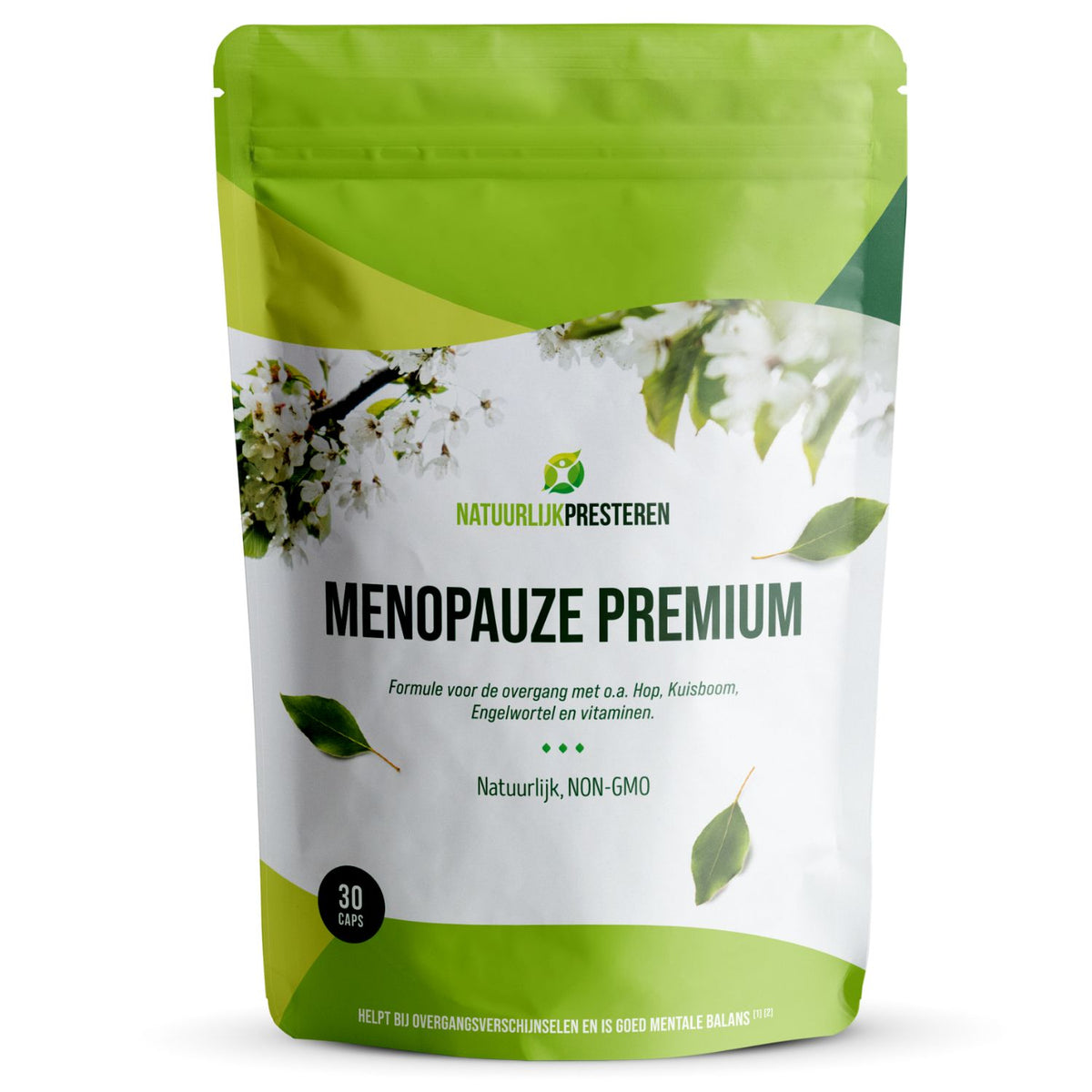
Menopause Premium is a formula that contributes to a good mood and mental balance, and helps alleviate menopausal symptoms.* It is a natural product, composed of high-quality plant extracts and vitamins that have been carefully balanced.
Herbs for menopause
For centuries, women have used herbs and plants to support their health. In our Western society, this practice has slowly disappeared, but fortunately, more and more people are rediscovering the power of nature.
Below you will find some herbs and vitamins that are commonly used in supplements for menopausal women.
1. Chasteberry – Helps with menstrual discomfort and contributes to normal hormonal balance. * (1)
This shrub from the mint family has been used for thousands of years to support female hormone balance.
2. Hops – Helps with menopausal symptoms and supports healthy sleep. * (2)
Hops are a climbing plant native to Europe and Asia. Traditionally, hops were used in beer brewing, but they were also often used in folk medicine to treat menopausal symptoms.
3. Black Cohosh – Helps with hot flashes, night sweats, and mood swings.* (3)
Also known as "black cohosh," this North American plant has been used for centuries by indigenous peoples to treat menopausal symptoms.
4. Chinese Angelica – Contributes to a healthy night's sleep and may help with hot flashes. * (4) (5)
This root plant from China has been used in traditional Chinese medicine for over 2,000 years, especially to support female health.
Good to know: Claims marked with ( ) are health claims awaiting European approval.*
Vitamins for menopause
In addition to herbs, there are also vitamins that are essential for support during menopause.
It is of course best to get these through your diet, but during menopause an extra dose through supplements can help alleviate discomfort.
- Vitamin B6 contributes to the regulation of hormonal activity.
- Vitamins B6 and B11 contribute to the reduction of tiredness and fatigue.
- Vitamin D is good for the muscles, the skeleton and the maintenance of strong bones.
Supplements for women's hair growth
Thinning hair and reduced hair growth are common in women over 40, especially during hormonal changes such as menopause. (6)
Supplements for women that focus on the health of your hair can provide support here.
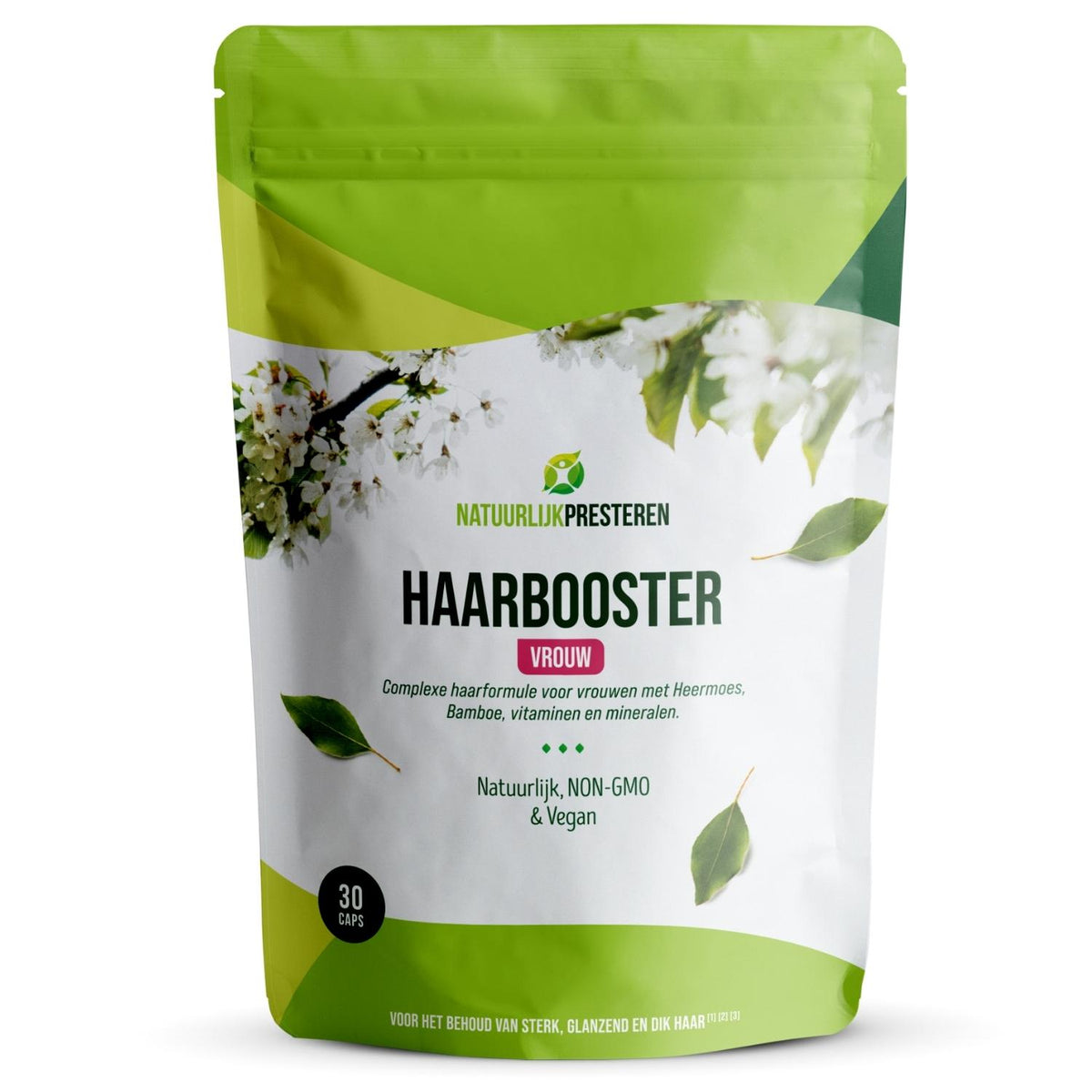
Hair Booster for Women contains natural ingredients like biotin and zinc , which help keep your hair strong and shiny. We've also added powerful plant extracts for added support.
- Horsetail - good for the blood circulation of your scalp (important for hair growth).
- Bamboo and Horsetail – both rich in organic silicon, which is good for hair strength.
Sources used
- Csupor, D., Lantos, T., Hegyi, P., Benkő, R., Viola, R., Gyöngyi, Z., Csécsei, P., Tóth, B., Vasas, A., Márta, K., Rostás, I., Szentesi, A., & Matuz, M. (2019). Vitex agnus-castus in premenstrual syndrome: A meta-analysis of double-blind randomized controlled trials. Complementary Therapies in Medicine , 47 , 102190. https://doi.org/10.1016/j.ctim.2019.08.024
- Abdi, F., & Roazbeh, N. (2016b). The effect of hops on vasomotor symptoms of menopause: A systematic review and meta-analysis. DOAJ (Directory Of Open Access Journals) . https://doi.org/10.22038/ijogi.2016.7797
- Castelo-Branco, C., Gambacciani, M., Cano, A., Minkin, M.J., Rachoń, D., Ruan, X., Beer, A., Schnitker, J., Zepelin, H.H., & Pickartz, S. (2020). Review & meta-analysis: isopropanolic black cohosh extract iCR for menopausal symptoms – an update on the evidence. Climacteric , 24 (2), 109–119. https://doi.org/10.1080/13697137.2020.1820477
- Liu, G. J., Karim, M. R., Xu, L. L., Wang, S. L., Yang, C., Ding, L., & Wang, Y. (2017). Efficacy and Tolerability of Gabapentin in Adults with Sleep Disturbance in Medical Illness: A Systematic Review and Meta-analysis. Frontiers in Neurology , 8 . https://doi.org/10.3389/fneur.2017.00316
- Toulis, K. A., Tzellos, T., Kouvelas, D., & Goulis, D. G. (2009). Gabapentin for the treatment of hot flashes in women with natural or tamoxifen-induced menopause: A systematic review and meta-analysis. Clinical Therapeutics , 31 (2), 221–235. https://doi.org/10.1016/j.clinthera.2009.02.006
- Fabbrocini, G., Cantelli, M., Masarà, A., Annunziata, M., Marasca, C., & Cacciapuoti, S. (2018). Female pattern hair loss: A clinical, pathophysiologic, and therapeutic review. International Journal Of Women's Dermatology , 4 (4), 203–211. https://doi.org/10.1016/j.ijwd.2018.05.001
Gerelateerde blogartikelen

Progesterone: What is it and what is it for?
Progesterone is a hormone that plays an important role in the hormonal cycle and pregnancy . Men also produce a small amount of progesterone, but this article will focus on progesterone in women. Progesterone regulates the menstrual cycle, supports pregnancy, and prevents premature labor by inhibiting uterine contractions. A progesterone imbalance can lead to irregular periods, fatigue, mood swings, weight gain and reduced fertility. A healthy lifestyle, stress reduction, adequate sleep, and a balanced weight can help keep progesterone levels in balance. Table of contents What does the progesterone hormone do? Progesterone and the hormonal cycle The hormone cycle, in short, goes like this Progesterone and pregnancy The functions of progesterone during pregnancy: Progesterone deficiency: causes and symptoms Progesterone excess: causes and symptoms Solutions for progesterone balance What does the progesterone hormone do? Progesterone is a hormone produced primarily in the ovaries. Simply put, hormones are the communication channel between the brain and the reproductive organs. Progesterone plays a major role in a woman's sexual development and hormonal cycle. During the menstrual cycle, progesterone prepares the uterus for pregnancy. This occurs during the second half of the cycle, after ovulation. Progesterone also plays an important role during pregnancy[ 1 ]. Progesterone and the hormonal cycle Progesterone cannot be considered separately from the entire female hormonal cycle. Hormone levels also vary during the phases of the menstrual cycle. Hormones that occur during the female hormonal cycle are: FSH, LH, estrogen, and progesterone. In short, the hormone cycle goes like this Egg development - Multiple follicles develop in both ovaries. This occurs under the influence of the hormone FSH. These follicles release estrogen, which makes the cervix more suitable for sperm. Complete development of one egg cell - One follicle fully develops per cycle. At the point of full development, significantly more estrogen is released. The ovulation - The pituitary gland recognizes the estrogen and releases the hormone LH. The follicle ruptures, and ovulation occurs, with the egg moving from the follicle and ovary into the fallopian tube. Journey to the Womb - The egg slowly travels through the fallopian tube to the uterus. Meanwhile, the empty follicle in the ovary produces the hormone progesterone. Together with estrogen, progesterone prepares the uterine lining for a potential pregnancy. They inhibit the hormones that cause more eggs to develop. Menstruation - If fertilization has not occurred, estrogen levels drop, you menstruate, and the cycle starts again. Progesterone and pregnancy Progesterone is also called the pregnancy hormone because it plays a significant role during pregnancy. The hormone is produced in the placenta and remains present in the body in larger quantities throughout pregnancy. The functions of progesterone during pregnancy: Making the uterus suitable - Progesterone not only prepares the uterus for pregnancy, it also continues to do so during pregnancy. Mucus plug - A mucus plug is also produced in the uterus. This prevents a new pregnancy and provides better protection for the baby. Prevent contraction - Progesterone causes your body to view the baby as foreign and reject it through muscle contractions. Baby food - During pregnancy, the baby receives nourishment from glands in the uterine wall. Progesterone is also responsible for this. Mammary glands - Along with several other hormones, progesterone causes the milk glands in the breasts to grow. Inhibition of labor - During pregnancy, hormones are produced that ensure you'll eventually give birth. Until the time is right, progesterone inhibits the effects of these hormones. Progesterone deficiency: causes and symptoms Hormones interact with each other. For example, excess estrogen can lead to a progesterone deficiency. When these two hormones are out of balance and there is a progesterone deficiency, the following symptoms can occur: Painful or irregular menstruation Headache Tender breasts Less desire for sex Gaining weight Trouble sleeping Mood swings Restless feeling Hair loss Fatigue Because progesterone plays such a crucial role in fertility and preparing the uterus for pregnancy, a deficiency of this hormone also affects it. For example, low progesterone levels can lead to reduced fertility, fewer menstrual periods, or miscarriage. If you suspect you have a progesterone deficiency, it is a good idea to visit your doctor. Too much progesterone: causes and symptoms Excess progesterone usually doesn't cause any problems. During pregnancy, your body reaches high progesterone levels. Menopause can also temporarily increase progesterone levels. If this is a natural process, it usually doesn't cause any symptoms. The pill, hormone therapy (during menopause), or fertility treatments are methods women use to take progesterone as contraception, to reduce menopausal symptoms, or to conceive. This usually doesn't cause major problems, but it can cause some typical symptoms of hormonal imbalance. Symptoms of too much progesterone: Irregular menstruation Fatigue Tender breasts Less desire for sex Headache Gaining weight Trouble sleeping Bloated feeling Mood swings Restless feeling Dizziness Solutions for progesterone balance Both a progesterone deficiency and an excess are hormonal imbalances. As you've read before, the symptoms are therefore similar. An imbalance of progesterone and other hormones can have various causes. If the imbalance isn't due to a medical condition or other underlying cause, there are several ways to restore your hormone balance. Tips for hormonal balance: Nutrition and lifestyle - A healthy diet and lifestyle support hormonal balance. Your body also needs healthy substances like good fats and protein to produce hormones like progesterone[ 2 ]. Healthy weight - Both being underweight and overweight can cause hormonal imbalances. So, if you want to maintain a balanced progesterone level, make sure your weight isn't too high or too low. Exercise in moderation - Exercise is good, but too much can lead to hormonal problems or even a complete stop of your period. So, by all means, exercise, but don't overdo it. Low stress - Stress and stress hormones throw your hormones out of balance. So try to reduce stress. Enough sleep - Good sleep also helps maintain a healthy hormone balance. Lauressa Lauressa studied Nutrition & Dietetics and also works as an editor. She enjoys delving deeply into topics related to healthy eating, mental well-being, and hormone balance. When she's not pursuing her passion for health, she enjoys being creative. Read more
Lees meer
The estrogen hormone: what is it and what does it do?
Estrogen is one of the key hormones in a woman's hormonal cycle. Men also have estrogen, but this article will focus on this hormone in women: what is estrogen and what does it do? Estrogen regulates the menstrual cycle, promotes feminine characteristics, and supports bone density, cognitive health, and vaginal health. Estrogen dominance or deficiency causes menstrual problems, weight fluctuations, mood swings, fatigue, and loss of libido, often due to stress, diet, or medical conditions. You can improve your estrogen balance with a healthy diet, sufficient sleep, moderate exercise, stress reduction, and a stable body weight. Table of contents What does the estrogen hormone do? Estrogen and the hormonal cycle The hormone cycle, in short, works as follows: Causes of estrogen imbalance Symptoms of too much estrogen Symptoms of estrogen deficiency Solutions for estrogen balance What does the estrogen hormone do? Estrogen has several functions. It is primarily involved in the female reproductive system. During puberty, for example, it contributes to the development of physical characteristics such as wider hips and breasts. The hormone also plays a significant role in the menstrual cycle, also known as the hormonal cycle. Estrogen occurs in several forms: estradiol, estrone, and estriol. Estradiol is the most important hormone in the hormonal cycle. Estrone is only produced after menopause, and estriol plays an important role during pregnancy. The hormone is produced in the ovaries, adrenal glands, and fatty tissue. Men also have the hormone estrogen, but in much smaller quantities. The functions of estrogen in a nutshell: Role of the menstrual cycle - Estrogen ensures the maturation of eggs in the ovaries. It also prepares the uterine lining for pregnancy. Secondary sex characteristics - During puberty, estrogen causes breasts, wider hips, and hair to grow. Bone Density : Estrogen prevents bone loss and, in the long term, osteoporosis. Cognitive health - According to research, estrogen may positively influence the brain[ 1 ]. Vaginal health - in the vagina, estrogen helps maintain a thick vaginal wall and keeps it moist. Note : If you're taking the pill, you won't have your natural hormonal cycle. Many of the facts and tips in this article will unfortunately not apply to you. Estrogen and the hormonal cycle Estrogen cannot be viewed separately from the entire female hormonal cycle. Hormones are essentially the communication channel between the brain and the reproductive organs. Hormone levels also vary during the menstrual cycle. Hormones present during the female hormonal cycle include FSH, LH, estrogen, and progesterone. In short, the hormone cycle goes like this: Egg development - Under the influence of the hormone FSH, multiple follicles develop in both ovaries. These follicles, in turn, release estrogen. This makes the cervix more suitable for sperm. Complete development of a single egg - One follicle fully develops per cycle. At the time of complete development, significantly more estrogen is released. Ovulation - This estrogen surge is recognized by the pituitary gland, which then releases the hormone LH. The follicle ruptures, and ovulation occurs. The egg then emerges from the follicle in the ovary and travels to the fallopian tube. Journey to the uterus - The egg slowly travels through the fallopian tube to the uterus. Meanwhile, the empty follicle produces the hormone progesterone. Together with estrogen, progesterone prepares the uterine lining for a potential pregnancy. They inhibit the hormones that cause more eggs to develop. Menstruation - When fertilization hasn't occurred, estrogen levels drop. You then menstruate, and the cycle begins again. Causes of estrogen imbalance There are several reasons why estrogen levels can fluctuate[ 2 ]. Some reasons are natural and normal, others are not. These are listed separately. Natural reasons for estrogen imbalance: Puberty Pregnancy and breastfeeding Recent delivery The transition Older age Other reasons for estrogen imbalance: Overweight Underweight Too much exercise Stress High alcohol consumption Early menopause Certain medications High blood pressure Diabetes Ovarian dysfunction Pituitary dysfunction PCOS Tumors on the genitals Symptoms of too much estrogen Excess estrogen is also called estrogen dominance. This can mean that estrogen levels are too high, or that the ratio of estrogen to other hormones is out of balance. Symptoms of too much estrogen include: Painful or irregular menstruation Headache Tender breasts Less desire for sex Gaining weight Trouble sleeping Restless feeling Hair loss Fatigue Symptoms of estrogen deficiency Estrogen deficiency is normal during menopause, but younger women can also experience it. The symptoms of estrogen deficiency are therefore similar to those of menopause. This is Symptoms of estrogen deficiency include: Irregular menstruation Hot flashes Dry skin and vagina Less desire for sex Pain during sex Night sweats Mood swings Fatigue Osteoporosis Some women use hormone therapy to reduce the effects and symptoms of menopause. This isn't suitable for everyone, for example, if there's a family history of breast cancer. Therefore, always discuss this with your doctor. Solutions for Estrogen Balance Both an estrogen deficiency and an excess are hormonal imbalances. This can occur for various reasons. If you suspect you're experiencing premature menopause, or if your estrogen is imbalanced due to a medical condition, it's a good idea to see a doctor. If the imbalance isn't caused by menopause or a medical condition, there are several ways to support your estrogen levels and restore their balance. These tips are for both estrogen deficiency and excess. Ways to Balance Estrogen: Nutrition and lifestyle - A healthy lifestyle and a good, varied diet are by definition good for hormone balance. Healthy weight - Both being underweight and overweight can cause hormonal imbalances. So, make sure your weight isn't too high or too low if you want to maintain estrogen balance. Exercise in moderation - You don't hear that said often, do you? Yet, it's true that women who exercise too much can suffer from hormonal imbalances. So, by all means, exercise, but don't overdo it. Low Stress - Reducing stress helps improve hormonal balance in the body. Get enough sleep - Good sleep also helps balance hormone levels in the body Lauressa Lauressa studied Nutrition & Dietetics and also works as an editor. She enjoys delving deeply into topics related to healthy eating, mental well-being, and hormone balance. When she's not pursuing her passion for health, she enjoys being creative. Read more
Lees meer
The Woman's Hormonal Cycle Explained
A woman's hormonal cycle is very complex. This cycle, also known as the menstrual cycle, consists of several phases and involves multiple hormones. During the menstrual cycle, the uterus is prepared for pregnancy. When there has been no fertilization, Everything is cleared out, and the cycle begins again. Different hormones have different functions in this process. In this article, we'll try to clearly explain how the female hormonal cycle works. The menstrual cycle lasts an average of 28 days and consists of four phases: menstruation, follicular phase, ovulation and luteal phase. Hormones such as estrogen, progesterone, FSH, and LH regulate fertility, energy, mood, and physical changes throughout the cycle. Each phase has specific characteristics, similar to seasons: winter (menstruation), spring (pre-ovulation), summer (ovulation), and fall (luteal phase). Table of contents What is the female hormonal cycle? Phase 1 - Menstruation (beginning of the hormonal cycle) Phase 2 - Pre-ovulation (Follicular phase) Phase 3 - Ovulation Phase 4 - Pre-menstruation (Luteal phase) What is the female hormonal cycle? Of course there are exceptions, but in general, women who do not use hormonal contraception have their own natural hormonal cycle. This lasts an average of 28 days, but a cycle of between 21 and 35 days is also considered normal. The female hormonal cycle can be divided into four phases: menstruation, follicular phase (pre-ovulation), ovulation and luteal phase (pre-menstruation)[ 1 ]. The uterus, ovaries, hypothalamus, and pituitary gland are responsible for hormone changes and release. Hormones can be seen as the communication channel between the brain and reproductive organs, initiating processes in the body. Therefore, different hormones are present in different phases of the cycle. Phase 1 - Menstruation (beginning of hormonal cycle) A woman's hormonal cycle begins with menstruation, the period of bleeding, which typically lasts 3 to 7 days. Menstruation begins when the hormones estrogen and progesterone have decreased. In response, the uterine lining that has built up is shed. At the same time, the follicles containing eggs in the ovaries begin growing again. One such egg will "pop" in the next cycle. Menstruation is therefore also the follicular phase, but you'll read more about this later. Menstruation is often compared to winter. Women often feel tired and don't feel like doing anything. Practically speaking, you're also busy collecting blood, and you may experience cramps. You might want to withdraw a bit and schedule quiet or no activities. In summary, ovulation is: Period of bleeding Follicles grow Hormones: Low Season: Winter Feeling: Withdrawal and low energy Phase 2 - Pre-ovulation (Follicular phase) Menstruation stops and the follicular phase continues. This means that the follicles containing the eggs continue to grow under the influence of the hormone FSH. These follicles release the hormone estrogen, which makes the cervix more receptive to sperm. Each woman's cycle, one follicle in the ovary fully develops. When this happens, significantly more estrogen is suddenly released, triggering ovulation. Pre-ovulation is similar to spring. It's a period of rebuilding and a kind of "new beginning." Women often feel more energetic, more attractive[ 2 ], and more eager to do things. Sex drive increases because you're now fertile, and your body doesn't want to miss out on the chance to get pregnant! In short, the follicular phase is: Period of development of follicles with egg cell Fertility Hormones - FSH, estrogen Season - Spring Feeling - Energy and confidence Phase 3 - Ovulation This is also called ovulation, which lasts about a day. When a follicle is fully developed, significantly more estrogen is released. The pituitary gland recognizes this and releases the hormone LH. This causes the follicle to open and release the egg. It travels from the ovary to the fallopian tube. Ovulation occurs around day 14 of a woman's cycle, with the first day of her menstrual cycle being day 1. Ovulation is often compared to summer. There's often still plenty of energy, a higher sex drive, and a greater desire to go out. Yet, it's not all fun and games. Many women feel their ovulation, and that can be quite painful. Common ovulation symptoms include cramps, bloating, and breast tenderness. In short, ovulation is: The ovulation Hormones - Estrogen, LH Season - Summer Feeling - Energy and zest for life Phase 4 - pre-menstrual (Luteal phase) The journey of the ruptured egg from the ovary, through the fallopian tube, to the uterus occurs in the luteal phase. The empty follicle (corpus luteum) is currently producing the hormone progesterone. Progesterone and estrogen work together to prepare the uterine lining for a potential pregnancy. They also temporarily inhibit the hormones that ensure the continued development of remaining eggs in the ovaries. Because if there is a pregnancy, another ovulation won't be necessary! If fertilization doesn't occur, progesterone and estrogen levels drop again, triggering menstruation. Premenstruation is similar to autumn. It's also called PMS week, because many women experience it during this time. PMS[ 3 ] is premenstrual syndrome, which can cause physical symptoms such as irritability, fatigue, and mood swings. In short, the luteal phase is: Preparing for pregnancy after ovulation Possible PMS Hormones - Progesterone, Estrogen Season - Autumn Feeling - Tired and irritable Lauressa Lauressa studied Nutrition & Dietetics and also works as an editor. She enjoys delving deeply into topics related to healthy eating, mental well-being, and hormone balance. When she's not pursuing her passion for health, she enjoys being creative. Read more
Lees meer