Winter months supplements
The winter months bring cold, dark days, and little sunshine. Many people feel less energetic during this period and fall into the winter blues.
Fortunately, you can support your resistance and mood with supplements during the winter months.
On this collection page you will find all the vitamins and minerals that can help you get through the short and dark days.
The 'R' in the month? Time for extra care
Have you ever heard of the 'R in the month' rule?
These are the months when you should pay extra attention to your immune system: from October through March. A handy mnemonic to help you remember when sleep, nutrition, and exercise are especially important.
These nutrients can help prevent the winter blues:
1. Sun vitamins (vitamin D): essential for winter
Did you know that 30-60% of the European population has a deficiency of vitamin D, the sunshine vitamin, especially in the winter months? (1)
This is because our body produces vitamin D with the help of sunlight, which is insufficient during the dark months.
Our vitamin D3 offers the perfect solution. It contains cholecalciferol (D3), the most absorbable form of vitamin D, dissolved in olive oil for better absorption.
At Natuurlijk Presteren you can choose from 3 vitamin D3 supplements:
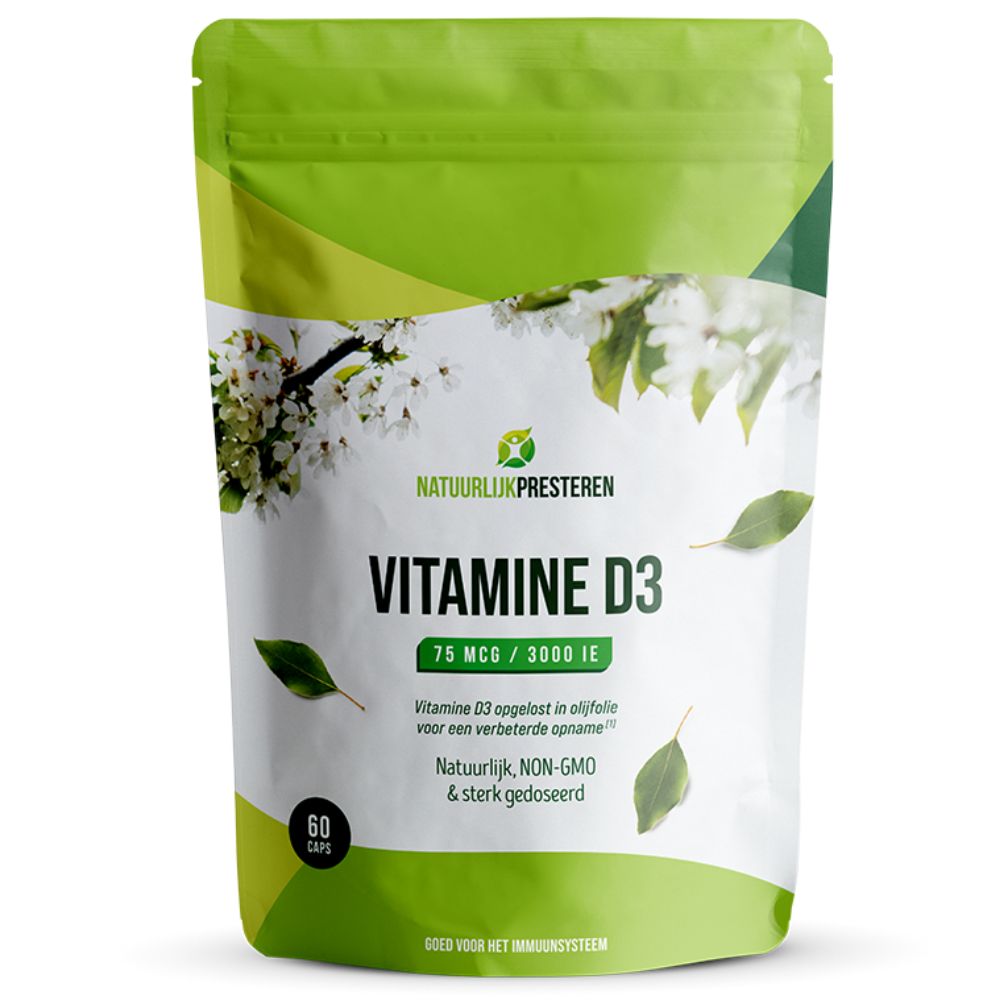
- Vitamin D3 - 75 mcg - With a strong dosage of 75 mcg per capsule, you can easily replenish your deficiency.
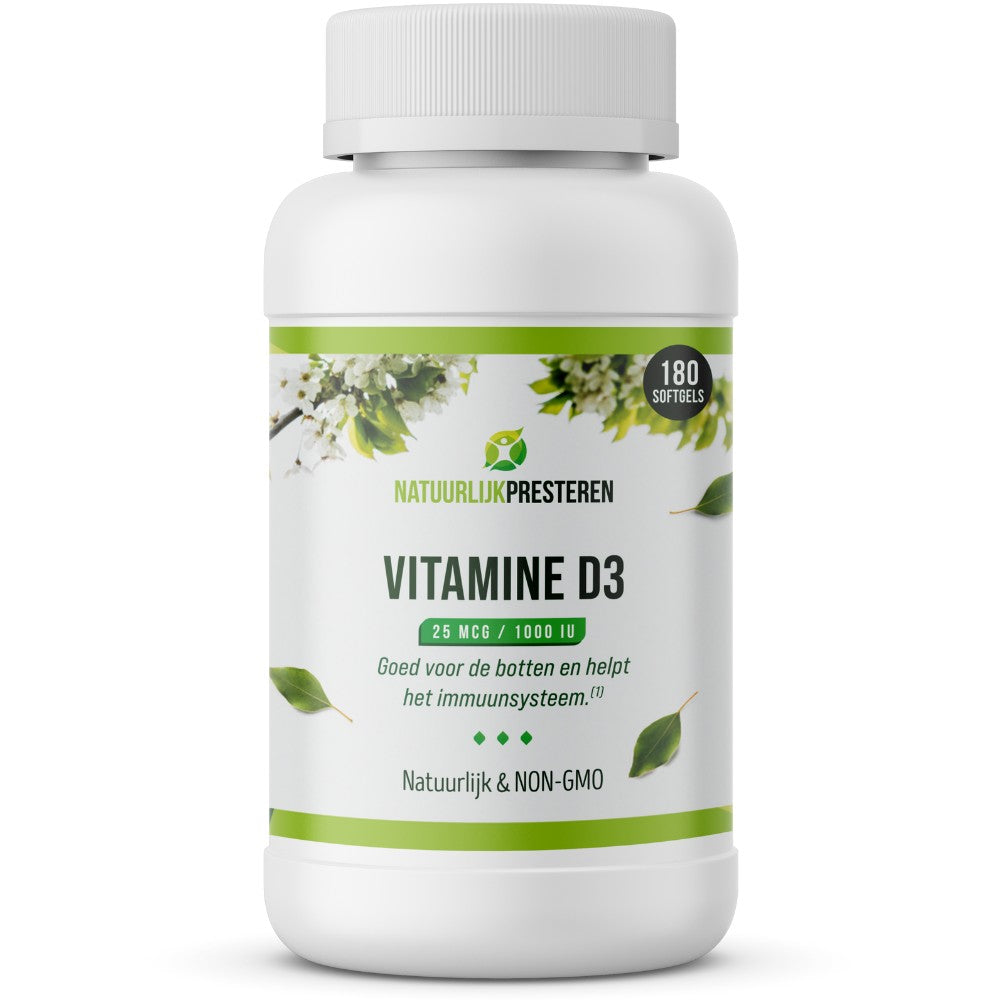
- Vitamin D3 - 25 mcg - If you regularly go outside, you can also opt for a maintenance dose of 25 mcg per capsule.
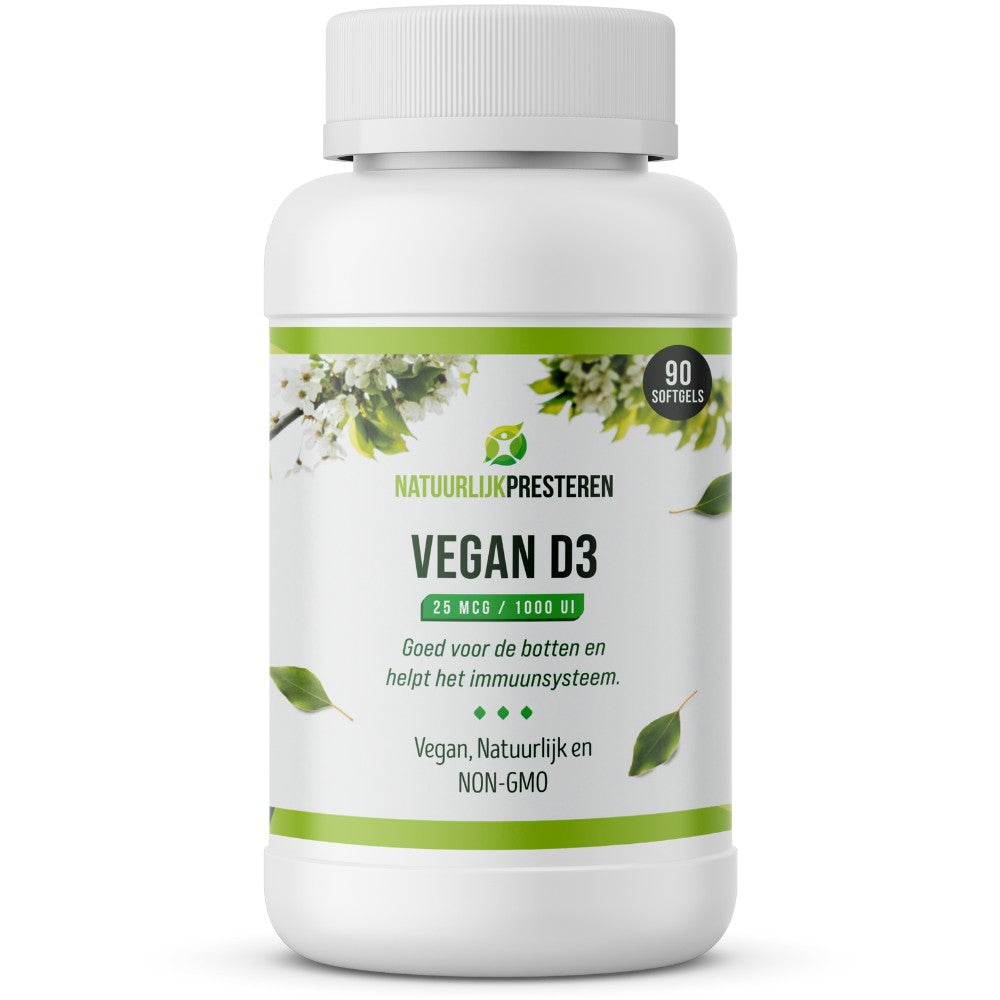
- Vegan Vitamin D3 - 25 mcg - We have developed a vegan D3 supplement especially for vegans, with 25 mcg per capsule from algae.
Why vitamin D3 in winter?
- Supports your immune system
- To maintain strong teeth and bones
- Contributes to the absorption of calcium
- Is good for the muscles
2. Vitamin C: a boost for your resistance
The "R" in the month means a higher risk of colds and flu. Vitamin C has a positive effect on the immune system and activates the body's natural energy.
If you have a cold, vitamin C seems to be especially helpful in reducing the severity and duration of bad colds. (2)
This makes it a useful supplement, especially if you want to get fit again quickly after a bad cold.
Extra tip: The body can only absorb a limited amount of vitamin C at a time. It's more effective to take smaller doses spread throughout the day, rather than one large dose.
3. B vitamins: energy and focus
Winter blues often cause fatigue and concentration problems.
B vitamins, especially B6, B11 and B12 , have a positive effect on the immune system.
The most relevant B vitamins for the winter months
- Vitamin B6: Contributes to the immune system and helps reduce fatigue.
- Vitamin B11 (Folic Acid): Contributes to the production of new cells and supports a healthy immune system. It can also support mood, which is beneficial during the winter months.
- Vitamin B12: Contributes to energy production and supports the nervous system, which can be important in cases of winter fatigue and stress.
So make sure you get enough of these three B vitamins. This will help you become more resistant to the flu.
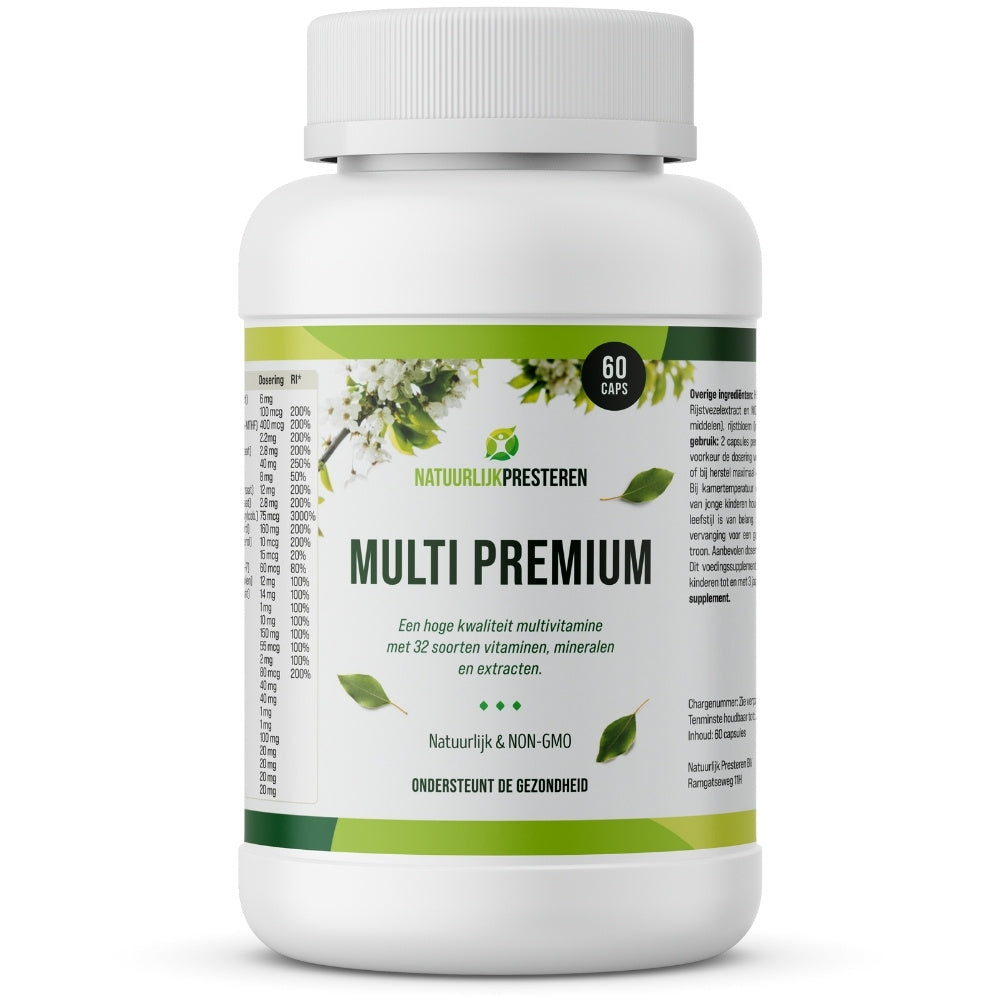
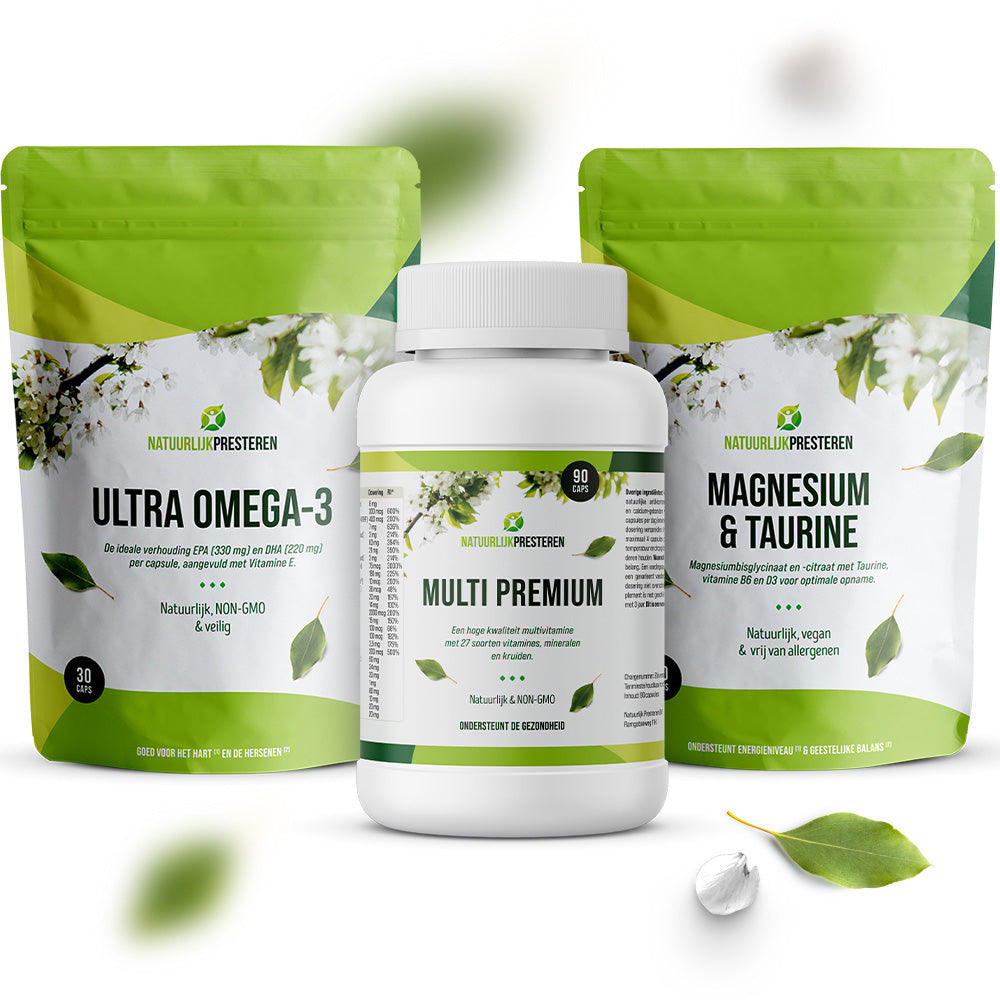
Bonus tip: Multi Premium supplement is the perfect choice for daily support of your natural defenses. It contains all 28 active, natural ingredients that contribute to your immunity. And all in a powerful yet safe dosage!
4. Omega-3 fatty acids: for your mood
Dark days can affect your mood.
Omega-3 fatty acids may help improve your mood.* There is increasing evidence for this in scientific studies. (3)
EPA and DHA are mainly found in fish and shellfish. But if you don't eat much fish, a fish oil supplement is a good choice.
Prefer not to eat fish at all? Then choose algal oil, such as our Vegan DHA, with 400 mg of plant-based omega-3 (in the form of DHA) per serving.
Our algae oil is made from pure algae oil that is sustainably grown.
5. Zinc: for resistance during the winter months
Zinc is an essential mineral that your body needs to support your immune system.
It helps your body defend itself against unwanted substances. Because your body can't store zinc, it's important to get enough of it daily.
Protein-rich foods such as meat, dairy, but also grains, beans, nuts and seeds are good sources of zinc.
But especially in the winter months, when your immune system needs extra support, a zinc supplement is a valuable addition to your health.
The Maximmuun product - Powerful support for your immune system
Maximmuun is an effective supplement that combines zinc with Quercetin and selenium for optimal support of your immune system.
This supplement is ideal for the winter months and contains per dose:
- Zinc – 15 mcg (150% of the RDA) – Contributes to good resistance.
- Quercetin – 500 mg – Is a powerful antioxidant, which protects your cells against oxidative damage and therefore supports your natural defense mechanism. * (4)
- Selenium – 110 mcg (200% of the RDA) - Also functions as an antioxidant, thus contributing to the normal functioning of the immune system.
This unique composition has been developed based on the latest scientific insights and is ideal for long-term use with natural ingredients.
Echinacea
Echinacea purpurea, also known as Purple Coneflower, is a plant that has been used for centuries by Native Americans in North America for its positive effect on the immune system. (5) (6)
Echinacea is often made into supplements, usually in the form of an extract from the root of the plant, and comes as a tablet, capsule or tincture.
● Echinacea is good for the respiratory tract *
● In addition, it has a positive effect on the immune system *
Please note: when using this product in combination with immunosuppressants, caution should be exercised and it should be avoided during pregnancy and breastfeeding.
A common dosage is 0.3 to 2.4 grams of extract per day.
Sources used
- Lips, P., Cashman, K. D., Lamberg-Allardt, C., Bischoff-Ferrari, H. A., Obermayer-Pietsch, B., Bianchi, M. L., Stepan, J., Fuleihan, G. E., & Bouillon, R. (2019). Current vitamin D status in European and Middle East countries and strategies to prevent vitamin D deficiency: a position statement of the European Calcified Tissue Society. European Journal Of Endocrinology , 180 (4), P23–P54. https://doi.org/10.1530/eje-18-0736
- Hemilä, H., & Chalker, E. (2023). Vitamin C reduces the severity of common colds: a meta-analysis. BMC Public Health , 23 (1). https://doi.org/10.1186/s12889-023-17229-8
- Liao, Y., Xie, B., Zhang, H., He, Q., Guo, L., Subramanieapillai, M., Fan, B., Lu, C., & McIntyre, R. S. (2019). Efficacy of omega-3 PUFAs in depression: A meta-analysis. Translational Psychiatry , 9 (1). https://doi.org/10.1038/s41398-019-0515-5
- Noshadi, N., Bonyadian, A., Hojati, A., Abbasalizad-Farhangi, M., Heidari, M., Darzi, M., Seyedhosseini-Ghaheh, H., Khajeh, M., Tabrizi, FPF, Vajdi, M., & Askari, G. (2024). The effect of quercetin supplementation on the components of metabolic syndrome in adults: A systematic review and dose–response meta-analysis of randomized controlled trials. Journal Of Functional Foods , 116 , 106175. https://doi.org/10.1016/j.jff.2024.106175
- Schapowal, A., Klein, P., & Johnston, S. L. (2015). Echinacea Reduces the Risk of Recurrent Respiratory Tract Infections and Complications: A Meta-Analysis of Randomized Controlled Trials. Advances in Therapy , 32 (3), 187–200. https://doi.org/10.1007/s12325-015-0194-4
- David, S., & Cunningham, R. (2019). Echinacea for the prevention and treatment of upper respiratory tract infections: A systematic review and meta-analysis. Complementary Therapies in Medicine , 44 , 18–26. https://doi.org/10.1016/j.ctim.2019.03.011
Gerelateerde blogartikelen
 bloggle
How much vitamin D do you need per day? Here are the facts.
Did you know that 9 out of 10 Dutch people don't get enough vitamin D? This is evident from a recent study of our eating habits. (1) Vitamin D is essential for strong bones and teeth, but most Dutch people don't get the recommended amount. High-risk groups, such as children, pregnant women, and people with dark skin, are particularly likely to be deficient. Furthermore, the same report found that: 60% of people have a (severe) vitamin D deficiency during the winter months 77% of elderly people have a (serious) vitamin D deficiency during the winter months Only 1 in 4 elderly people aged 70+ take vitamin D supplements (despite the advice of the RIVM) (2) Maybe it's time to reconsider your vitamin D intake. This article explains which factors play a role and how much you need. Vitamin D is crucial for bones, teeth and the immune system, but 9 out of 10 Dutch people do not get enough. Important factors: sunlight, skin color, diet, weight, medication use and age determine how much vitamin D you need. Regular testing and possible supplementation (D3) helps maintain healthy vitamin D levels, especially for at-risk groups and the elderly. Table of contents What is Vitamin D and what are its benefits? Benefits of Vitamin D What are healthy vitamin D levels? What if your vitamin D is too low? What determines how much vitamin D you need per day? 1. How often you spend time outdoors (the more you spend time outdoors, the greater the chance of getting enough D) 2. The country you live in (the strength of the sun varies by country) 3. Your skin color (more pigment, harder to produce vitamin D) 4. Whether you live in a city or in the countryside 5. How healthy your diet is 6. How much weight you have (excess fat mass) 7. Whether you have liver and/or kidney disease 8. What medications you take 9. Gender and hormones How much vitamin D do you need per day in the Netherlands? Children < 12 years Young adults 12- 18 years Fit, active adults (18-50 years) Adults with an inactive lifestyle (18-50 years) Adults with a medical condition The elderly Vitamin D supplements: The difference between IU and mcg In short What is Vitamin D and what are its benefits? Vitamin D is a special substance that your body produces when your skin comes into contact with sunlight, and therefore actually acts more like a hormone. It's also found in foods like oily fish, liver, meat, eggs, and dairy products, but usually not in sufficient amounts. It's estimated that we get only 25% of our vitamin D from food. (3) Although diet plays a role, sunlight is the most important source of vitamin D. There are 2 main forms of vitamin D: Vitamin D2 (ergocalciferol) - Found mainly in plant sources such as mushrooms; and Vitamin D3 (cholecalciferol) - This is the best form because it is better absorbed by your body. D3 is the form produced by your skin and found in animal-based foods. Benefits of Vitamin D This is what vitamin D does for your body: It is good for maintaining strong bones and teeth Increases calcium absorption in the bones Has a positive effect on the immune system Helps to reduce the risk of falls due to muscle weakness and postural instability (at least 20 mcg per day) Plays a role in the cell division process Helps with the normal functioning of your muscles What are healthy vitamin D levels? To determine if you have a vitamin D deficiency, you must have your vitamin D levels tested with a blood test. This will measure the amount of vitamin D (specifically, the calcidiol level ). The result is usually expressed in nmol/l . This value allows your doctor to determine whether you have sufficient vitamin D or whether you may have a deficiency that may require treatment. These are the normal values of vitamin D: Younger than 70 years - You have enough vitamin D if your level is 30 nmol/l or higher . From the age of 70 - You have sufficient vitamin D at a level of 50 nmol/l or higher . (3) Good to know: nmol/l stands for nanomol, which is one billionth of a mole (6.022 x 10²³ particles of a substance). "Per liter" means it indicates the amount of substance in one liter of blood. So, a vitamin D value of 30 nmol/l means there are 30 billionths of a mole of vitamin D in each liter of blood. The higher the value, the more vitamin D in your body. What if your vitamin D is too low? If your vitamin D status is too low, your doctor will prescribe vitamin D supplements. The dosage depends on the severity of your deficiency: Below 35 nmol/l (severe deficiency) - You need vitamin D supplements in a high dose (loading dose). Between 35 and 50 nmol/l - A maintenance dose is sufficient to keep your value stable. (3) What determines how much vitamin D you need per day? The amount of vitamin D you need daily depends on several factors. It's important to understand which circumstances affect your vitamin D needs so you can ensure you get enough. These are the main factors that determine how much vitamin D you need: More info More info More info
Lees meer bloggle
Vitamin D in food? Eat these 5 types of food more often.
The best and most important way to get enough vitamin D is to regularly expose your skin to the sun. Unfortunately, that's not so easy in the Netherlands. Especially in autumn and winter, we hardly see any sun. And even when the sun does shine, the UV radiation isn't strong enough to meet our daily vitamin D needs. That's why it can also be helpful to get enough vitamin D through food. Animal-based foods, in particular, contain the active form of vitamin D, which your body can use effectively. This is a natural way to supplement your vitamin D intake. On the advice of the Health Council, it is also a good idea to take supplements to maintain a healthy level. In this article I will explain how you can get vitamin D through food. Vitamins D2 and D3 are found in food. Vitamin D3 is the best form and is found in oily fish, eggs, organ meats, and (grass-fed) beef. It is recommended to take a vitamin D3 supplement, especially during the autumn and winter months Plant-based sources almost always contain vitamin D2, which is less effective. Only vitamin D3 from algae is an exception. Table of contents What form of vitamin D is found in food? The best types of food with the most vitamin D 1. Fatty fish (preferably from the North Sea) 2. Eggs (preferably organic) 3. Red (beef) meat (preferably organic and grass-fed) 4. Organ meat: liver and kidneys 5. A vitamin D supplement Plant-based foods with vitamin D The best vegan vitamin D What form of vitamin D is found in food? Vitamin D comes in two forms: D2 and D3. Of the two, vitamin D3 is the most potent and the best choice for your body. Vitamin D3 (cholecalciferol) is the form your body produces naturally when you're exposed to sunlight. It's also found in animal products like oily fish, eggs, and liver. D3 is better absorbed and stored by your body than D2, making it the most effective choice for your vitamin D intake. Vitamin D2 (ergocalciferol) comes primarily from plant sources, such as mushrooms (which have been exposed to UV light). While D2 is beneficial, your body is less able to utilize it, and the concentration of D2 in plant foods is often too low to have a significant effect. The best foods with the most vitamin D So you can get your vitamin D from various sources, with animal products being the richest in food. But where exactly is vitamin D found? Think of oily fish, eggs, and (organ) meat. These contain the powerful form of vitamin D3 , which is best absorbed by your body. 1. Fatty fish (preferably from the North Sea) Want to get vitamin D from your diet? Oily fish is one of the richest sources. Be sure to choose fish from the North Sea, as they are often less contaminated. The following fish species are particularly good for your vitamin D intake: Sardines – 12.3 mcg (492 IU) per 100 grams Anchovies – 11 mcg (440 IU) per 100 grams Trout – 9.4 mcg (376 IU) per 100 grams Mackerel – 8 mcg (320 IU) per 100 grams Sole – 8 mcg (320 IU) per 100 grams Herring – 6.2 mcg (248 IU) per 100 grams (1) Recommendation : Eat two servings of oily fish per week to get enough vitamin D. This not only provides you with a good dose of vitamin D, but also provides you with healthy omega-3 fatty acids, which contribute to your overall health. 2. Eggs (preferably organic) Did you know that eggs can be a surprisingly good source of vitamin D in our diet? Especially if you choose organic eggs. Organic chickens are often allowed outside, and when they walk in the sun, their bodies naturally produce vitamin D3. This increases the vitamin D3 content in their eggs. There are also eggs in which chickens are given extra vitamin D3 through their feed. This makes the eggs even richer in vitamin D, so you get a substantial dose in one go. (2) 3. Red meat (preferably organic and grass-fed) Besides oily fish and eggs, beef is another good source of vitamin D. This is especially true for grass-fed and organic meat. Grass-fed cattle are given the opportunity to graze outdoors and thus produce vitamin D through sunlight. This means that the meat from these cattle contains more vitamin D than meat from animals that are only kept in barns. (3) (4) Moreover, the diet of grass-fed cattle is different from that of barn animals. They eat grass and herbs that are naturally rich in vitamin D. As an added benefit, grass-fed cattle have a more favorable fatty acid profile, with more omega-3 fatty acids and less omega-6. (5) 4. Organ meats: liver and kidneys Organ meats, such as liver and kidneys, also contain a lot of vitamin D. Fish liver in particular (up to 120 mcg per 100 g, depending on the fish species and origin) and beef liver follow (up to 14 mcg per 100 grams). (6) This makes liver an excellent choice if you're looking for a natural source of vitamin D. Tip : Don't like the taste of organ meats? No problem! You don't have to eat whole liver to experience the benefits of vitamin D. Grass-fed ground beef is available that contains a small amount of beef liver. This way, you can easily add extra vitamin D3 to your diet without sacrificing the typical liver flavor. 5. A vitamin D supplement In addition, there are nutritional supplements containing D3, which are also officially considered food. They contain a lot of vitamin D3 and are therefore a quick and effective way to replenish a deficiency. However, vitamin D from food and sunlight remains the preferred source for a natural balance. In practice, however, it's often difficult to get enough vitamin D from food and sunlight alone, especially during the winter months. Plant-based diet with vitamin D Plant foods do not contain vitamin D3, only vitamin D2, which is less effective. So, if you eat a vegetarian or vegan diet, you won't naturally get any vitamin D3, as it is only found in animal products. Manufacturers therefore add vitamin D3 to products such as vegetable milk and margarine, so that you can get sufficient vitamin D even without animal products. In short : Without this addition, it is difficult to get enough vitamin D from a purely plant-based diet. The best vegan vitamin D The best option for vegans is to take vitamin D3 supplements, which are derived from plants or algae. These supplements are often called "plant-based D3" or "vegan D3." Vegan D3 usually comes from lichens. A lichen isn't actually moss, but a symbiotic relationship between a fungus and an algae. They produce D3 just like we do, through sunlight. This makes this vegan form of D3 a good and powerful alternative to D3 from animal products. These are the 3 best vegan vitamin D3 supplements in the Netherlands: Vegan D3 - Natural Performance : 100% vegan, made from high-quality algae. With a good maintenance dose of 25 mcg D3 per capsule. Vegan D3 - Vitakruid : Extracted from algae and in a good dosage of 25 mcg per capsule. Vegan D3 Oil Drops: Orthica - Vegan D3 in liquid form with vitamin D3V® from algae. Five drops provide a dose of 25 mcg. Ebrina van der Bijl Ebrina is a nutritionist with a deep commitment to healthy eating and a sustainable lifestyle, based in beautiful Portugal. Her passion for natural and organic products is at the heart of her work. With a background in Nutrition & Dietetics and experience in product development and writing, she translates complex scientific information into practical advice for a balanced lifestyle. Read more Sources used aHealthylife. (2021, January 10). The top 12 foods with the most vitamin D - aHealthylife.nl. aHealthylife.nl. https://www.ahealthylife.nl/de-top-12-voedsel-met-de-meeste-vitamine-d/ Barnkob, L.L., Argyraki, A., & Jakobsen, J. (2020). Naturally enhanced eggs as a source of vitamin D: A review. Trends in Food Science & Technology, 102, 62–70. https://doi.org/10.1016/j.tifs.2020.05.018 Cashman, K. D., O'Sullivan, S. M., Galvin, K., & Ryan, M. (2020). Contribution of Vitamin D2 and D3 and Their Respective 25-Hydroxy Metabolites to the Total Vitamin D Content of Beef and Lamb. Current Developments in Nutrition, 4(7), nzaa112. https://doi.org/10.1093/cdn/nzaa112 Jakobsen, J., & Christensen, T. (2020). Natural Vitamin D in Food: To What Degree Does 25‐Hydroxyvitamin D Contribute to the Vitamin D Activity in Food? JBMR Plus, 5(1). https://doi.org/10.1002/jbm4.10453 Daley, C. A., Abbott, A., Doyle, P. S., Nader, G. A., & Larson, S. (2010). A review of fatty acid profiles and antioxidant content in grass-fed and grain-fed beef. Nutrition Journal, 9(1). https://doi.org/10.1186/1475-2891-9-10 Schmid, A., & Walther, B. (2013). Natural vitamin D content in animal products. Advances in Nutrition, 4(4), 453–462. https://doi.org/10.3945/an.113.003780 9/fphys.2023.1211896
Lees meer
What are the benefits of sunlight?
Almost everyone loves a bit of sunlight. As soon as the sun starts shining, you often feel much happier and have more energy. But how does this actually happen? In this article, I'll explain the benefits of sunlight! Sunlight increases serotonin production, which improves and calms your mood. UVB rays help your skin produce vitamin D, essential for bones, the immune system, and muscle function. Lack of sunlight or dark skin increases the risk of a deficiency; vitamin D supplements may then provide a solution. Table of contents Sunlight and Serotonin Mental Health in Winter Sunlight and Vitamin D When is the Best Time to Get Sunlight? The Benefits of Sunlight Vitamin D3 Frequently Asked Questions Sunlight and serotonin You often hear that the sun can be very damaging to your skin. But did you know that the sun can actually have benefits for your mood? I'll try to explain this for you. Sunlight and darkness trigger the release of certain hormones in your brain. When you're exposed to sunlight, serotonin release increases. Serotonin is also known as the happiness hormone. It's linked to your mood and can help you feel calm. Serotonin also has many other functions. When it gets dark outside, melatonin production increases. This is the hormone responsible for sleep. Without enough sun exposure, your serotonin levels may drop. Low serotonin levels are linked to lower self-esteem and a lack of well-being. Mental health in winter Reduced sun exposure has been linked to a drop in serotonin levels. This means you're much more likely to feel unwell in the winter, which is often the case. How exactly does this happen? Well… Sunlight is absorbed through your eyes. Here, certain areas of your retina are stimulated, which triggers the release of serotonin. Days are shorter in winter, which explains this drop in serotonin levels. Sunlight and vitamin D There's a good reason vitamin D is called "the sunshine vitamin." When your skin is exposed to sunlight, it produces vitamin D from cholesterol. Let me explain how this works… The sun's ultraviolet B (UVB) rays hit cholesterol in the skin cells, providing energy for the synthesis of vitamin D. Did you know? People with tanned or dark skin produce less (or less quickly) vitamin D from sunlight. Vitamin D plays many roles in the body and is essential for optimal health. For example, vitamin D is crucial for calcium absorption from food and for the development and maintenance of strong bones. This vitamin also has a beneficial effect on the immune system and, along with other nutrients, contributes to healthy muscle function. Want to boost your immune system? Then read our article " 6 Natural Ways to Boost Your Immune System." If you don't get enough sunlight, for example, if you have an office job, it's often recommended to take a vitamin D supplement. UVB rays from the sun can't penetrate windows. So people who work next to sunny windows are still susceptible to vitamin D deficiency. What is the best time to get sunlight? The afternoon, especially in summer, is the best time to get sunlight. That's when the sun is at its highest point and UVB rays are most intense. This means you need less time in the sun to produce sufficient vitamin D. Many studies also show that the body is most efficient at producing vitamin D in the afternoon. Tip: In the Netherlands, about 15 minutes of afternoon sunlight exposure three times a week during the summer is sufficient to maintain healthy levels among white adults. The benefits of sunlight In summary, sunlight offers several health benefits. First, you produce more serotonin when you get enough sunlight. Too little sunlight can lead to a serotonin deficiency. Furthermore, you produce more vitamin D when you get enough sunlight. Too little sunlight can also lead to a vitamin D deficiency. Vitamin D3 Do you have insufficient sunlight exposure, for example due to an office job, or do you have dark/tan skin? Then it's advisable to take a vitamin D supplement! Reduced vitamin D production is almost impossible to compensate for with food. Vitamin D3 is the solution! Highly absorbable form of vitamin D3 - Cholecalciferol Just one pack lasts 200 days Safely dosed & 100% natural Lars Keijzers Lars is a biobased chemist with an insatiable interest in nutrition and science. He also enjoys exploring personal development and can be found regularly at the local gym. Read more
Lees meer