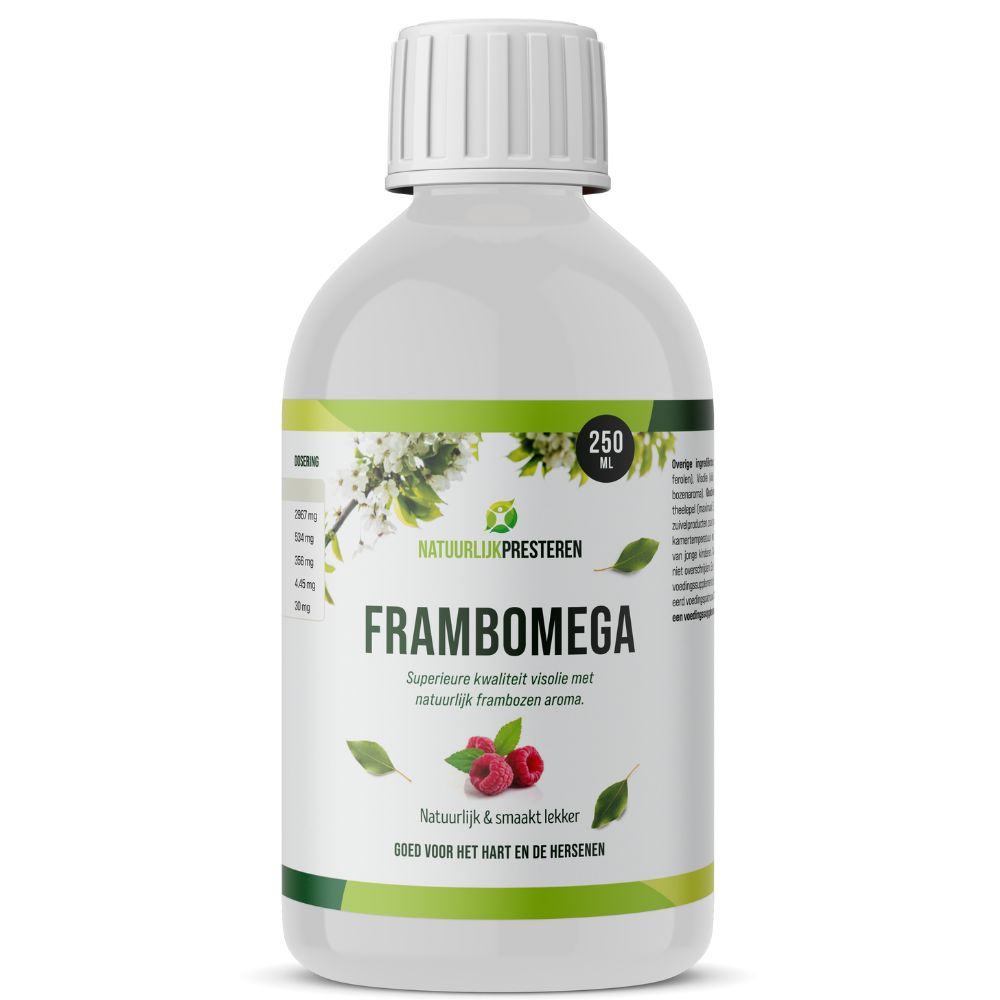
Fish oil for children
Many children cannot (yet) swallow capsules, especially at a younger age. However, it's important that they get enough omega-3 fatty acids, as these are essential for brain development.
And that is exactly why there is liquid fish oil, ideal for children.
A good fish oil for children masks the fishy smell with natural flavorings so that your child gets enough omega-3 without a struggle.
Is fish oil healthy for children?
Yes, absolutely. Fish oil contains important fatty acids like EPA and DHA. DHA, in particular, helps with brain growth and function in children, especially at a young age.
Ideally, you want your child to get omega-3s through food, but that's often not possible. After all, not all children like fish. Fish oil supplements for children are liquid and offer a good and practical alternative.
In addition, some parents (or their children) choose not to eat fish based on their beliefs. In that case, an omega-3 supplement with algae oil is an effective solution.
The benefits of fish oil for children
Omega-3 fatty acids in fish oil are important for both adults and children. These are the benefits:
- Is good for eyesight (min. 250 mg per day)
- Is an important building block of the brain (min. 250 mg per day)
- Does it contribute to the maintenance of normal blood fat levels (min. 2 g per day)?
- Supports the normal development of the eyes (min. 100 mg per day) and brain (min. 200 mg per day) in the foetus and in breastfed babies (if the mother takes DHA).
- Supports the maintenance of normal blood pressure (min. 3 grams per day)*
- Is good for the heart (min. 250 mg per day)
Good to know: When you use supplements, this should not exceed 5 grams together with your diet.
New studies on omega-3 for children
In addition to the benefits mentioned above, a lot of research is also being done into other effects of omega-3 fatty acids in children.
Although there are promising findings, definitive conclusions cannot yet be drawn because the studies are not yet sufficient or the results vary.
I can tell you that interesting studies have recently been published on the possible effects of omega-3 (supplements) on, among other things:
- The ability to concentrate in children. (1)
- The value of triglycerides* in the blood in children and adolescents. (2)
- Insulin sensitivity in children. (3)
- Mental well-being in children and adults. (4)
- Visual attention, working memory and communication. (5)
(*) Triglycerides are fats in your blood that are formed from excess calories and stored as energy reserves. Too high a level can contribute to fat buildup in blood vessels, which is bad for your heart.
The best omega 3 fish oil for children
So there are plenty of reasons to give your child extra omega 3 fish oil!
Wondering how to choose the best fish oil for your child? Here's what to look for:
- Choose liquid fish oil with a natural flavor – You can give this directly to your child with a spoon or mix it into a drink. This increases the likelihood that your child will be able (and willing) to take the supplement.
- Consider the origin of the fish - Sustainably caught fish is not only better for the environment and reduces the impact on fish populations. Moreover, fish from sustainable catches often comes from cleaner waters and contains fewer harmful substances such as heavy metals or microplastics.
- Choose pure fish oil made from first-pressed fish - This means the oil is extracted directly from the fish, without any additional processing or chemical processes. This keeps the fatty acids as natural and pure as possible, and they retain their full nutritional value. Moreover, first-pressed fish oil often tastes and smells better.
Sources used
- Bloch, M. H., & Qawasmi, A. (2011). Omega-3 Fatty Acid Supplementation for the Treatment of Children With Attention-Deficit/Hyperactivity Disorder Symptomatology: Systematic Review and Meta-Analysis. Journal Of The American Academy Of Child & Adolescent Psychiatry , 50 (10), 991–1000. https://doi.org/10.1016/j.jaac.2011.06.008
- Khorshidi, M., Hazaveh, Z. S., Alimohammadi-Kamalabadi, M., Jamshidi, S., Moghaddam, OM, Olang, B., Hatefi, S., Hosseini, A., Jamilian, P., Zarezadeh, M., Kohansal, P., Heshmati, J., Jamilian, P., & Sayyari, A. (2023). Effect of omega-3 supplementation on lipid profile in children and adolescents: a systematic review and meta-analysis of randomized clinical trials. Nutrition Journal , 22 (1). https://doi.org/10.1186/s12937-022-00826-5
- Hou, M., Zhou, W., Sun, L., Wang, B., Shen, J., Cao, L., & Lv, H. (2020). Effect of Fish Oil on Insulin Sensitivity in Children: A Systematic Review and Meta-Analysis of Randomized, Controlled Trials. Canadian Journal Of Diabetes , 45 (6), 531-538.e1. https://doi.org/10.1016/j.jcjd.2020.11.004
- Raine, A., & Brodrick, L. (2024). Omega-3 supplementation reduces aggressive behavior: A meta-analytic review of randomized controlled trials. Aggression And Violent Behavior , 78 , 101956. https://doi.org/10.1016/j.avb.2024.101956
- Sherzai, D., Moness, R., Sherzai, S., & Sherzai, A. (2022). A Systematic Review of Omega-3 Fatty Acid Consumption and Cognitive Outcomes in Neurodevelopment. American Journal Of Lifestyle Medicine , 17 (5), 649–685. https://doi.org/10.1177/15598276221116052
Gerelateerde blogartikelen
 bloggle
What is omega-3 algae oil and what are its benefits?
Omega-3 algae oil is becoming increasingly popular—and for good reason. It's the plant-based solution for anyone who wants the benefits of omega-3 without fish oil. Sustainable, pure, and just as effective. Instead of using fish, we extract the healthy fatty acids directly from algae, the original source. This way, you get all the health benefits without impacting the ocean. Are you considering switching to algal oil? This article explains everything you need to know about this vegan form of omega-3. Omega-3 algal oil is a plant-based source of DHA/EPA, as effective as fish oil. It is more sustainable and free of heavy metals, with less impact on the oceans than fish oil. Possible side effects are mild; sometimes stomach upset or a slight fishy taste, but generally well tolerated for daily use. Table of contents What exactly is omega-3 algal oil? Benefits of omega-3 algal oil Algal oil (vegetable omega-3) or fish oil? Algal oil Fish oil Production of omega-3 algal oil Side effects of algal oil Is omega-3 algal oil completely vegan? Buy omega-3 algal oil capsules What exactly is omega-3 algae oil? Omega-3 algal oil is a plant-based oil packed with essential fatty acids such as DHA (docosahexaenoic acid) and EPA (eicosapentaenoic acid). For this reason, it's also called vegan omega-3 or vegan DHA. As the name suggests, the oil comes from algae, the source from which fish naturally obtain their omega-3. If you don't want to eat fish, you can also get these important fatty acids directly from the source. The result? A pure oil, packed with omega-3, that's just as effective as fish oil. (1) (2) Benefits of Omega-3 Algal Oil Algal oil not only has the same health benefits as fish oil, but offers even more advantages. These are the main benefits: Better for the environment – Algal oil production has no negative impact on the oceans. Overfishing threatens many fish species and decreases biodiversity. Because algal oil doesn't require fish, you contribute to the restoration of marine ecosystems. Sustainable production chain – Algae farming uses fewer natural resources than fishing. It requires less water, feed, and energy, and produces less waste. This makes algae oil a more efficient and environmentally friendly option. Higher in the food chain, lower emissions – Algae are lower in the food chain, meaning their production is more efficient and produces less CO2 emissions than the fishing and fish oil industries. No Contaminants – Algae grows in controlled conditions, making the oil free of heavy metals and other harmful substances that can be found in fish oil. (3) No fishy aftertaste – Many people do not experience burping or an unpleasant odor as they do with fish oil capsules. Algal oil (vegetable omega-3) or fish oil? So, what's the best choice: algae oil or fish oil? Both contain the essential omega-3 fatty acids DHA and EPA, but algae oil offers several clear advantages: Algal oil It's more sustainable, cleaner, and better for the environment . Moreover, with algae oil, vegetarians and vegans get a complete alternative without animal products. Want omega-3 without the aftertaste and without polluting the oceans? Then this plant-based omega-3 is the smart choice! Fish oil However, fish oil can be an attractive option in some situations. It's often easier to obtain and generally cheaper . Additionally, some fish oil supplements naturally contain higher concentrations of DHA and EPA per capsule or serving, potentially giving you more omega-3 for a lower price. Production of omega-3 algal oil Our vegan omega-3 algae oil is extracted from the Schizochytrium algae species, which is grown in a controlled environment. This means that factors such as temperature, nutrition and CO2 are carefully monitored, ensuring clean, high-quality oil. After the algae grow, they are fermented, a process similar to making beer or kombucha. This allows the omega-3 fatty acids, such as DHA, to be extracted from the algae. The algae oil and DHA are then filtered out through fragmentation and centrifugation. The final oil contains 40% DHA, 500 mg of which is used per capsule in our products. Side effects of algal oil Algal oil is generally well tolerated, but as with any supplement, side effects may occur in some people. The possible side effects of algal oil are usually mild: Stomach discomfort – Some people may experience bloating, gas, or mild stomach pain. This is more common when starting omega-3 supplements, but usually disappears over time. Fishy aftertaste – Although algal oil often has less of a fishy aftertaste than fish oil, some people may still experience a slight aftertaste after consuming it. The "fishy taste" in fish is caused by omega-3 fats. Blood thinning – Because omega-3 fatty acids have blood-thinning properties, using algae oil may increase the risk of bleeding in people already taking blood thinners. It's important to consult a doctor if you're taking blood-thinning medication. Allergies – In rare cases, people may have an allergic reaction to algae oil, especially if they are sensitive to algae or seafood. Is omega-3 algae oil completely vegan? Yes, omega-3 algae oil is completely plant-based (vegan), because it is extracted directly from algae and contains no animal products. Buy Omega-3 Algal Oil capsules When choosing an omega-3 algae oil supplement, it's important to consider a number of factors to get the most out of your supplement. The concentration of DHA and EPA - A good dosage of DHA is usually between 250-500 mg per day, depending on your personal needs and health. Capsules or oil - Omega-3 algae oil is available in capsules or as an oil. Algae oil capsules ensure you always get the same dose, while the oil can easily be added to a smoothie, salad dressing, or granola. Choose what works best for you. Purity and Origin - Also pay attention to the purity and origin of the algae oil. Good algae oil should be free of contaminants such as heavy metals. You can often see this from certificates on the website and quality labels. Looking for high-quality, plant-based algae oil capsules? Our vegan DHA algae oil offers exactly what you need: a pure and effective source of omega-3, with 400 mg DHA per serving (2 capsules). Ebrina van der Bijl Ebrina is a nutritionist with a deep commitment to healthy eating and a sustainable lifestyle, based in beautiful Portugal. Her passion for natural and organic products is at the heart of her work. With a background in Nutrition & Dietetics and experience in product development and writing, she translates complex scientific information into practical advice for a balanced lifestyle. Read more Sources used Lane, K.E., Wilson, M., Hellon, T.G., & Davies, I.G. (2021b). Bioavailability and conversion of plant based sources of omega-3 fatty acids – a scoping review to update supplementation options for vegetarians and vegans. Critical Reviews in Food Science And Nutrition, 62(18), 4982–4997. https://doi.org/10.1080/10408398.2021.1880364 Ryan, L., & Symington, A. M. (2014). Algal-oil supplements are a viable alternative to fish-oil supplements in terms of docosahexaenoic acid (22:6n-3; DHA). Journal Of Functional Foods, 19, 852–858. https://doi.org/10.1016/j.jff.2014.06.023 Ji, X., Ren, L., & Huang, H. (2015). Omega-3 Biotechnology: A Green and Sustainable Process for Omega-3 Fatty Acids Production. Frontiers in Bioengineering And Biotechnology, 3. https://doi.org/10.3389/fbioe.2015.00158
Lees meer bloggle
Best Omega 3 for Kids: Fish Oil for Optimal Growth
DHA, a fatty acid from omega-3, supports the normal development of vision and the brain, provided your child gets enough daily (250 mg DHA per day). But because many children don't like fish or its smell, this isn't always possible. Do you still want to be sure your child gets enough of these healthy fatty acids? Then it's wise to give omega-3 supplements. It's important to choose a product with the correct composition and dosage. Not every omega-3 oil meets children's needs. In this article you can read what to look for when buying a good omega-3 for children. Omega-3 with sufficient DHA (≥250 mg) and EPA (≥100 mg ) supports brain development, vision and heart health in children. Choose liquid oil with a low Totox value (<10) and natural flavors. Avoid capsules for easier administration. Keep refrigerated, mix into yogurt or smoothies and serve with meals for optimal absorption and fewer side effects. Table of contents Benefits of Omega-3 for Children Criteria for buying Omega-3 for children 1. Liquid form (no capsules) 2. A low Totox value 3. An added flavouring 4. The dosage EPA and DHA Which types of Omega-3 are best for children EPA and DHA – the direct, active forms (from fish or algae) ALA – the indirect, vegetable form (from seeds and nuts) Tips for incorporating liquid fish oil for children into food Tip 1: Mix the oil with food Tip 2: Avoid mixing with hot or acidic drinks and dishes Tip 3: Let children choose what to put the Omega-3 in Tip 4: Store Omega-3 oil in the refrigerator Omega-3 rich foods for children (my top 5) Side effects of Omega-3 Buy liquid Omega-3? Benefits of Omega-3 for Children Omega-3 (or fish oil) is good for your child, but only if the supplement contains enough DHA (and sometimes EPA). These are the proven benefits of fish oil (0mega-3) in the right amount: DHA contributes to normal brain development - From 250 mg DHA per day DHA supports the vision of young children - From 100 mg DHA per day DHA and EPA together contribute to a healthy heart - From 250 mg DHA + EPA per day Does your child eat little oily fish? Then a good omega-3 supplement can help them get these benefits. Good to know: Liquid omega-3 for children is available as algae oil or special fish oil for children. The dosage and flavor are tailored to your child's needs. Criteria for buying omega-3 for children But be careful, because not every omega-3 oil is suitable for children. Some products have an unpleasant fishy taste, contain too few active ingredients, or are difficult to take. Therefore, pay attention to the following points when looking for a good algae oil or fish oil for your child: 1. Liquid form (not capsules) Most children find swallowing large capsules difficult. A liquid omega-3 oil is easier to administer , such as on a spoon, mixed with yogurt, or in a smoothie. This way, taking a supplement doesn't become a battle at the table. 2. A low Totox value Choose an oil with a low Totox value (preferably below 10). (1) The Totox value indicates the degree of oxidation of the oil. The lower the value, the fresher the oil and the less fishy it tastes and smells. Conversely, a high oxidation level can intensify the odor and flavor, which children often find unpleasant. 3. An added aroma Children are sensitive to smell and taste. A natural flavoring , such as strawberry, lemon, or raspberry, helps mask the typical fishy taste. Please note that this is a natural flavour, without artificial additives or sweeteners. 4. The dosage of EPA and DHA The amount of active ingredients is crucial in omega-3 supplements for children. From age 4, a dosage of 500 to 1000 mg EPA + DHA per day is a good guideline. (2) Which types of omega-3 are best for children? Omega-3 is a collective name for various fatty acids, of which DHA and EPA are the most important for children. These are mainly found in oily fish , fish oil and algae oil . EPA and DHA – the direct, active forms (from fish or algae) EPA and DHA are the forms the body can use directly. They don't need to be converted first and are easily absorbed. These fatty acids are found in animal sources such as oily fish and krill, but also in algae – a plant-based alternative for those who prefer not to use animal products. DHA and EPA from algae or fish oil are good for: DHA in particular plays a role in the development of vision and the brain (but only with a sufficient daily intake) EPA , together with DHA, supports the normal functioning of the heart if your child gets enough of it ALA – the indirect, plant-based form (from seeds and nuts) ALA (alpha-linolenic acid) is a plant-based omega-3 fatty acid found in, among other things, flaxseed, chia seeds and walnuts. While ALA is healthy, it doesn't provide the same benefits as EPA and DHA. The body must first convert ALA, and this only happens in very small amounts: often less than 10%, and probably even less in children. (3) (4) In short: For proven health effects, it is better to choose a supplement with EPA and DHA. Tips for incorporating liquid fish oil into children's diets Even with strawberry or lemon flavors, some children still find fish oil disgusting. Picky eaters, in particular, can taste the oil in everything. Fortunately, it's easy to hide in food (if you're clever about it). Tip 1: Mix the oil with food Hiding liquid fish oil in children's food works best in cold or lukewarm dishes with a mild flavor. Consider: (Vegetable) yoghurt, custard or quark Smoothies – especially with banana, mango, pear or strawberry Oatmeal porridge – cooled or lukewarm Applesauce or pearsauce Peanut butter or nut paste – mix and spread on bread or crackers Tip 2: Avoid mixing with hot or acidic drinks and dishes Heat can break down the omega-3 fatty acids, making them less effective Sour juices such as orange juice actually enhance the fishy taste Tip 3: Let children choose where to put the omega-3 When children feel controlled, they're often less resistant. For example, my kids prefer not to have fish oil hidden, but simply pure on a spoon. We joke about it: we call it "DIRTY oil." They also love putting drops on the spoon and counting (the number of drops) (especially the youngest ones). Tip 4: Store omega-3 oil in the refrigerator Did you know that cold fish oil has a less strong smell and taste? So, keep the bottle in the refrigerator. Added benefit: Cold helps slow oxidation, keeping the oil fresher longer and less likely to go rancid. This applies to both algae and fish oil. (5) (6) Omega-3 Rich Foods for Kids (My Top 5) It's certainly great if your child gets enough (or at least a large portion) of their omega-3 needs from food. And that's perfectly fine. There are plenty of nutritious and child-friendly options that are easy to incorporate into their daily diet. These are my favorite resources (but especially the kids'): Salmon (preferably wild) - Rich in both EPA and DHA. Easy to use in wraps or as a salmon burger. Choose wild salmon, as it often contains slightly more omega-3 than farmed salmon. (7) Mackerel or herring - Very high in omega-3s, but with a distinctive flavor. You can make a herring spread, and mackerel makes a delicious pasta sauce. A favorite of my children. Sardines - Small but mighty. Sardines on pizza or toast are a hit here. Because of the salt content, it's best not to give sardines too often (once a week is fine). Eggs - Some eggs are enriched because the chicken was fed omega-3-rich food. This is useful if your child doesn't like fish. To see if the eggs are enriched, check the box; it should indicate whether the chicken was fed omega-3-rich food. Ground flaxseed - Contains ALA and therefore not a direct source of DHA/EPA. However, flaxseed is a great plant-based supplement. Sprinkle some ground flaxseed or ground flaxseed powder over yogurt. It also works very well in oatmeal. Side effects of omega-3 Omega-3 supplements are safe for children when used according to the recommended dosage. Generally, side effects are not known. In some cases these complaints were reported: Mild abdominal discomfort - Some children may experience mild nausea, bloating, or gas. This is more common with higher doses (>1 gram per day) and is reduced when the oil is taken with a meal. (8) Fishy burps - Especially in liquid form or during oxidation. Less common in refrigerated oils or products with a mild aroma. Lighter or looser stools - At higher doses (>1–2 grams/day), omega-3 oil may affect bowel movements. This effect is usually mild and temporary. (8) Want to buy liquid omega-3? Our omega-3 liquid raspberry (Frambomega) is specially developed for children: Rich in DHA and EPA, mild in taste and easy to take. With 750 mg DHA and 250 mg EPA per teaspoon, your child will get the dosage right straight away. Thanks to the natural raspberry flavour , most children cannot taste fish, making it ideal for fussy eaters. Good to know : The oil is sourced from sustainable fishing (certified) and has an extra low Totox value (maximum freshness and minimal oxidation). A reliable and child-friendly choice for every day. Ebrina van der Bijl Ebrina is a nutritionist with a deep commitment to healthy eating and a sustainable lifestyle, based in beautiful Portugal. Her passion for natural and organic products is at the heart of her work. With a background in Nutrition & Dietetics and experience in product development and writing, she translates complex scientific information into practical advice for a balanced lifestyle. Read more Sources used Jairoun, A. A., Shahwan, M., & Zyoud, S. H. (2020). Fish oil supplements, oxidative status, and compliance behavior: Regulatory challenges and opportunities. PLoS ONE, 15(12), e0244688. https://doi.org/10.1371/journal.pone.0244688 European Food Safety Authority. (2012b, July 27). Tolerable Upper Intake Level of EPA, DHA and DPA. https://www.efsa.europa.eu/en/efsajournal/pub/2815 Takić, M., Ranković, S., Girek, Z., Pavlović, S., Jovanović, P., Jovanović, V., & Šarac, I. (2024). Current Insights into the Effects of Dietary α-Linolenic Acid Focusing on Alterations of Polyunsaturated Fatty Acid Profiles in Metabolic Syndrome. International Journal Of Molecular Sciences, 25(9), 4909. https://doi.org/10.3390/ijms25094909 Turck, D., Bohn, T., Castenmiller, J., De Henauw, S., Hirsch‐Ernst, KI, Knutsen, HK, Maciuk, A., Mangelsdorf, I., McArdle, HJ, Naska, A., Peláez, C., Pentieva, K., Thies, F., Tsabouri, S., Vinceti, M., Bresson, J., & Siani, A. (2022). Scientific advice related to nutrient profiling for the development of harmonized mandatory front‐of‐pack nutrition labeling and the setting of nutrient profiles for restricting nutrition and health claims on foods. EFSA Journal, 20(4). https://doi.org/10.2903/j.efsa.2022.7259 Ismail, A., Bannenberg, G., Rice, H. B., Schutt, E., & MacKay, D. (2016). Oxidation in EPA‐ and DHA‐rich oils: an overview. Lipid Technology, 28(3–4), 55–59. https://doi.org/10.1002/lite.201600013 Boran, G., Karaçam, H., & Boran, M. (2005). Changes in the quality of fish oils due to storage temperature and time. Food Chemistry, 98(4), 693–698. https://doi.org/10.1016/j.foodchem.2005.06.041 Molversmyr, E., Devle, HM, Naess‐Andresen, CF, & Ekeberg, D. (2022). Identification and quantification of lipids in wild and farmed Atlantic salmon (Salmo salar), and salmon fed by GC‐MS. Food Science & Nutrition, 10(9), 3117–3127. https://doi.org/10.1002/fsn3.2911 European Food Safety Authority. (2012, July 27). Tolerable Upper Intake Level of EPA, DHA and DPA. https://www.efsa.europa.eu/en/efsajournal/pub/2815
Lees meer
What is fish oil good for? These are the pros and cons.
More and more people are taking fish oil. It's one of the most popular supplements in the Netherlands. But what does it really do for your health, and are there any downsides? In this article, I will take you step by step through the most important facts, with the official benefits and caveats. Fish oil contains omega-3 (EPA, DHA), which we often lack. Aim for a better omega-3/omega-6 balance by consuming fewer vegetable oils and more fish, algae, or flaxseed. Proven benefits: 250 mg EPA+DHA supports heart; 250 mg DHA supports brain and vision; higher doses of EPA lower triglycerides; additional DHA recommended during pregnancy/breastfeeding. Pay attention to quality and safety: choose purified, fresh oil with the IFOS label; avoid acid reflux by taking it with meals; consider sustainable algae oil; consult your doctor if you are taking blood thinners. Table of contents Why do we actually need fish oil? It's all about the balance: Omega-3:Omega-6. What is a good balance? The 5 proven benefits of fish oil: 1. Good for your heart 2. Supports brain function 3. Good for your eyesight 4. Supports normal blood lipid levels 5. Contributes to the normal development of babies' eyes and brains. The disadvantages of fish oil : 1. Taste and regurgitation 2. Quality and oxidation 3. Sustainability 4. Interaction with medications. What types of fish oil are there? How do you know if you're getting enough? What does high-dose fish oil (Omega-3 3600) mean? What are the symptoms of an omega-3 deficiency? When is the best time to take fish oil? Fish oil side effects : Is it dangerous? My personal advice. Why do we actually need fish oil? I'd like to start with the most essential question: Why do so many people take fish oil supplements? The simple answer: Because fish oil is rich in omega-3 fatty acids , such as EPA and DHA , which our bodies can't produce on their own. And many people don't get enough of it. This isn't just because we eat less oily fish , but also because our diets are high in omega-6 . It's all about the balance: Omega-3:Omega-6 And here's the problem: Omega-3 and omega-6 both use the same enzymes to convert to their active forms. An excess of omega-6 can therefore limit the conversion to EPA and DHA. So it's all about the balance between omega-3 and omega-6 : Omega-6 (linoleic acid) is found in abundance in sunflower oil, corn oil, soybean oil, margarine, and processed products. Omega-3 (ALA, EPA and DHA) is found in flaxseed, walnuts, chia, oily fish and algae. What is a good balance? In an average Western diet, the ratio is often around 15:1 (for every 1 gram of omega-3, you eat 15 grams of omega-6). While researchers see indications that a ratio closer to 1–2:1 is likely more in line with how our bodies naturally work. (1) (2) (3) In short : You can take enough omega-3 according to the guidelines, but if you consume a lot of omega-6, the balance will still be skewed. Therefore, pay attention not only to how much omega-3 you consume, but also to the ratio with omega-6. Eating more oily fish, algae, or flaxseed, and fewer omega-6-rich oils will help improve that balance. The 5 Proven Benefits of Fish Oil Fish oil is best known for two omega-3 fatty acids: EPA (eicosapentaenoic acid) and DHA (docosahexaenoic acid). These are the forms your body can most easily utilize. There are a number of strongly proven benefits for EPA and DHA : 1. Good for your heart One of the best-documented benefits of fish oil is its contribution to a normal functioning heart. For this, you need a daily intake of 250 mg of EPA and DHA combined . 2. Supports brain function DHA is an important building block in our brains. A daily intake of at least 250 mg of DHA contributes to the maintenance of normal brain function. This makes fish oil an attractive option for anyone who wants to continue supporting their brain. 3. Good for your eyesight Your eyes also benefit from DHA. This fatty acid occurs naturally in the retina and plays a role in its normal function. A daily intake of 250 mg of DHA helps maintain normal vision. 4. Supports normal blood fat levels Besides its well-known benefits for the heart, brain, and eyes, DHA also plays a role in maintaining normal blood triglyceride levels. This effect occurs with a daily intake of 2 grams of DHA (always in combination with EPA). Good to know : These are higher doses than you'll find in standard fish oil capsules. The total intake of EPA and DHA combined must remain below 5 grams per day. That's why you'll mainly see this claim on highly concentrated fish oil products specifically developed for this purpose. 5. Contributes to the normal development of babies' eyes and brains DHA is especially important during pregnancy and breastfeeding. The mother's DHA intake contributes to the normal development of the fetus's eyes and brain. An additional 200 mg of DHA per day is required for this, in addition to the standard 250 mg of EPA+DHA recommended for adults. This benefit also applies to breastfed babies. A mother's daily intake of sufficient DHA supports the normal development of her child's eyes and brain. Note : Cod liver oil (oil from cod liver) contains a lot of vitamin A in addition to omega-3. Excessive vitamin A intake can be harmful to your baby's development. Therefore, during pregnancy, it's best to choose a purified fish oil or algae oil supplement, which clearly indicates the DHA and EPA content and eliminates the risk of vitamin A overdose. The disadvantages of fish oil So, fish oil has some clear benefits. But there are also a few drawbacks to consider: 1. Taste and burping A classic drawback: The well-known "fish burps." Especially with cheap capsules or when taken on an empty stomach. 2. Quality and oxidation Fish oil is susceptible to oxidation, which can cause it to become rancid. This not only alters the taste and smell but also reduces its effectiveness. Therefore, choose high-quality fish oil. Tip : You can see this, for example, from the IFOS certification ("International Fish Oil Standards"), an independent quality mark that tests fish oil products per batch to determine whether the EPA and DHA content is in line with what is stated on the label, the absence of heavy metals and PCBs and the oxidation values (freshness and stability of the oil). A fish oil with a 5-star IFOS rating guarantees that your oil is pure, fresh, and correctly dosed as stated on the label. 3. Sustainability Small fish species like anchovies are often used for fish oil. This raises questions about overfishing and ecological impact. Algal oil is a more sustainable alternative. 4. Interaction with medications At very high doses (above 3–5 g EPA+DHA per day), fish oil can affect blood clotting. This is especially relevant for people taking blood thinners. In such cases, always consult a doctor. What types of fish oil are there? Fish oil is usually extracted from oily fish such as anchovies or sardines. Variants such as krill oil and algae oil also exist. Which choice is best depends on your personal situation: Fish oil – From oily fish such as anchovies, sardines, and mackerel. Animal source of EPA and DHA. Krill oil – Extracted from tiny, shrimp-like marine animals (zooplankton). Contains EPA and DHA, plus the antioxidant astaxanthin. Possibly more absorbable, but evidence is limited. Sustainability is a sensitive issue, as krill is food for whales and penguins. Algal oil – Made from microalgae, the original source of omega-3. Plant-based, so suitable for vegetarians and vegans. Particularly rich in DHA and produced under controlled conditions, often more sustainable. How do you know if you're getting enough? A question I often hear is: How much omega-3 should I actually consume? And what does that look like in practice? You've probably heard of the rule of thumb: Eat oily fish twice a week? That's indeed a good starting point, and it will help you reach the recommended 250 mg (DHA+EPA) per day. But the catch is that these official recommendations don't take your omega-6 intake into account. And yet this is very important, because omega-3 and omega-6 use the same enzymes in the body to be processed. What you can do is the following: Check your diet - Do you eat a lot of processed foods, fried foods, or products with sunflower or soy oil? Then you're probably getting a lot of omega-6. Do you regularly eat oily fish (such as salmon, herring, or mackerel), walnuts, flaxseed, or do you take a supplement? Then you're better balanced. Test your omega-3 index - This is a simple blood test (sometimes available through your GP, more often online or through lab tests). The omega-3 index measures the amount of EPA and DHA in your red blood cells. A value of 8% or higher is often considered optimal. In the Netherlands, the average is around 4–5%. Pay attention to symptoms - Dry skin, fatigue, stiff joints, or difficulty concentrating can sometimes indicate an omega-3 deficiency. However, this is never 100% reliable, as such symptoms can also have other causes. What does high-dose fish oil (Omega-3 3600) mean? Sometimes you'll come across supplements with names like Omega-3 Fish Oil 3600. This means it's a high-dose product with 3600 mg of fish oil per daily dose. These often contain more than 2000 mg of the active fatty acids EPA and DHA. This is much higher than the standard recommendation of 250 mg per day. Good to know : Such a high dosage can be helpful for specific health goals. However, this is usually done under medical supervision. For most people, a lower dosage is sufficient. What are the symptoms of an omega-3 deficiency? An omega-3 deficiency can manifest itself in symptoms such as: Dry skin, brittle hair and nails Fatigue and less energy Stiff or painful joints Vision problems (blurred vision) Concentration and memory problems Mood swings or depressed feelings More susceptible to infections and inflammations It's good to know that these complaints can also have other causes. Therefore, I always recommend consulting a doctor if you have any doubts. Want to know more? Then read my article about omega-3 deficiency symptoms. When is the best time to take fish oil? Always take fish oil during or immediately after a meal with some fat . That: Improves the absorption of omega-3 fatty acids Reduces the chance of burping or a fishy taste And is gentler on your stomach Extra tip : I divide my dosage over the day (one part in the morning and the other part in the evening) for even better tolerability. Side effects of fish oil Although most people tolerate fish oil well, you may experience side effects if you consume high doses or if you are sensitive. These are the most common: Gastrointestinal complaints - Think of belching, a fishy aftertaste, nausea, or diarrhea. This is especially true if you take fish oil on an empty stomach. Reflux or heartburn - Some people experience heartburn. A tip: Take the capsules with a meal; that often helps. Loose stools or flatulence - Usually mild and temporary, especially with high doses. Skin reactions : Rare, but some people get a mild skin rash or allergic symptoms, often when allergic to fish or shellfish. Note : At very high doses, such as those found in "3600" supplements, fish oil can affect blood clotting. If you are taking blood thinners and are considering such high doses, always discuss this with your doctor first. Fish Oil During Pregnancy: Is It Dangerous? No, in fact, I recommend purified fish oil or algae oil during pregnancy. These supplements provide important omega-3 fatty acids, especially DHA, which plays a major role in the development of your baby's brain and eyes. (4) So you and your baby will benefit, provided you stick to the recommended daily amounts. But be careful: There are situations in which fish oil can be dangerous: Cod liver oil – this is made from cod liver and contains omega-3 as well as a lot of vitamin A. Too much vitamin A can be harmful to your unborn baby (5). Unpurified fish oil – Cheap, poorly purified fish oil can be contaminated with heavy metals or PCBs. Therefore, always choose a reliable brand with a quality mark. Extremely high doses – At doses above 3–5 grams of EPA+DHA per day, fish oil can affect blood clotting. This can pose risks, especially around delivery. So always choose a purified supplement, preferably with a quality mark, and stay within the recommended amounts. My personal advice For me, fish oil (or algae oil) is a great supplement, not a replacement . The foundation always remains a healthy diet with plenty of vegetables, fruit, and occasional oily fish. I pay attention not only to my omega-3 intake, but also to the balance with omega-6 . That's why I use less sunflower oil and processed products, and I choose unprocessed fats like olive oil more often. When it comes to supplements, I always choose a product with high purity . I pay attention to quality marks and transparency from the manufacturer. This way, I know for sure that the oil is fresh and clean, and that the EPA and DHA content matches what's listed on the label. During pregnancy, I would always choose algae oil or purified fish oil – never cod liver oil, because of the risk of too high a dose of vitamin A. Finally, my practical tip: Take fish oil with your meal, preferably with some fat . This improves absorption and reduces the risk of acid reflux. Ebrina van der Bijl Ebrina is a nutritionist with a deep commitment to healthy eating and a sustainable lifestyle, based in beautiful Portugal. Her passion for natural and organic products is at the heart of her work. With a background in Nutrition & Dietetics and experience in product development and writing, she translates complex scientific information into practical advice for a balanced lifestyle. Read more Sources used Simopoulos, A.P. (2016). An increase in the omega-6/omega-3 fatty acid ratio increases the risk for obesity. Nutrients, 8 (6), 320. https://doi.org/10.3390/nu8060320 Wang, Y., Liu, J., Yang, Y., Huang, Y., Liu, Z., & Xiang, X. (2022). Effect of high ratio of n-6/n-3 PUFAs on depression: A meta-analysis. Frontiers in Nutrition, 9, 889576. https://doi.org/10.3389/fnut.2022.889576 Zhang, Y., Zhang, J., Zhao, L., Yang, Y., Zhang, Y., Zhao, X., … Guo, C. (2024). Higher ratio of plasma omega-6/omega-3 fatty acids is associated with increased risk of all-cause, cancer, and CVD mortality. eLife, 13, e90132. https://doi.org/10.7554/eLife.90132 EFSA Panel on Dietetic Products, Nutrition and Allergies (NDA). (2010). Scientific Opinion on Dietary Reference Values for fats, including saturated fatty acids, polyunsaturated fatty acids, monounsaturated fatty acids, trans fatty acids, and cholesterol. EFSA Journal, 8 (3), 1461. https://doi.org/10.2903/j.efsa.2010.1461 World Health Organization. (2011). Guideline: Vitamin A supplementation in pregnant women. NCBI Bookshelf. https://www.ncbi.nlm.nih.gov/books/NBK304288/
Lees meer