

What are magnesium supplements?
Magnesium supplements are dietary supplements used to increase magnesium levels in the body.
Magnesium is an essential mineral that contributes to many different processes in the body, including muscle and nerve function, regulation of the maintenance of strong bones and teeth, and energy production.
What types of magnesium are there?
There are many types of magnesium. Some occur naturally, such as in certain foods and seawater.
Synthetic magnesium compounds are often developed to have specific properties, such as improved absorption or specific applications. They can be made through chemical reactions or by combining magnesium with other substances.
These are the most important and commonly used types of magnesium:
Naturally occurring magnesium species
- Magnesium Oxide: Commonly found in foods, but has low bioavailability and is therefore less used in supplements.
- Magnesium Chloride: Found in seawater and extracted for supplements because of its high bioavailability.
-
Magnesium chelate: Found in plant foods such as green leafy vegetables, nuts, seeds, and whole grains. Easily absorbed by the body.
Synthetic magnesium types (in supplements)
- Magnesium citrate: Magnesium with citric acid. A highly absorbable form of magnesium, often chosen for muscle support.
- Magnesium bisglycinate: Magnesium bound to glycine, often used to contribute to cognition and sleep.
- Magnesium taurate: A combination of magnesium and taurine (an amino acid). Often chosen for applications aimed at supporting the heart and nervous system.
- Magnesium Malate: Magnesium bound to malic acid, often used to aid in energy production in the body.
What is the best magnesium supplement?
Each form of magnesium is absorbed differently by the body. Therefore, a combination of different types of magnesium can be more effective.
The four forms of magnesium listed in supplements generally offer higher bioavailability than many other varieties. (1)
Therefore, depending on your specific health goals, I recommend choosing a combination of these four types of magnesium .
Our magnesium supplements
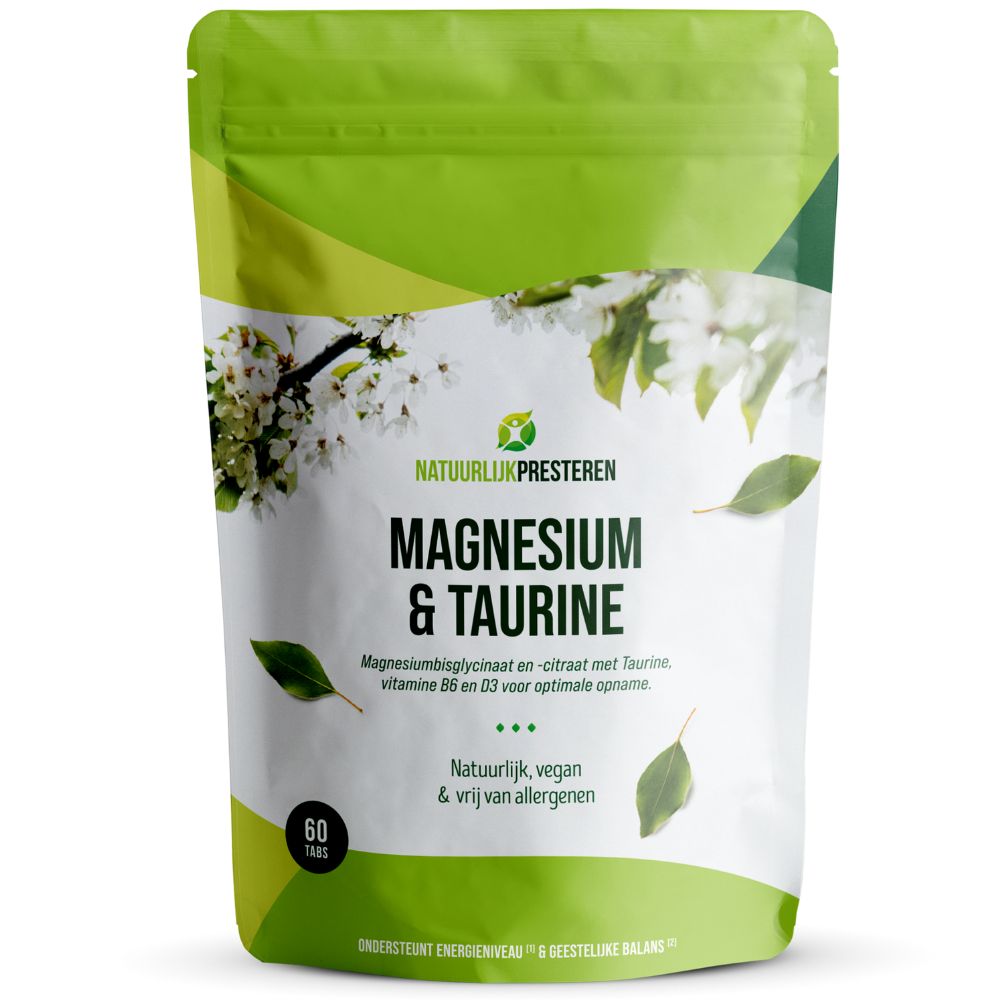
A good example is our high-quality supplement Magnesium & Taurine, which combines two types of magnesium with taurine. Magnesium bisglycinate is better absorbed by the brain, while magnesium citrate is better absorbed by muscles. We therefore combine these two forms of magnesium for the most complete effect possible.
On this collection page you will find all our products with the best absorbable magnesium.
The ideal time to take magnesium
What many people don't know is that the ideal time to take magnesium tablets depends on your goal:
- For sleep : Magnesium plays an important role in nerve function. Take magnesium an hour before bed to help you relax.
- For energy: Magnesium helps with fatigue. Take magnesium in the morning or afternoon to support your energy levels throughout the day.
- Post-workout: Magnesium plays a role in maintaining supple muscles. Take magnesium after your workout to contribute to muscle recovery.
- Between meals : Some forms of magnesium are better absorbed when taken between meals. Do you suffer from stomach upset? Then taking the tablets during or immediately after a meal may actually help.
Sources Used
- Blancquaert, L., Vervaet, C., & Derave, W. (2019). Predicting and Testing Bioavailability of Magnesium Supplements. Nutrients , 11 (7), 1663. https://doi.org/10.3390/nu11071663
Gerelateerde blogartikelen
 bloggle
Magnesium: Everything you need to know!
Magnesium is an essential mineral with many different functions in the body. It contributes to the nervous system and muscle function, for example. A magnesium deficiency therefore has several consequences for the body. This article covers everything about magnesium. You'll learn about the types of magnesium, its benefits, its sources, and more. Magnesium supports muscles, nerves, energy production and mental health and is found in foods such as nuts, chocolate and vegetables. A deficiency can lead to fatigue, muscle cramps, concentration problems and heart problems, made worse by stress, caffeine and poor diet. The best forms of magnesium are organically bound variants such as bisglycinate and citrate, which are better absorbed and work more effectively. Table of contents What is magnesium? What types of magnesium are there? Organically bound magnesium Inorganically bound magnesium How much magnesium do you need per day? What are the benefits of magnesium? What are the symptoms of a magnesium deficiency? Causes of a magnesium deficiency Insufficient dietary intake Chronic stress Gut problems (Irritable Bowel Syndrome or Leaky Gut Syndrome) Too much alcohol Too high estrogen Insulin resistance Too much caffeine Use of antacids Elite sports or sauna Where does magnesium come in? What are the side effects of too much magnesium? What is the best magnesium? What is magnesium? Magnesium is a mineral the body needs for a wide range of functions. Most people are familiar with magnesium for its effects on rest and muscle recovery, but it also influences other bodily processes. For example, it also affects energy and mental health. Magnesium is found in chocolate, vegetables, and nuts, among other things. A deficiency or excess is rare, but when it does occur, it can cause quite unpleasant symptoms. Your body absorbs magnesium through the small intestine. Magnesium absorption can vary significantly depending on the supplement and the type of food. You can read more about this later in the article. What types of magnesium are there? Magnesium is available in various forms. These variants have different properties and are not all equally absorbable. Magnesium types can actually be divided into two types: organically bound and inorganically bound. Organically bound magnesium Organic magnesium is a form of magnesium in which magnesium is bound to an organic molecule. These forms are absorbed the best. Magnesium bisglycinate - This form is known for its relaxing effect on the nervous system and muscles. It is a combination of magnesium and the amino acid glycine. Magnesium citrate - This form of magnesium is combined with citric acid and is better absorbed. It is often used for people suffering from constipation. Magnesium malate - This form of magnesium is also combined with another substance, in this case malic acid. This is often recommended for people who want muscle support or suffer from fatigue. Magnesium Taurate - This is another form of magnesium known for its relaxing effects and cardiovascular benefits. It's a combination of magnesium and the amino acid taurine. Inorganically bound magnesium Inorganic magnesium is a form of magnesium in which magnesium is bonded to an inorganic molecule or atom. Magnesium oxide - These forms are widely used against heartburn and constipation. Magnesium hydroxide - is also used against heartburn and constipation. Magnesium chloride - This form is primarily used for nerves and muscles. It's known for its relaxing effect. It's often used in flakes for topical use. Magnesium sulfate - This form is also called Epsom salt and is known for its strong laxative effect. How much magnesium do you need per day? The amount of magnesium you need varies by age and specific needs. The table below provides guidelines for daily intake. Age / needs Amount of magnesium per day Infants (0-6 months) 30 mg Infants (7-12 months) 75 mg Children (1-3 years) 80 mg Children (4-8 years) 130 mg Children (9-13 years) 240 mg boy 280 mg girls Teenagers (14-18 years) 410 mg boys 360 mg girls Adult men (18+) 400 – 420 mg Adult women (18+) 310 – 320 mg Pregnant women 350 – 360 mg Women who are breastfeeding 310 – 320 mg It's important to know that these are general recommendations and that needs can vary from person to person. It's wise to consult a medical professional before starting supplements, especially if you have an underlying health condition. What are the benefits of magnesium? Magnesium has positive effects on both the body and the mind. The benefits of magnesium are listed below. Helps against fatigue and for a healthy energy level - Magnesium is essential for the production of ATP, which is a substance our body uses to create energy. It also plays a role in regulating electrolyte balance and nerve function, which also helps prevent fatigue. Good for a good night's sleep - Magnesium helps you relax during stressful times because it has a calming effect on the nervous system. It also plays a role in the production of 5-HTP and serotonin, which converts to melatonin. It's also linked to GABA, a calming neurotransmitter in the brain [1]. Supports electrolyte balance - Magnesium is one of the electrolytes important for proper fluid balance, nerve function, and muscle contraction. It also plays a role in the balance of other important electrolytes, such as potassium, calcium, and sodium. Supports the nervous system - The nervous system is like electrical wiring that transmits signals between the brain and the rest of the body. Magnesium supports this system by ensuring that nerve cells don't become overactive and thus remain "calm." Is good for the muscles - Magnesium helps conduct signals between nerves and muscles. It also helps maintain the balance between muscle contraction and relaxation. Contributes to normal protein synthesis - Protein synthesis is the process of building new proteins. This requires the assembly of amino acids. Magnesium supports this process. Supports cognition - Magnesium supports various psychological functions. It's involved in signal transmission between brain cells and regulating neurotransmitters. Helps keep bones and teeth healthy - Magnesium helps form healthy bone and tooth structures. It works together with calcium to achieve this. Supports cell division - Cell division involves many steps and magnesium acts as a kind of 'director' in carrying out these steps, making it work more efficiently. Good for concentration - Magnesium plays a role in neurological processes, such as the transmission of signals between the brain and nerve cells. This is important for clear thinking, focus, and concentration. Magnesium is also involved in the function of neurotransmitters, which are related to alertness, attention, and concentration. Magnesium is essential for a wide range of functions in the body and mind. When you don't get enough magnesium from food, various symptoms can occur. A magnesium deficiency is more common than you might think. Approximately 20 to 30 percent of adults don't get enough magnesium. What are the symptoms of a magnesium deficiency? As you read above, magnesium is essential for a wide range of functions in the body and mind. When you don't get enough magnesium from food, various symptoms can occur. A magnesium deficiency is more common than you might think. Approximately 20 to 30 percent of adults don't get enough magnesium. The symptoms of a magnesium deficiency[2][3]: Loss of appetite Nausea Concentration problems Gloom Fatigue Muscle problems Heart problems Nerve problems Numbness Tingling The causes of a magnesium deficiency A magnesium deficiency can therefore significantly impact your physical and mental health. There are also circumstances that may increase your magnesium needs, or cause it to be absorbed less effectively. In these cases, pay extra attention to your intake or take a supplement. Insufficient dietary intake Many foods are processed before they're eaten. Think of grinding, heating, or refining. Magnesium is lost with every processing step. Furthermore, magnesium is often present in the skin, or it evaporates into the cooking water if you overcook food. Food from bags, packets, or cans also contains few nutrients, including magnesium. Chronic stress When you're stressed, your body uses more magnesium[4]. As mentioned earlier, magnesium plays an important role in relaxation and the production of neurotransmitters, which are responsible for feelings of happiness. Chronic stress can therefore cause a magnesium deficiency, but a magnesium deficiency can also cause stress. Then you end up in a vicious cycle. Bowel problems (Irritable Bowel Syndrome or Leaky Gut Syndrome) With intestinal problems like Irritable Bowel Syndrome or Leaky Gut Syndrome, a vicious cycle can also develop. The intestinal problems can lead to reduced absorption. But reduced magnesium absorption can also lead to reduced intestinal muscle function. Too much alcohol Alcohol stimulates the kidneys to excrete more magnesium. It also reduces the efficiency of digestion and can cause a vitamin D deficiency. Vitamin D is necessary for proper magnesium absorption[5]. Too much estrogen In some cases, estrogen levels can be too high in women. This is called estrogen dominance. To eliminate estrogen, the body needs magnesium. Estrogen dominance therefore requires more magnesium. If there is too little magnesium, estrogen levels can rise even further. This is another vicious cycle. Insulin resistance Magnesium is involved in releasing energy from carbohydrates. Insulin resistance makes the body insensitive to insulin. Blood sugar levels then rise. This results in higher blood sugar levels and increased magnesium consumption, meaning you need more of it. Magnesium is also less well absorbed with insulin resistance. Too much caffeine Magnesium is processed by the kidneys. They filter it and ensure that any excess is excreted. Caffeine affects kidney function. It acts as a diuretic, which encourages your kidneys to excrete more urine. This can lead to excess magnesium loss because it leaves your body through urine and isn't absorbed[6]. Caffeine is found in, among other things: Coffee Tea Cola Chocolate Use of antacids Antacids reduce the stomach's acidity. If there's too little stomach acid, the body can absorb fewer nutrients. This can lead to a mineral deficiency, such as magnesium. Your body can't digest food, and the magnesium is excreted undigested. Top sport or sauna You also have an increased risk of a magnesium deficiency if you participate in elite sports or frequent saunas. This is because sweating causes the loss of various minerals, including magnesium. The body then simply needs more magnesium to stay healthy. What does magnesium contain? Below are 20 food sources that are high in magnesium. Food Amount per 100 grams Seaweed 770 mg Pumpkin seeds 535 mg Chia seeds 335 mg Dark chocolate 327 mg Sunflower seeds 325 mg Cashew nuts 292 mg Almonds 268 mg Quinoa 197 mg Brown rice 143 mg Wheat germ 138 mg Spinach 79 mg Soybeans 70 mg Black beans 60 mg Tofu 53 mg Kale 47 mg Lentils 36 mg Salmon 30 mg Avocado 29 mg Bananas 27 mg What are the side effects of too much magnesium? Too much magnesium can cause a number of symptoms. For example, some forms of magnesium (particularly the inorganic forms) are used as laxatives for a reason. This laxative effect can also be a drawback. Below are all the side effects of too much magnesium. Diarrhea Nausea Fatigue Muscle weaknesses Palpitations Low blood pressure To reduce the adverse effects of magnesium, if you do require a higher dose, it can help to minimize its impact on the gastrointestinal system. This can be done by taking it after meals or spreading the dose throughout the day. What is the best magnesium? With all the different types of magnesium available, it can be difficult to determine which form is best. For optimal results, it's best to combine different forms of organically bound magnesium. Organically bound magnesium is more easily absorbed. For example, combine magnesium citrate and magnesium bisglycinate for the most complete effect. Magnesium bisglycinate is better absorbed by the brain and benefits psychological functions, while magnesium citrate is better absorbed by muscles and thus has an effect on the muscles and nervous system. For example, we sell the Magnesium & Taurine supplement in our webshop. This also contains vitamin D and vitamin B6. Magnesium works closely with vitamin D3 . In addition, taurine and the active form of B6 (P5P) help improve magnesium absorption into cells. This allows the body to utilize this magnesium more quickly. Lauressa Lauressa studied Nutrition & Dietetics and also works as an editor. She enjoys delving deeply into topics related to healthy eating, mental well-being, and hormone balance. When she's not pursuing her passion for health, she enjoys being creative. Read more Sources https://www.ncbi.nlm.nih.gov/pmc/articles/PMC5452159/ https://pubmed.ncbi.nlm.nih.gov/29387426/ https://pubmed.ncbi.nlm.nih.gov/22087052/ https://www.ncbi.nlm.nih.gov/books/NBK507250/ https://pubmed.ncbi.nlm.nih.gov/7836619/ https://www.researchgate.net/publication/279923885
Lees meer
Why combine Magnesium Bisglycinate with Magnesium Citrate?
We recently received a good question from one of our customers. She was examining the packaging of our magnesium supplement carefully and wondered why we combine Magnesium Bisglycinate with Magnesium Citrate. She always thought that bisglycinate was a much better form of magnesium than citrate. "So why would you combine it with another form of magnesium?" she asked. In this article, we'll explain why this is so beneficial for the body. Magnesium bisglycinate is absorbed differently, has little competition and works faster in the brain (memory, concentration, learning performance). Magnesium citrate competes with other minerals and is absorbed more slowly. It is known to be well absorbed and is beneficial for muscles (including the heart muscle). A combined formula supports both brain and muscles, extra reinforced with taurine, vitamin B6 and vitamin D. Table of contents The Difference Between Magnesium Bisglycinate and Citrate Magnesium Bisglycinate Magnesium Citrate The Perfect Combination Why Combine These Two Forms Frequently Asked Questions The difference between Magnesium Bisglycinate and Citrate Let's start by saying that these are both incredibly effective forms. However, there is a significant difference between the two. The difference lies primarily in how they are absorbed into the body's cells. Magnesium bisglycinate Magnesium bisglycinate is treated by the body as an amino acid, meaning it hardly competes with other minerals in the body. This often makes it better absorbed than, for example, bisglycinate citrate. Research has also shown that bisglycinate is absorbed more quickly into the brain than into the muscles. This form is therefore better for psychological functions such as memory, concentration, and learning performance. Magnesium citrate Magnesium citrate does compete with other minerals in the body, making it slightly less well absorbed. Many different minerals use the same type of receptors to enter a cell. Research has shown that magnesium citrate is absorbed faster in the muscles than in the brain, which means it is actually better for muscle function (including the heart muscle). The perfect combination Both forms of magnesium would like to enter a body cell together. A long line of other minerals lies in front of the body cell... Magnesium bisglycinate can use a different entrance than normal minerals! This makes it easier for it to enter the body cell, because it doesn't compete with other minerals. The citrate has to wait in line for a while, so it takes longer to enter the body cell. Why combine these two forms Both forms of magnesium have different properties. One form (-citrate) is better absorbed by the muscles, while the other form (-bisglycinate) is better absorbed by the brain. If you're looking for a complete magnesium supplement, it's best to combine these two. We've also added taurine, vitamin B6 , and vitamin D to this combination for extra potency. If you're curious about this magnesium supplement… Click here to view it in the webshop >> Jochum Smid Jochum Smid is a biobased chemist specializing in orthomolecular nutrition. He develops and selects the nutritional supplements at Natuurlijk Presteren and has a passion for biohacking, science, and healthy eating. Read more
Lees meer
Taking magnesium before bed? Here are the 5 benefits for your sleep.
Could taking magnesium before bed be beneficial for you? Many people have trouble sleeping, which can leave them feeling tired and irritable during the day. Poor sleep can have a major impact on your health, but luckily, magnesium can help. This mineral is involved in the production of the substances you need for a good night's sleep and also has a positive effect on your nervous system. In this blog post, we explain why taking magnesium before bed can help you get a good night's sleep. Magnesium deficiency can be caused by processed foods, stress, gut problems and excessive alcohol or caffeine consumption, which hinder absorption and can cause sleep problems. Magnesium is often chosen as part of an evening routine focused on relaxation and rest. It's a popular mineral in products used for restless legs or irregular sleep patterns. Magnesium citrate and bisglycinate are known for their good absorption and are often combined with substances such as taurine, vitamin B6 and D3 for a widely applicable formula. Table of contents The causes of a magnesium deficiency Benefits of magnesium for sleep 1. Support during stress 2. Less tired during the day 3. Necessary for the production of melatonin 4. Support of the sleep rhythm 5. Magnesium for restless legs Forms of magnesium for bedtime The causes of magnesium deficiency If you regularly have trouble sleeping, it could be due to a magnesium deficiency. A deficiency of this mineral can arise from various causes. Nowadays, we eat a lot of processed foods. The more processed food is, the more magnesium is lost. Compared to the past, we therefore consume much less magnesium. In addition, stress causes your body to use more magnesium. The mineral is necessary for the production of neurotransmitters and helps you relax. Gut problems can also be the cause of a magnesium deficiency. If you suffer from IBS or leaky gut syndrome, your body may have difficulty absorbing nutrients (including magnesium). Furthermore, alcohol and caffeine consumption can cause a magnesium deficiency. Benefits of magnesium for sleep Magnesium plays an important role in relaxation and sleep. These are the benefits of magnesium for a good night's sleep. 1. Support for stress To fall asleep and sleep well, you need to be able to relax. When you're stressed, you can feel both physically and mentally tense, which can make sleeping difficult. Magnesium is important in the relaxation process. It activates the parasympathetic nervous system, which produces relaxation and calmness [1] . It does this by regulating the release of neurotransmitters, which send signals throughout the nervous system and into the brain. In addition, magnesium binds to GABA receptors. GABA is a neurotransmitter that reduces nerve activity, making you feel calmer and fall asleep faster. Did you know? Sleeping pills work on the same GABA receptors as magnesium, which is what makes them so effective. Magnesium has the same effect, only in a natural way. 2. Less tired during the day A magnesium deficiency can create a vicious cycle of fatigue. Poor sleep makes you feel overtired during the day, but you sleep poorly again, making you feel even more tired. Supplementing with magnesium can break this cycle. A good night's sleep helps you feel more refreshed during the day. You can do more, like exercising, which will help you feel healthy and tired at the end of the day. And that will make it easier to fall asleep quickly and sleep soundly. 3. Necessary for the production of melatonin Your body produces various substances to help you sleep well. Melatonin is one of them. It's produced by the pineal gland in response to light. When it gets dark, melatonin production increases, making you feel drowsy. Melatonin is therefore essential for falling asleep and staying asleep. Magnesium is also important here; it's a cofactor needed to produce melatonin. If you have a magnesium deficiency, melatonin production is also disrupted, which can lead to sleep problems. 4. Support of the sleep rhythm As mentioned, magnesium is important for melatonin production. The body's own melatonin ensures a regular sleep pattern. This is your biological clock, which ensures you get sleepy in the evening and wake up feeling refreshed in the morning. This biological clock responds to the light and dark signals you receive, prompting your body to produce the right hormones, including melatonin. This sleep-wake rhythm is therefore crucial for sleeping well. 5. Magnesium for restless legs Those who suffer from restless legs syndrome (RLS) may also benefit from magnesium. Restless legs syndrome is a condition in which you feel an irresistible urge to keep moving your legs. This can make it difficult to fall asleep at night. Research suggests that a magnesium deficiency plays a role in this. The link between magnesium and RLS has not yet been sufficiently demonstrated in people without other symptoms. However, there does seem to be evidence that magnesium deficiency plays a role in people who develop restless legs syndrome during pregnancy or while receiving dialysis. Forms of magnesium before bed Are you planning to use magnesium before bed? There are different forms of this mineral, and not all are absorbed equally well by the body. Forms of magnesium that are best avoided are magnesium oxide, magnesium hydroxide, and magnesium chloride. These are difficult for the body to absorb. They can also cause diarrhea. Therefore, they are officially registered as laxatives. The best forms of magnesium are magnesium citrate and magnesium bisglycinate. These are organically bound forms of magnesium, making them easily absorbed and utilized by the body. Our magnesium supplement contains a combination of these forms of magnesium plus additional taurine, vitamin B6 and vitamin D3. Combining magnesium with taurine and active vitamins B6 and D3 further enhances the absorption of this mineral. Your body therefore has access to it even faster. We've also added magnesium to our natural sleep aid. This sleep aid has been voted the best natural sleep aid by sites like slaapbalans.nl and slaapwijsheid.nl. Miriam Mirjam felt a connection with nature from a young age. This has led to a deep passion for health, natural remedies, and healthy eating. She also loves reading, yoga, and writing. When the weather is nice, she enjoys exploring new hiking trails. Read more
Lees meer