What are prostate pills?
Natural prostate pills are dietary supplements containing herbal extracts and nutrients that can support prostate health, such as saw palmetto, pumpkin seed, and nettle root.
Unlike some prescription medications, natural supplements usually have fewer side effects and are often well tolerated.
They can complement a healthy lifestyle and are valued for their gentle, supportive effect in maintaining prostate health.
How do prostate pills work?
The ingredients in prostate supplements target three key areas: hormonal balance, urinary tract health, and cell protection:
1. Hormonal balance
Essential nutrients such as vitamin B6 (in active pyridoxal-5-phosphate) and zinc (citrate) contribute to normal hormonal balance. The extract from a small palm species called saw palmetto supports both prostate function and male potency*.
2. Urinary tract support
Plant extracts such as nettle (4:1 extract) and pumpkin seed (10:1 extract) are known for their ability to support the urinary tract and are beneficial for prostate function.* Saw palmetto extract also supports the urinary tract.
3. Protection of cells
Vitamin E helps protect healthy body cells, and zinc plays a role in protecting sperm cells. Zinc also supports normal sperm cell division.
Please note: Claims marked with (*) are health claims awaiting European approval.
Our natural prostate pills
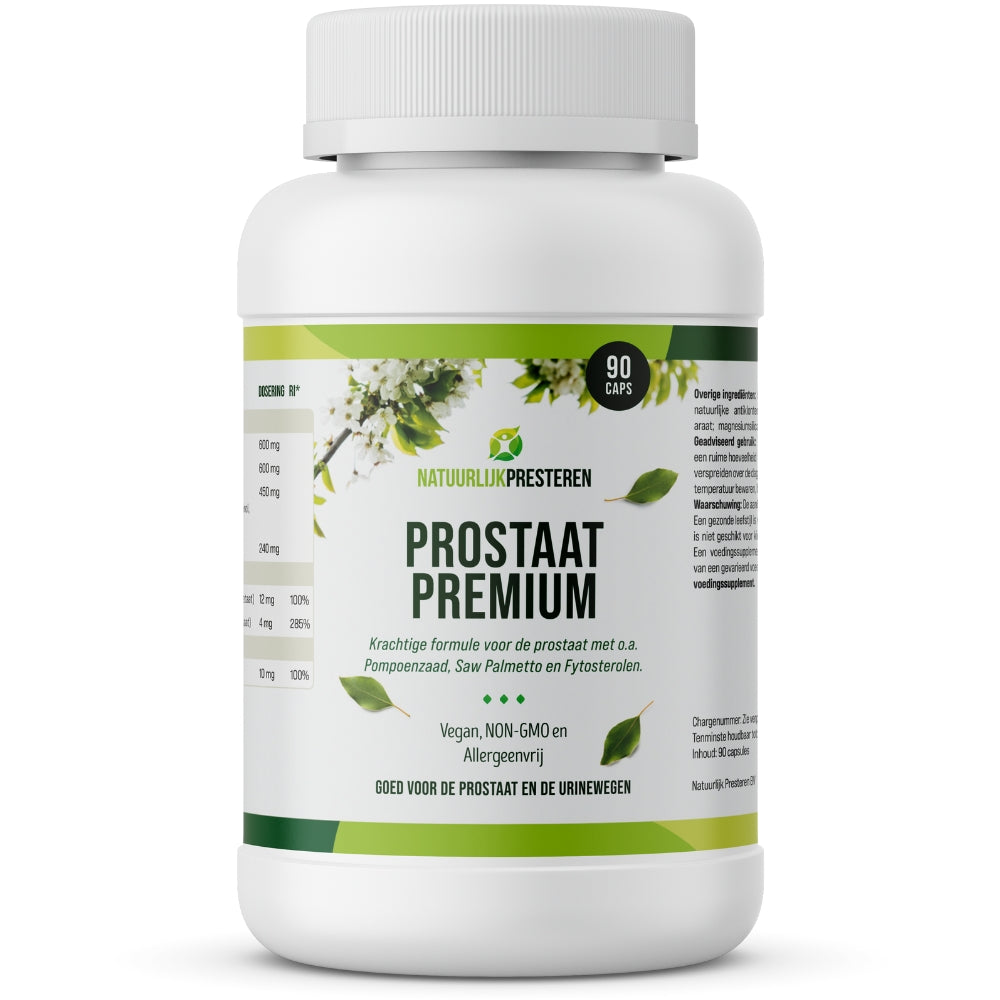
The prostate pills from Natuurlijk Presteren, Prostaat Premium , contain all these carefully selected plant extracts and nutrients.
Specially developed for men aged 50+, this 8-in-1 prostate formula contains only natural ingredients and is designed to support prostate health.
Tips for Using Natural Prostate Pills
If you're considering using prostate tablets or capsules, I recommend keeping the following points in mind for optimal results:
Tip 1: Choose Quality
Make sure you choose natural prostate pills from a reputable brand that is transparent about the ingredients and their source.
Tip 2: Follow the Recommended Dosage
Stick to the recommended dosage on the packaging. Overdosing can lead to unpleasant side effects, while too little may be ineffective.
Tip 3: Monitor your diet and lifestyle
Natural supplements work best when combined with a healthy lifestyle. Eat a varied and healthy diet, stay physically active, and avoid excessive alcohol consumption and smoking.
Tip 4: Be Patient
Natural supplements can take time to show noticeable results. Give the supplement several weeks to months to be effective.
Gerelateerde blogartikelen

How to Keep Your Prostate Healthy: Tips from a Nutritionist
Do you want to keep your prostate healthy? As a man, it's wise to pay attention to your prostate, a small but important gland that plays a major role in your health. With the right nutrition and a healthy lifestyle you can keep your body strong and in doing so you also contribute to a healthy prostate. In this article, as a nutritionist, I'll give you practical tips on what you can eat more often to support your prostate. I'll also tell you which foods to avoid. No promises or guarantees for a healthy prostate, but honest and scientifically substantiated advice that you can apply immediately. A healthy lifestyle and diet can support the prostate, but offer no guarantees; mindful eating and exercise do help maintain prostate health. Regularly choose tomatoes, unprocessed soy, green tea, cruciferous vegetables, oily fish and sufficient zinc, selenium and vitamin D as a basis for support. Limit processed red meat, dairy, saturated/trans fats, and sugar; watch for symptoms such as urinary problems and consult a doctor if you experience any. Table of contents What is a prostate? How common are prostate problems? The influence of diet and lifestyle on your prostate health Nutritional tips for a healthy prostate 1. Eat tomatoes regularly for lycopene 2. Add unprocessed soy products to your menu 3. Drink green tea daily 4. Enjoy coffee in moderation 5. Eat cruciferous vegetables daily 6. Eat more fatty fish (omega-3) Vitamins and minerals for your prostate health 1. Zinc 2. Selenium 3. Vitamin D Why Prostate Premium is a good choice Foods to avoid Combine with other healthy habits Symptoms of an enlarged prostate What is a prostate? The prostate is a small, walnut-sized gland found only in men. It lies beneath the bladder and surrounds the beginning of the urethra. The prostate plays an important role in reproduction: It produces some of the fluid in semen, which nourishes and protects the sperm cells. How common are prostate problems? As men age, various prostate problems can arise, such as: An enlarged prostate, also called benign prostatic hyperplasia (BPH) (benign) Inflammation of the prostate (prostatitis) Prostate cancer In the Netherlands , about half of men over 60 suffer from an enlarged prostate , and this percentage increases even further in older men. Inflammations can occur at any age, while prostate cancer is more common in men over 50. (1) Good to know : It's not entirely clear whether prostate problems are truly more common than they used to be. Thanks to better research and increased awareness, problems are now being detected more often and earlier. However, it's becoming increasingly clear that aging and lifestyle play a significant role. Therefore, it's wise to pay attention to your prostate health, regardless of your age. The influence of diet and lifestyle on your prostate health We can't stop aging, but what you can influence is what you eat and how you live. By making conscious choices in these areas, you help your body age as healthily as possible, and, as a man, also keep your prostate healthy. Scientific research shows that diet and lifestyle can play a role in prostate health. Studies often focus on the relationship between these factors and prostate problems, such as benign prostatic hyperplasia (BPH) and prostate cancer. This involves not only looking at the origins of these conditions, but also at how nutrition and lifestyle relate to the complaints that may accompany them. Important to know It is important to know that nutrition and lifestyle can contribute to maintaining a healthy prostate, but that they do not guarantee that prostate problems will be prevented or cured. Nutritional tips for a healthy prostate As a nutritionist, I'm happy to share practical tips to support your general health with nutrition, and indirectly also your prostate. Below you'll find my advice on foods that fit into a healthy lifestyle, along with an explanation of what scientific research shows about their potential role. 1. Eat tomatoes regularly for lycopene Tomatoes are packed with lycopene, an antioxidant that gives the fruits their red color. Researchers are studying lycopene for its potential role in healthy lifestyle, including its relationship to prostate health. (2) (3) Although there is no convincing evidence yet that lycopene directly contributes to a healthy prostate, tomatoes are an excellent addition to a varied diet that is good for your overall well-being. Did you know that lycopene from heated tomatoes , for example, in sauces or soups, is better absorbed by your body? Heating breaks down the tomato's cell walls, making the substance more readily available. 2. Add unprocessed soy products to your diet By unprocessed soy products I mean soy that has been modified or processed as little as possible, such as tofu , soy milk without added sugars or flavorings, and edamame (young soybeans). These products contain isoflavones, plant compounds being studied for their properties, including potential antioxidant activity and influence on hormone processes. Their role in prostate health is also being investigated. (4) Currently, there is no convincing evidence that soy directly contributes to prostate health. However, soy products do fit well within a varied diet that supports general well-being. Try tofu in a stir-fry or edamame as a healthy snack – simple and delicious! 3. Drink green tea daily Green tea is rich in catechins, antioxidants naturally found in tea leaves. Research focuses on the role of green tea within a healthy lifestyle, including looking at the effect of drinking several cups per day in relation to prostate health. (5) Although there is not yet enough evidence to say that green tea directly contributes to a healthy prostate, green tea fits perfectly into a varied diet that is good for your overall well-being. For example, drink it as a warm morning drink or as a refreshing iced tea. 4. Enjoy coffee in moderation Coffee is a favorite way to start the day for many, and researchers have looked at its role in a healthy lifestyle. Some studies are looking at the possible relationship between coffee consumption and various aspects of men's health, including the prostate. (6) Although there's no hard evidence yet that coffee directly contributes to prostate health, coffee can be a good fit for a healthy diet, provided you drink it in moderation. This means about 3 to 4 cups per day , which is considered safe for most people. So enjoy your daily cup of coffee, but in moderation. 5. Eat cruciferous vegetables daily Vegetables from the cruciferous family, such as broccoli, cauliflower and Brussels sprouts , contain many vitamins and minerals as well as antioxidants such as glucosinolates. There is no convincing evidence yet that these substances are directly good for your prostate, but these vegetables do make your meals nutritious and varied, which benefits your overall well-being. (7) For example, roast some Brussels sprouts with some honey and Parmesan cheese for a crunchy side dish. 6. Eat more fatty fish (omega-3) Omega-3 fatty acids are healthy fats that are found in oily fish such as salmon and mackerel . Scientists are investigating omega-3s for their potential influence on inflammatory processes and cell health, aspects that are also relevant to prostate tissue. These studies are promising, but there is not yet enough evidence to establish a clear link with prostate health. What is certain is that regularly eating oily fish fits into a varied and balanced diet. (8) Good to know : Most studies focus on prostate cancer, but a healthy diet with these tips can also support your prostate in other ways. The evidence for other prostate problems is less clear, but these healthy habits are a good foundation in any case. Vitamins and minerals for your prostate health Want to give your prostate some extra support? Focus on a few essential vitamins and minerals. Ideally, you should get these from food, but if you're deficient, consider supplements. Here are the most important vitamins and minerals for your prostate: 1. Zinc Zinc is a mineral found in foods such as meat, fish, whole grains, and nuts . It contributes to the normal functioning of the immune system and plays a role in fertility, for example by supporting healthy sperm production. Zinc occurs naturally in high concentrations in the prostate and helps keep the body in balance. (9) A varied diet generally provides sufficient zinc. It's important not to take too much zinc through supplements, as an excess can be harmful. 2. Selenium Selenium is a mineral your body needs in small amounts. It's found in Brazil nuts, fish, and eggs , among other foods. It protects your cells from damage and supports your immune system and sperm production. (10) Selenium is valuable for your overall health, but a varied diet usually provides enough. High doses of supplements (above 900 mcg/day) can even have adverse effects. 3. Vitamin D Vitamin D is mainly formed in the skin under the influence of sunlight , but you can also get it from oily fish and fortified dairy products. It supports your immune system and normal cell division, which keeps your body healthy. (11) A good vitamin D level is important for your well-being, but the evidence for direct benefits for your prostate is still limited. Supplements are only necessary in case of a deficiency. Good to know : Eat a varied diet to get these nutrients, and talk to your doctor about supplements if you think you're missing something. This way, you'll give your body and prostate a healthy foundation. Why Prostate Premium is a good choice Prostate Premium combines the most important minerals and vitamins with carefully selected natural ingredients, each known for their contribution to a healthy lifestyle for men aged 45 and over. It includes, among other things: Pumpkin seed extract contains fatty acids and antioxidants that are involved in protecting body cells from oxidative stress Saw Palmetto and nettle have long been traditionally used to support male health The phytosterol complex , including beta-sitosterol, is a natural component of many plants and is being studied for potential effects on prostate health Zinc citrate is a well-absorbed form of zinc, a mineral that contributes to the normal functioning of the immune system and the maintenance of healthy hormonal balance. By combining these ingredients, Prostate Premium supports men in several areas of their health, in line with a healthy lifestyle. The supplement is carefully formulated with standardized extracts and high-quality forms of vitamins and minerals, ensuring reliable quality and absorption into the body. Good to know : This product is intended as a supplement to a healthy diet and lifestyle, not as a replacement for medical treatment. Foods to avoid Some foods are actually mentioned in studies as potentially linked to an increased risk of prostate problems . Therefore, it may be wise to eat them in moderation or avoid them as much as possible. Processed red meat – High consumption of red meat, especially processed meats like sausage and bacon, has been associated with a slightly increased risk of prostate cancer and prostate enlargement in some studies. Substances produced during cooking or processing may play a role in this. (12) Dairy and calcium – Some studies have shown that a high intake of dairy and calcium may be associated with a slightly higher risk of prostate cancer. Therefore, it is wise to consume dairy in moderation as part of a varied diet. (13) Saturated and trans fats – These fats are mainly found in fried foods and processed snacks. Some studies show a possible association with an increased risk of prostate cancer and inflammation. Limiting these can contribute to a healthy lifestyle. (14) Sugary foods and drinks – Excessive sugar consumption can indirectly affect prostate problems, including by increasing the risk of obesity and inflammation. Therefore, reducing sugar may be a wise choice. (15) Bottom Line : Some studies have linked diets high in red and processed meat, dairy, sugar, and trans fats to a higher incidence of prostate problems. A varied diet with plenty of vegetables, fruits, and fish is generally recommended for good health, which may also benefit your prostate. (16) Combine with other healthy habits The nutritional tips can contribute to a healthy body, which can also indirectly benefit your prostate. A healthy lifestyle enhances this effect. Consider, for example: Walk at least half an hour every day Get enough sleep (7 to 9 hours per night) Quit smoking and drink alcohol in moderation Maintain a healthy weight through good nutrition and exercise Using stress reduction techniques such as meditation or mindfulness Have regular check-ups , especially from the age of 50 or if you have a family history In short : By combining these habits with a balanced diet, you give your body and prostate the best support. Symptoms of an enlarged prostate Do you suspect something's wrong with your prostate? Prostate problems, such as an enlarged prostate, usually cause a number of typical symptoms. Here are the most common symptoms to look out for. If you recognize anything, see your doctor to have it checked out. Difficulty urinating - Does it feel like your bladder isn't emptying completely, or is your stream weaker than before? This could indicate an enlarged prostate putting pressure on your urethra. Frequent urination - Do you often have to get up at night to pee, or go to the bathroom frequently during the day? This could be due to an overactive bladder or prostate problems. Pain or burning sensation when urinating - A burning sensation or pain during urination may indicate an inflammation, such as prostatitis. Blood in urine or semen - Do you see blood in your urine or semen? This isn't always serious, but it's important to have it checked out. Pain in your pelvis or lower back - Pain in your pelvis, groin, or lower back can sometimes indicate prostate problems, especially prostatitis or other conditions. Problems with sexual function - Difficulty getting an erection or pain during ejaculation can sometimes be linked to prostate problems. Good to know : These symptoms don't necessarily mean something serious is wrong, but they are a sign that you need to take action. A healthy lifestyle, such as a varied diet and enough exercise, supports your overall health, but if you experience these symptoms, a visit to your doctor is the best course of action. They can help you with the appropriate checkups. Ebrina van der Bijl Ebrina is a nutritionist with a deep commitment to healthy eating and a sustainable lifestyle, based in beautiful Portugal. Her passion for natural and organic products is at the heart of her work. With a background in Nutrition & Dietetics and experience in product development and writing, she translates complex scientific information into practical advice for a balanced lifestyle. Read more Sources used Prostate cancer | Age. (n.d.). Public Health and Care. https://www.vzinfo.nl/prostaatkanker/leeftijd Chen, P., Zhang, W., Wang, X., Zhao, K., Negi, D.S., Zhuo, L., Qi, M., Wang, Lycopene and Risk of Prostate Cancer. Medicine, 94(33), e1260. https://doi.org/10.1097/md.0000000000001260 Balali, A., Fathzadeh, K., Askari, G., & Sadeghi, O. (2025). Dietary intake of tomato and lycopene, blood levels of lycopene, and risk of total and specific cancers in adults: a systematic review and dose–response meta-analysis of prospective cohort studies. Frontiers in Nutrition, 12. https://doi.org/10.3389/fnut.2025.1516048 Applegate, C., Rowles, J., Ranard, K., Jeon, S., & Erdman, J. (2018). Soy Consumption and the Risk of Prostate Cancer: An Updated Systematic Review and Meta-Analysis. Nutrients, 10(1), 40. https://doi.org/10.3390/nu10010040 Guo, Y., Zhi, F., Chen, P., Zhao, K., Xiang, H., Mao, Q., Wang, X., & Zhang, X. (2017). Green tea and the risk of prostate cancer. Medicine, 96(13), e6426. https://doi.org/10.1097/md.0000000000006426 Wang, A., Wang, S., Zhu, C., Huang, H., Wu, L., Wan, X., Yang, Coffee and cancer risk: A meta-analysis of prospective observational studies. Scientific Reports, 6(1). https://doi.org/10.1038/srep33711 Long, J., Liu, Z., Liang, S., & Chen, B. (2023). Cruciferous Vegetable Intake and Risk of Prostate Cancer: A Systematic Review and Meta-Analysis. Urologia Internationalis, 107(7), 723–733. https://doi.org/10.1159/000530435 Szymanski, K. M., Wheeler, D. C., & Mucci, L. A. (2010). Fish consumption and prostate cancer risk: a review and meta-analysis. American Journal Of Clinical Nutrition, 92(5), 1223–1233. https://doi.org/10.3945/ajcn.2010.29530 Bonaventura, P., Benedetti, G., Albarède, F., & Miossec, P. (2014). Zinc and its role in immunity and inflammation. Autoimmunity Reviews, 14(4), 277–285. https://doi.org/10.1016/j.autrev.2014.11.008 Hurst, R., Armah, C. N., Dainty, J. R., Hart, D. J., Teucher, B., Goldson, A. J., Broadley, M. R., Motley, A. K., & Fairweather-Tait, S. J. (2010). Establishing optimal selenium status: results of a randomized, double-blind, placebo-controlled trial. American Journal Of Clinical Nutrition, 91(4), 923–931. https://doi.org/10.3945/ajcn.2009.28169 Shahvazi, S., Soltani, S., Ahmadi, S., De Souza, R., & Salehi-Abargouei, A. (2018). The Effect of Vitamin D Supplementation on Prostate Cancer: A Systematic Review and Meta-Analysis of Clinical Trials. Hormone And Metabolic Research, 51(01), 11–21. https://doi.org/10.1055/a-0774-8809 Nouri-Majd, S., Salari-Moghaddam, A., Aminianfar, A., Larijani, B., & Esmaillzadeh, A. (2022). Association Between Red and Processed Meat Consumption and Risk of Prostate Cancer: A Systematic Review and Meta-Analysis. Frontiers in Nutrition, 9. https://doi.org/10.3389/fnut.2022.801722 Aune, D., Rosenblatt, DAN, Chan, D.S., Vieira, A.R., Vieira, R., Greenwood, D.C., Vatten, L.J., & Norat, T. (2014). Dairy products, calcium, and prostate cancer risk: a systematic review and meta-analysis of cohort studies. American Journal Of Clinical Nutrition, 101(1), 87–117. https://doi.org/10.3945/ajcn.113.067157 De Souza, R. J., Mente, A., Maroleanu, A., Cozma, A. I., Ha, V., Kishibe, T., Uleryk, E., Budylowski, P., Schünemann, H., Beyene, J., & Anand, S. S. (2015). Intake of saturated and trans unsaturated fatty acids and risk of all causes mortality, cardiovascular disease, and type 2 diabetes: systematic review and meta-analysis of observational studies. BMJ, h3978. https://doi.org/10.1136/bmj.h3978 Huang, Y., Chen, Z., Chen, B., Li, J., Yuan, Dietary sugar consumption and health: umbrella review. BMJ, e071609. https://doi.org/10.1136/bmj-2022-071609 Fabiani, R., Minelli, L., Bertarelli, G., & Bacci, S. (2016). A Western Dietary Pattern Increases Prostate Cancer Risk: A Systematic Review and Meta-Analysis. Nutrients, 8(10), 626. https://doi.org/10.3390/nu8100626
Lees meer
Natural Prostate Remedies? Here Are the Options
In addition to a healthy diet and lifestyle, many men are increasingly choosing natural supplements to support their prostate. But what remedies are available, and what do we know about their effects? I've looked into it for you. In this article, I'll tell you what you need to know about several popular and natural prostate pills. How exactly do they work, and what active ingredients are in them? A healthy lifestyle is the foundation for prostate health; many men supplement this with natural supplements such as saw palmetto, nettle, pumpkin seed, and beta-sitosterol, some of which are neither definitive nor definitive. Vitamin D3, zinc and selenium support the immune system, which indirectly contributes to normal prostate function and protection against inflammation. Supplements have standardized dosages and generally appear safe, but the evidence is inconclusive and use should always be discussed with a doctor, especially with medication. Table of contents The Function of the Prostate Natural Remedies: 4 Popular Options 1. Saw Palmetto Extract 2. Nettle Extract 3. Pumpkin Seed Extract 4. Beta-Sitosterol These Vitamins Are Also Important for Your Prostate The Importance of a Strong Immune System for Your Prostate The function of the prostate Your prostate is a small gland about the size of a walnut. Only men have a prostate. It's located beneath your bladder and surrounds the beginning of your urethra. This gland is essential for your reproduction and helps your urethra to function normally. Curious about what else your prostate does? Here are its main functions: Produces prostatic fluid - The prostate makes about 20-30% of your semen, a fluid that nourishes your sperm, protects them from the acidic environment outside your body, and makes them motile for their journey to an egg. Regulates urine flow during ejaculation - During ejaculation, the prostate closes your urethra with a muscle (the internal sphincter), so urine and semen don't mix. Supports normal urine flow - A healthy prostate keeps your urethra open so you can urinate without difficulty. As you age, your prostate can grow, for example, due to benign prostatic hyperplasia (BPH), also known as benign prostatic enlargement. This can narrow the urethra and cause symptoms such as a weaker urinary stream. That is why it is important to take good care of your prostate. Natural remedies: 4 popular options Taking good care of your prostate starts with a healthy lifestyle : Think about a varied diet, with plenty of vegetables like tomatoes, fish, and nuts, and exercise regularly. These basic habits are important and can support your prostate health in the long run. In addition, many men choose to use natural supplements, also known as prostate pills, to complement their diet and lifestyle. These are the most popular and best-substantiated ingredients in prostate supplements today: 1. Saw Palmetto Extract Saw palmetto extract (also called saw palmetto) is derived from the berries of a small palm tree native to the United States. Sometimes the leaves of the palm are also used. It is one of the most well-known ingredients used in natural supplements (related to the prostate). Dosage - Usually 320 mg per day of a standardized extract (85-95% fatty acids). Science - Some studies show a possible association between saw palmetto extract and a reduction in the urge to urinate at night*. (1) Safety - Generally safe, with possible mild side effects such as headaches. If you are taking medication, consult your doctor before using saw palmetto. 2. Nettle Extract Nettle, extracted from the root of the plant you know from nature, has traditionally been used for various health purposes. It contains active substances such as lignans (such as secoisolariciresinol), flavonoids (such as quercetin) and sterols (such as beta-sitosterol). Dosage - Around 600 mg per day is often used, sometimes standardized to 200-250 mg sterols. Scientific research - Nettle extract is being studied for its potential contribution to maintaining normal prostate function and supporting the urinary tract.* However, the available evidence is limited and its effectiveness has not yet been definitively established. (3) Safety - Generally, nettle is considered safe. Always consult a doctor, especially if you are taking medication. 3. Pumpkin seed extract Pumpkin seeds are rich in zinc, phytosterols (such as beta-sitosterol) and antioxidants, including vitamin E and carotenoids. That's why pumpkin seed extract and pumpkin seed oil are often used as natural ingredients in prostate supplements. Dosage - Approximately 320 mg per day, divided into two doses, or a handful of pumpkin seeds daily. Science - Some studies suggest that pumpkin seed extract may contribute to the maintenance of normal prostate and bladder function and a possible role in reducing the urge to urinate.* These effects are still being investigated and have not yet been recognized as approved health claims. (4)(5) Safety - Generally safe, but consultation remains important. 4. Beta-sitosterol Beta-sitosterol is a phytosterol, a plant substance with a structure similar to cholesterol. This substance occurs naturally in various plants and seeds such as saw palmetto, pumpkin seeds, nuts (almonds and walnuts), soy, and avocados. Dosage - Usually 60-130 mg per day, often divided into two doses. Science - Phytosterols (including beta-sitosterol) are being studied for their potential role in supporting urinary tract and prostate health.* However, more research is needed to definitively determine these effects. (6) Safety - Considered safe, but always consult your doctor, especially if taking medication. Good to know : Claims marked with (*) are health claims awaiting European approval. These vitamins are also important for your prostate Certain vitamins and minerals are essential for your overall health and can also indirectly support your prostate. These are primarily nutrients that contribute to a well-functioning immune system . These are the 3 most important vitamins and minerals for your prostate: Vitamin D3 helps keep your bones strong and contributes to a well-functioning immune system Zinc is naturally abundant in the prostate and plays a role in supporting your immune system Selenium helps protect your body's cells and also contributes to healthy immune function Eat a varied diet with plenty of vegetables, nuts, and fish to get these nutrients. If you're having trouble getting enough of them through your daily diet, it can sometimes be wise to temporarily supplement your meals with supplements. Please note : Always consult your doctor before using supplements, especially if you have existing health conditions or are taking medication. The Importance of a Strong Immune System for Your Prostate These nutrients contribute in particular to the maintenance of a normally functioning immune system, which plays an important role in supporting healthy prostate function. A well-functioning immune system helps keep inflammation and infections under control. This can prevent harmful processes from developing in the prostate , such as inflammation (prostatitis) or other prostate problems. By keeping your body strong and balanced, you also indirectly support the health of your prostate. Ebrina van der Bijl Ebrina is a nutritionist with a deep commitment to healthy eating and a sustainable lifestyle, based in beautiful Portugal. Her passion for natural and organic products is at the heart of her work. With a background in Nutrition & Dietetics and experience in product development and writing, she translates complex scientific information into practical advice for a balanced lifestyle. Read more Sources used Novara, G., et al. (2016). Serenoa repens for lower urinary tract symptoms due to benign prostatic hyperplasia: A systematic review and meta-analysis. European Urology, 70(5), 784–793. https://doi.org/10.1016/j.eururo.2016.04.033 Franco, J. V., Trivisonno, L., Sgarbossa, N. J., Alvez, G. A., Fieiras, C., Liquitay, C. M. E., & Jung, J. H. (2023). Serenoa repens for the treatment of lower urinary tract symptoms due to benign prostatic enlargement. Cochrane Library, 2023(6). https://doi.org/10.1002/14651858.cd001423.pub4 Ghorbanibirgani, A., Khalili, A., & Zamani, L. (2013). The Efficacy of Stinging Nettle (Urtica Dioica) in Patients with Benign Prostatic Hyperplasia: A Randomized Double-Blind Study in 100 Patients. Iranian Red Crescent Medical Journal, 15(1). https://doi.org/10.5812/ircmj.2386 Hong, H., Kim, C., & Maeng, S. (2009). Effects of pumpkin seed oil and saw palmetto oil in Korean men with symptomatic benign prostatic hyperplasia. Nutrition Research And Practice, 3(4), 323. https://doi.org/10.4162/nrp.2009.3.4.323 Vahlensieck, W., Theurer, C., Pfitzer, E., Patz, B., Banik, N., & Engelmann, U. (2014). Effects of Pumpkin Seed in Men with Lower Urinary Tract Symptoms due to Benign Prostatic Hyperplasia in the One-Year, Randomized, Placebo-Controlled GRANU Study. Urologia Internationalis, 94(3), 286–295. https://doi.org/10.1159/000362903 Berges, R., Windeler, J., Trampisch, H., Senge, T., & Group, N. Β. S. (1995). Randomized, placebo-controlled, double-blind clinical trial of β-sitosterol in patients with benign prostatic hyperplasia. The Lancet, 345(8964), 1529–1532. https://doi.org/10.1016/s0140-6736(95)91085-9
Lees meer
Saw Palmetto Leaf: What Is It and What Are Its Benefits?
Saw palmetto (leaf) is a popular extract often used in men's supplements. It has a long history of use in traditional herbal preparations. Many men are enthusiastic about saw palmetto, but official approval of its health claims is still lacking. This doesn't mean it can't help, but scientific evidence has been inconclusive so far. In this article, I'll look at the known uses of saw palmetto and honestly tell you what we know so far about this natural plant extract. Saw palmetto (especially from the berries) is a commonly used natural extract with potential health benefits, but scientific evidence is still inconclusive and official claims are lacking. Research focuses on effects on prostate function, urinary tract function, hormone balance, and nocturnal urination; results vary, so further confirmation is needed. When used safely (320–960 mg/day) it is usually mild, but choose quality extracts, talk to your doctor, and stop before surgery. Table of contents What is Saw Palmetto? Saw Palmetto and Its Many Names: What You Need to Know What are the benefits of Saw Palmetto? 1. Saw Palmetto extract benefits prostate function* 2. Saw Palmetto extract supports normal urinary tract function in men over 45* 3. Saw Palmetto extract supports male hormone balance* 4. Saw Palmetto helps reduce the urge to urinate at night* How to use Saw Palmetto safely? Conclusion What is saw palmetto? Saw palmetto, also known as saw palmetto, is a small, palm-like plant found primarily in the southeastern United States. It has been used in traditional medicine for centuries. The berries of the saw palmetto are by far the most commonly used part. These ripe, dark berries (actually single-seed drupes) contain many active ingredients, such as free fatty acids (e.g., lauric acid) and phytosterols (e.g., beta-sitosterol), which are used in supplements. The berries are dried and processed into extracts, capsules, tablets, tinctures or tea. Good to know : The leaves are rarely used in supplements because they contain few active ingredients. Historically, indigenous peoples in North America sometimes used the leaves for other purposes, such as making mats, but for health applications, the berries are the standard. Saw Palmetto and Its Many Names: What You Need to Know Saw palmetto is offered in various forms and under various names. This can sometimes be confusing, especially if you're looking for the right supplement or information about it. That is why I will first list the most important names and their meaning. Saw palmetto leaf - Refers to the leaves of the saw palmetto plant. It is sometimes used in supplements, but is less well known than the berries. ● Saw Palmetto - A less common, and actually an incorrect, variant of the name 'saw palmetto'. Saw Palmetto - The English name for the saw palmetto. This usually refers to extracts from the berries, but sometimes also the leaves. ● Saw Palmetto berries (or fruit) – These are the berries of the saw palmetto plant, the part most often used in supplements and research. Serenoa repens - The botanical name for the saw palmetto. This name is mainly found in scientific literature. In short : Extracts of saw palmetto berries are usually used for supplements. Saw palmetto leaves are less common. Saw palmetto or saw palmetto are the most commonly used names for supplements. What are the benefits of Saw Palmetto? Saw palmetto is widely studied in relation to prostate function , the urinary tract , and hair growth in men. Scientists believe these potential effects may be related to the extract's influence on the balance of certain hormones and inflammatory processes. Due to strict European regulations regarding health claims, I unfortunately cannot be specific about this. The current scientific evidence is insufficient to allow official claims for saw palmetto. There are a number of effects of saw palmetto that are currently being assessed by the European Commission: 1. Saw Palmetto extract is good for prostate function * Saw palmetto extract is of particular interest to scientists in relation to prostate function in men. Large, comprehensive studies have already investigated how the extract relates to various aspects of prostate function, but the evidence is not yet clear enough. More research is needed before conclusions can be drawn. (1) (2) 2. Saw Palmetto extract supports normal urinary tract function in men over 45 years of age* Much research has also been done into the use of saw palmetto extract in relation to the functioning of the urinary tract . Some studies show an association between saw palmetto use and changes in urinary tract function, but even here the results vary too much to draw definitive conclusions. (1) (2) (3) 3. Saw palmetto extract supports male hormone balance * Saw palmetto extract is also being studied for its potential effects on hormone balance important for male health, such as prostate health and hair growth. Scientific studies show mixed results and so far offer no clear picture. Therefore, further research is needed to better understand the precise role of saw palmetto extract in hormone balance. (4) (5) (6) (7) 4. Saw palmetto helps reduce the urge to urinate at night* Finally, many scientists are curious about the effects of saw palmetto on the ( nighttime) urge to urinate . Although there are some indications of possible links, the available evidence is insufficient to draw strong conclusions. (1) (3) Good to know : Claims marked with (*) are health claims awaiting European approval. How do you use saw palmetto safely? A dose of 320-960 mg of extract per day is generally safe, even if used for longer periods of several months to several years. Side effects are rare and men who did experience them reported that they were mild, such as headache, dizziness or mild stomach upset. However, I recommend that you consider the following if you are considering using saw palmetto: Consult your doctor - Are you taking medications, such as blood thinners or hormone pills? Saw palmetto can affect their effectiveness, so check with your doctor first. Stop before surgery - Saw palmetto can theoretically slow blood clotting, so stop taking it at least two weeks before a scheduled surgery. To be on the safe side, tell your doctor that you are taking saw palmetto. Choose quality - Not all supplements are created equal. Choose standardized extracts (85–95% fatty acids) from trusted brands to ensure the content and purity. Conclusion Saw palmetto, also known as saw palmetto, is a popular natural extract that has been used for centuries in traditional herbal preparations. The berries of this small palm from the United States are particularly important because they contain active ingredients such as fatty acids and plant sterols, which are used in supplements. Although many men report positive experiences with saw palmetto, the scientific evidence is still inconclusive and official health claims have not yet been approved. Scientists are primarily investigating the potential influence of saw palmetto extract on prostate function, urinary tract function, and the balance of certain hormones, which may also play a role in hair growth. Saw palmetto extract is typically used in doses of around 320 mg per day and is considered safe, with rare side effects. Important : Always consult your doctor if you have any health problems or are taking medications. It's also important to always choose high-quality supplements and combine them with a healthy lifestyle. This way, you give your prostate the best chance of staying healthy. Ebrina van der Bijl Ebrina is a nutritionist with a deep commitment to healthy eating and a sustainable lifestyle, based in beautiful Portugal. Her passion for natural and organic products is at the heart of her work. With a background in Nutrition & Dietetics and experience in product development and writing, she translates complex scientific information into practical advice for a balanced lifestyle. Read more Sources used Franco, J. V., Trivisonno, L., Sgarbossa, N. J., Alvez, G. A., Fieiras, C., Liquitay, C. M. E., & Jung, J. H. (2023). Serenoa repens for the treatment of lower urinary tract symptoms due to benign prostatic enlargement. Cochrane Library, 2023(6). https://doi.org/10.1002/14651858.cd001423.pub4 Novara, G., et al. (2016). Serenoa repens for lower urinary tract symptoms due to benign prostatic hyperplasia: A systematic review and meta-analysis. European Urology , 70(5), 784–793. https://doi.org/10.1016/j.eururo.2016.04.033 Morgia, G., et al. (2014). Efficacy and safety of a combination of Serenoa repens, selenium, and lycopene in men with lower urinary tract symptoms and prostate disorders: The PROCOMB trial. Urology , 84(4), 800–806. https://doi.org/10.1016/j.urology.2014.05.042 Prager, N., Bickett, K., French, N., & Marcovici, G. (2002). A Randomized, Double-Blind, Placebo-Controlled Trial to Determine the Effectiveness of Botanically Derived Inhibitors of 5-α-Reductase in the Treatment of Androgenetic Alopecia. The Journal Of Alternative And Complementary Medicine, 8(2), 143–152. https://doi.org/10.1089/acm.2002.8.143 Evron, E., Juhasz, M., Babadjouni, A., & Mesinkovska, N.A. (2020). Natural Hair Supplement: Friend or Foe? Saw Palmetto, a Systematic Review in Alopecia. Skin Appendage Disorders, 6(6), 329–337. https://doi.org/10.1159/000509905 Rossi, A., Mari, E., Scarnò, M., Garelli, V., Maxia, C., Scali, E., Iorio, A., & Carlesimo, M. (2012). Comparitive Effectiveness and Finasteride Vs Serenoa Repens in Male Androgenetic Alopecia: A Two-Year Study. International Journal Of Immunopathology And Pharmacology, 25(4), 1167–1173. https://doi.org/10.1177/039463201202500435 Ufomadu, P. (2023). Complementary and alternative supplements: a review of dermatologic effectiveness for androgenetic alopecia. Baylor University Medical Center Proceedings, 37(1), 111–117. https://doi.org/10.1080/08998280.2023.2263829
Lees meer