


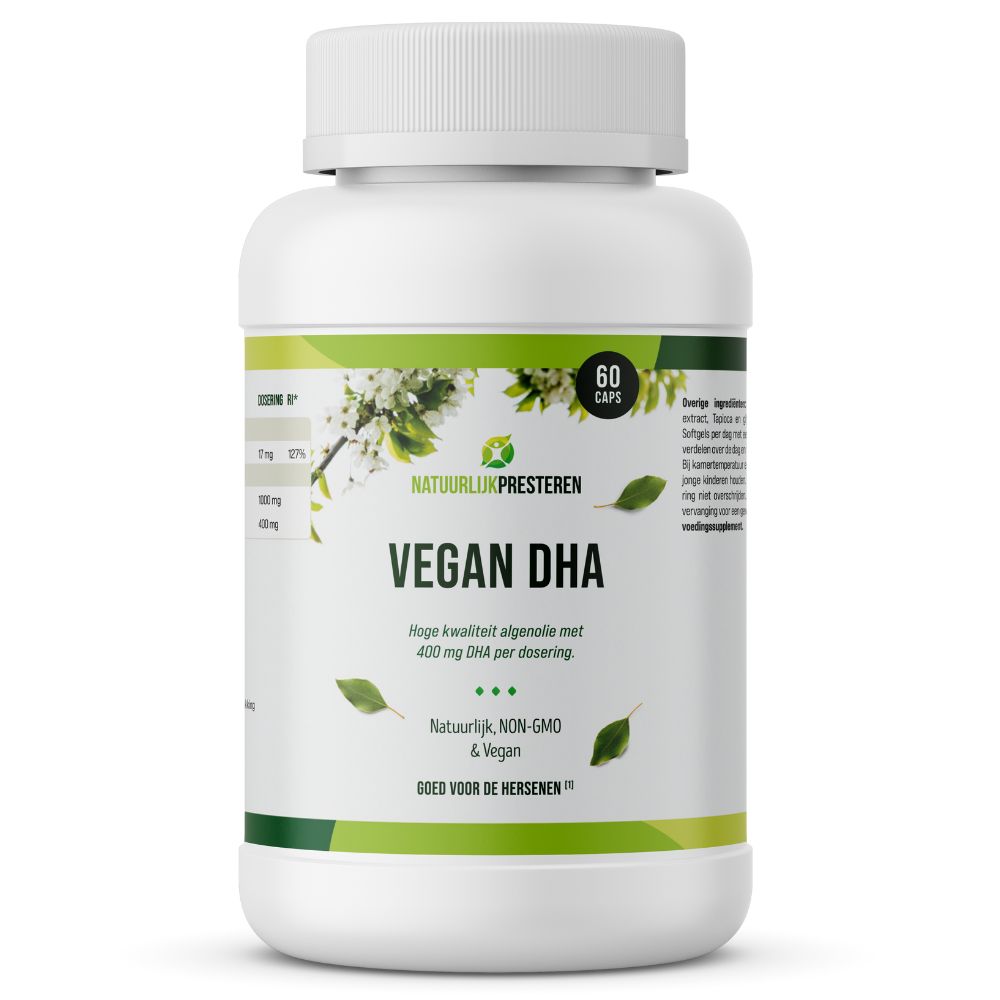
What is Algal Oil?
Algal oil is a vegetable oil extracted from micro-algae and provides important omega-3 fatty acids (DHA and EPA), just like fish oil.
It's considered a sustainable source of these fatty acids because algae, a renewable resource, is grown in controlled tanks and ponds. This helps reduce the impact on marine ecosystems.
Unlike fish oil, algae oil is completely plant-based, making it a suitable choice for vegetarians and vegans.
Where do the algae come from?
Most commercially available algae oil is extracted from the Schizochytrium algae. This microalgae is particularly valuable because it produces large quantities of the omega-3 fatty acid DHA.
Scientists have developed ways to optimize algae oil yields by controlling growing conditions such as temperature, light, and nutrients.
These techniques help algae produce omega-3 fatty acids more efficiently, particularly DHA. Algal oil is therefore increasingly considered a sustainable and healthy source of omega-3 fatty acids.
Types of algae oil
Algal oil comes in different varieties, depending on the type of algae used and the omega-3 fatty acids it contains.
Algal oil with DHA
Most algae oils contain only DHA, which among other things:
- Good for your brain (min. 250 mg per day); and
- Contributes to the maintenance of normal blood fat levels (min. 2 g per day)
Algal oil with both DHA and EPA
But the best algae oil contains both DHA and EPA. Algae that produce both include Crypthecodinium or Nannochloropsis . Taking DHA and EPA together is good for you:
- Blood pressure (min. 3 grams per day); * and you
- Heart (min. 250 mg per day)
Good to know: (*) When you use supplements, this should not exceed 5 grams together with your diet.
Benefits of Algal Oil
Although algae oil is often more expensive than fish oil, it offers several benefits.
Here are 5 important benefits of algae oil:
- Completely suitable for vegetarians and vegans – as it has no animal origin.
- Same effect as fish oil - Algal oil contains the same powerful omega-3 fatty acids as fish oil, namely EPA and DHA, but from a plant-based source. This means you can experience the same health benefits as with fish oil.
- Good for the environment - By choosing algae oil, you help combat overfishing. Instead of harvesting fish from the sea, algae oil is sustainably farmed, which has a less harmful impact on the environment.
- No burping - Algal oil has a mild, neutral flavor. No fishy burps or aftertaste.
- Less contamination - Algae grows at the base of the food chain and is often cultivated in closed systems, meaning you're hardly exposed to any contamination. This makes algae oil a pure alternative to fish oil, which can sometimes contain heavy metals or other contaminants.
Tip: Because algae oil has a milder flavor, you can also add it to your daily smoothie or meal. It's important to add the algae oil only after cooking, as heating damages the algae and reduces its effectiveness.
What is ALA and is it in fish oil?
ALA (alpha-linolenic acid) is a plant-based omega-3 fatty acid and is mainly found in plant sources such as flaxseed, chia seeds, and walnuts, not in fish oil .
Although ALA and DHA/EPA are all omega-3 fatty acids, they are used and processed by the body in different ways.
ALA must first be converted into DHA and EPA in the body, but this conversion is often inefficient. Therefore, algae oil or fish oil is often more effective at increasing your omega-3 levels than vegetable oils, such as flaxseed oil. (1)
The difference between fish oil and algae oil
Fish are so rich in omega-3 fatty acids because they feed on algae or other algae-eating organisms. They themselves don't contain any omega-3 at all!
The healthy fatty acids from the algae accumulate in the fish's fatty tissue. These fats are extracted for fish oil supplements. Algal oil, on the other hand, is extracted directly from the microalgae.
This makes it a plant-based and vegan source of omega-3 fatty acids.
What is better: Fish oil or Algal oil?
Algal oil and fish oil are both effective sources of omega-3 fatty acids, provided the algal oil contains both DHA and EPA. (2)
Not only are they equally effective, the absorption of omega-3 fatty acids from both fish oil and algae oil is also comparable.
The choice between the two depends mainly on personal preferences and ethical considerations.
Sources used
-
- Lane, K.E., Wilson, M., Hellon, T.G., & Davies, I.G. (2021b). Bioavailability and conversion of plant based sources of omega-3 fatty acids – a scoping review to update supplementation options for vegetarians and vegans. Critical Reviews in Food Science And Nutrition , 62 (18), 4982–4997. https://doi.org/10.1080/10408398.2021.1880364
- Ryan, L., & Symington, A. M. (2014). Algal-oil supplements are a viable alternative to fish-oil supplements in terms of docosahexaenoic acid (22:6n-3; DHA). Journal Of Functional Foods , 19 , 852–858. https://doi.org/10.1016/j.jff.2014.06.023
Gerelateerde blogartikelen
 bloggle
What is omega-3 algae oil and what are its benefits?
Omega-3 algae oil is becoming increasingly popular—and for good reason. It's the plant-based solution for anyone who wants the benefits of omega-3 without fish oil. Sustainable, pure, and just as effective. Instead of using fish, we extract the healthy fatty acids directly from algae, the original source. This way, you get all the health benefits without impacting the ocean. Are you considering switching to algal oil? This article explains everything you need to know about this vegan form of omega-3. Omega-3 algal oil is a plant-based source of DHA/EPA, as effective as fish oil. It is more sustainable and free of heavy metals, with less impact on the oceans than fish oil. Possible side effects are mild; sometimes stomach upset or a slight fishy taste, but generally well tolerated for daily use. Table of contents What exactly is omega-3 algal oil? Benefits of omega-3 algal oil Algal oil (vegetable omega-3) or fish oil? Algal oil Fish oil Production of omega-3 algal oil Side effects of algal oil Is omega-3 algal oil completely vegan? Buy omega-3 algal oil capsules What exactly is omega-3 algae oil? Omega-3 algal oil is a plant-based oil packed with essential fatty acids such as DHA (docosahexaenoic acid) and EPA (eicosapentaenoic acid). For this reason, it's also called vegan omega-3 or vegan DHA. As the name suggests, the oil comes from algae, the source from which fish naturally obtain their omega-3. If you don't want to eat fish, you can also get these important fatty acids directly from the source. The result? A pure oil, packed with omega-3, that's just as effective as fish oil. (1) (2) Benefits of Omega-3 Algal Oil Algal oil not only has the same health benefits as fish oil, but offers even more advantages. These are the main benefits: Better for the environment – Algal oil production has no negative impact on the oceans. Overfishing threatens many fish species and decreases biodiversity. Because algal oil doesn't require fish, you contribute to the restoration of marine ecosystems. Sustainable production chain – Algae farming uses fewer natural resources than fishing. It requires less water, feed, and energy, and produces less waste. This makes algae oil a more efficient and environmentally friendly option. Higher in the food chain, lower emissions – Algae are lower in the food chain, meaning their production is more efficient and produces less CO2 emissions than the fishing and fish oil industries. No Contaminants – Algae grows in controlled conditions, making the oil free of heavy metals and other harmful substances that can be found in fish oil. (3) No fishy aftertaste – Many people do not experience burping or an unpleasant odor as they do with fish oil capsules. Algal oil (vegetable omega-3) or fish oil? So, what's the best choice: algae oil or fish oil? Both contain the essential omega-3 fatty acids DHA and EPA, but algae oil offers several clear advantages: Algal oil It's more sustainable, cleaner, and better for the environment . Moreover, with algae oil, vegetarians and vegans get a complete alternative without animal products. Want omega-3 without the aftertaste and without polluting the oceans? Then this plant-based omega-3 is the smart choice! Fish oil However, fish oil can be an attractive option in some situations. It's often easier to obtain and generally cheaper . Additionally, some fish oil supplements naturally contain higher concentrations of DHA and EPA per capsule or serving, potentially giving you more omega-3 for a lower price. Production of omega-3 algal oil Our vegan omega-3 algae oil is extracted from the Schizochytrium algae species, which is grown in a controlled environment. This means that factors such as temperature, nutrition and CO2 are carefully monitored, ensuring clean, high-quality oil. After the algae grow, they are fermented, a process similar to making beer or kombucha. This allows the omega-3 fatty acids, such as DHA, to be extracted from the algae. The algae oil and DHA are then filtered out through fragmentation and centrifugation. The final oil contains 40% DHA, 500 mg of which is used per capsule in our products. Side effects of algal oil Algal oil is generally well tolerated, but as with any supplement, side effects may occur in some people. The possible side effects of algal oil are usually mild: Stomach discomfort – Some people may experience bloating, gas, or mild stomach pain. This is more common when starting omega-3 supplements, but usually disappears over time. Fishy aftertaste – Although algal oil often has less of a fishy aftertaste than fish oil, some people may still experience a slight aftertaste after consuming it. The "fishy taste" in fish is caused by omega-3 fats. Blood thinning – Because omega-3 fatty acids have blood-thinning properties, using algae oil may increase the risk of bleeding in people already taking blood thinners. It's important to consult a doctor if you're taking blood-thinning medication. Allergies – In rare cases, people may have an allergic reaction to algae oil, especially if they are sensitive to algae or seafood. Is omega-3 algae oil completely vegan? Yes, omega-3 algae oil is completely plant-based (vegan), because it is extracted directly from algae and contains no animal products. Buy Omega-3 Algal Oil capsules When choosing an omega-3 algae oil supplement, it's important to consider a number of factors to get the most out of your supplement. The concentration of DHA and EPA - A good dosage of DHA is usually between 250-500 mg per day, depending on your personal needs and health. Capsules or oil - Omega-3 algae oil is available in capsules or as an oil. Algae oil capsules ensure you always get the same dose, while the oil can easily be added to a smoothie, salad dressing, or granola. Choose what works best for you. Purity and Origin - Also pay attention to the purity and origin of the algae oil. Good algae oil should be free of contaminants such as heavy metals. You can often see this from certificates on the website and quality labels. Looking for high-quality, plant-based algae oil capsules? Our vegan DHA algae oil offers exactly what you need: a pure and effective source of omega-3, with 400 mg DHA per serving (2 capsules). Ebrina van der Bijl Ebrina is a nutritionist with a deep commitment to healthy eating and a sustainable lifestyle, based in beautiful Portugal. Her passion for natural and organic products is at the heart of her work. With a background in Nutrition & Dietetics and experience in product development and writing, she translates complex scientific information into practical advice for a balanced lifestyle. Read more Sources used Lane, K.E., Wilson, M., Hellon, T.G., & Davies, I.G. (2021b). Bioavailability and conversion of plant based sources of omega-3 fatty acids – a scoping review to update supplementation options for vegetarians and vegans. Critical Reviews in Food Science And Nutrition, 62(18), 4982–4997. https://doi.org/10.1080/10408398.2021.1880364 Ryan, L., & Symington, A. M. (2014). Algal-oil supplements are a viable alternative to fish-oil supplements in terms of docosahexaenoic acid (22:6n-3; DHA). Journal Of Functional Foods, 19, 852–858. https://doi.org/10.1016/j.jff.2014.06.023 Ji, X., Ren, L., & Huang, H. (2015). Omega-3 Biotechnology: A Green and Sustainable Process for Omega-3 Fatty Acids Production. Frontiers in Bioengineering And Biotechnology, 3. https://doi.org/10.3389/fbioe.2015.00158
Lees meer algenolie of visolie
Algenolie of visolie: wat is beter?
Omega-3-vetzuren zijn onmisbaar voor je gezondheid. Idealiter krijg je deze vetzuren binnen via je voeding, bijvoorbeeld door een tot twee keer per week vette vis te eten. Maar in de praktijk lukt dat veel mensen niet of niet structureel, waardoor een omega-3-supplement een waardevolle aanvulling kan zijn. Tegelijkertijd kiezen steeds meer mensen voor plantaardige voeding en groeit het besef dat regelmatige visconsumptie, zeker wanneer dit advies wereldwijd wordt toegepast, impact heeft op het ecosysteem van de oceanen. Door overbevissing en druk op visbestanden kijken steeds meer onderzoekers naar alternatieve, schaalbare bronnen van omega-3, zoals algenolie. Dat brengt ons bij een logische vraag: wat is beter? Algenolie of visolie? In dit artikel zet ik de verschillen, voordelen en aandachtspunten helder en eerlijk voor je op een rij, zodat jij een keuze kunt maken die past bij jouw lichaam, leefstijl én toekomstvisie. Zowel algenolie als visolie leveren EPA en DHA, worden vergelijkbaar opgenomen en hebben dezelfde gezondheidsvoordelen. Alleen de verhouding tussen EPA en DHA verschilt. Algenolie is een schone, diervrije en goed opschaalbare omega‑3-bron, gekweekt in gesloten systemen, waardoor het ecosysteem van de oceanen minder wordt belast dan bij visolie. Visolie bevat vaak meer EPA, algenolie relatief meer DHA; de beste keuze hangt af van jouw gezondheidsdoel, dieetvoorkeur, levensfase en kijk op duurzaamheid. Inhoudsopgave De kern in één oogopslag Wat zijn visolie en algenolie en waar heb je ze voor nodig? De belangrijkste verschillen op een rij 1. Herkomst en duurzaamheid 2. Samenstelling: EPA en DHA 3. Opneembaarheid en effectiviteit 4. Zuiverheid en verontreiniging 5. Smaak, geur en bijwerkingen 6. Geschiktheid per doelgroep Wat zegt de wetenschap? Veelgemaakte misverstanden Omega-3: gezondheid en duurzaamheid Conclusie: algenolie of visolie – wat is beter? De kern in één oogopslag Dit is wat je aan het einde van dit artikel weet: Zowel visolie als algenolie leveren EPA en DHA – maar visolie is vaak EPA-rijk, algenolie meestal DHA-rijk De bron verschilt (vis vs. microalgen), de werkzame vetzuren niet – EPA en DHA uit algen zijn bio-identiek aan die uit vis Algenolie is 100% vegan en diervrij – technisch zijn microalgen geen planten, maar voor jou: het is een volwaardig vegan/plantaardig alternatief voor visolie Algenolie is doorgaans zeer schoon en vaak gunstiger qua duurzaamheid – omdat het in gesloten systemen wordt gekweekt (hoogwaardige visolie wordt wel grondig gezuiverd tot onder de wettelijke limieten) De beste keuze is persoonlijk – en hangt af van je doel (EPA vs. DHA), dieetvoorkeur, prijs en je kijk op duurzaamheid Wat zijn visolie en algenolie en waar heb je ze voor nodig? Zowel visolie als algenolie zijn bronnen van de omega-3-vetzuren EPA en DHA. Deze vetzuren dragen bij aan de normale werking van het hart (bij een dagelijkse inname van 250 mg EPA en DHA). DHA draagt daarnaast bij aan het behoud van een normale hersenfunctie en een normaal gezichtsvermogen (bij 250 mg DHA per dag). Het verschil tussen beide zit niet zozeer in wat ze doen, maar vooral in waar ze vandaan komen: Visolie wordt gewonnen uit vette vissoorten zoals ansjovis, sardientjes en makreel. Het bevat de omega-3-vetzuren EPA en DHA, die direct door je lichaam gebruikt kunnen worden. Visolie is al jarenlang de standaard als het gaat om omega-3-suppletie. Algenolie is afkomstig uit microalgen en is de oorspronkelijke bron van omega-3 in de voedselketen. Vissen krijgen hun EPA en DHA namelijk binnen door algen te eten. Algenolie bevat vooral DHA en soms ook EPA, afhankelijk van het product. Dit plantaardige alternatief is relatief nieuw vergeleken met visolie. De belangrijkste verschillen op een rij Hoewel visolie en algenolie allebei EPA en DHA leveren, verschillen ze op een aantal belangrijke punten. Wat voor jou de beste keuze is, hangt af van het perspectief van waaruit je het bekijkt. Daarom leg ik hieronder de belangrijkste verschillen overzichtelijk per perspectief uit. Zo kun je voor jezelf bepalen welk punt, of punten, het zwaarst wegen: 1. Herkomst en duurzaamheid De herkomst van een omega-3-supplement bepaalt niet alleen of het plantaardig is, maar ook hoe groot de belasting is voor milieu en ecosystemen. Visolie – wordt gewonnen uit vis, vaak uit kleinere vissoorten zoals ansjovis en sardientjes. Hoewel deze soorten relatief snel groeien, kan grootschalige visvangst bijdragen aan druk op visbestanden en het mariene ecosysteem, afhankelijk van vangstmethoden en beheer. Algenolie – is plantaardig en wordt geproduceerd door microalgen te kweken in gesloten, gecontroleerde systemen. Daardoor is visvangst overbodig en worden oceanen niet belast, wat dit tot een duurzame en goed opschaalbare bron van omega-3 maakt (1, 2, 3). Dit punt weegt in het voordeel van: algenolie 2. Samenstelling: EPA en DHA Hoewel zowel visolie als algenolie EPA en DHA bevatten, verschilt de onderlinge verhouding van deze omega-3-vetzuren. Voor het effect op je gezondheid is vooral die verhouding en de totale dosering van belang, niet zozeer de bron zelf. Visolie – bevat van nature zowel EPA als DHA, vaak in relatief hoge doseringen. Algenolie – is van nature rijk aan DHA. Sommige specifieke algensoorten produceren daarnaast ook EPA (deze EPA uit algen is bio-identiek aan EPA uit vis en wordt door het lichaam op dezelfde manier benut) (4, 5). Dit punt weegt in het voordeel van: visolie (bij een specifieke behoefte aan een hogere EPA-inname) 3. Opneembaarheid en effectiviteit Voor de werking van omega-3 is ook de chemische vetvorm waarin EPA en DHA worden aangeboden van belang. Samenstelling – zowel visolie als algenolie worden in supplementen doorgaans geleverd in de triglyceride-vorm, een vorm die je lichaam efficiënt kan verteren en opnemen. Opneembaarheid – omdat beide bronnen dezelfde vetvorm gebruiken, is de opneembaarheid van EPA en DHA vergelijkbaar, ongeacht of ze uit vis of algen afkomstig zijn. Effectiviteit – bij een voldoende inname van EPA en DHA is er voor de algemene gezondheid dus geen duidelijk verschil in effectiviteit tussen visolie en algenolie. Dit punt weegt in het voordeel van: beide 4. Zuiverheid en verontreiniging De kwaliteit van een omega-3-supplement wordt mede bepaald door de herkomst van de grondstof en de manier waarop de olie wordt gezuiverd. Visolie – wordt vaak gemaakt van kleinere vissoorten zoals ansjovis en sardientjes, die van nature minder verontreinigingen bevatten. Hoogwaardige visolie wordt daarnaast zorgvuldig gezuiverd, waardoor eventuele sporen van zware metalen of dioxines tot ruim onder de wettelijke limieten worden teruggebracht. Algenolie – wordt gekweekt in afgesloten, gecontroleerde systemen en is van nature zeer schoon, met minimale blootstelling aan mariene verontreinigingen. Dit punt weegt in het voordeel van: algenolie, hoewel beide vormen zeer zuiver kunnen zijn (mits ze van hoge kwaliteit zijn) (5). 5. Smaak, geur en bijwerkingen De smaak en verdraagbaarheid van een omega-3-supplement hangen niet alleen af van de bron, maar ook van versheid, oxidatie en de toedieningsvorm. Visolie – kan een vissige smaak of oprispingen geven, vooral wanneer de olie minder vers is of geoxideerd. Verse, goed gestabiliseerde visolie hoeft dit niet te veroorzaken. Algenolie – is van nature neutraler van smaak en geur, maar kan bij oxidatie eveneens onaangenaam ruiken of smaken. Daarnaast geldt dat vloeibare oliën (zowel vis- als algenolie) gevoeliger zijn voor oxidatie dan capsules, omdat ze na openen meer in contact komen met zuurstof. Dit punt weegt in het voordeel van: algenolie (door de van nature neutrale smaak en vaak betere verdraagbaarheid) (5, 6) 6. Geschiktheid per doelgroep Persoonlijke voorkeuren, dieetkeuzes en gevoeligheden bepalen uiteindelijk welk omega-3-supplement het beste bij je past. Visolie – geschikt voor mensen zonder dieetbeperkingen die een hoge dosering EPA en DHA willen gebruiken. Algenolie – een logische keuze voor vegetariërs en veganisten, en wordt ook vaak gekozen door mensen met een gevoelige maag vanwege de neutrale smaak en betere verdraagbaarheid. Zwangere vrouwen kiezen in de praktijk regelmatig voor algenolie, omdat deze van nature rijk is aan DHA. DHA draagt bij aan de normale ontwikkeling van de hersenen en ogen van de foetus (bij een inname van 200 mg DHA per dag, bovenop de aanbevolen dagelijkse hoeveelheid voor volwassenen). Daarnaast is algenolie van nature schoon en doorgaans goed verdraagbaar (7, 8). Conclusie: wat het beste past, verschilt per persoon en levensfase. Wat zegt de wetenschap? Wetenschappelijk onderzoek laat zien dat het effect van omega-3-suppletie wordt bepaald door de aanwezigheid van de vetzuren EPA en DHA, en niet zozeer door de bron waaruit deze afkomstig zijn (5). Dat betekent dat: zolang de dosering voldoende is en de vetzuren goed opneembaar zijn, kunnen zowel algenolie als visolie bijdragen aan de eerder genoemde gezondheidseffecten: de normale werking van het hart (bij een dagelijkse inname van 250 mg EPA en DHA) het behoud van een normale hersenfunctie (DHA, bij 250 mg per dag) het behoud van een normaal gezichtsvermogen (DHA, bij 250 mg per dag) Veelgemaakte misverstanden Rondom omega-3-supplementen bestaan veel aannames die niet altijd kloppen, vooral als het gaat om de verschillen tussen algenolie en visolie. Ik help je graag met opheldering rondom de meest voorkomende misverstanden (8, 9): ‘Algenolie is minder krachtig dan visolie’ – Niet juist. Zowel DHA als EPA uit algen zijn bio-identiek aan DHA en EPA uit vis en worden door het lichaam op dezelfde manier opgenomen en benut. Het effect hangt af van de hoeveelheid EPA en DHA, niet van de bron waaruit ze afkomstig zijn. ‘Visolie is altijd beter onderzocht’ – Visolie wordt al langer gebruikt en is daardoor historisch gezien vaker onderzocht. Inmiddels is er echter ook een groeiend aantal goed opgezette studies waaruit blijkt dat algenolie een volwaardige bron van DHA (en soms EPA) is, met een vergelijkbare biologische beschikbaarheid. ‘Je hebt altijd EPA nodig’ – Niet per se. Voor de algemene gezondheid speelt DHA vaak de grootste rol, onder andere bij de normale werking van de hersenen en het gezichtsvermogen. EPA is een aanvullende omega-3 die niet voor iedereen noodzakelijk is, maar wel wordt meegenomen in supplementen met een bredere of specifieke samenstelling. Omega-3: gezondheid en duurzaamheid Vanuit gezondheidsperspectief wordt het eten van vette vis vaak gezien als een goede manier om omega-3-vetzuren binnen te krijgen. Maar wanneer je dit advies bekijkt op wereldschaal, ontstaat een spanningsveld. Onderzoekers en internationale organisaties wijzen erop dat: een groot deel van de visbestanden al maximaal wordt benut. het voor de wereldbevolking niet haalbaar is als iedereen structureel één tot twee keer per week vette vis eet. alternatieve bronnen van EPA en DHA nodig zijn om zowel gezondheid als ecosysteem te ondersteunen. Algenolie wordt steeds vaker genoemd als een duurzame, toekomstbestendige bron van DHA (en EPA). Je hoeft er geen vis voor te vangen en het kan in gesloten systemen worden gekweekt, waardoor de druk op de oceanen afneemt (10, 11). Conclusie: algenolie of visolie – wat is beter? Er is geen universeel juiste keuze. Wat ‘beter’ is, hangt af van jouw behoeften, waarden en situatie. Vis eten kan bijdragen aan je omega-3-inname, maar is voor veel mensen lastig vol te houden en mogelijk wereldwijd niet schaalbaar. Visolie is effectief en bevat vaak hogere doseringen EPA en DHA. Algenolie biedt dezelfde werkzame vetzuren, is 100% vegan en diervrij, schoon en duurzaam. Steeds vaker verschuift de vraag daarom van ‘wat werkt?’ naar ‘wat is toekomstbestendig?’ Voor een groeiende groep mensen is algenolie dan ook niet langer een alternatief voor visolie, maar een bewuste keuze. Ebrina van der Bijl Ebrina is voedingsdeskundige met een diepe toewijding aan gezonde voeding en een duurzame levensstijl, gevestigd in het prachtige Portugal. Haar passie voor natuurlijke en biologische producten vormt de kern van haar werk. Met een achtergrond in Voeding & Diëtetiek en ervaring in productontwikkeling en tekstschrijven, vertaalt ze complexe wetenschappelijke informatie naar praktische adviezen voor een gebalanceerde levensstijl. Lees meer Gebruikte bronnen Togarcheti, S. C., & Padamati, R. B. (2021). Comparative Life Cycle Assessment of EPA and DHA Production from Microalgae and Farmed Fish. Clean Technologies, 3(4), 699–710. https://doi.org/10.3390/cleantechnol3040042 Kunj, P., Sahu, S., Singh, G., & Arya, S. K. (2025). A review on algal oils as a sustainable source of essential omega-3 fatty acids. Bioresource Technology Reports, 30, 102154. https://doi.org/10.1016/j.biteb.2025.102154 Liu, Y., Ren, X., Fan, C., Wu, W., Zhang, W., & Wang, Y. (2022b). Health Benefits, Food Applications, and Sustainability of Microalgae-Derived N-3 PUFA. Foods, 11(13), 1883. https://doi.org/10.3390/foods11131883 Dempsey, M., Rockwell, M. S., & Wentz, L. M. (2023). The influence of dietary and supplemental omega-3 fatty acids on the omega-3 index: A scoping review. Frontiers in Nutrition, 10, 1072653. https://doi.org/10.3389/fnut.2023.1072653 Bailey, E., Wojcik, J., Rahn, M., Roos, F., Spooren, A., & Koshibu, K. (2025). Comparative Bioavailability of DHA and EPA from Microalgal and Fish Oil in Adults. International Journal Of Molecular Sciences, 26(19), 9343. https://doi.org/10.3390/ijms26199343 Albert, B. B., Cameron-Smith, D., Hofman, P. L., & Cutfield, W. S. (2013b). Oxidation of Marine Omega-3 Supplements and Human Health. BioMed Research International, 2013, 1–8. https://doi.org/10.1155/2013/464921 Frankel, E. N., Satué-Gracia, T., Meyer, A. S., & German, J. B. (2002). Oxidative Stability of Fish and Algae Oils Containing Long-Chain Polyunsaturated Fatty Acids in Bulk and in Oil-in-Water Emulsions. Journal Of Agricultural And Food Chemistry, 50(7), 2094–2099. https://doi.org/10.1021/jf0111458 Bernstein, A. M., Ding, E. L., Willett, W. C., & Rimm, E. B. (2011). A Meta-Analysis Shows That Docosahexaenoic Acid from Algal Oil Reduces Serum Triglycerides and Increases HDL-Cholesterol and LDL-Cholesterol in Persons without Coronary Heart Disease3. Journal Of Nutrition, 142(1), 99–104. https://doi.org/10.3945/jn.111.148973 Yurko-Mauro, K., Alexander, D. D., & Van Elswyk, M. E. (2015). Docosahexaenoic Acid and Adult Memory: A Systematic Review and Meta-Analysis. PLoS ONE, 10(3), e0120391. https://doi.org/10.1371/journal.pone.0120391 Sprague, M., Dick, J., & Tocher. (2016). Impact of sustainable feeds on omega-3 long-chain fatty acid levels in farmed Atlantic salmon, 2006–2015. Scientific Reports, 6(1), 21892. https://doi.org/10.1038/srep21892 Gatta, P. P. (2022). The State of World Fisheries and Aquaculture 2022. In FAO eBooks. https://doi.org/10.4060/cc0461en
Lees meer beste algenolie
Hoe herken je de beste algenolie?
Algenolie wordt steeds populairder als plantaardig alternatief voor visolie. Dat is niet zo vreemd: algenolie bevat dezelfde belangrijke omega-3 vetzuren, zoals DHA en soms EPA, maar dan volledig vegan. Algenolie is vooral interessant voor wie plantaardig eet of geen visolie wil of verdraagt. Een voordeel van algenolie is dat deze vaak in een gecontroleerde omgeving wordt gemaakt, waardoor de samenstelling consistent is en elke batch wordt standaard getest op ongewenste stoffen. Een nadeel ten opzichte van visolie kan zijn dat EPA vaak lager is gedoseerd en dat algenolie meestal iets duurder is. Juist daarom is het belangrijk om goed te kijken naar kwaliteit en samenstelling. In dit artikel vertel ik je waar je precies op kunt letten bij het kiezen van de beste algenolie. Goed om te weten: algenolie wordt ook wel vegan omega-3-olie genoemd, of simpelweg vegan DHA. Het gaat hierbij om hetzelfde product: omega-3-olie gemaakt van microalgen. Algenolie is een volledig plantaardige bron van omega 3, met vooral DHA (en soms EPA), en is daardoor een interessant vegan alternatief voor visolie en krillolie. De beste algenolie biedt een duidelijke DHA-dosering per portie, komt van gecontroleerd gekweekte microalgen, is getest op verontreinigingen en goed beschermd tegen oxidatie, bijvoorbeeld met vitamine E. Let bij je keuze op duurzaamheid, natuurlijke smaakstoffen en de gewenste toedieningsvorm: vloeibare algenolie voor flexibele dosering of vegan capsules als je smaak en gemak belangrijk vindt. Inhoudsopgave Let op deze criteria bij het kiezen van algenolie 1. Goede dosering DHA (en soms ook EPA) 2. Duidelijke herkomst van de algen 3. Beschermd tegen oxidatie 4. Transparantie over duurzaamheid 5. Bevat alleen natuurlijke smaakstoffen (bij vloeibare algenolie) Top 3: de beste omega-3-algenolie #1. Beste keuze – Vegan DHA van Natuurlijk Presteren #2. Beste prijs-kwaliteit – Vegan Omega-3 1250 TG Algenolie van Vitakruid #3. Beste alternatief - Vegan Algenolie Vloeibaar 1200 mg van Mattisson Meer weten over de beste algenolie? 1. Wat als algenolie naar vis smaakt? 2. Wat is beter: visolie of algenolie? 3. Wat is het verschil tussen algenolie en krillolie? 4. Algenolie: vloeibaar of in capsules? Let op deze criteria bij het kiezen van algenolie Je kunt algenolie als vloeibaar supplement of als capsule gebruiken. Of je nu kiest voor vegan omega-3 capsules of vloeibare omega-3-olie (algenolie), let bij het kopen op de volgende aandachtspunten: 1. Goede dosering DHA (en soms ook EPA) Bij algenolie draait het vooral om DHA. Dit omega-3 vetzuur ondersteunt de hersenen en het gezichtsvermogen bij een dagelijkse inname van minimaal 250 mg DHA (1,2). Sommige algenoliën bevatten daarnaast ook EPA, maar meestal in lagere hoeveelheden dan visolie. Let daarom altijd op hoeveel mg DHA per dosering wordt geleverd en of EPA aanwezig is en in welke hoeveelheid. Let op: het etiket wordt soms het totaalgewicht van de algenolie vermeld, bijvoorbeeld 1250 mg olie. Dat zegt weinig. Het gaat uiteindelijk om de hoeveelheid DHA die die olie daadwerkelijk bevat, bijvoorbeeld 500 mg DHA per dosering. 2. Duidelijke herkomst van de algen De beste omega-3-algenolie komt van microalgen die onder gecontroleerde omstandigheden worden gekweekt. Microalgen zoals Schizochytrium worden via fermentatie geproduceerd in plaats van uit de open oceaan geoogst. Daardoor is de samenstelling doorgaans consistent en worden partijen standaard getest op zware metalen en andere verontreinigingen, zodat ze aan strenge kwaliteitsnormen voldoen. Goed om te weten: transparantie over de gebruikte algensoort, kweekmethode en het productieproces geeft vertrouwen dat je een zuivere en stabiele olie kiest (3). 3. Beschermd tegen oxidatie Algenolie bevat meervoudig onverzadigde vetzuren en is daardoor gevoelig voor oxidatie. Dat kan de smaak negatief beïnvloeden en zegt iets over de versheid van de olie. Daarom is goede bescherming extra belangrijk, vooral bij vloeibare algenolie. Kies bij voorkeur een product met een recente TOTOX-waarde (of vergelijkbare versheidsmeting) die binnen de gebruikelijke kwaliteitsgrenzen valt, en met een antioxidant zoals vitamine E om de olie te helpen beschermen. Tip: ga je voor vloeibare algenolie? Let dan op de verpakking: een donkere glazen fles of een goed afgesloten, lichtdichte verpakking helpt oxidatie te beperken (4, 5). 4. Transparantie over duurzaamheid Een belangrijk voordeel van vegan omega-3 is duurzaamheid. Algen worden gekweekt zonder druk op zeeën of visbestanden en vragen minder natuurlijke hulpbronnen (6). De beste algenolie komt van producenten die: duurzaam en efficiënt kweken open zijn over herkomst en productie werken met schone, gecontroleerde processen Goed om te weten: duurzaamheid zegt niet alles, maar past goed bij een bewuste en toekomstgerichte keuze. 5. Bevat alleen natuurlijke smaakstoffen (bij vloeibare algenolie) Bij vloeibare algenolie wordt vaak een aroma toegevoegd, meestal een natuurlijk aroma zoals citroen, sinaasappel of vanille. Dat gebeurt vooral om de smaak en geur aangenamer te maken, omdat algenolie, zeker bij minder verse of minder goed beschermde olie, een vissige of zeeachtige smaak kan hebben. Goed om te weten: een subtiel aroma kan het gebruik prettiger maken, zolang het niet te sterk is en de versheid van de olie niet maskeert. Let er daarom op dat het aroma van natuurlijke afkomst is en ondersteunend werkt, niet overheersend.stemmingsstoornissen. Top 3: de beste omega-3-algenolie Om het kiezen nog wat makkelijker voor je te maken heb ik vast de drie beste vegan omega-3-olie supplementen voor je geselecteerd. Ik heb ervoor gekozen om drie vloeibare varianten te vergelijken. Dit zijn de beste keuzes: #1. Beste keuze – Vegan DHA van Natuurlijk Presteren Een pure en toegankelijke algenolie met een effectieve DHA-dosering, speciaal ontwikkeld voor dagelijks gebruik. Deze vegan omega-3 combineert kwaliteit met eenvoud. Voordelen 400 mg DHA per dosering met vitamine E tegen oxidatie van gecontroleerd gekweekte microalgen (Schizochytrium) in een donkere fles ter bescherming van de olie stabiel en zuiver (elke batch wordt getest en voldoet aan strikte limieten voor verontreinigingen) neutrale smaak en geurloos #2. Beste prijs-kwaliteit – Vegan Omega-3 1250 TG Algenolie van Vitakruid Een complete en krachtig gedoseerde algenolie voor wie hoge eisen stelt aan kwaliteit, transparantie en duurzaamheid. Voordelen 1250 mg omega-3 per dosering, waarvan 500 mg DHA omega-3 van de leverancier Algarithm® TOTOX-waarde onder 8 (volgens de leverancier) in een donkere, glazen fles ter bescherming van de olie van gecontroleerd gekweekte microalgen (Schizochytrium) stabiel en zuiver (laboratoriumgetest en binnen strenge kwaliteitslimieten voor verontreinigingen) Meer informatie #3. Beste alternatief - Vegan Algenolie Vloeibaar 1200 mg van Mattisson Een zorgvuldig gedoseerde vloeibare algenolie met zowel DHA als EPA. Dankzij het toegevoegde natuurlijke aroma is deze algenolie prettiger in gebruik en een fijne keuze voor wie gevoelig is voor de smaak van algenolie. Voordelen 600 mg omega-3 per dosering (2,5 ml), waarvan 450 mg DHA en 150 mg EPA omega-3 van de leverancier Algal Omega 3-to-1® van gecontroleerd gekweekte microalgen (Schizochytrium) met antioxidanten en een donkere glazen fles ter bescherming van de olie met natuurlijke sinaasappelsmaak stabiel en zuiver (elke batch wordt getest en voldoet aan strikte limieten voor verontreinigingen) Meer informatie Meer weten over de beste algenolie? Twijfel je of algenolie bij jou past? In het volgende hoofdstuk ga ik wat dieper in op veelgestelde vragen, zoals smaak, gebruik en de verschillen met andere omega-3-olie. 1. Wat als algenolie naar vis smaakt? Algenolie wordt vaak omschreven als neutraal van smaak, maar in de praktijk kan algenolie wel degelijk een visachtige of zeeachtige smaak hebben. Dat komt niet door ‘vis’, maar doordat microalgen de lange-keten omega-3-vetzuren (DHA/EPA) produceren die ook in visolie zitten. Bij contact met zuurstof, licht of warmte kunnen deze vetzuren oxideren tot vluchtige verbindingen (zoals bepaalde aldehyden en ketonen) die we als ‘visachtig/zeeachtig’ herkennen. Als de olie minder goed wordt beschermd of licht is geoxideerd, kan die typische smaak naar voren komen. Je merkt dit dus vooral wanneer: de algenolie niet helemaal vers is de olie onvoldoende beschermd wordt tegen zuurstof en licht de capsule al in je mond oplost je gevoelig bent voor omega-3-smaken Goed om te weten: een lichte vissmaak is geen reden tot paniek, maar een sterke of aanhoudende visachtige smaak kan erop wijzen dat de kwaliteit of versheid niet optimaal is. Dit kun je doen: kies voor vegan omega-3-capsules in plaats van vloeibare algenolie let op een recente TOTOX-waarde en de aanwezigheid van een antioxidant (bijv. vitamine E) bewaar algenolie koel en donker neem capsules tijdens of direct na een maaltijd Blijft de smaak storend? Dan is overstappen naar een ander product vaak de beste keuze. 2. Wat is beter: visolie of algenolie? Dat hangt vooral af van je persoonlijke situatie en doel. Zowel visolie als algenolie leveren de belangrijke omega-3 vetzuren, maar ze verschillen in samenstelling, herkomst en toepassing. Visolie bevat van nature zowel EPA als DHA, vaak in hogere hoeveelheden. Vooral EPA is in visolie meestal ruimer aanwezig. Daarom wordt visolie veel gebruikt in onderzoek naar hart- en vaatgezondheid. Een bijkomend voordeel is dat visolie doorgaans betaalbaarder is. Algenolie is daarentegen de oorspronkelijke bron van omega-3: vissen krijgen hun EPA en DHA door algen te eten. Algenolie levert vooral DHA, het vetzuur dat in onderzoek vaak in verband wordt gebracht met de hersenen en het gezichtsvermogen. Een nadeel is dat algenolie vaak wat duurder is. Onderzoek laat zien dat DHA uit algenolie net zo goed wordt opgenomen als DHA uit visolie. Daarmee is algenolie een volwaardig, plantaardig alternatief voor omega-3, vooral voor wie gericht DHA wil aanvullen (7). Omdat microalgen gecontroleerd worden gekweekt, is algenolie volledig vegan en vaak een duurzamere optie. Batches worden standaard op kwaliteit getest, waardoor de kans op verontreinigingen doorgaans laag is. Kortom: voor wie plantaardig leeft of bewust kiest voor een duurzaam alternatief, is algenolie een uitstekende en volwaardige bron van omega-3. 3. Wat is het verschil tussen algenolie en krillolie? Algenolie en krillolie zijn allebei bronnen van omega-3, maar van verschillende bronnen afkomstig: Krillolie is afkomstig van krill, kleine kreeftachtigen uit de oceaan. Het is dus een dierlijke omega-3. De omega-3 vetzuren in krillolie zijn deels gebonden aan fosfolipiden, een vetvorm die van nature voorkomt in celmembranen. Dit lijkt bij te dragen aan de opname in je lichaam. Krillolie bevat daarnaast van nature astaxanthine, een antioxidant die helpt de olie te beschermen tegen oxidatie. De doseringen EPA en DHA per capsule zijn meestal lager dan bij vis- of algenolie. Algenolie is volledig plantaardig en vormt de oorspronkelijke bron van omega-3 in de voedselketen. Het levert vooral DHA (en soms ook EPA) in triglyceridenvorm, een natuurlijke vetvorm die het lichaam goed kan benutten. De olie is afkomstig van gecontroleerd gekweekte microalgen en wordt per batch getest, waardoor het risico op verontreinigingen doorgaans laag is. Kortom: de keuze tussen algenolie en krillolie hangt af van je dieet, je voorkeur voor plantaardig of dierlijk, en je doel met omega-3. Wie vooral DHA zoekt of bewust plantaardig wil blijven, komt meestal uit bij algenolie. 4. Algenolie: vloeibaar of in capsules? Algenolie is verkrijgbaar als vloeibare olie en als vegan omega-3 capsules. Welke vorm het beste bij je past? Ook dit hangt weer af van wat je voorkeur heeft. Vegan omega-3 capsules zijn voor de meeste mensen het prettigst in gebruik. Ze zijn makkelijk te doseren, hebben minder kans op smaak of nasmaak en zijn beter beschermd tegen licht en zuurstof. Vloeibare algenolie kan handig zijn als je moeite hebt met het slikken van capsules, de dosering flexibel wilt aanpassen of algenolie wilt mengen door voeding (praktisch bij kinderen). Houd er wel rekening mee dat vloeibare algenolie gevoeliger is voor oxidatie en vaker een uitgesproken smaak kan hebben. Daarom kiezen veel mensen uiteindelijk voor capsules als ze dagelijks algenolie willen gebruiken. Ebrina van der Bijl Ebrina is voedingsdeskundige met een diepe toewijding aan gezonde voeding en een duurzame levensstijl, gevestigd in het prachtige Portugal. Haar passie voor natuurlijke en biologische producten vormt de kern van haar werk. Met een achtergrond in Voeding & Diëtetiek en ervaring in productontwikkeling en tekstschrijven, vertaalt ze complexe wetenschappelijke informatie naar praktische adviezen voor een gebalanceerde levensstijl. Lees meer Gebruikte bronnen Mazereeuw, G., Lanctôt, K. L., Chau, S. A., Swardfager, W., & Herrmann, N. (2012). Effects of omega-3 fatty acids on cognitive performance: a meta-analysis. Neurobiology Of Aging, 33(7), 1482.e17-1482.e29. https://doi.org/10.1016/j.neurobiolaging.2011.12.014 Verfuerden, M. L., Dib, S., Jerrim, J., Fewtrell, M., & Gilbert, R. E. (2020). Effect of long-chain polyunsaturated fatty acids in infant formula on long-term cognitive function in childhood: A systematic review and meta-analysis of randomised controlled trials. PLoS ONE, 15(11), e0241800. https://doi.org/10.1371/journal.pone.0241800 Kunj, P., Sahu, S., Singh, G., & Arya, S. K. (2025). A review on algal oils as a sustainable source of essential omega-3 fatty acids. Bioresource Technology Reports, 30, 102154. https://doi.org/10.1016/j.biteb.2025.102154 Albert, B. B., Cameron-Smith, D., Hofman, P. L., & Cutfield, W. S. (2013). Oxidation of Marine Omega-3 Supplements and Human Health. BioMed Research International, 2013, 1–8. https://doi.org/10.1155/2013/464921 Sepidarkish, M., Akbari-Fakhrabadi, M., Daneshzad, E., Yavari, M., Rezaeinejad, M., Morvaridzadeh, M., & Heshmati, J. (2019). Effect of omega-3 fatty acid plus vitamin E Co-Supplementation on oxidative stress parameters: A systematic review and meta-analysis. Clinical Nutrition, 39(4), 1019–1025. https://doi.org/10.1016/j.clnu.2019.05.004 Liu, Y., Ren, X., Fan, C., Wu, W., Zhang, W., & Wang, Y. (2022). Health Benefits, Food Applications, and Sustainability of Microalgae-Derived N-3 PUFA. Foods, 11(13), 1883. https://doi.org/10.3390/foods11131883 Bailey, E., Wojcik, J., Rahn, M., Roos, F., Spooren, A., & Koshibu, K. (2025). Comparative Bioavailability of DHA and EPA from Microalgal and Fish Oil in Adults. International Journal Of Molecular Sciences, 26(19), 9343. https://doi.org/10.3390/ijms26199343
Lees meer