


What is GABA?
GABA stands for gamma-aminobutyric acid. It's a neurotransmitter, a chemical in the brain that helps transmit signals between nerve cells. GABA plays a particularly important role in calming the brain. This is sometimes necessary when those nerve cells have become overactive, which you can notice as a feeling of stress or tension.
So it acts a bit like a brake pedal for your brain. When GABA does its job, it can contribute to a feeling of calm and relaxation.
Endogenous GABA
Our body produces GABA in the brain. This happens through the conversion of glutamate, another important neurotransmitter.
The body's own GABA has a relaxing effect on the nervous system and inhibits the influence of external stimuli.
What are GABA supplements?
If you live a healthy lifestyle with a balanced diet, adequate sleep, and effective stress management techniques, in most cases your body can produce sufficient GABA.
However, supplements can be helpful for people who need extra support. If GABA isn't working properly in your brain, it can disrupt the normal functioning of your nervous system. (1)
Does GABA as a supplement really work?
There is some debate about the effectiveness of GABA supplements. Some studies suggest that GABA in supplement form may not cross the blood-brain barrier well, meaning it doesn't reach the brain in significant quantities. (2)
This raises questions about the extent to which GABA supplements directly influence brain function. More research is needed. Therefore, until then, European regulations prohibit us from providing further information about GABA's effects.
Types of GABA supplements
There are many different GABA supplements available. They come in two main forms: single supplements containing only GABA and multi-supplements that contain other ingredients besides GABA to support their effectiveness.
Additionally, you can take GABA supplements in different ways: via regular oral tablets or via sublingual (under the tongue) tablets.
GABA with L-theanine
The advantage of a supplement that combines GABA with other ingredients is that the substances can support each other's effects.
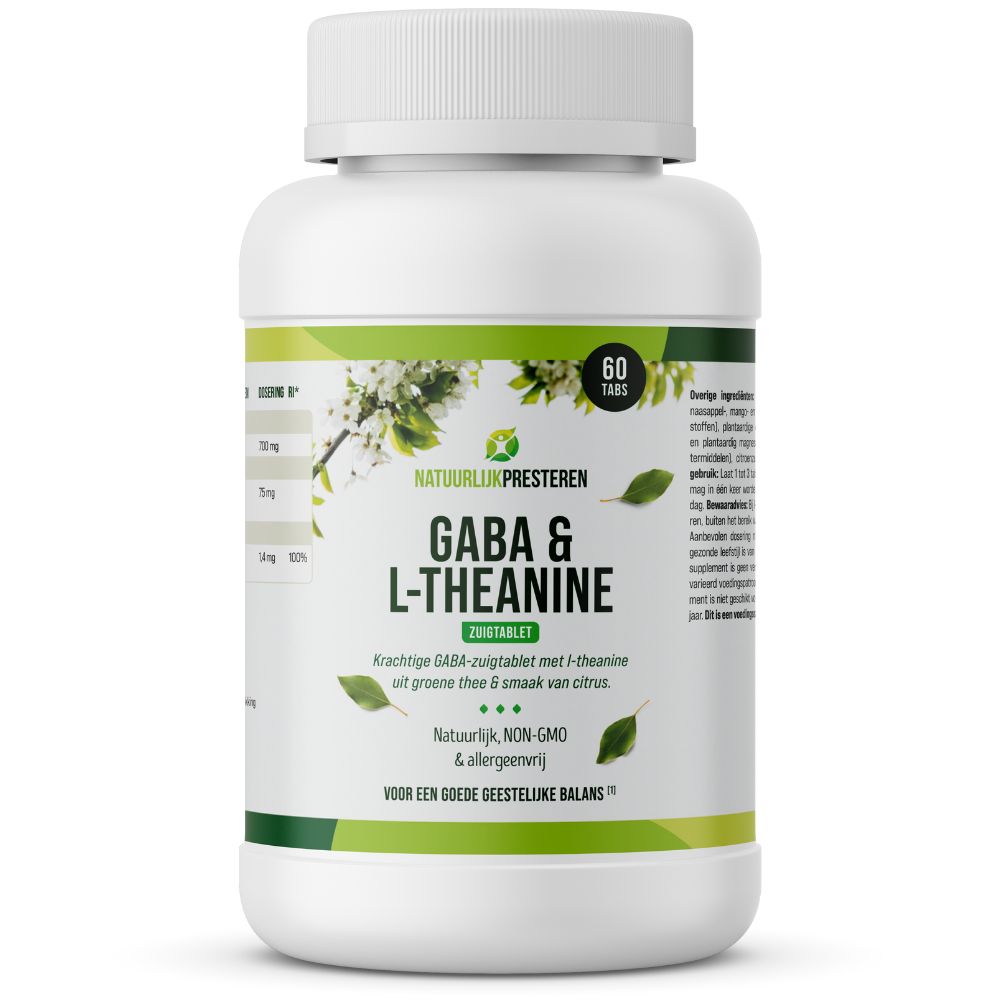
In addition to GABA, we've also added L-theanine, a natural amino acid found in green tea. To complete the formula , we've added active vitamin B6 (P5P), which is beneficial for mental balance.
Sublingual GABA Supplements
Sublingual means "under the tongue." Sublingual supplements are not swallowed, but placed under your tongue. This prevents the active ingredients from reaching your stomach, but allows them to be absorbed more quickly into your bloodstream through the oral tissues. (3)
Lozenges are a form of sublingual supplement.
How can you help your body produce more GABA?
GABA deficiency can occur due to lifestyle factors as well as mental and physical problems.
There are several natural ways to support GABA production in your body:
Tip 1: Eat foods rich in glutamate
Glutamate is the precursor to GABA. Your body needs this substance to produce GABA. Tomatoes, mushrooms, seaweed, and fermented foods contain glutamate.
Good to know: When you hear the word "glutamate," many people think of monosodium glutamate (MSG), a food additive often associated with Chinese food. But glutamate is the most abundant amino acid in your brain. It plays a vital role there by stimulating other neurons so they can perform their functions.
Tip 2: Drink green tea
Theanine is an amino acid found mainly in green tea and can support the functioning of GABA
Tip 3: Maintain a healthy sleep routine
A good night's sleep contributes to GABA production. (4) Maintain regular bedtimes and avoid screens before bed.
Tip 4: Stress management
Techniques such as meditation, deep breathing, and mindfulness can help reduce stress, which can support GABA production.
Sources Used
- Jewett, B. E., & Sharma, S. (2023, July 24). Physiology, GABA . StatPearls - NCBI Bookshelf. https://www.ncbi.nlm.nih.gov/books/NBK513311/
- Boonstra, E., De Kleijn, R., Colzato, LS, Alkemade, A., Forstmann, BU, & Nieuwenhuis, S. (2015). Neurotransmitters as food supplements: the effects of GABA on brain and behavior. Frontiers in Psychology , 6 . https://doi.org/10.3389/fpsyg.2015.01520
- NARANG, N., SHARMA, J., Shri Baba Mastnath Institute of Pharmaceutical Sciences and Research, & Institute of Pharmaceutical Sciences, Kurukshetra University. (2011). SUBLINGUAL MUCOSA AS A ROUTE FOR SYSTEMIC DRUG DELIVERY. In International Journal Of Pharmacy And Pharmaceutical Sciences (Vol. 3, Issue Suppl 2, pp. 18–22). https://www.innovareacademics.in/journal/ijpps/Vol3Suppl2/1092.pdf
- Siegel, J. M. (2004). The Neurotransmitters of Sleep . PubMed Central (PMC). https://www.ncbi.nlm.nih.gov/pmc/articles/PMC8761080/#:~:text=In%20some%20cases%2C%20GABA%20neurons,are%20involved%20in%20arousal%20functions
Gerelateerde blogartikelen

Natural tranquilizers? These remedies provide peace of mind.
Natural tranquilizers are a great way to support your body and mind during stressful times. Many people suffer from chronic stress, anxiety, restlessness, and tension. This can, in turn, lead to sleep and concentration problems, headaches, and fatigue. Fortunately, there are several natural tranquilizers that can help. These are herbs, active plant compounds, and minerals with properties that can promote calm and relaxation. In this blog post, we'll discuss 10 natural tranquilizers you can use for stress, anxiety, and inner turmoil. Natural tranquilizers support relaxation, sleep, stress, anxiety and insomnia without being addictive. Effective natural remedies such as valerian, passion flower, lavender, ashwagandha and magnesium help with relaxation and sleep. They stimulate GABA, help regulate serotonin and melatonin, and have adaptogenic effects without causing drowsiness or dependency. Table of contents Valerian Passionflower Lavender Ashwagandha Hops Rhodiola Chamomile L-theanine Magnesium Relax Plus Valerian Valerian has been used for centuries as a sleep aid. Research suggests it may help promote healthy, high-quality sleep [1] . Valerian produces these effects because the compounds in the plant promote the production of GABA (gamma-aminobutyric acid). GABA is a neurotransmitter that has an inhibitory effect on the nervous system. Research shows that having higher levels of GABA in the brain helps you fall asleep faster and sleep better. Valerian can also help during stressful times. It acts as a natural tranquilizer, offering support during restless periods. The substance valeric acid is responsible for these effects [2] . You can take valerian as a capsule or drink valerian tea. To maximize its calming effect, it's best to take this natural sedative before bed or when you're feeling tense. Passion flower Passionflower is a natural tranquilizer, contributing to normal resistance to stress. It can also offer support when feeling restless or tense. A study published in the Journal Anesthesia and Analgesia examined the effects of passion flower in people who were scheduled to undergo surgery. Those who received the supplement reported that it helped them relax prior to surgery. Those who received the placebo did not report these effects [3] . Passion flower is also good for sleep. In a double-blind, placebo-controlled study published in Phytotherapy Research, participants were given a daily dose of passion flower tea. After 7 days, those who received the passion flower tea reported that it helped support sleep [4] . Passionflower's calming properties appear to arise from its ability to support GABA concentration in the brain. You can take a passionflower supplement (extract, capsules, or tablets) or make a tea from the dried leaves. Lavender Many people know lavender as the plant that smells so wonderful in summer. But lavender has more benefits than just a pleasant scent. This plant, with its beautiful purple flowers, can help promote sleep and relaxation. Several studies seem to indicate that the active ingredients in lavender can help you relax. This makes it good for your mood and sleep [5] . Interestingly, inhaling the scent of lavender generally appears to be more effective than ingesting it in any other way. Therefore, aromatherapy with lavender is also popular for supporting sleep. A 2015 study involved 158 women who had just given birth. They inhaled lavender scents four days a week for eight weeks. The women who received real lavender experienced improved sleep [6] . Ashwagandha Are you familiar with ashwagandha as a natural sedative? Officially, it's not a sedative, but it's an adaptogen. This means it adapts to your body's needs. It helps you relax during stressful moments, while it boosts your energy levels when you're tired. Several studies have shown that ashwagandha supplements can help during stressful times. A small study included 58 people, who received either 250 or 600 mg of ashwagandha extract daily for eight weeks. Those who received the real drug reported that it helped them manage stress. Those who received a placebo did not report these benefits. Another benefit was that it helped support sleep [6] . Hop Hops are best known as one of the ingredients in beer, but they're also one of the natural sedatives on our list. They've been used in herbal medicine in Europe since the 9th century. Even today, there is still interest in the properties of hops, particularly their effects on anxiety and sleep. Research shows that hops can act as a natural sedative and support a good night's sleep. In a 2012 study, women were given non-alcoholic beer with hops with dinner. The women who drank it found it helped them sleep better. If you're planning to use hops to address sleep problems, for example, be careful how you do it. Don't drink extra beer before bed. Drinking too much alcohol can negatively impact the quality of your sleep, even if it might help you fall asleep faster. Did you know? Hops may also help with menopausal symptoms, as the plant contains phytoestrogens. It seems that hops may alleviate some of these symptoms, but more research is needed to clarify this. Rhodiola Rhodiola is also an adaptogen, which can help during stressful times. It provides your body with exactly what you need at that moment: it has a calming effect during times of stress, but also supports your energy levels during times of fatigue. Taking rhodiola if you suffer from tension can help you cope better with stress. Stress can also negatively impact other aspects of your life. For example, you may experience fatigue, both mentally and physically. Thanks to rhodiola's adaptogenic properties, it may also offer relief from this. 100 people who were given 400 mg of rhodiola daily for 8 weeks in a study indicated that it provided support during stressful periods[ 7] . Researchers also suspect that rhodiola is good for mood. Chamomile Chamomile is one of those natural sedatives that almost everyone knows. Traditionally, it's recommended to drink a cup of chamomile tea before bed. Chamomile helps you relax and sleep well. Chamomile's calming effect is due to its antioxidant apigenin . This binds to certain receptors in the brain, promoting drowsiness and potentially helping with insomnia. Furthermore, the relaxing effects are also beneficial for feelings of anxiety and tension. Chamomile is a good remedy to use during stressful times. Did you know? Chamomile is also known in herbal medicine as a remedy for digestive problems. It has been prescribed for centuries for diarrhea, loss of appetite, nausea, and abdominal pain. L-theanine L-theanine is an amino acid found primarily in green and black tea, as well as in some types of mushrooms. Do you enjoy a nice cup of hot tea and feel relaxed afterward? That might be true; it's L-theanine that helps you relax. The advantage of this substance is that it produces this effect without making you sluggish or sleepy. The substance influences various neurotransmitter systems and supports the production of GABA. This substance can slow down the activity of the nervous system, which can help you relax. Did you know? Taking L-theanine in combination with caffeine can potentially have a positive effect on your concentration. So, if you need sharper focus, it might be a good idea to have a cup of coffee after your cup of tea. Magnesium Magnesium can also function as a natural sedative. Many people use magnesium supplements to support sleep. This is because magnesium helps produce serotonin and melatonin, among other things. [8] Magnesium can also be very beneficial during stressful times. It's good for stress resistance and can help during stressful times. Relax Plus The Relax+ dietary supplement is one of the natural sedatives you can use to manage stress. It's specially formulated as a natural relaxant and contains calming herbs like chamomile, hops, passionflower, valerian, rhodiola, and L-theanine. Relax+ has an adaptogenic effect and helps you relax better when you're stressed, but also provides an uplifting effect when you're tired. This supplement is ideal for use during stressful periods, as it supports resilience. Do you suffer from disturbed sleep, often feel tense or stressed, worry a lot, and experience anxiety? Try Relax+, which naturally promotes relaxation and calm. With Relax+, you have all the supplements you need to promote more peace and increased resistance to stress. Take two or three capsules daily and benefit from what nature has to offer. Choose a natural way to relax. Natural remedies work in harmony with your body. They don't cause drowsiness or lethargy, and they're not addictive. They're safe for long-term use. Miriam Mirjam felt a connection with nature from a young age. This has led to a deep passion for health, natural remedies, and healthy eating. She also loves reading, yoga, and writing. When the weather is nice, she enjoys exploring new hiking trails. Read more
Lees meer bloggle
L-Theanine Omega-3: What Is It and What Does It Do?
L-theanine and omega-3 are two powerful supplements often combined for their synergistic effect. Together, they can work even better: The omega-3 fatty acid DHA is good for your brain and L-theanine, found in tea, influences neurotransmitters that play a role in concentration and mood. This article will help you discover if these supplements are right for you and what to look for when purchasing this unique combination. L-Theanine and Omega-3 (LT + O3) naturally support your brain function, concentration and memory. Choose a high-quality LT+O3 package with sufficient DHA, approximately 300 mg L-theanine and possibly B vitamins for optimal effectiveness. The L-Theanine Omega-3 package is safe for various ages and can help provide support during studies and work. Table of contents What is L-theanine with omega-3? The L-Theanine and Omega-3 formula from Natuurlijk Presteren Ingredients in L-theanine omega-3 supplements L-theanine Source of omega-3 fats Blue Skullcap (Scutellaria) B vitamins What does L-theanine do with omega-3? (Effect) Criteria for a good L-theanine omega-3 supplement/package The top 3 best L-theanine with omega-3 supplements #1 L-theanine, Omega-3 and Skullcap package (LT + O3) – Natuurlijk Presteren #2 LT 4 Theanine – Vitamins by mail #3 LTO 3 – Herb-e-Concept Skullcap in L-theanine & Omega-3 supplements What is L-theanine with omega-3? L-theanine with omega-3 is also called LTO3 . LTO3 is the brand name for the popular formula known for supporting concentration and mental calm. The supplement combines the benefits of L-theanine and omega-3 fatty acids , making it a popular choice for people seeking additional mental support, especially during busy or stressful times.* Based on this combination, several products have now appeared on the market, which vary in dosage and additional ingredients, such as Blue Skullcap and B vitamins. The L-Theanine and Omega-3 formula from Natural Performance Our version is inspired by the well-known LTO3 formula, but we have further optimized the ingredients and added additional ingredients for even better effectiveness. It is therefore not surprising that it is one of our best-selling products. Ingredients in L-theanine omega-3 supplements The main ingredients in these formulas are L-theanine and Omega 3. But also Blue Skullcap and B vitamins are valuable additions . To understand why one product is better than another, it's good to know a little more about these 4 specific ingredients: L-theanine L-theanine is an amino acid found in tea leaves ( Camellia sinensis ) and contributes to the tea's unique flavor. The amount of L-theanine varies between different tea varieties and depends on growing conditions. It influences the production of GABA (gamma-aminobutyric acid), an important inhibitory neurotransmitter that regulates the activity of nerve cells. This makes L-theanine popular in products aimed at concentration. * (1) (2) Source of omega-3 fats There are several omega-3 fatty acids, the best known of which are EPA, DHA, and ALA. DHA and EPA are found in large quantities in fish, while ALA comes primarily from plant sources, such as flaxseed oil. DHA is the most important omega-3 fatty acid for healthy brain function, making it essential in a good L-Theanine Omega-3 supplement. (3) Tip 1 - It's important to choose a supplement that contains liquid fish oil , as this provides a higher concentration of DHA compared to other sources such as herring roe (non-liquid omega-3). Tip 2 - Also pay attention to the quality of the fish oil. The DHA should come from a reliable source . Always choose fish oil that has been purified to remove heavy metals, PCBs, and other contaminants, as these substances can be present, especially if the oil is not properly purified. Blue Skullcap (Scutellaria) Scutellaria (Blue Skullcap), also known as Scutellaria , is a plant from the Lamiaceae family that's increasingly found in nutritional supplements. But in other cultures, the benefits of this herb have been known for much longer. Since the second (!) century, this skullcap has been used in Chinese medicine. It is often used in supplements for its flavonoids , such as baicalin, scutellarin, and other bioactive compounds, which may contribute to brain function.* Unfortunately, due to new European legislation, it is not permitted to say more about the effects of this natural ingredient. Still curious? I recommend you read my article about Blue Skullcap. But this recent research on the herb is also interesting. (4) You can also always send us an email (klantenservice@natuurlijkpresteren.nl). We're happy to answer all your questions! B vitamins B vitamins are often added to L-theanine and omega-3 supplements because they help with important brain functions: They contribute to mental resilience , concentration and memory functioning (B1, B3, B5, B6, B8 and B12). They have a positive influence on the functioning of the nervous system (B1, B2, B3, B6, B8 and B12). They activate the natural energy in your body (B1, B2, B3, B5, B8). They help reduce tiredness and fatigue (B2, B3, B5, B6 and B12). What do L-theanine omega-3 supplements do? (Effects) As I mentioned at the beginning of this article, the combination of omega-3 and L-theanine is interesting because these ingredients complement each other. Omega-3 fatty acids, such as DHA, play an important role in brain health and can contribute to its normal functioning. L-theanine, a substance found in green tea, is known for its effect on mental calm and focus. * Taking these two ingredients together can help support omega-3 function, while L-theanine can help maintain a sense of balance and focus.* In addition, skullcap contains all kinds of antioxidants that are good for brain function. In short: This combination can be useful for those looking for mental support without feeling rushed or distracted. * Criteria for a good L-theanine omega-3 supplement/package When choosing a good L-theanine and omega-3 supplement, it is important to pay attention to a few key criteria for the best results: L-theanine from a natural source - A natural source of L-theanine usually comes from green tea ( Camellia sinensis ) or other tea plants. Look for terms like "L-theanine from green tea extract" on labels to ensure it's natural, not synthetic. Blue skullcap in extract form: In extract form the active ingredients are more concentrated, which ensures a stronger effect. L-theanine and Skullcap in a 2:1 ratio - This specific ratio ensures optimal synergy between L-theanine and skullcap. High-dose omega-3 fats - High-quality fish oil is always liquid and contains a high concentration of DHA per serving: 220-250 mg. Avoid products containing "herring roe," as this is a poorer source of DHA. Supportive B vitamins - A good L-theanine & Omega-3 supplement also contains the most important B vitamins. These contribute to the supplement's effectiveness and support memory, concentration, and learning ability. Top 3 Best L-Theanine with Omega-3 Supplements The best L-Theanine Omega-3 is a composite package of 2 separate supplements: One supplement with “solid” ingredients – L-Theanine, Skullcap & B Vitamins One supplement based on high-quality fish oil with a high concentration of DHA The reason for this is that it is technically not possible to mix herbs such as L-theanine and blue skullcap (powder form) with liquid fish oil in one capsule. Many manufacturers therefore use solid DHA from herring roe, but this contains little omega-3 and has a low dosage. A better option is to take the fish oil separately, in liquid form, and L-theanine and blue skullcap separately as a powder (in capsules). This way, you get the best quality of everything. #1 L-theanine, Omega-3 and Skullcap Pack (LT + O3) – Natural Performance We actually already gave it away a bit earlier in this article… But the best L-Theanine Omega-3 in our opinion is a combination of: one supplement with “solid” ingredients - L-Theanine, Skullcap & B vitamins one supplement based on high-quality fish oil incl. high concentration of DHA Because very few supplements meet the requirements for a good L-theanine Omega-3 package, we ultimately decided to develop our own. This is how we arrived at the following package: Alfa Focus (product 1) – Contains 300 mg L-Theanine and 150 mg Blue Skullcap in combination with vitamins B3 and B8, to support concentration, learning performance and memory. Ultra Omega-3 (product 2) – Contains high-quality fish oil with a high concentration of DHA for optimal effectiveness. We've also added vitamin E to protect the quality of the fish oil, as vitamin E acts as a powerful antioxidant. All in all, the rightful winner in the top 3 best L-theanine & Omega 3 supplements. #2 LT 4 Theanine – Vitamins by mail LT4 Theanine from Vitamines per mail also launched a great formula. This product doesn't contain omega-3, but it does contain ashwagandha ( Withania somnifera ), lemon balm ( Melissa officinalis ), and black pepper extract (BioPerine®), which support the effectiveness of L-theanine. Advantages L-theanine from green tea Contains Skullcap extract Contains Ashwagandha Disadvantages No Omega-3 fatty acids No vitamin B complex Too little L-theanine This unique formula took second place in my top 3 because of its unique composition of supporting ingredients and the quality of the green tea extract. #3 LTO 3 – Herb-e-Concept Herb-e-Concept was one of the first to market the combination of L-theanine, omega-3 and blue skullcap with their well-known LTO3® formula. They use a good dosage of L-theanine (300 mg), but use a solid form of DHA (roe), which is less effective than liquid fish oil. Advantages: Contains L-theanine Contains Skullcap Contains Omega-3 Disadvantages: L-theanine from synthetic source Too few omega-3 fats No vitamin B complex Low dose The LTO3® formula cannot be missing from the top 3 due to its composition, but in terms of dosage and quality of the active ingredients, numbers 1 and 2 perform considerably better. Good to know : One dose of this product consists of 3 capsules. Skullcap in L-theanine & Omega-3 supplements Blue Skullcap ( Scutellaria lateriflora ) is a valuable addition to L-theanine and Omega-3 formulas. As I explained earlier, it is primarily the flavonoids in Skullcap that may contribute to cognitive function. Combined with L-theanine, it can enhance the supplement's effectiveness. This makes it a useful addition to a well-balanced supplement. Good to know : Claims marked with (*) are health claims awaiting European approval. Jochum Smid Jochum Smid is a biobased chemist specializing in orthomolecular nutrition. He develops and selects the nutritional supplements at Natuurlijk Presteren and has a passion for biohacking, science, and healthy eating. Read more Sources used: Li, M., Liu, H., Wu, D., Kenaan, A., Geng, F., Li, H., Gunaratne, A., Li, H., & Gan, R. (2022). L-Theanine: A Unique Functional Amino Acid in Tea (Camellia sinensis L.) With Multiple Health Benefits and Food Applications. Frontiers in Nutrition, 9. https://doi.org/10.3389/fnut.2022.853846 Hidese, S., Ogawa, S., Ota, M., Ishida, I., Yasukawa, Z., Ozeki, M., & Kunugi, H. (2019b). Effects of L-Theanine Administration on Stress-Related Symptoms and Cognitive Functions in Healthy Adults: A Randomized Controlled Trial. Nutrients, 11(10), 2362. https://doi.org/10.3390/nu11102362 Liu, H., Deng, Y., Chen, L., Weng, S., & Xu, D. (2023). The effect of omega 3 supplementation on serum brain-derived neurotrophic factor: A systematic review and meta-analysis. European Journal of Integrative Medicine , 61 , 102264. https://doi.org/10.1016/j.eujim.2023.102264 Ma, Y., Zhou, X., Zhang, F., Huang, C., Yang, H., Chen, W., & Tao, X. (2024). The effect of scutellaria baicalensis and its active ingredients on major depressive disorder: a systematic review and meta-analysis of literature in pre-clinical research. Frontiers in Pharmacology , 15 . https://doi.org/10.3389/fphar.2024.1313871
Lees meer
Unable to sleep due to restlessness? 9 tips for a relaxed mind and body.
Sometimes you lie in bed and can't sleep because you feel restless. Your body can't relax properly, or your thoughts keep racing . When you're stressed from work or a personal situation, it's easy to pinpoint. There may also be other reasons why you're not feeling relaxed. Some examples are: Working late Difficult conversations before bed Social contact until late at night An exciting series or movie Worrying and caring Stress during the day Too many stimuli Sometimes you simply lie awake from restlessness without being able to pinpoint the cause. It's not necessary to pinpoint exactly what's causing your body or mind to feel so restless. The most important thing is to be able to completely unwind, allowing you to relax and fall asleep quickly. This article offers 9 ways to help you when you can't sleep due to restlessness. Restlessness before bed can be caused by stress, screen use, worrying, working late, and social or emotional stimuli. Relaxation techniques such as meditation, breathing exercises, soothing teas and essential oils can help you fall asleep faster. Avoid screens, create a calming atmosphere and take magnesium to support a good night's sleep. Table of contents 1 - Meditation and breathing exercises 2 - List or agenda for the next day 3 - Drink a soothing tea 4 - Exercise, but in moderation 5 - Shift your attention to something calming 6 - Avoid screens until late in the evening 7 - Use essential oils 8 - Create a good atmosphere 9 - Magnesium for restlessness before bedtime 1 - Meditation and breathing exercises Meditation and breathing exercises are a good tip if you can't sleep due to restlessness. Science has now fully embraced meditation as a technique for mental relaxation. During meditation, you move more out of your head and more into your body. This helps to relax both the body and the mind. Breathing exercises are also calming for both body and mind. The difference between breathing exercises and meditation is subtle. While you become more aware of your breath during meditation, you change the way you breathe during breathing exercises. An example is the 'box breathing' exercise: Breathe in for four seconds Hold this for four seconds Exhale for four seconds Hold this again for four seconds Continue like this for a while. There are plenty more breathing exercises to do before bed. A useful app to use for meditation and breathing exercises is Calm. This app can help you sleep better and maintain good mental health. [1] 2 - List or agenda for the next day Sometimes the restlessness that keeps you from sleeping is caused by to-dos that linger in your mind. You don't want to forget everything you have to do the next day, and these tasks keep swirling around in your mind. It can be helpful to write down everything you want to remember for the next day. For example, put the tasks in your calendar or leave a note on the table with the to-do's for the next day. Hopefully, you'll be able to let go of it afterward and go to bed with a clearer mind. 3 - Drink a soothing tea When you think of tea, you think of peace. Tea is warm and cozy. So, if you can't sleep due to restlessness and are looking for relaxation, a warm cup of tea is definitely recommended. Be careful not to pour a huge cup of tea. You don't want to get up multiple times during the night to go to the bathroom. Also, choose a tea that doesn't contain caffeine. Caffeine is precisely what you want to avoid before bed, and many people misjudge how much caffeine green, and especially black, tea contains. Teas that do not contain caffeine are: Chamomile tea (also very relaxing!) Rooibos tea Ginger tea Mint tea Decaffeinated green, black and white tea Fruit tea 4 - Exercise, but in moderation There are several reasons why exercise helps you sleep better. Exercise reduces stress, makes you more tired, and clears your mind. So, when restlessness keeps you awake, it's crucial to exercise. However, it's advisable not to exercise intensively too close to bedtime. Exercise wakes your body up and makes you alert. So, it's best to do an intensive workout during the day or as early in the evening as possible. 5 - Shift your attention to something calm For example, if you've worked late, thoughts about work can keep running through your mind, making sleep more difficult and restless. You might want to go to bed right after work, lest you end up being too late. Still, it's better to do something calming before bed. This will shift your attention to something peaceful and pleasant. Think of a good book, like a novel, or a magazine you can browse through. Try to avoid exciting movies or books, as these can have the opposite effect and actually make your mind more restless. 6 - Avoid screens until late at night Watching movies or TV shows right before bed is definitely not recommended. Screens are very stimulating. Research shows that looking at screens within an hour of bedtime is detrimental to falling asleep or staying asleep [2] . Moreover, social media can provide a lot of impressions in a short time, which can linger in your mind before you fall asleep and cause restlessness. So try to finish your phone activity well before bed. 7 - Use essential oils Aromatherapy uses essential oils to improve your physical and mental well-being, and therefore also to help you relax. The plants from which the oils are made are said to have certain healing properties, and you can either believe in them or not. Even if you don't believe this, you can still use essential oils to help you feel restless before bed. A pleasant fragrance with a beautiful meaning can, in itself, create a sense of well-being and calm. You can use them in an aroma diffuser, for example, or simply smell the bottle. Below are some oils and the meanings often given to them: Lavender oil - relaxation Peppermint oil - relief Citrus oil - good mood and energy Eucalyptus oil - refreshing Chamomile oil - relaxation 8 - Create a good atmosphere When unwinding before bed, the atmosphere in your room or home is important. Especially after a busy day, your body and mind need time to adjust to the idea of going to sleep. A relaxing atmosphere at home can help with this. You can create a cozy, relaxing atmosphere by, for example: Cleaning up clutter Close the curtains Dim lights Turn on lamps with a warm shade (such as a salt lamp) Lighting candles Turn on some soothing music A scented candle or an aroma diffuser 9 - Magnesium for restlessness before going to sleep If you're having trouble sleeping due to restlessness, you might consider taking magnesium. Magnesium has several benefits for your sleep. It provides support during stress and helps you establish a good sleep pattern. There are even more benefits of magnesium for sleep. There are many types of magnesium on the market, but many are poorly absorbed. Our magnesium supplement contains only the most absorbable types and is combined with other ingredients that contribute to magnesium's effectiveness: taurine, active vitamin B6, and D3. Lauressa Lauressa studied Nutrition & Dietetics and also works as an editor. She enjoys delving deeply into topics related to healthy eating, mental well-being, and hormone balance. When she's not pursuing her passion for health, she enjoys being creative. Read more
Lees meer