


What is lutein?
Lutein is an important antioxidant found mainly in plants, vegetables and fruits.
This substance belongs to the carotenoid group (a group of natural pigments) and occurs naturally in fruits and vegetables (such as broccoli, bell peppers, kiwi, and grapes). Egg yolks are also a source of lutein.
Lutein supplements
For supplements, lutein is mainly extracted from marigold (Calendula officinalis).
This plant is mainly known as a raw material for calendula ointment, but it also contains a wealth of other valuable substances:
- Marigold extract consists of approximately 20% lutein and also contains a small amount of zeaxanthin (approximately 1%), two substances that are very similar.
- In addition to lutein and zeaxanthin, marigold extract also contains other substances, such as saponins, flavonoids and triterpenes.
These substances together enhance the effect of the marigold extract and make it widely applicable in health supplements.
Zeaxanthin and lutein
Both substances look very similar, but their atoms are arranged slightly differently.
You will often find lutein and zeaxanthin together in supplements. This is because they reinforce each other in their work.
1. Yellow pigment, green vegetables
They also often occur together in nature. In many vegetables, fruits, and flowers, they are responsible for the yellow, orange, and red colors.
Are you also immediately thinking of carrots and yellow bell peppers? It's a bit different.
Lutein and zeaxanthin are mainly found in green leafy vegetables, such as spinach and kale. This is because these substances combine well with chlorophyll, the green pigment in plants.
So even though lutein and zeaxanthin are yellow pigments, they are actually found in vegetables that are green in color, rather than the yellow or orange vegetables you might expect.
2. Antioxidants
Lutein and zeaxanthin act as Antioxidants. They help protect the body against free radicals, unstable molecules that can damage cells, proteins, fats, and DNA.
Because lutein and zeaxanthin complement each other, they enhance each other's effects and together they can help combat free radicals even more effectively.
They also contribute to the restoration of glutathione. Glutathione is another powerful antioxidant in your body that is important for protecting cells from damage.
3. Eye health
Lutein and zeaxanthin are also found in your eyes. They are the main carotenoids in the human lens. They help protect your eyes from light damage, especially in the macula, the central part of your retina.
Research has shown that taking 20 mg of lutein daily for at least 6 months can help support eye health, especially in people with age-related macular degeneration (AMD), an eye disease that often occurs later in life. (1) (2)
Multivitamin with lutein and zeaxanthin
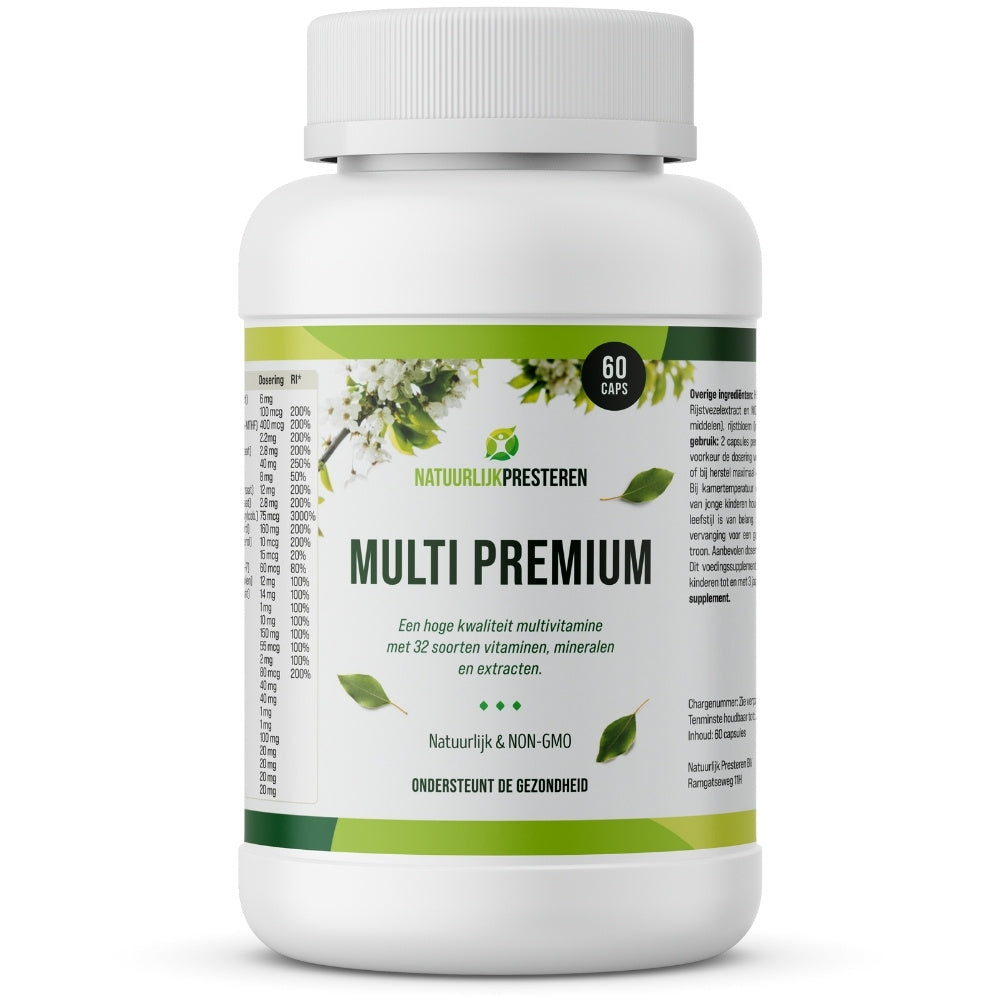
Multi Premium is a high-quality multivitamin that contains the most absorbable forms of important vitamins and minerals.
Combined with antioxidants from Tagetes Erecta extract, Multi Premium provides a plant-based source of lutein and zeaxanthin, which help protect your eyes and brain.*
Sources used
- Liu, Y., Ni, M., Wu, R., Yang, Z., Zhu, X., & Chen, J. (2022). The level and efficacy of lutein in patients with age-related macular degeneration: a comprehensive systematic review and meta-analysis. Annals Of Translational Medicine , 10 (6), 299. https://doi.org/10.21037/atm-22-173
- Wilson, L.M., Tharmarajah, S., Jia, Y., Semba, R.D., Schaumberg, D.A., & Robinson, K.A. (2021). The Effect of Lutein/Zeaxanthin Intake on Human Macular Pigment Optical Density: A Systematic Review and Meta-Analysis. Advances in Nutrition , 12 (6), 2244–2254. https://doi.org/10.1093/advances/nmab071
Gerelateerde blogartikelen
 beste vitamine d voor ouderen
Vitamins for your eyes? These are the most important ones
Do you spend a lot of time in front of a screen? Then you've probably noticed your eyes feeling dry or tired. No wonder: Our eyes are put under a lot of strain these days with all those hours spent staring at screens. But excessive sun or dry air from air conditioning can also contribute to eye irritation and fatigue. Fortunately, you can also give your eyes some support from within, for example, with the right nutrition. Certain vitamins and minerals contribute to maintaining normal vision. In this article you can read which vitamins your eyes need most and where you can find them. The most important vitamins for eyes are A, C and E with zinc; in addition, lutein and zeaxanthin support the macula. Choose liver, leafy greens, and oily fish or algae oil; 250 mg DHA per day supports vision. Lifestyle tips: UV protection, 20-20-20 screen breaks, sleep, no smoking, stress reduction; eye supplements are a complement, not a replacement; use retinol with caution during pregnancy. Table of contents The 6 most important vitamins (and minerals) for your eyes 1. Vitamin A - good for your eyesight 2. Zinc - contributes to the maintenance of normal vision 3. Vitamin C - against free radicals 4. Vitamin E - against free radicals 5. Lutein and zeaxanthin - natural pigments from vegetables 6. Omega-3 fatty acids (DHA) - good for your eyesight In short Lifestyle also counts Supplement as a supplement Multipremium The 6 Most Important Vitamins (and Minerals) for Your Eyes These are the most relevant vitamins and minerals for your eyes: 1. Vitamin A – good for your eyesight Vitamin A is one of the best-known vitamins for your eyes. It contributes to the maintenance of normal vision. In your retina it helps to form rhodopsin , a substance that supports your eyes in changing light conditions (such as from light to dim). (1) In addition, vitamin A helps keep your mucous membranes healthy , which are also found in and around your eyes. Vitamin A can be found, for example, in: Retinol (vitamin A) - Liver (very rich), eggs, dairy Provitamin A (beta-carotene) - Orange and dark green vegetables such as carrots, pumpkin and kale (your body can convert this into vitamin A) Are you pregnant or planning to have children? Be careful with liver and high retinol intake. If in doubt, consult your doctor or dietitian. 2. Zinc – contributes to the maintenance of normal vision Zinc helps vitamin A function in the retina , where it's needed to convert light into images. A lack of zinc makes this function less efficient. This mineral also occurs naturally in several parts of our eye such as the retina and in the retinal pigment epithelium (RPE), a pigment layer in the retina , and contributes to the protection of cells from oxidative stress. Good sources of zinc include: Meat (especially beef and lamb) Shellfish such as oysters Nuts and seeds Whole grains 3. Vitamin C – against free radicals Vitamin C helps protect cells from oxidative stress (i.e., helps fight free radicals). It's a powerful antioxidant that's highly water-soluble. It occurs in relatively high concentrations in and around the eye, including in the lens and the fluids of our eye . These parts of the eye are exposed to a lot of light and oxygen every day, which creates small amounts of free radicals. These are reactive particles that can damage cells. Vitamin C therefore contributes to the protection of cells against oxidative stress in eye tissue. Did you know that vitamin C works with other antioxidants, like vitamin E? It helps reactivate them after they've completed their protective work. This way, they reinforce each other's effects. (3)(4) Therefore, regularly eat foods rich in this vitamin, such as: Citrus fruits Strawberries Kiwi Bell pepper Brussels sprouts 4. Vitamin E – against free radicals Like vitamin C, vitamin E contributes to the protection of cells from oxidative stress. Vitamin E is a fat-soluble antioxidant and works primarily in the fatty areas of the eye , such as the retina . There, it helps protect the fats in eye cells from damage by light and oxygen. This is especially important in the retina, because there are many polyunsaturated fatty acids there that can oxidize more quickly. You get vitamin E if you regularly eat foods such as: Nuts and seeds (e.g. almonds, sunflower seeds) Vegetable oils (e.g. sunflower oil, wheat germ oil) Avocado 5. Lutein and zeaxanthin – natural colorants from vegetables Lutein and zeaxanthin are plant carotenoids , pigments found mainly in green and yellow vegetables such as spinach, kale and corn. In our eyes, these substances accumulate in the macula . This is the small area of the retina that allows us to see clearly. There, they form part of the natural pigment that gives this area its characteristic yellow hue. Researchers are investigating, among other things, how lutein and zeaxanthin absorb light and how they contribute to the density and composition of that macular pigment . They want to better understand why this particular area of the eye attracts these substances. Although the science on this is still developing, these studies beautifully demonstrate how subtly nutrition and eye function are intertwined.(5)(6) Where can you find lutein and zeaxanthin? Dark green leafy vegetables (spinach, kale) Corn Egg yolks 6. Omega-3 fatty acids (DHA) – good for your eyesight Your eyes are made up partly of fatty acids, especially in the retina, the part at the back of your eye that captures light. DHA (an omega-3 fatty acid) is naturally abundant in the retina. (7) Your body only produces DHA in small amounts. Therefore, it's good to regularly eat foods rich in it, such as oily fish (salmon, herring, mackerel) or algae oil as a plant source. With a daily intake of at least 250 mg DHA, this fatty acid contributes to the maintenance of normal vision. In short Your eyes benefit from foods rich in: Vitamin A and zinc – Contribute to the maintenance of normal vision Vitamin C and E – Contribute to the protection of cells from oxidative stress Lutein and zeaxanthin – Naturally occur in the macula (there is no official health claim for these substances yet) DHA – Contributes to the maintenance of normal vision (with a daily intake of at least 250 mg DHA) A varied diet with plenty of vegetables, fruit, nuts, and occasional oily fish provides these nutrients naturally. This way, you give your body, and therefore your eyes, exactly what it needs to continue functioning properly. (8)(9) Lifestyle also counts Good nutrition is important, but not the only thing. You can also help your eyes by consciously managing your lifestyle. A few simple habits can make a difference: Wear sunglasses with UV protection in bright sunlight – UV can irritate your eyes. Choose UV400 and also wear a cap or hat in bright light. Take regular screen breaks - Use the 20-20-20 rule: Every 20 minutes, look at something 20 meters away (or more) for 20 seconds. Blink more often. Get enough sleep - After a good night's sleep, your eyes often feel less dry or tired. Avoid smoking - Smoking irritates the surface of the eye and constricts blood vessels, which can make eyes feel drier and more tired. Reduce prolonged stress - When stressed, you blink less and your eyes become more tense. This can lead to dry or tired eyes. Relax, take breaks, and exercise regularly. Supplement as a supplement A varied and colorful diet provides your body with the building blocks it needs, from beta-carotene in orange vegetables to lutein in dark green leafy vegetables. However, it's not always possible to get everything you need from food. Think of periods of stress, times when you eat less fruit and vegetables, or when your needs are higher (for example, during pregnancy). In such situations, a supplement with vitamin A, zinc, vitamin C, vitamin E and natural carotenoids such as lutein and zeaxanthin can be a practical addition. Good to know : Think of supplements as an extra boost on top of a healthy foundation. They don't replace a healthy diet, rest, and balance. And be careful with retinol (vitamin A) if you're pregnant or planning to become pregnant. If in doubt, consult your doctor or dietitian. (10) Multipremium Want to make it easy to support your daily intake? Then a balanced multivitamin (such as Multipremium) can be a practical addition to a healthy lifestyle. Use according to label and combine with a varied diet. Ebrina van der Bijl Ebrina is a nutritionist with a deep commitment to healthy eating and a sustainable lifestyle, based in beautiful Portugal. Her passion for natural and organic products is at the heart of her work. With a background in Nutrition & Dietetics and experience in product development and writing, she translates complex scientific information into practical advice for a balanced lifestyle. Read more Sources used Zhang, X., Yang, H., Zhou, X., Xu, J., Chen, J., Liao, L., Wu, P., & Duan, Potential benefits of vitamin A and its derivatives in glaucoma. European Journal Of Medical Research, 30(1). https://doi.org/10.1186/s40001-025-02780-4 McKay, B.S., Grabrucker, A.M., Thompson, R.B., Chew, E.Y., Lengyel, I., & González-Iglesias, H. (2025). Zinc in eye health, retinal biology and disease. Progress in Retinal And Eye Research, 101404. https://doi.org/10.1016/j.preteyeres.2025.101404 Wei, L., Liang, G., Cai, C., & Lv, J. (2015). Association of vitamin C with the risk of age-related cataract: a meta-analysis. Acta Ophthalmologica, 94(3). https://doi.org/10.1111/aos.12688 Zhang, Y., Jiang, W., Xie, Z., Wu, W., & Zhang, D. (2015). Vitamin E and risk of age-related cataract: a meta-analysis. Public Health Nutrition, 18(15), 2804–2814. https://doi.org/10.1017/s1368980014003115 Wilson, L.M., Tharmarajah, S., Jia, Y., Semba, R.D., Schaumberg, D.A., & Robinson, K.A. (2021). The Effect of Lutein/Zeaxanthin Intake on Human Macular Pigment Optical Density: A Systematic Review and Meta-Analysis. Advances in Nutrition, 12(6), 2244–2254. https://doi.org/10.1093/advances/nmab071 Lopresti, A. L., & Smith, S. J. (2025). The effects of lutein/zeaxanthin (Lute-gen®) on eye health, eye strain, sleep quality, and attention in high electronic screen users: a randomized, double-blind, placebo-controlled study. Frontiers in Nutrition, 12. https://doi.org/10.3389/fnut.2025.1522302 Wang, W., & Ko, M. (2023). Efficacy of Omega-3 Intake in Managing Dry Eye Disease: A Systematic Review and Meta-Analysis of Randomized Controlled Trials. Journal Of Clinical Medicine, 12(22), 7026. https://doi.org/10.3390/jcm12227026 Lawrenson, J. G., & Downie, L. E. (2019). Nutrition and Eye Health. Nutrients, 11(9), 2123. https://doi.org/10.3390/nu11092123 Khoo, H. E., Ng, H. S., Yap, W., Goh, H. J. H., & Yim, H. S. (2019). Nutrients for Prevention of Macular Degeneration and Eye-Related Diseases. Antioxidants, 8(4), 85. https://doi.org/10.3390/antiox8040085 Pereira, A., Adekunle, R.D., Zaman, M., & Wan, M.J. (2023). Association Between Vitamin Deficiencies and Ophthalmological Conditions. Clinical Ophthalmology, Volume 17, 2045–2062. https://doi.org/10.2147/opth.s401262
Lees meer vitamine c weerstand
The most important vitamins for your resistance
Sometimes your immune system needs a little extra support. A flu going around, a few short nights, or simply too much on your mind can really put your defenses to the test. Fortunately, your body has a powerful defense system: your immune system. It works quietly in the background, keeping everything in balance, as long as it receives the right building blocks. Just like you, your immune system needs energy and nutrients to function properly. You get these building blocks from healthy foods, rich in vitamins and minerals that support your immune cells. In this article you will discover which nutrients are important for a strong immune system and how you can obtain them through food or a good supplement. The most important vitamins for resistance are C, D, A, B6, B12 and folate; iron, zinc, copper and selenium also count. Recommended doses: vitamin C 75 mg per day (athletes +200 mg); vitamin D 10 µg, for 70+ 20 µg. Diet, sleep, exercise, and relaxation form the foundation; supplements provide temporary relief (winter, stress), but do not replace a healthy lifestyle. Table of contents Which vitamins are good for your immune system? 1. Vitamin C 2. Folate (vitamin B11) 3. Vitamin A 4. Vitamin B12 5. Vitamin B6 6. Vitamin D Vitamins that indirectly support your immune system Minerals 1. Iron 2. Copper 3. Selenium 4. Zinc Nutrition and lifestyle: The basis for your immune system A supplement to complement your diet Multi Premium Which vitamins are good for your immune system? Some vitamins have a direct effect on your immune system. These are literally involved in the functioning of your immune cells or the production of antibodies. (1) The most important resistance vitamins are: 1. Vitamin C Vitamin C supports your immune system and helps protect your cells from oxidative stress . Your body can't store this vitamin. That's why it's important to get enough of it every day. The recommended daily amount is 75 milligrams per day. You will find it in: Citrus fruits Kiwi Bell pepper Strawberries Berries Broccoli and Brussels sprouts Did you know that your body produces more free radicals during intense exercise, and therefore uses more vitamin C? Regular exercisers therefore benefit from an extra 200 milligrams of vitamin C per day, above and beyond the recommended amount. Vitamin C contributes to the normal functioning of the immune system during and after intense physical exertion. 2. Folate (vitamin B11) Folate contributes to the normal functioning of the immune system. It supports the production of new cells , including white blood cells that are important for your immune system. For adults, 300 micrograms per day from food is sufficient, unless you are pregnant or want to become pregnant. You will mainly find folate in: Green leafy vegetables (such as spinach and kale) Legumes (lentils, chickpeas) Avocado Citrus fruit Whole grain products Did you know that folate is the natural form of vitamin B11? Supplements often contain folic acid, the synthetic form that your body can convert into active folates, but this process isn't equally efficient for everyone. 3. Vitamin A Vitamin A contributes to the normal functioning of the immune system and supports the maintenance of healthy mucous membranes . This is important because it is your first line of defense against outside influences. As a man, you need about 800 micrograms of retinol activity equivalents (RAE) per day. For women, that's 680 micrograms of RAE. Good sources are: Orange or dark green vegetables (such as carrots, pumpkin, and kale) Liver (don't eat this too often, as your body stores excess vitamin A, and too much of it can be harmful) Eggs (especially the yolk) Did you know that beta-carotene from vegetables is converted into vitamin A in your body? Your body regulates this conversion itself and only produces as much vitamin A as it needs. 4. Vitamin B12 Vitamin B12 contributes to the normal functioning of the immune system. It supports your immune cells so they can do their job normally. In addition, B12 supports cell energy supply and the maintenance of healthy nerves . This is important because your nervous system and immune system work closely together to keep your body in balance. B12 also plays a role in the production of new cells , including white blood cells that are part of your immune system. Recommended amount: 2.8 micrograms per day for adults. Those who don't eat animal products usually need extra B12 from fortified foods or a supplement. You find it in animal products such as: Meat Fish Eggs Dairy Did you know that a vitamin B12 deficiency often only becomes noticeable after months, because your body can store a supply of it? 5. Vitamin B6 Vitamin B6 contributes to the normal functioning of the immune system and is involved in the production of antibodies . Your body needs B6 to properly utilize proteins, and antibodies are built from proteins. B6 supports the processes that keep your natural defenses balanced. As an adult, you need about 1.5 milligrams of vitamin B6 every day. Be careful with supplements: Excessive intake (more than 25 milligrams per day, long-term) can cause nerve problems. Therefore, stick to the recommended dosage on the packaging. You will find it in: Whole grains Bananas Potatoes Nuts Chicken Fish Did you know that vitamin B6 also helps release energy from your food and is also important for your concentration and mood? 6. Vitamin D Vitamin D has a positive effect on the immune system. Your immune system consists of various cells, such as macrophages, T cells, and B cells , which together maintain the immune system's balance. Many of these cells have receptors for vitamin D. This allows vitamin D to play a role in regulating their normal activity . Your body produces vitamin D partly in the skin (under the influence of sunlight), but you can also supplement it through food or supplements. The guideline for adults is 10 micrograms of vitamin D per day, and for people over 70 years of age 20 micrograms per day. Good sources are: Fatty fish Eggs Did you know that many people in the Netherlands don't get enough sunlight during the winter to get enough vitamin D? Therefore, supplementation is especially recommended for at-risk groups (such as people with dark skin, those aged 70 and over, or those who rarely spend time outdoors). For others, a supplement can be helpful during the darker months, depending on their sun exposure. Vitamins that indirectly support your immune system Besides these vitamins, there are also others that have an indirect effect . They don't contribute directly to the immune system, but they do support processes that are important for it. For example: Vitamin E and riboflavin (B2) help protect cells from oxidative stress. This is important because too much oxidative damage can weaken immune cells. Niacin (B3) , pantothenic acid (B5) , and biotin (B8) support energy metabolism. And good energy metabolism helps the immune system function efficiently. So some vitamins work within the immune system itself, while others maintain the conditions in which that system can function properly. Minerals Not only vitamins, but also minerals help your immune system function properly. They support the production and protection of cells that defend your body against external influences. (2) These are the most important ones: 1. Iron Iron has a positive effect on the immune system, because it helps in the production of red blood cells and supports the transport of oxygen in your body. This is important for your immune cells, because they need oxygen to function properly. An iron deficiency can also cause you to get tired more quickly and your immune system to respond more slowly. Therefore, make sure you get about 16 milligrams of iron daily if you are an adult woman before menopause, and about 11 milligrams if you are a man or have already gone through menopause. Good sources are: Red meat (such as beef or lamb) Whole grain products Legumes (such as lentils and beans) Green leafy vegetables Nuts and seeds Did you know that vitamin C helps your body absorb iron better? A glass of orange juice with a meal does more than you think. 2. Copper Copper helps the normal functioning of the immune system. It's a trace element that helps form enzymes that protect your cells from damage. It also supports the activity of white blood cells . You will find a lot of copper in: Nuts and seeds (especially cashews and sunflower seeds) Whole grain products Crustaceans Liver Dark chocolate Did you know that you only need a small amount of copper? The reference intake for adults is around 0.9–1.0 milligrams of copper per day. Too much zinc or iron can actually hinder its absorption, so varying your diet is the best way to maintain that balance. 3. Selenium Selenium contributes to the normal functioning of the immune system. This mineral helps protect your cells from oxidative stress and is involved in the production of proteins used by your immune system. Selenium contributes to healthy cooperation between your immune cells. Recommended amount: Approximately 70 micrograms per day for men and 60 micrograms for women, according to the Nutrition Center. These foods are rich in selenium: Brazil nuts Meat and fish Eggs Whole grains Did you know that the amount of selenium you consume depends on where your food comes from? In the Netherlands, the soil naturally contains little selenium, meaning grains and vegetables provide less of this mineral. 4. Zinc Zinc supports your immune system in several ways. It helps in the production and renewal of immune cells and protects cells against oxidative stress released during immune responses. Your body can't store zinc, so it's important to get some every day. The recommended amount for men is 9 milligrams per day and for women 7 milligrams . You will mainly find zinc in these foods: Meat and poultry Whole grain products Nuts and seeds Legumes Dairy Did you know that pumpkin seeds are among the best plant sources of zinc? This is helpful if you eat less meat. Nutrition and lifestyle: The basis for your immune system Your immune system works best when your body gets everything it needs: Enough vitamins, minerals, sleep, exercise and rest. A healthy diet forms the foundation. It provides the building blocks your immune system needs to function normally. Exercise, sleep and relaxation then help to keep that system in balance, so that it does not react too strongly or too slowly. If you eat a varied diet, with plenty of vegetables, fruit, whole grains, legumes, nuts, fish and occasionally some meat or eggs, your body usually gets enough nutrients to keep your immune system functioning normally. A supplement to complement your diet Supplements can be a practical addition to a healthy lifestyle, especially at times when your body needs some extra support. Think of the winter months , when you get less sunlight , or periods of stress , fatigue or recovery , when your nutritional intake or absorption is temporarily less than optimal. However, it's important to remember that supplements don't replace a healthy diet or lifestyle. They only supplement where needed. And, more isn't always better. Too much of certain nutrients can actually throw your immune system out of balance. (3)(4)(5) Multi Premium Want to supplement your daily intake of essential vitamins and minerals? Then choose a high-quality multivitamin, like our Multi Premium. It contains vitamins C, D, B6, B12, folate, and zinc, which contribute to the normal functioning of the immune system. This is what you can expect from Multi Premium: Appropriate dosages , tailored to the recommended daily amounts. With active forms such as methylcobalamin (B12) and 5-MTHF (folate). Free from unnecessary fillers and artificial additives. Balanced mineral ratios , such as zinc and copper. Ebrina van der Bijl Ebrina is a nutritionist with a deep commitment to healthy eating and a sustainable lifestyle, based in beautiful Portugal. Her passion for natural and organic products is at the heart of her work. With a background in Nutrition & Dietetics and experience in product development and writing, she translates complex scientific information into practical advice for a balanced lifestyle. Read more Sources used Mitra, S., Paul, S., Roy, S., Sutradhar, H., Emran, TB, Nainu, F., Khandaker, MU, Almalki, M., Wilairatana, P., & Mubarak, M. S. (2022). Exploring the Immune-Boosting Functions of Vitamins and Minerals as Nutritional Food Bioactive Compounds: A Comprehensive Review. Molecules, 27(2), 555. https://doi.org/10.3390/molecules27020555 Paulsingh, C. N., Riaz, M. F., Garg, G., Umeano, L., Iftikhar, S., Alhaddad, S. F., & Hamid, P. (2024). Exploring the Impact of Personalized Nutritional Approaches on Metabolism and Immunity: A Systematic Review of Various Nutrients and Dietary Patterns. Cureus. https://doi.org/10.7759/cureus.58553 Stefanache, A., Lungu, I., Butnariu, I., Calin, G., Gutu, C., Marcu, C., Grierosu, C., Goroftei, E.R.B., Duceac, L., Dabija, M.G., Popa, F., & Damir, D. (2023). Understanding How Minerals Contribute to Optimal Immune Function. Journal Of Immunology Research, 2023, 1–26. https://doi.org/10.1155/2023/3355733 Stephen, A. I., & Avenell, A. (2006). A systematic review of multivitamin and multimineral supplementation for infection. Journal Of Human Nutrition And Dietetics, 19(3), 179–190. https://doi.org/10.1111/j.1365-277x.2006.00694.x Fantacone, M. L., Lowry, M. B., Uesugi, S. L., Michels, A. J., Choi, J., Leonard, S. W., Gombart, S. K., Gombart, J. S., Bobe, G., & Gombart, A. F. (2020). The Effect of a Multivitamin and Mineral Supplement on Immune Function in Healthy Older Adults: A Double-Blind, Randomized, Controlled Trial. Nutrients, 12(8), 2447. https://doi.org/10.3390/nu12082447
Lees meer
13 Scientifically Proven Benefits of Vitamin C
Vitamin C is one of the most well-known vitamins. It's a water-soluble, essential vitamin. This means your body can't produce it on its own, so you must get it from food or a supplement. Vitamin C is best known for its antioxidant properties, safety, and low price. It's often used, among other things, to treat cold symptoms. An antioxidant protects your body against damage caused by free radicals (such as UV radiation or air pollution). But what types of vitamin C are there? And what are its benefits? In this article, I'll explain the different types of vitamin C and its 13 scientifically proven benefits ! Vitamin C is an essential, water-soluble antioxidant that your body cannot produce itself. It supports the immune system, heart, bones, iron absorption and mental functions thanks to the production of collagen and antioxidant protection. Different forms (L-ascorbic acid, mineral ascorbates, Ester-C) offer the same benefits but differ in absorption and stomach friendliness. Table of contents Types of Vitamin C L-ascorbic acid Mineral ascorbates Ester-C Scientifically proven benefits of vitamin C 1. Vitamin C protects against oxidative damage 2. Vitamin C is good for your blood vessels 3. Vitamin C is good for your bones 4. Vitamin C is good for your cartilage 5. Vitamin C is good for iron levels in your blood 6. Vitamin C is good for your immune system 7. Vitamin C is good for your skin 8. Vitamin C is good for your psychological function 9. Vitamin C is good for your mouth and teeth 10. Vitamin C is good for the regeneration of vitamin E 11. Vitamin C is good for your nervous system 12. Vitamin C supports your energy levels 13. Vitamin C helps with fatigue Vitamin C is a versatile supplement Types of Vitamin C Because vitamin C is an essential vitamin, your body cannot produce it on its own. Therefore, it's important to eat plenty of foods rich in vitamin C, such as kiwis or oranges. You can also choose to take a vitamin C supplement. There are currently three generations of vitamin C on the market: L-ascorbic acid L-ascorbic acid is the natural form of vitamin C and is the least expensive compared to the other forms. It is a very weak acid and is well tolerated by most people, except those who are acid-sensitive. Mineral ascorbates Examples of mineral ascorbates include calcium ascorbate, sodium ascorbate, and magnesium ascorbate. In these supplements, vitamin C is bound to a mineral, which reduces the acidity of the vitamin C. Mineral ascorbates are a good choice for anyone looking for vitamin C that is less harsh on the stomach than L-ascorbic acid. Ester-C Ester-C is a complex of calcium ascorbate and vitamin C metabolites with higher bioavailability. This means it's a version of vitamin C that's better absorbed by your body. This is the newest and most absorbable version of L-ascorbic acid. All three different vitamin C supplements offer the same health benefits for your body. In recent years, extensive research has been conducted into these benefits. Did you know? Brussels sprouts and red bell peppers contain more vitamin C than oranges. Scientifically proven benefits of vitamin C Below you will find 13 benefits of vitamin C, along with various scientific studies that support this: 1. Vitamin C protects against oxidative damage Vitamin C is primarily known as an antioxidant, meaning it helps combat free radicals in the body. These free radical compounds can cause damage when you have too much of them in your body. Your body uses antioxidants to keep these free radicals under control. Vitamin C contributes to protection against free radicals and external influences. This is good for maintaining healthy cells and tissues. (1) 2. Vitamin C is good for your blood vessels Healthy cardiovascular systems are important for everyone. All your organs depend on the blood supply. Unhealthy blood vessels can prevent various vital organs from receiving enough blood. Vitamin C contributes to the production of collagen in your body. Collagen is important for maintaining supple veins and strong blood vessel walls, among other things. A collagen deficiency is detrimental to your blood vessels. In fact, vitamin C is important for the health of your blood vessels, because collagen formation is essential for the proper functioning of the blood vessels. This has been shown in a study of obese children. (2) 3. Vitamin C is good for your bones Vitamin C is not only important for your blood vessels but also for normal bone function. For example, vitamin C contributes to the maintenance of strong bones and plays a role in bone formation. A study has shown that vitamin C is good for maintaining strong bones. No adverse effects have been reported, which suggests that vitamin C is safe to use. (3) A vitamin C deficiency affects collagen production. And collagen contributes to the maintenance of strong bones. Taking a vitamin C supplement is therefore good for your bones. This is measured based on bone mineral density. (4) 4. Vitamin C is good for your cartilage Healthy bones and healthy cartilage. Who wouldn't want that? Because vitamin C contributes to collagen production in your body, it's good for the production of cartilage in joints. Vitamin C is also good for maintaining healthy cartilage. Its antioxidant properties offer protection against inflammation in your joints. This has been shown in a study of the effect of vitamin C on cartilage health. (5) This is because the vitamin is water soluble and can therefore react with various aqueous free radicals and reactive forms of oxygen. A vitamin C deficiency can therefore lead to reduced collagen production. Joints contain a lot of collagen-rich connective tissue, which means a collagen deficiency could cause problems. Many studies have been done on the cause of joint problems related to collagen deficiency. (6) 5. Vitamin C is good for the iron levels in your blood Iron is an important mineral that plays a variety of roles in your body. For example, iron is essential for the production of red blood cells and the transport of oxygen. Vitamin C increases the absorption of iron from food by your body. In fact, 100mg of vitamin C has been shown to increase iron absorption by 67%. (7) Essentially, the vitamin provides your body with extra iron. This is very beneficial for people prone to iron deficiency, as it can help reduce the risk of anemia. An iron deficiency can lead to reduced red blood cell production, which causes anemia. Do you have low iron levels in your blood? Then vitamin C can help improve your iron absorption. (8) 6. Vitamin C is good for your immune system A strong immune system is important for staying healthy. This is also why most people take a vitamin C supplement. Vitamin C supports your immune system. Your immune system works with white blood cells, also called lymphocytes and phagocytes. They help protect your body and ensure the normal functioning of your immune system. (9) Because vitamin C is an antioxidant, it helps your white blood cells function better by protecting them from free radical damage. (10) Finally, vitamin C helps protect your body after strenuous physical exertion. Your immune system is weakened because your body is busy recovering. The protective effect of vitamin C provides support in this process. A vitamin C deficiency has been linked to poorer resistance, which helps protect your body. (11) Curious about ways to boost your immune system? Then be sure to read our article on natural ways to strengthen your immune system . This article contains 6 helpful methods for a stronger immune system. 7. Vitamin C is good for your skin Healthy skin gives you a well-groomed appearance. For this, it's important that you produce enough collagen. Vitamin C contributes to collagen production and thus to maintaining healthy skin. Vitamin C is a very important part of your skin's immune system. It's transported to your skin, where it can act as an antioxidant. This helps strengthen your skin from within. (12) Healthy skin contains a lot of vitamin C, especially in the outer layer of the skin. Vitamin C keeps your skin healthy by protecting it from oxidative damage caused by UV radiation and exposure to pollutants like cigarette smoke or ozone. (13) 8. Vitamin C is good for your psychological function Vitamin C is a powerful antioxidant that promotes mental resilience and a clear mind. It even has several benefits for your psychological function, such as improving your mood, learning performance, concentration, and memory. Vitamin C deficiency is involved in your memory and thinking ability. In addition, a high vitamin C intake has been shown to have a protective effect on your thinking and memory as you age. (14) It has also been shown that people with good mental balance and normal concentration have higher concentrations of vitamin C in their bodies compared to other people. (15) 9. Vitamin C is good for your mouth and teeth Beautiful, healthy teeth: that's something everyone wants. And vitamin C can definitely help! It contributes to collagen formation, which is good for maintaining strong teeth. Collagen can help heal wounds in your mouth. In addition, too little collagen has been linked to tooth loss. This is because collagen is made up of fibers found in the tissues that make up teeth and bones. (16) A collagen deficiency can cause weakened gums, which can lead to bleeding. A vitamin C supplement can help stimulate collagen production. (17) 10. Vitamin C is good for the regeneration of vitamin E Vitamin E is a fat-soluble vitamin that also functions as an antioxidant. This vitamin doesn't dissolve in water, unlike vitamin C. Vitamin E plays a role in regulating cellular metabolism, among other things. Vitamin C can help maintain the activity of vitamin E by returning vitamin E to its active form. (18) I'll try to explain it simply for you... Vitamin C and vitamin E are both antioxidants, meaning they protect your body from free radical damage. Vitamin C scavenges water-soluble free radicals (outside your cells), while vitamin E scavenges free radicals within your membranes (inside your cells). When vitamin E attacks free radicals within your membranes, the vitamin binds to them. Vitamin C regenerates vitamin E by essentially taking over these free radicals from vitamin E, so they have a place to fight new free radicals in your cells. This even happens through your membranes, so vitamin C doesn't have to enter your cells for this. (19) 11. Vitamin C is good for your nervous system Your nervous system is essentially a network of nerves that receive information from your senses and transmit it to your brain. Your brain also sends signals to the rest of your body via your nervous system. In fact, your nervous system ensures that your entire body is connected. Your brain and spinal cord form the central part of your nervous system. The connections from there to your muscles and organs form the peripheral part of your nervous system. These two parts work together to keep your body functioning optimally. Vitamin C contributes to the normal functioning of your nervous system. This means it plays an important role in the functioning of your nerves. This is because it is an important antioxidant and therefore participates in many different cellular functions. (20) 12. Vitamin C supports your energy levels Your body produces energy in the form of ATP. This molecule is comparable to gasoline, which powers your car. ATP is produced in your mitochondria. This is one of the organelles in your body's cells, just as the engine is a component of your car. Mitochondria produce energy. Some cells that use a lot of energy (like muscles) have thousands of mitochondria, while other cells have only a few hundred. In your mitochondria, proteins, fats, and carbohydrates are converted into energy in the form of ATP. (21) Energy production in your mitochondria is vital to life and plays a role in many bodily processes, such as your physical strength and endurance. Mitochondria can be damaged and even die when exposed to free radicals. Vitamin C contributes to normal energy-yielding metabolism because it helps protect your body against these free radicals and promotes your energy metabolism. (22) 13. Vitamin C helps with fatigue Fatigue can have many different causes. It's not always immediately clear why you're so tired all the time. However, vitamin C has been proven to help reduce fatigue. As previously discussed, vitamin C is good for your blood iron levels. This iron level is responsible for healthy oxygen transport in your blood. Too little oxygen to your body's cells can, in turn, lead to fatigue. (23) One of the first signs of a vitamin C deficiency is fatigue. Fatigue can even occur before a complete deficiency develops. A vitamin C supplement can help counteract these symptoms after just a few days of moderate intake or within 24 hours of a high dose of vitamin C. (24) Vitamin C is a versatile supplement In this article, we've outlined 13 scientifically proven benefits of vitamin C. If you're considering taking a vitamin C supplement to supplement your diet, there are several important things to know. The general maintenance dose of vitamin C for adults is 1-2 grams per day. It's best to use vitamin C in combination with other antioxidants. This creates a strong interaction because they essentially "recycle" each other. Also, always make sure you use a high-quality vitamin C supplement! Lars Keijzers Lars is a biobased chemist with an insatiable interest in nutrition and science. He also enjoys exploring personal development and can be found regularly at the local gym. Read more
Lees meer