


What is N-Acetyl-L-Tyrosine (NALT)?
N-Acetyl-L-Tyrosine (NALT) is a more soluble form of the amino acid tyrosine. Tyrosine plays an important role in the body because it helps produce proteins and neurotransmitters such as dopamine , the so-called "reward hormone."
Your body can synthesize tyrosine from phenylalanine, another amino acid you get from protein-rich foods like poultry, dairy, and beans. Because NALT is more soluble, it's easier for the body to absorb and utilize.
Dopamine and Tyrosine
Tyrosine is one of the most important building blocks for dopamine production. Dopamine stimulates the brain's reward center, making you feel happy and wanting to repeat certain activities. This happens, for example, with sex, eating, exercising, or being in love. (1)
Unfortunately, dopamine also plays a major role in addiction. Some drugs increase dopamine production, making you want to use them more often. Dopamine is also important for cognitive processes such as creativity, concentration , and focus. (2)
In short: You can get phenylalanine through your diet, from which your body can synthesize tyrosine. Tyrosine is a building block for messengers in the brain, including dopamine, the reward hormone. Supplements provide a more soluble form of tyrosine: N-Acetyl-L-Tyrosine, abbreviated NALT. Your body can use this form more effectively and quickly to produce dopamine, among other things.
What are Nootropics
Nootropics are often used to enhance mental performance and can come in various forms, such as dietary supplements, herbal extracts, or medications. Nootropics are substances that support cognitive functions like memory and focus. NALT is one such nootropic. Other examples include caffeine and L-theanine.
Nootropic Stacks
N-Acetyl-L-Tyrosine (NALT) is often added to “nootropic stacks,” a combination of multiple nootropics in dietary supplements aimed at supporting cognitive performance.
The popularity of NALT in these supplements points to its valued effectiveness. However, due to recent European legislation, we cannot make specific claims about the effects of this supplement.
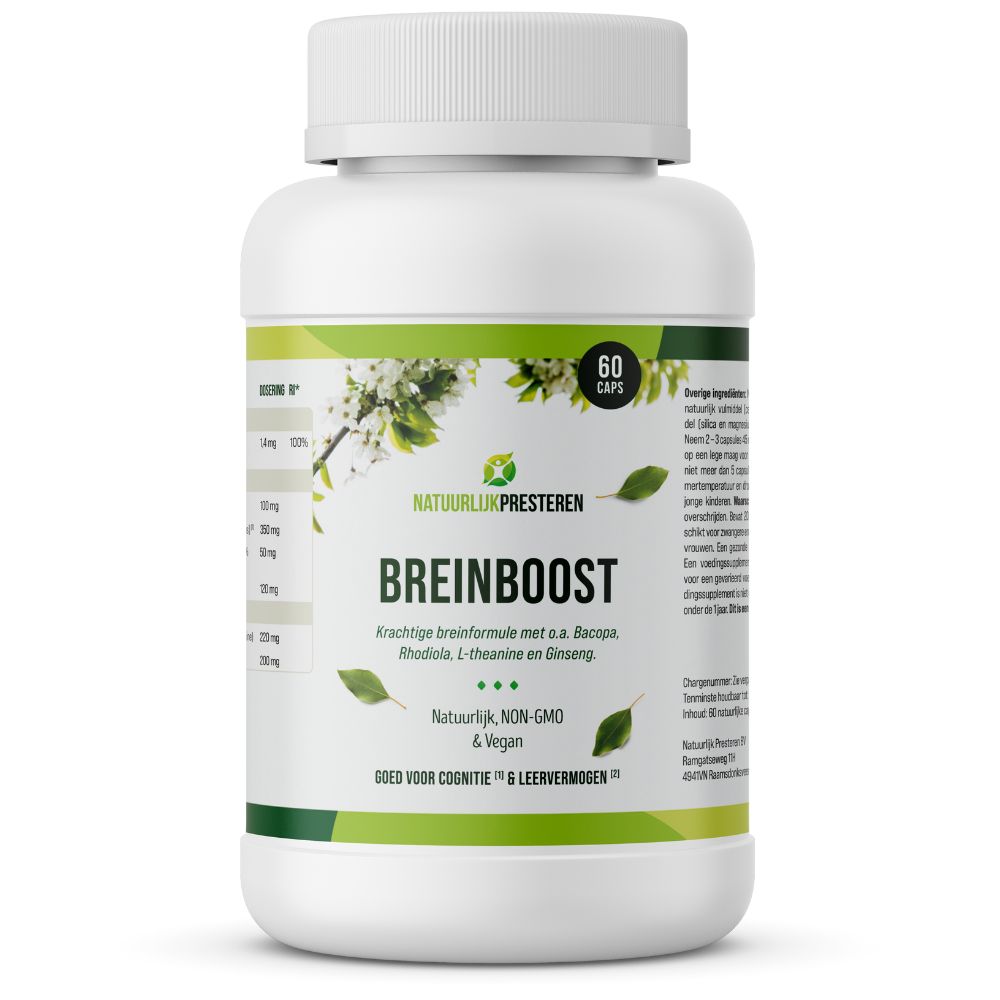
Support your Focus and Cognition with BrainBoost
Brain Boost is a powerful combination of seven natural nootropics , carefully dosed for optimal synergy and results.
This product, used by scientists and specialists, is completely natural and safe. It supports productivity, learning ability , and focus by using top-quality extracts.
Key ingredients and their benefits
- Bacopa Monnieri : 350 mg of the extract with 25% bacosides. Supports memory, cognition, and focus*
- Rhodiola Rosea : 50 mg, standardized to 3% Rosavins and 1% Salidroside. Supports mental balance and is beneficial for blood circulation, cognition, and mental performance.
- Panax Ginseng : 120 mg. Supports mental and physical fatigue and contains antioxidants that help protect the brain.
- Guarana and L-Theanine : 100 mg of guarana and 220 mg of L-theanine. This combination helps achieve deep focus, without the jitters caused by caffeine.
- N-Acetyl-L-Tyrosine (NALT) : 200 mg. A more easily absorbed form of tyrosine that helps produce neurotransmitters for focus and creativity.
- Pyridoxal-5-phosphate : 1.4 mg. The bioactive form of vitamin B6, supports learning performance, memory, and mental balance.
Brain Boost offers a natural boost for your brain with a carefully composed mix of effective ingredients.
Tips to increase your Dopamine
Do you often feel tired or unmotivated? Your dopamine levels may play a role in these feelings. Several factors can lead to a drop in dopamine, such as chronic stress, poor diet, lack of sleep, and unhealthy lifestyle choices.
With these tips you can get your dopamine levels back up, or better yet, keep them up!
Tip 1: Eat protein-rich foods
Make sure you get enough protein to support the production of tyrosine, which is necessary for dopamine. Add foods like chicken, fish, low-fat cottage cheese, nuts, and grains to your diet for a good protein boost.
Tip 2: Take the right vitamins and minerals
Vitamins and minerals are crucial for the conversion of phenylalanine to dopamine. Choose a multivitamin with a broad spectrum of easily absorbed vitamins and minerals to support this process.
Tip 3: Give your body time to recover
After stressful periods, your body needs time to replenish dopamine. Get plenty of rest and relaxation exercises to lower your stress levels and recover faster.
Sources Used
- Daubner, S. C., Le, T., & Wang, S. (2011). Tyrosine hydroxylase and regulation of dopamine synthesis. Archives Of Biochemistry And Biophysics , 508 (1), 1–12. https://doi.org/10.1016/j.abb.2010.12.017
- Wise, R. A., & Jordan, C. J. (2021). Dopamine, behavior, and addiction. Journal Of Biomedical Science , 28 (1). https://doi.org/10.1186/s12929-021-00779-7
Gerelateerde blogartikelen
 bloggle
Looking for the best dopamine supplement? Here's what to look for.
Dopamine is the chemical that motivates you to take action, achieve goals, and experience pleasure. Do you notice yourself lacking motivation, feeling more irritable, or having less energy? Then your dopamine levels may be out of balance. Fortunately, your dopamine system is adaptable. With a few simple adjustments to your diet and lifestyle, perhaps supplemented with supplements, you can restore dopamine balance. In this article I explain what dopamine exactly is, how you can maintain your dopamine levels yourself and which supplements can help with this. Dopamine is a neurotransmitter important for motivation and movement. It's produced from phenylalanine via tyrosine and L-DOPA, with the help of vitamin B6. Supplements may contain tyrosine, L-DOPA (from Mucuna pruriens ), and supporting vitamins, and help cross the blood-brain barrier. Recommended Mucuna pruriens brands: Natuurlijk Presteren, Vitakruid (25% L-DOPA), and Mattisson (20% L-DOPA). Use caution if pregnant or taking medication. Table of contents What is dopamine? How does your body produce dopamine? How do dopamine supplements work? Types of dopamine supplements Individual supplements Compound dopamine boosters The 3 best dopamine supplements with Mucana puriens 1. Mucuna pruriens (XX% L-DOPA) - Natural Performance 2. Mucuna pruriens (25% L-DOPA) - Vitakruid 3. Mucuna Pruriens (20% L-DOPA) - Mattisson What are the benefits of Mucuna puriens? Dopamine is also found in your food The effect of stimulants on dopamine Who should not use Mucuna pruriens What is dopamine? Dopamine is a neurotransmitter, a substance that transmits signals between brain cells. It has two important roles: Motivator and reward - Dopamine gives you a good feeling when you achieve something, motivates you and helps you persevere Essential for movement - It allows brain regions to communicate with each other to control your muscles. Problems with dopamine can therefore lead to movement disorders, such as those seen in Parkinson's disease. Stress, lack of sleep or poor diet can throw your dopamine production out of balance: Too little dopamine can be noticed by less motivation, concentration problems, fatigue and less pleasure Too much dopamine can cause overstimulation, impulsiveness, restlessness or even hallucinations Good to know : Genetics and diseases like Parkinson's also influence dopamine balance, but these situations require a broader approach than just diet and supplements. Want to know more? Discuss this with your doctor or a specialist. How does your body make dopamine? Dopamine is produced in your body from building blocks that you ingest through food. It starts with the amino acid phenylalanine , which is converted in your body into tyrosine, also an amino acid Next, your body converts tyrosine into L-DOPA , which in turn turns into dopamine Vitamins such as vitamin B6 are important for these conversions because they activate enzymes that make this process possible How do dopamine supplements work? You cannot take dopamine itself as a supplement because it cannot pass through the blood-brain barrier, a kind of protective layer that keeps your brain safe. Therefore, dopamine supplements usually contain ingredients that support dopamine production such as tyrosine, L-DOPA (from Mucuna pruriens) and supporting vitamins and minerals. These substances can be absorbed and thus indirectly contribute to dopamine production. Types of dopamine supplements Curious about dopamine supplements? It's good to know that there are two main types: Individual supplements These supplements contain an active ingredient that directly or indirectly affects dopamine. The dosage is often higher than with combination supplements. Most often, this is Mucuna pruriens , a natural source of levodopa (L-DOPA), the direct precursor of dopamine. This extract is obtained from the seeds of the Velvet bean, which are naturally very rich in levodopa. Other examples include individual forms of L-tyrosine or phenylalanine , amino acids, or: The building blocks of proteins. Your body uses these substances to produce dopamine. Compound dopamine boosters Combination supplements often contain multiple ingredients in lower concentrations , each with a supporting role, such as amino acids, vitamins, and herbs in a single formula. Mucuna pruriens extract is also often found in these. This blend is designed to support the dopamine system in multiple ways, both dopamine production and dopamine function. Tip : Ideal if you notice that you not only have less motivation, but are also tired, have difficulty concentrating and are stressed. What are the benefits of Mucuna puriens? Mucuna pruriens (velvet bean) has a long history in Ayurvedic medicine, a traditional Indian healing method thousands of years old. The seeds naturally contain L-DOPA, a substance that is converted into dopamine in the body. In Ayurveda, extracts of these seeds are used for their potential benefits, including: Can contribute to a healthy balance of the nervous system.* May support libido.* May have a positive effect on memory.* Please note : (*) The health claims listed are pending approval by the European Food Safety Authority (EFSA) and are based on traditional use and preliminary studies. There is insufficient scientific evidence to confirm these claims. Dopamine is also in your diet I mentioned earlier that your body needs certain amino acids to produce L-DOPA, which is then converted into dopamine. These amino acids, tyrosine and phenylalanine , are found in protein-rich foods . So by regularly eating protein-rich food, you automatically get these substances and in this way you can easily work on your dopamine balance yourself. Examples of foods rich in tyrosine and phenylalanine: Fish Chicken and turkey Beef and pork Eggs Hard cheeses such as Parmesan Milk, yogurt and cottage cheese Avocados Nuts, seeds and kernels Legumes Good to know : Research shows that extra tyrosine especially helps to support your dopamine production during stressful situations or when your brain has to perform a lot (1) (2). The effect of stimulants on dopamine Stimulants can disrupt your dopamine balance, so you'd rather avoid that. Now, you might think that a cup of coffee will actually help if you can't get off the couch. I thought so too. But it works differently: Although alcohol, nicotine, drugs, and sugar temporarily increase dopamine, in the long run they disrupt dopamine production and function. This can lead to addictive behavior: Alcohol - Initially increases your dopamine levels, which creates a pleasant feeling. But with prolonged use, your dopamine system becomes depleted and the natural balance is disrupted, causing you to need more and more to feel the same effect. This contributes to addictive behavior. (3) Nicotine - Smoking stimulates the release of dopamine, providing a quick reward. This constant stimulation causes your brain to adapt, making you crave more and more nicotine. This makes nicotine both addictive and harmful. (4) Drugs like cocaine and amphetamines - Cause massive dopamine spikes, much higher than normal. This disrupts your reward system, meaning you feel less pleasure and motivation without the drug. After use, dopamine release decreases and the receptors function less effectively, which increases addiction and a disrupted reward system. (5) Sugar - Stimulates dopamine, similar to drugs, especially when used excessively and repeatedly. This can lead to persistently increased dopamine release and decreased sensitivity to natural rewards, increasing the risk of dependence. (6) In short: Stimulants make your brain need more and more for the same effect, which can lead to addiction and less pleasure from natural rewards. Therefore, it's best to avoid these substances for a healthy dopamine balance. Who should not use Mucuna pruriens The RIVM has issued a warning, as there is not yet enough scientific research to determine what a safe dose is. This does not mean that it can do harm, but only that it is wise to be careful in certain situations. (7) They advise against using Mucuna pruriens if: You are pregnant or breastfeeding Have liver or kidney problems You are taking medication, because Mucuna pruriens can affect it Furthermore, it is always good to pay attention to how you react and to start with low doses. Ebrina van der Bijl Ebrina is a nutritionist with a deep commitment to healthy eating and a sustainable lifestyle, based in beautiful Portugal. Her passion for natural and organic products is at the heart of her work. With a background in Nutrition & Dietetics and experience in product development and writing, she translates complex scientific information into practical advice for a balanced lifestyle. Read more Sources used Jongkees, B.J., Hommel, B., Kühn, S., & Colzato, L.S. (2015b). Effect of tyrosine supplementation on clinical and healthy populations under stress or cognitive demands—A review. Journal Of Psychiatric Research, 70, 50–57. https://doi.org/10.1016/j.jpsychires.2015.08.014 Hase, A., Jung, S. E., & Rot, M. A. H. (2015). Behavioral and cognitive effects of tyrosine intake in healthy human adults. Pharmacology Biochemistry And Behavior, 133, 1–6. https://doi.org/10.1016/j.pbb.2015.03.008 Kania, A., Porco, N., & Caravaggio, F. (2024). Measuring Alcohol‐Induced striatal dopamine release in healthy humans with [11C]‐Raclopride: A Meta‐Analysis. Synapse, 79(1). https://doi.org/10.1002/syn.70007 Kim, K., & Picciotto, M. R. (2023). Nicotine addiction: More than just dopamine. Current Opinion in Neurobiology, 83, 102797. https://doi.org/10.1016/j.conb.2023.102797 Ashok, A. H., Mizuno, Y., Volkow, N. D., & Howes, O. D. (2017). Association of Stimulant Use With Dopaminergic Alterations in Users of Cocaine, Amphetamine, or Methamphetamine. JAMA Psychiatry, 74(5), 511. https://doi.org/10.1001/jamapsychiatry.2017.0135 Rada, P., Avena, N., & Hoebel, B. (2005). Daily bingeing on sugar repeatedly releases dopamine in the accumbens shell. Neuroscience, 134(3), 737–744. https://doi.org/10.1016/j.neuroscience.2005.04.043 RIVM: Be cautious when using dietary supplements containing Mucuna pruriens. (n.d.) RIVM. https://www.rivm.nl/nieuws/rivm-wees-voorzichtig-met-gebruik-van-voedingssupplementen-met-mucuna-pruriens
Lees meer
Want to study faster? 15 tips to improve your learning!
Who wouldn't want to study faster? Working, learning, and absorbing information more quickly has many advantages. Not only can you achieve better results, you'll also have more time for fun things and increase your chances of pursuing higher education. Want to study faster? We've compiled 15 handy tips for you. Think about putting your phone away from the room, taking regular breaks, and testing yourself effectively. These 15 tips will give you the tools you need to study faster. Test your knowledge by asking yourself questions, summarizing the material in your own words, quizzing yourself, and explaining the material to others. Use pen and paper, visual aids and a quiet learning environment, and take regular short breaks to improve concentration. Make sure you get enough exercise, have a healthy sleep pattern and limit alcohol and caffeine to optimize your study performance. Table of contents 1 - Ask yourself questions about the material 2 - Study faster: summarize in your own words 3 - Write with pen and paper 4 - Study aloud 5 - Use pictures 6 - Test yourself regularly 7 - Take a 5-minute break every hour 8 - Explain information to someone else 9 - Use mnemonics 10 - Avoid alcohol 11 - Divide your study hours 12 - Put your phone on silent 13 - Study in a low-stimulus environment 14 - Do strength training before studying 15 - Sleep well after your study session 1 - Ask yourself questions about the material Most people study the material they need to know by reading it as often as possible. This way, you always see the text and the information in the same way. A good tip to help you study faster is to ask yourself questions about the material. This will help you look at the information differently and present it in your own words. You'll also learn to see more connections between different paragraphs and chapters. You'll look for solutions and answers that are important to the topic. By asking yourself questions, you actively engage with the material, which means you will remember it much better. 2 - Study faster: summarizing in your own words Similar to the tip above, summarizing in your own words is also a good way to get a better grasp on the material. You can easily skim through everything without fully understanding what you've read. By summarizing the information in your own words, you process it at a deeper level. This technique also involves actively engaging with the material. You'll structure it, reorganize it, and make connections. Keep your summary concise and simple. A summary provides the main points, so don't go into details. 3 - Write with pen and paper Many people use computers and laptops while studying. Typing and reading online is fast, but the information usually doesn't stick for long. If you want to ensure that what you're learning actually stays in your memory for a longer period of time, write with pen and paper, not on a computer. Research shows that information we write by hand is retained much better and longer than information we retain when we type it [1] . This is probably because different areas of the brain are involved when writing by hand. All the information stored while writing by hand gives your brain more tools to retrieve it later. It might take more time, but you'll gain that time back in the end, because you'll retain what you learn more effectively. Write your notes while reading or listening and review them afterward to help you remember everything. This way, you'll ultimately study faster. 4 - Learning aloud Anyone who wants to study effectively is well-advised to study aloud. If you read the key points of the material aloud to yourself, the information will come through multiple channels. This information is then stored not only in visual memory, but also in verbal and auditory memory. And the more places something is stored, the easier it is to remember and retrieve. Research has also been conducted on this. McLeod and Forrin studied 100 Canadian students. They had to learn 80 words, choosing between four ways to remember them: Reading in silence Listening to someone else Listening to a recording of oneself Read aloud They were then tested, and after two weeks, they were given a list of new words and had to indicate which of the words was already on the first list they had learned. Those who had read aloud performed best [2] . While reading aloud is a good way to learn, combining all four methods seems to yield the best results. So, alternate between the different methods to learn faster. 5 - Use images Using images can be a great way to absorb information more effectively and quickly. Draw a picture of what you've read, or try processing information in graphs or charts. Your brain can process images 60,000 times faster than words. Therefore, using images can dramatically accelerate the learning process. Presenting information visually can help you grasp new, complex concepts more quickly and connect topics. It also helps you remember your material better. If you first read something in text and then see it as an image, your brain stores the information in different places. It's not for nothing that we say a picture can tell a thousand words! So, harness the power of images while studying. 6 - Test yourself regularly A good way to learn faster is to test yourself. Once you've worked through the material, create a test for yourself. Use open-ended or multiple-choice questions, ask yourself to summarize something, or write down keyword definitions. Then close your books (or turn off the internet) and take your own test. Of course, do this without cheating. Afterward, review what you did well and what you didn't. This will quickly show you where your weaknesses are and where you need to spend more time. This will allow you to study faster and more effectively. 7 - 5 minutes break per hour It's important to give your brain regular breaks. This prevents mental exhaustion and keeps you sharp. A constant stream of information can prevent your brain from processing. A 5-minute break every hour is enough to help you unwind. Leave your work for a moment, get up, and do something else. Make sure you're not doing anything that requires you to process new information. So, don't watch TV, YouTube, or browse social media. This keeps your brain active and isn't a restful activity. Take a walk (without music or a podcast), look out the window, and drift off for a moment. You could also do some gentle physical exercise, like yoga or stretching. After this relaxing break, you'll find you can concentrate well again and have renewed energy for your studies. 8 - Explaining information to someone else Explaining what you've learned to someone else also helps you study effectively. Ask a friend to listen to you and try to explain what you've been learning. Try to do this in a clear and concise manner. Explain everything in a way they can understand. Ask the other person if they understood everything or if you need to explain something further. To explain a topic to someone, you need to be thoroughly familiar with the material and be able to recall all the key points. This way, you'll actively engage with the material and master it faster. You'll also get a clear picture of what you already know well and what you don't. If you don't have anyone to discuss your study material with, try writing down what you would tell someone else. 9 - Mnemonics Mnemonics are useful tools for remembering information more easily and studying faster. You can combine the first letters of words and sentences to easily memorize complex information. Or create a song, rhyme, or abbreviation for what you need to remember. This gives your brain more tools to store information, making it easier to retrieve. The information is also usually simpler, allowing you to learn it faster. Examples of mnemonics: The formula ab + c = E I'm Always Eating Cake Or to make it easier to remember the order of the animal kingdom, use the sentence: When Little Otters Go Steal Bicycles Department Class Order Family Gender Kind 10 - Avoid alcohol Studying hard for a test or quiz? Put alcohol aside for a while. Alcohol promotes neuroinflammation, which means it causes low-grade inflammation in the brain [3] . This can cause your brain to function less effectively, which you may notice as poorer concentration and reduced information retention. So it's a good idea to avoid alcohol on the days you have to study. This way, you ensure your brain can function optimally when you need to perform. Did you know? Alcohol not only negatively impacts your learning ability, but also the development of teenagers' brains. The brain continues to develop until the age of 26 (for men) and 24 (for women). Therefore, alcohol consumption can be harmful to your brain! 11 - Divide your study hours It's wise to distribute your study time throughout the day. You'll be able to store information better in your long-term memory if you practice regularly for short periods, ultimately allowing you to study faster. It's better to study five times for one hour than one time for eight hours straight. So, prolonged cramming isn't actually all that effective. Your brain becomes overloaded with information and doesn't absorb as much. Spread your studying over shorter periods; this is more efficient and helps you retain the material better. 12 - Put your phone on silent If you want to study faster, it's recommended to silence your phone and put it in a different room. Your phone is a major distraction, and many people are easily distracted if they leave it nearby. They want to check regularly to make sure they haven't missed anything, which interrupts their work. Research shows that your concentration is significantly reduced when your phone is in plain sight, even if it's turned off. Every interruption disrupts your focus and makes it harder to reengage with your studies. So make it easy on yourself, put your smartphone away, and enjoy the peace and quiet. Once you're done studying, you'll have plenty of time to catch up on what you missed (or didn't miss). 13 - Study in a low-stimulus environment We've already discussed disrupting your concentration. Studying works best in a low-stimulus environment. If possible, work in a space with minimal distractions. If your own study space isn't quiet enough, find a spot at school or in the library. The fewer distractions (think housemates, music, street noise, television, or computer), the better you can focus on your studies and absorb information. Choosing the right study space can significantly impact your performance. 14 - Strength Training Before Studying Physical exertion is also a very effective method for learning faster, especially if you do strength training. Doing muscle-strengthening exercises before studying increases the concentration of dopamine and acetylcholine in your blood. These neurotransmitters sharpen your concentration and help you remember what you learn better. So, exercise for an hour before you start studying: work out with dumbbells, kettlebells, a barbell, or your own body weight—there are many exercises you can do. Did you know? Strength training isn't just good for your muscles and mental performance. It also has a positive effect on your mood. That will definitely help you study faster! 15 - Sleep well after your study session Are you so happy you're done studying that you want to go out for a good night's sleep or have a long movie night? That's probably going to make for a short night, and unfortunately, that's not a good idea. While you sleep, your brain is busy processing and organizing all the information you've just absorbed. Especially if you get a good night's sleep (at least 8 hours), you'll remember what you've learned. Postpone the partying for a while and treat yourself to a good night's sleep. Make sure your bedroom is quiet, dark, and comfortable, so you can sleep undisturbed and your hard work during the day won't be in vain. Miriam Mirjam felt a connection with nature from a young age. This has led to a deep passion for health, natural remedies, and healthy eating. She also loves reading, yoga, and writing. When the weather is nice, she enjoys exploring new hiking trails. Read more
Lees meer