


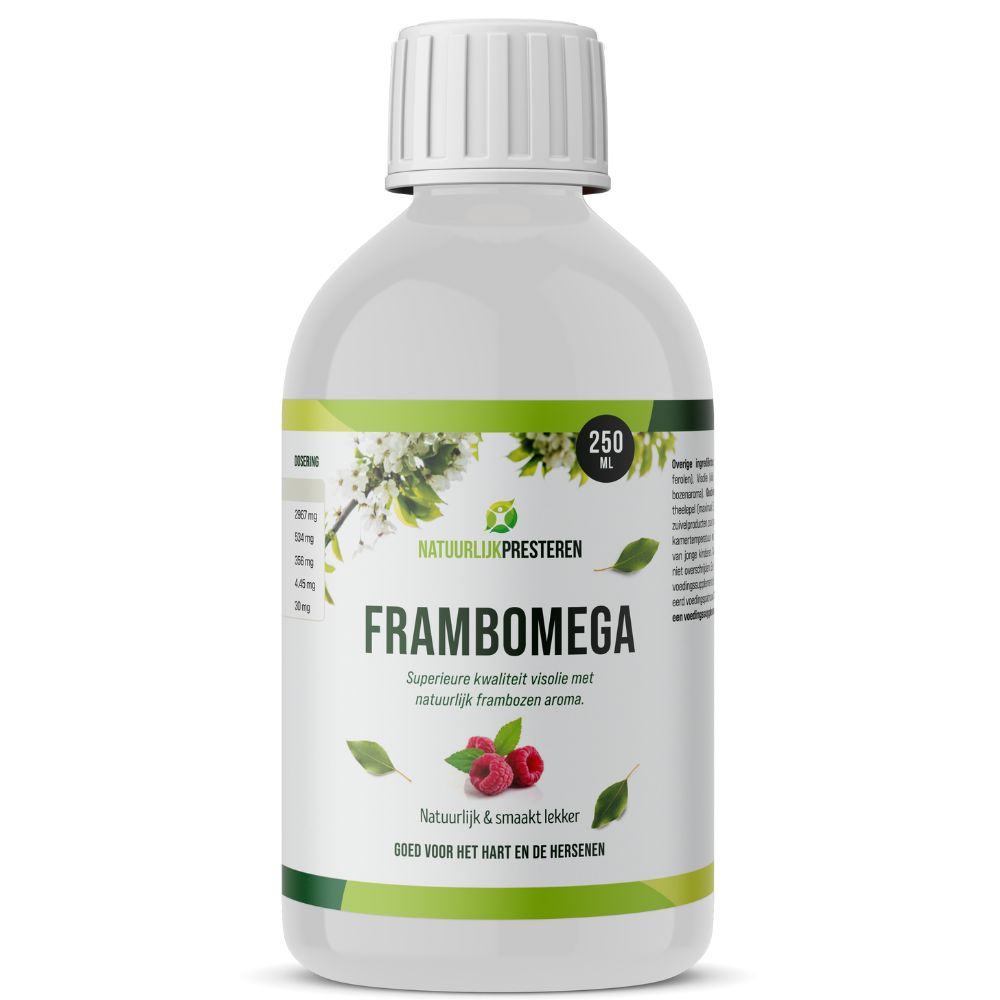
Liquid fish oil
Liquid fish oil is a dietary supplement containing omega-3 fatty acids, such as EPA and DHA. These fatty acids are extracted from oily fish, such as salmon, mackerel, and sardines, and are available in a liquid form that you can take directly.
It is an excellent alternative to fish oil capsules, especially for people who have difficulty swallowing pills.
A major advantage of liquid fish oil is that you can easily adjust the dosage to your own needs.
What is liquid fish oil?
Fish oil is oil extracted from the fatty tissue of oily fish species such as herring, tuna, anchovies and mackerel.
About 30% of fish oil consists of omega-3 fatty acids, while the remainder is made up of other fats. It also often contains small amounts of vitamins A and D.
To get enough omega-3 fatty acids, it's recommended to eat oily fish at least twice a week. However, because this is difficult for many people, fish oil—in both liquid and capsule form—offers an easy way to supplement the diet.
Fish oil vs cod liver oil
Perhaps you were given cod liver oil as a child. This was the precursor to the fish oil supplements we know today. Cod liver oil is extracted from the livers of fish like cod and, in addition to omega-3, also contains plenty of vitamins A and D.
Fish oil, on the other hand, comes from the fat of the fish and is primarily rich in omega-3s, with fewer vitamins. Because too much vitamin A and D can be harmful, cod liver oil is less commonly used these days. Liquid fish oil is therefore a safer option for supplementing your omega-3s.
The benefits of liquid fish oil
Fish oil supplements are available in capsule or liquid form, with the liquid form having several advantages:
- Faster absorption: Liquid fish oil is absorbed slightly faster than capsules, because it can be absorbed directly into the body (the capsule must first be broken down before your body can use the oil).
- Suitable for people who cannot swallow capsules: You can easily take the oil with a spoon or dissolved in fatty drinks, such as milk. This makes it a good alternative for people who have difficulty swallowing capsules.
- Kid-friendly: Liquid fish oil is perfect for children because it can be easily mixed with drinks and often has a pleasant taste (preferably choose a natural flavoring).
Recognizing the best liquid fish oil
When choosing the best liquid fish oil, there are a few factors to keep in mind:
- First Pressing : Oil is cold-pressed from fish or fish products without heating or chemical additives. This preserves the natural nutrients, such as omega-3 fatty acids, and results in a pure, high-quality oil with a higher concentration of healthy fatty acids.
- Sustainable fishing : Choose fish oil from sustainably caught fish, sourced from well-managed fisheries. Sustainable fishing protects fish populations, helps prevent harmful substances in the oil, and contributes to environmentally friendly production.
- Dosage : Choose a fish oil supplement with a dosage of at least 450 mg EPA/DHA per day, as recommended by the Health Council. Scientific research shows that doses above 1.2 g per day offer no additional benefits, so a dosage within this range is most effective. (1)
- Taste: Choose an oil with a pleasant, non-fishy taste, preferably with a natural flavour (e.g. raspberry).
Is fish oil better than plant-based omega-3?
Both fish oil and algae oil are excellent sources of omega-3 fatty acids, especially the important ones EPA and DHA. (2) (3)
Both have their advantages, depending on your preferences and needs:
- Fish oil is ideal for non-vegetarians because it directly provides the active omega-3 fatty acids that are easily absorbed by the body. It often contains a higher concentration of EPA and DHA than algal oil.
- Algal oil is a sustainable option, even for non-vegetarians. It provides the same omega-3 fatty acids and is a good choice if you're concerned about the impact on fish populations. It's often considerably more expensive.
If you don't have a specific preference for sustainability or veganism, fish oil is often the better choice because of its higher concentration of omega-3s.
Liquid Omega-3 fish oil from Natural Performance
Our liquid omega-3 fish oil is derived from small fish species like sardines and anchovies, which are less contaminated with harmful substances such as heavy metals. The oil has also been tested for all possible contaminants.
Made with virgin fish oil, this supplement provides a high concentration of omega-3 fatty acids per serving and is enriched with a natural raspberry flavor for a pleasant taste.
Sources used
- Shen, S., Gong, C., Jin, K., Zhou, L., Xiao, Y., & Ma, L. (2022). Omega-3 Fatty Acid Supplementation and Coronary Heart Disease Risks: A Meta-Analysis of Randomized Controlled Clinical Trials. Frontiers in Nutrition , 9 . https://doi.org/10.3389/fnut.2022.809311
- Lane, K.E., Wilson, M., Hellon, T.G., & Davies, I.G. (2021b). Bioavailability and conversion of plant based sources of omega-3 fatty acids – a scoping review to update supplementation options for vegetarians and vegans. Critical Reviews in Food Science And Nutrition , 62 (18), 4982–4997. https://doi.org/10.1080/10408398.2021.1880364
- Ryan, L., & Symington, A. M. (2014). Algal-oil supplements are a viable alternative to fish-oil supplements in terms of docosahexaenoic acid (22:6n-3; DHA). Journal Of Functional Foods , 19 , 852–858. https://doi.org/10.1016/j.jff.2014.06.023