What is zeaxanthin?
Zeaxanthin is a carotenoid, a natural pigment found in plants and colored fruits and vegetables. It's a powerful antioxidant and plays an important role in eye health.
We cannot produce zeaxanthin ourselves and must therefore obtain it from food or supplements.
Vitamin for your eyes
Although zeaxanthin isn't strictly a vitamin, it plays a vital role in eye health, along with lutein. It's therefore sometimes called the eye vitamin.
These substances occur naturally in high concentrations in the macula, the central part of the retina responsible for sharp vision.
Zeaxanthin and lutein help your eyes by:
- Prevent retinal damage as antioxidants
- Filter blue light (which helps protect light-sensitive cells)
Scientific research
In a meta-analysis of 46 studies, including 3,189 participants, it was found that an intake of ≥20 mg per day of lutein/zeaxanthin helps reduce the risk of AMD (an age-related disease of the macula) by 11%. (1) [1]
This is a common cause of vision loss in the elderly.
Zeaxanthin supplements
Our bodies can't produce zeaxanthin on their own. This means you have to get it through your diet. If this isn't possible (temporarily), you can take a zeaxanthin supplement.
These supplements are available in capsule or tablet form and are often combined with other natural substances that contribute to the health of your eyes, such as lutein.
Marigold
Zeaxanthin in supplements is often extracted from marigold (Calendula officinalis), known from calendula ointment.
But marigold has more to offer: it contains various plant compounds (phytochemicals). Marigold extract consists of only 1% zeaxanthin, but also contains lutein, saponins, flavonoids, and triterpenes.
This mixture makes the extract a versatile source of useful substances.
The Tagetes erecta extract
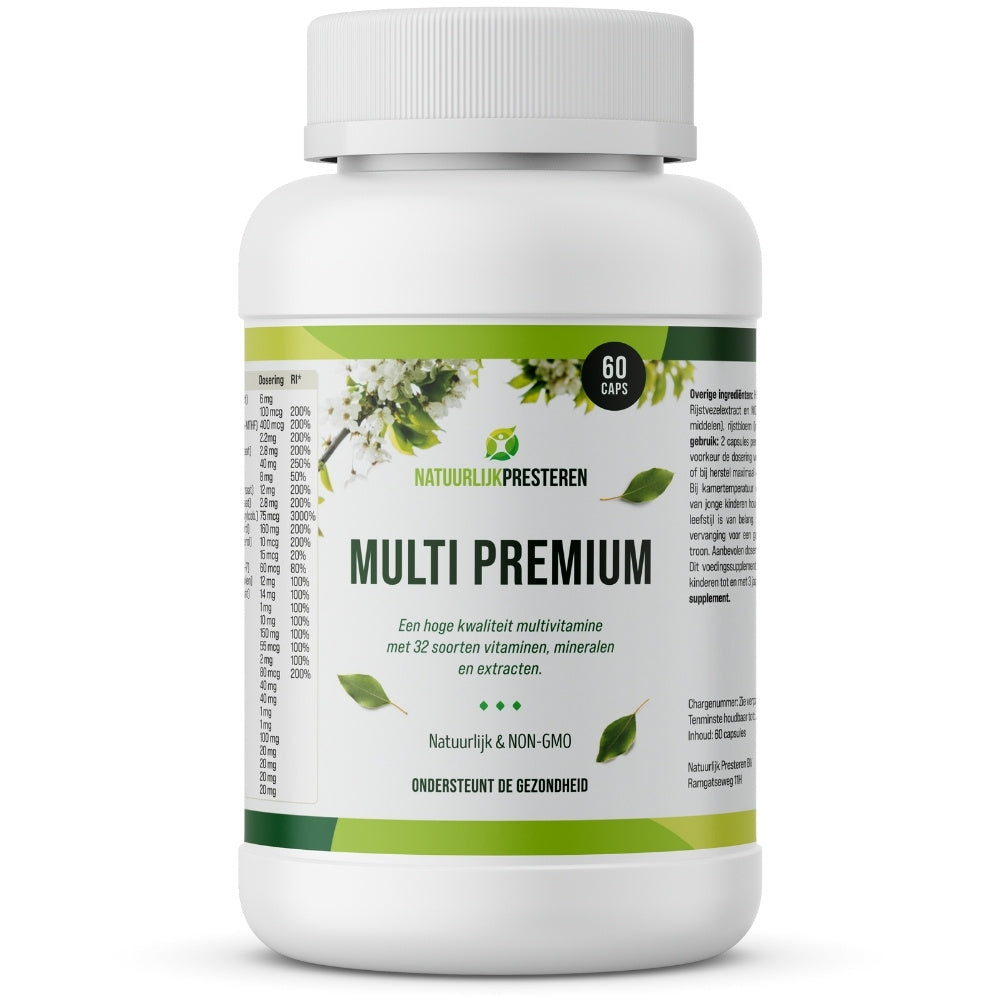
In our high-quality multivitamin Multi Premium, we use Tagetes erecta extract, a natural and rich source of zeaxanthin and lutein.
Compared to other sources, such as egg yolks or green leafy vegetables, this extract is special because it specifically provides these two substances in a high concentration.
In addition, the extract comes from a sustainable and environmentally friendly source.
How do you use zeaxanthin?
Zeaxanthin is fat-soluble, meaning it is generally better absorbed when taken with a meal that contains fat.
Zeaxanthin and lutein
Zeaxanthin and lutein are very similar in structure (only the arrangement of the atoms is different).
They enhance each other's effects and therefore often occur in combination, both in nature and in supplements.
Effect as antioxidants
Both are powerful antioxidants that help protect the body against unstable molecules called free radicals.
Too many free radicals can damage cells in the body and cause so-called oxidative stress.
As antioxidants, zeaxanthin and lutein can help:
- To protect proteins , fats and DNA from oxidative damage.
- In the recycling of glutathione, another important antioxidant in the body.
Zeaxanthin in your diet
As I mentioned before, zeaxanthin is found in a variety of natural food sources.
While a zeaxanthin extract in a supplement offers a high concentration of active ingredients, these foods are also a good and natural source of zeaxanthin:
- Vegetables : Spinach, kale, corn, bell pepper, sweet potato and pumpkin
- Fruit: Mango, tangerines and kiwi
- Egg yolks: Contain easily absorbable zeaxanthin
- Algae : Spirulina and Dunaliella salina
Sources used
- Wilson, L.M., Tharmarajah, S., Jia, Y., Semba, R.D., Schaumberg, D.A., & Robinson, K.A. (2021b). The Effect of Lutein/Zeaxanthin Intake on Human Macular Pigment Optical Density: A Systematic Review and Meta-Analysis. Advances in Nutrition , 12 (6), 2244–2254. https://doi.org/10.1093/advances/nmab071
Gerelateerde blogartikelen
Gezonder eten: 4 makkelijke manieren voor elke dag
Je wilt gezonder eten, maar aan het eind van de dag wint gemak het vaak van je goede intenties. Niet omdat je het niet wilt, maar omdat je omgeving het je lastig maakt. Herkenbaar? Door slim in te kopen, je keuken goed in te richten en koken leuker te maken, kun je jezelf een handje helpen. Dit zijn vier praktische manieren om dat vandaag al te doen. Door geen ultra-bewerkte voeding standaard in huis te halen en verleidelijke snacks uit het zicht te houden, verklein je de kans dat gemak je gezonde eetvoornemens ondermijnt. Met een basisvoorraad van houdbare, voedzame producten zoals groenten, peulvruchten, volle granen en eiwitten wordt gezond koken eenvoudiger, zelfs op drukke of vermoeiende dagen. Nieuwe recepten en de 80/20-regel maken gezond eten leuker en haalbaar: je eet vooral volwaardig, maar houdt bewust ruimte voor genietmomenten zonder streng dieetgevoel. Inhoudsopgave 1. Haal geen troep (ultra-bewerkte voeding) in huis Waarom dit werkt 2. Zorg dat je voldoende gezonde ingrediënten altijd op voorraad hebt 3. Maak koken leuker met nieuwe recepten 4. Eet volgens de 80/20-regel Veelgestelde vragen 1. Haal geen troep (ultra-bewerkte voeding) in huis Ik merk het bij mezelf ook: als er ‘troep’ in huis is, eet ik het op. Niet uit zwakte, maar omdat het zo ontworpen is. Ultra-bewerkte voeding is gemaakt om makkelijk, aantrekkelijk en snel te zijn, precies wat je brein prettig vindt na een lange dag. Gelukkig werkt het andersom net zo goed: wat er niet is, kun je ook niet opeten. Koop het alleen bewust op een gepland moment, en niet ‘voor de zekerheid’ om in huis te hebben. Ultra-bewerkte voeding herken je vaak aan een lange ingrediëntenlijst met toevoegingen, aroma’s en bewerkingen. Denk aan kant-en-klare snacks, zoete tussendoortjes en sterk bewerkte maaltijden. Waarom dit werkt Een recente overzichtsstudie in The Lancet (2025) bundelt tientallen jaren onderzoek naar ultra-bewerkte voeding. De auteurs laten zien dat het probleem bij dit soort voeding niet alleen zit in suiker, zout of vet, maar vooral in hoe deze producten ons eetgedrag sturen: ze zijn ontworpen om makkelijk te eten en verdringen daardoor voedzamere keuzes. Minder ultra-bewerkte voeding eten is daarom een logische en effectieve eerste stap richting een gezonder eetpatroon (1). Persoonlijke tip: geen snacks in het zicht. Wat je ziet, wil je. 2. Zorg dat je voldoende gezonde ingrediënten altijd op voorraad hebt Wat je in huis hebt, bepaalt vaak wat je eet, zeker op momenten dat je moe bent of weinig tijd hebt. Door een vaste basis aan gezonde ingrediënten op voorraad te houden, wordt gezond eten de makkelijke keuze. (2) Je hoeft dan minder te vertrouwen op wilskracht, maar laat je omgeving voor je werken. Denk aan: diepvriesgroenten verse groenten die lang houdbaar zijn fruit (vers of diepvries) eieren peulvruchten in pot of blik (linzen, kikkererwten, bonen) volkorenrijst -of pasta quinoa havermout noten en zaden vis in blik (sardines, makreel, zalm) zuivel of plantaardige alternatieven tofu of tempeh Zo kun je vrijwel altijd iets voedzaams samenstellen, zelfs op dagen waarop koken het laatste is waar je zin in hebt. Persoonlijke tip: ik zorg dat mijn koelkast en voorraadkast compleet en betrouwbaar zijn, dat voorkomt last-minute keuzes waar ik later spijt van krijg. 3. Maak koken leuker met nieuwe recepten Wat eten we vanavond? Het is een van de meest gestelde vragen in huis en tegelijk een mooie kans om koken weer leuk en inspirerend te maken. Door nieuwe recepten te proberen, doorbreek je de sleur en ontdek je smaken en combinaties waar je anders misschien niet zo snel voor zou kiezen. Zelf merk ik dat mijn motivatie om te koken meteen toeneemt als ik iets nieuws op het menu zet. Niet ingewikkeld of perfect, maar gewoon iets anders dan de standaard. Dat maakt koken minder een ‘moetje’ en meer een moment voor jezelf (of samen). Persoonlijke tip: zelf gebruik ik het Eatertainment-platform als vast startpunt van mijn week. Je plant er makkelijk je weekmenu, vindt er leuke recepten en dagelijks een tip voor een verrassende maaltijd. Extra handig is dat je vanuit daar ook meteen al je ingrediënten kunt bestellen, dat scheelt keuzestress en maakt koken weer leuk. 4. Eet volgens de 80/20-regel Het idee is simpel: je eet 80% van de tijd voedzaam en gevarieerd, en laat 20% ruimte voor minder gezonde, maar lekkere keuzes. Zonder schuldgevoel. Zo werkt het: De 80%: onbewerkte, voedzame producten zoals groenten, fruit, volle granen, peulvruchten, magere eiwitten en gezonde vetten. De 20%: bewust genieten van iets extra’s, zoals chocolade, een wijntje of chips, omdat je gezonde basis dit goed opvangt. Geen dieet, maar een leefstijl die draait om balans en volhouden. (3) Veelgestelde vragen Hoe kan ik gezonder eten zonder ingewikkelde recepten? Kies minder ultrabewerkte producten en zorg voor een vaste basis aan gezonde ingrediënten. Maak simpele maaltijden met groenten, volkoren graanproducten en een bron van eiwit. Hoe herken ik ultrabewerkte voeding in de supermarkt? Let op lange ingrediëntenlijsten met veel toevoegingen en aroma's. Voorbeelden zijn kant en klare snacks, zoete tussendoortjes en sterk bewerkte maaltijden. Welke gezonde basisproducten zijn handig om altijd in huis te hebben? Denk aan diepvriesgroente, lang houdbare groente, fruit, peulvruchten in pot of blik, volkoren rijst of pasta, havermout, noten, zaden, eieren, vis in blik en tofu. Wat kan ik doen als ik aan het einde van de dag geen energie heb om te koken? Zorg voor eenvoudige voorraadmaaltijden met diepvriesgroente en peulvruchten. Plan een paar standaardgerechten die je snel kunt bereiden zonder veel nadenken. Hoe maak ik gezond koken leuker? Probeer regelmatig nieuwe recepten en keukens uit. Zie koken als een moment voor jezelf of samen, in plaats van een taak die snel af moet. Wat is de 80 20 regel voor voeding precies? Ongeveer tachtig procent van wat je eet bestaat uit voedzame basisproducten. De overige twintig procent gebruik je om bewust te genieten van iets extra's. Is het erg als ik soms toch snaai tussendoor? Af en toe snaaien past binnen een gebalanceerd eetpatroon. Belangrijker is dat je dagelijkse basis vooral uit onbewerkte, voedzame producten bestaat. Hoe voorkom ik dat ik alles opeet zodra ik snacks in huis heb? Koop snacks alleen bewust en niet als vaste voorraad. Bewaar ze uit het zicht en kies liever kleine verpakkingen dan grote voorraden. Ebrina van der Bijl Ebrina is voedingsdeskundige met een diepe toewijding aan gezonde voeding en een duurzame levensstijl, gevestigd in het prachtige Portugal. Haar passie voor natuurlijke en biologische producten vormt de kern van haar werk. Met een achtergrond in Voeding & Diëtetiek en ervaring in productontwikkeling en tekstschrijven, vertaalt ze complexe wetenschappelijke informatie naar praktische adviezen voor een gebalanceerde levensstijl. Lees meer Gebruikte bronnen Monteiro, C. A., Louzada, M. L., Steele-Martinez, E., Cannon, G., Andrade, G. C., Baker, P., Bes-Rastrollo, M., Bonaccio, M., Gearhardt, A. N., Khandpur, N., Kolby, M., Levy, R. B., Machado, P. P., Moubarac, J., Rezende, L. F. M., Rivera, J. A., Scrinis, G., Srour, B., Swinburn, B., & Touvier, M. (2025). Ultra-processed foods and human health: the main thesis and the evidence. The Lancet. https://doi.org/10.1016/s0140-6736(25)01565-x Langfield, T., Marty, L., Inns, M., Jones, A., & Robinson, E. (2023). Healthier diets for all? A systematic review and meta‐analysis examining socioeconomic equity of the effect of increasing availability of healthier foods on food choice and energy intake. Obesity Reviews, 24(6), e13565. https://doi.org/10.1111/obr.13565 Wang, D., Benito, P. J., Rubio‐Arias, J. Á., Ramos‐Campo, D. J., & Rojo‐Tirado, M. A. (2024). Exploring factors of adherence to weight loss interventions in population with overweight/obesity: an umbrella review. Obesity Reviews, 25(9), e13783. https://doi.org/10.1111/obr.13783
Lees meer beste vitamine d voor ouderen
Vitamins for your eyes? These are the most important ones
Do you spend a lot of time in front of a screen? Then you've probably noticed your eyes feeling dry or tired. No wonder: Our eyes are put under a lot of strain these days with all those hours spent staring at screens. But excessive sun or dry air from air conditioning can also contribute to eye irritation and fatigue. Fortunately, you can also give your eyes some support from within, for example, with the right nutrition. Certain vitamins and minerals contribute to maintaining normal vision. In this article you can read which vitamins your eyes need most and where you can find them. The most important vitamins for eyes are A, C and E with zinc; in addition, lutein and zeaxanthin support the macula. Choose liver, leafy greens, and oily fish or algae oil; 250 mg DHA per day supports vision. Lifestyle tips: UV protection, 20-20-20 screen breaks, sleep, no smoking, stress reduction; eye supplements are a complement, not a replacement; use retinol with caution during pregnancy. Table of contents The 6 most important vitamins (and minerals) for your eyes 1. Vitamin A - good for your eyesight 2. Zinc - contributes to the maintenance of normal vision 3. Vitamin C - against free radicals 4. Vitamin E - against free radicals 5. Lutein and zeaxanthin - natural pigments from vegetables 6. Omega-3 fatty acids (DHA) - good for your eyesight In short Lifestyle also counts Supplement as a supplement Multipremium The 6 Most Important Vitamins (and Minerals) for Your Eyes These are the most relevant vitamins and minerals for your eyes: 1. Vitamin A – good for your eyesight Vitamin A is one of the best-known vitamins for your eyes. It contributes to the maintenance of normal vision. In your retina it helps to form rhodopsin , a substance that supports your eyes in changing light conditions (such as from light to dim). (1) In addition, vitamin A helps keep your mucous membranes healthy , which are also found in and around your eyes. Vitamin A can be found, for example, in: Retinol (vitamin A) - Liver (very rich), eggs, dairy Provitamin A (beta-carotene) - Orange and dark green vegetables such as carrots, pumpkin and kale (your body can convert this into vitamin A) Are you pregnant or planning to have children? Be careful with liver and high retinol intake. If in doubt, consult your doctor or dietitian. 2. Zinc – contributes to the maintenance of normal vision Zinc helps vitamin A function in the retina , where it's needed to convert light into images. A lack of zinc makes this function less efficient. This mineral also occurs naturally in several parts of our eye such as the retina and in the retinal pigment epithelium (RPE), a pigment layer in the retina , and contributes to the protection of cells from oxidative stress. Good sources of zinc include: Meat (especially beef and lamb) Shellfish such as oysters Nuts and seeds Whole grains 3. Vitamin C – against free radicals Vitamin C helps protect cells from oxidative stress (i.e., helps fight free radicals). It's a powerful antioxidant that's highly water-soluble. It occurs in relatively high concentrations in and around the eye, including in the lens and the fluids of our eye . These parts of the eye are exposed to a lot of light and oxygen every day, which creates small amounts of free radicals. These are reactive particles that can damage cells. Vitamin C therefore contributes to the protection of cells against oxidative stress in eye tissue. Did you know that vitamin C works with other antioxidants, like vitamin E? It helps reactivate them after they've completed their protective work. This way, they reinforce each other's effects. (3)(4) Therefore, regularly eat foods rich in this vitamin, such as: Citrus fruits Strawberries Kiwi Bell pepper Brussels sprouts 4. Vitamin E – against free radicals Like vitamin C, vitamin E contributes to the protection of cells from oxidative stress. Vitamin E is a fat-soluble antioxidant and works primarily in the fatty areas of the eye , such as the retina . There, it helps protect the fats in eye cells from damage by light and oxygen. This is especially important in the retina, because there are many polyunsaturated fatty acids there that can oxidize more quickly. You get vitamin E if you regularly eat foods such as: Nuts and seeds (e.g. almonds, sunflower seeds) Vegetable oils (e.g. sunflower oil, wheat germ oil) Avocado 5. Lutein and zeaxanthin – natural colorants from vegetables Lutein and zeaxanthin are plant carotenoids , pigments found mainly in green and yellow vegetables such as spinach, kale and corn. In our eyes, these substances accumulate in the macula . This is the small area of the retina that allows us to see clearly. There, they form part of the natural pigment that gives this area its characteristic yellow hue. Researchers are investigating, among other things, how lutein and zeaxanthin absorb light and how they contribute to the density and composition of that macular pigment . They want to better understand why this particular area of the eye attracts these substances. Although the science on this is still developing, these studies beautifully demonstrate how subtly nutrition and eye function are intertwined.(5)(6) Where can you find lutein and zeaxanthin? Dark green leafy vegetables (spinach, kale) Corn Egg yolks 6. Omega-3 fatty acids (DHA) – good for your eyesight Your eyes are made up partly of fatty acids, especially in the retina, the part at the back of your eye that captures light. DHA (an omega-3 fatty acid) is naturally abundant in the retina. (7) Your body only produces DHA in small amounts. Therefore, it's good to regularly eat foods rich in it, such as oily fish (salmon, herring, mackerel) or algae oil as a plant source. With a daily intake of at least 250 mg DHA, this fatty acid contributes to the maintenance of normal vision. In short Your eyes benefit from foods rich in: Vitamin A and zinc – Contribute to the maintenance of normal vision Vitamin C and E – Contribute to the protection of cells from oxidative stress Lutein and zeaxanthin – Naturally occur in the macula (there is no official health claim for these substances yet) DHA – Contributes to the maintenance of normal vision (with a daily intake of at least 250 mg DHA) A varied diet with plenty of vegetables, fruit, nuts, and occasional oily fish provides these nutrients naturally. This way, you give your body, and therefore your eyes, exactly what it needs to continue functioning properly. (8)(9) Lifestyle also counts Good nutrition is important, but not the only thing. You can also help your eyes by consciously managing your lifestyle. A few simple habits can make a difference: Wear sunglasses with UV protection in bright sunlight – UV can irritate your eyes. Choose UV400 and also wear a cap or hat in bright light. Take regular screen breaks - Use the 20-20-20 rule: Every 20 minutes, look at something 20 meters away (or more) for 20 seconds. Blink more often. Get enough sleep - After a good night's sleep, your eyes often feel less dry or tired. Avoid smoking - Smoking irritates the surface of the eye and constricts blood vessels, which can make eyes feel drier and more tired. Reduce prolonged stress - When stressed, you blink less and your eyes become more tense. This can lead to dry or tired eyes. Relax, take breaks, and exercise regularly. Supplement as a supplement A varied and colorful diet provides your body with the building blocks it needs, from beta-carotene in orange vegetables to lutein in dark green leafy vegetables. However, it's not always possible to get everything you need from food. Think of periods of stress, times when you eat less fruit and vegetables, or when your needs are higher (for example, during pregnancy). In such situations, a supplement with vitamin A, zinc, vitamin C, vitamin E and natural carotenoids such as lutein and zeaxanthin can be a practical addition. Good to know : Think of supplements as an extra boost on top of a healthy foundation. They don't replace a healthy diet, rest, and balance. And be careful with retinol (vitamin A) if you're pregnant or planning to become pregnant. If in doubt, consult your doctor or dietitian. (10) Multipremium Want to make it easy to support your daily intake? Then a balanced multivitamin (such as Multipremium) can be a practical addition to a healthy lifestyle. Use according to label and combine with a varied diet. Ebrina van der Bijl Ebrina is a nutritionist with a deep commitment to healthy eating and a sustainable lifestyle, based in beautiful Portugal. Her passion for natural and organic products is at the heart of her work. With a background in Nutrition & Dietetics and experience in product development and writing, she translates complex scientific information into practical advice for a balanced lifestyle. Read more Sources used Zhang, X., Yang, H., Zhou, X., Xu, J., Chen, J., Liao, L., Wu, P., & Duan, Potential benefits of vitamin A and its derivatives in glaucoma. European Journal Of Medical Research, 30(1). https://doi.org/10.1186/s40001-025-02780-4 McKay, B.S., Grabrucker, A.M., Thompson, R.B., Chew, E.Y., Lengyel, I., & González-Iglesias, H. (2025). Zinc in eye health, retinal biology and disease. Progress in Retinal And Eye Research, 101404. https://doi.org/10.1016/j.preteyeres.2025.101404 Wei, L., Liang, G., Cai, C., & Lv, J. (2015). Association of vitamin C with the risk of age-related cataract: a meta-analysis. Acta Ophthalmologica, 94(3). https://doi.org/10.1111/aos.12688 Zhang, Y., Jiang, W., Xie, Z., Wu, W., & Zhang, D. (2015). Vitamin E and risk of age-related cataract: a meta-analysis. Public Health Nutrition, 18(15), 2804–2814. https://doi.org/10.1017/s1368980014003115 Wilson, L.M., Tharmarajah, S., Jia, Y., Semba, R.D., Schaumberg, D.A., & Robinson, K.A. (2021). The Effect of Lutein/Zeaxanthin Intake on Human Macular Pigment Optical Density: A Systematic Review and Meta-Analysis. Advances in Nutrition, 12(6), 2244–2254. https://doi.org/10.1093/advances/nmab071 Lopresti, A. L., & Smith, S. J. (2025). The effects of lutein/zeaxanthin (Lute-gen®) on eye health, eye strain, sleep quality, and attention in high electronic screen users: a randomized, double-blind, placebo-controlled study. Frontiers in Nutrition, 12. https://doi.org/10.3389/fnut.2025.1522302 Wang, W., & Ko, M. (2023). Efficacy of Omega-3 Intake in Managing Dry Eye Disease: A Systematic Review and Meta-Analysis of Randomized Controlled Trials. Journal Of Clinical Medicine, 12(22), 7026. https://doi.org/10.3390/jcm12227026 Lawrenson, J. G., & Downie, L. E. (2019). Nutrition and Eye Health. Nutrients, 11(9), 2123. https://doi.org/10.3390/nu11092123 Khoo, H. E., Ng, H. S., Yap, W., Goh, H. J. H., & Yim, H. S. (2019). Nutrients for Prevention of Macular Degeneration and Eye-Related Diseases. Antioxidants, 8(4), 85. https://doi.org/10.3390/antiox8040085 Pereira, A., Adekunle, R.D., Zaman, M., & Wan, M.J. (2023). Association Between Vitamin Deficiencies and Ophthalmological Conditions. Clinical Ophthalmology, Volume 17, 2045–2062. https://doi.org/10.2147/opth.s401262
Lees meer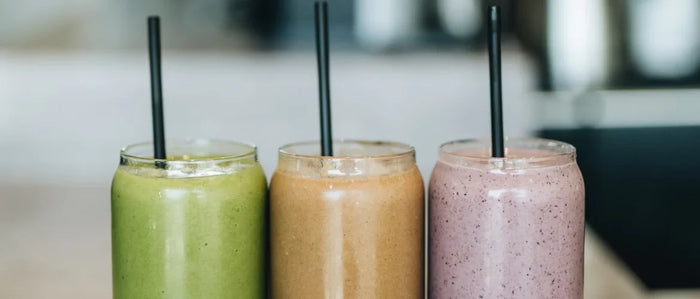
The 10 best vegetables to make a smoothie from
There's a good chance you're not eating enough vegetables. You might not like the taste, the texture, or you might simply forget about them. These could all be reasons. You should actually eat at least 250 grams of vegetables per day. Research shows that only 25% of all Dutch people meet this requirement! If you don't like the taste, you can try a different approach If you don't like the texture, you can simply make a very healthy green smoothie! But which vegetables are the healthiest and best to make a smoothie with, so you still get your daily dose of vegetables? I'll explain it to you in this blog post! You can easily eat more vegetables through smoothies, such as carrots, beets, spinach, broccoli, parsley, cucumber and celery. These vegetables contain essential nutrients such as vitamins, antioxidants and nitrates, which support blood pressure, digestion and resistance, among other things. With HealthBoost Green Juice you combine 27 types of fruits and vegetables, plus enzymes, algae, probiotics and fiber in one smoothie. Table of contents 1- Carrots 2- Beets 3 - Spinach 4 - Broccoli 5 - Parsley 6 - Cucumber 7 - Celery 8 - Tomatoes 9 - Wheatgrass 10 - Kale Health Boost Frequently Asked Questions 1- Carrots Carrots have a slightly sweet flavor and a wealth of healthy nutrients, making them perfect for a healthy smoothie. They're low in calories and packed with vitamin A, biotin , and potassium. They're also packed with carotenoids like beta-carotene, lycopene, alpha-carotene, and lutein. These are plant pigments that act as powerful antioxidants in your body. In short, very healthy! Because carrot juice is so sweet, it pairs well with other commonly juiced fruits and vegetables, such as citrus fruits, ginger, and beets. 2- Beets Besides their beautiful color, beets also add a whole host of health benefits to your daily smoothie. They contain high levels of manganese, potassium, and folic acid. They are also packed with nitrates, a type of natural plant compound with powerful, diverse health benefits. Research has shown that beetroot juice is good for your blood pressure, athletic performance, and mental performance. Not only are beets themselves a delicious addition to your smoothie, but their leafy green tops (called beet greens) are also very nutritious and can be juiced as well. 3 - Spinach Spinach is a green leafy vegetable that gives a mild, fresh flavor to your smoothie. It's high in vitamin C and vitamin A. It also contains many antioxidants like quercetin, kaempferol, and lutein. It's also packed with nitrates, which offer various health benefits. Spinach is a great addition to your daily smoothie. 4 - Broccoli Broccoli is a cruciferous vegetable that is packed with substances that have a positive effect on your health. It's primarily a source of important micronutrients like potassium, vitamin A, vitamin C, and vitamin B6. It also contains a lot of kaempferol, a powerful antioxidant. You can juice broccoli stalks and heads for a highly nutritious addition to your smoothie. Did you know that broccoli is in the top 10 vegetables with the highest vitamin C content? Vitamin C has numerous benefits for the body. 5 - Parsley Parsley is best known as a tasty herb. But… it's also a great vegetable to use in your smoothie. It's packed with vitamin A, vitamin K, and vitamin C. These vitamins are responsible for several health benefits! It's also rich in antioxidants. Super healthy! 6 - Cucumber Cucumbers are largely water, making them perfect for your smoothie. They're low in calories yet high in potassium, manganese, and vitamins K and C. Adding them to your smoothie helps you stay hydrated. This is crucial for digestion, kidney function, weight management, and physical performance. 7 - Celery Celery juice is an increasingly popular addition to smoothies. It contains a lot of vitamin A, vitamin K and vitamin C. It also contains many antioxidants such as kaempferol, caffeic acid and ferulic acid. Research has shown that celery extract is good for your blood pressure, heart health, and lowering your triglyceride and cholesterol levels. Celery combines perfectly with lemon juice, apple juice, ginger juice, and leafy greens for a delicious drink. 8 - Tomatoes Tomatoes are ideal for making a delicious smoothie, because they contain many nutrients and few calories. Tomatoes are packed with essential nutrients like vitamin C, potassium, and folate. They're also rich in lycopene, a powerful antioxidant. Combine tomatoes with celery, cucumber, and parsley for a refreshing, healthy smoothie. 9 - Wheatgrass Wheatgrass is an edible grass that is also known as one of the most popular vegetables for a delicious, healthy smoothie. It's very nutritious and packed with iron, phosphorus, magnesium, and copper. It also contains 17 different amino acids, the building blocks of proteins. It's also high in chlorophyll, a natural plant pigment that's also a powerful antioxidant. In short, truly super healthy! Wheatgrass can be eaten as is or added to your super healthy smoothie. 10 - Kale Kale is a versatile leafy green with a mild flavor that pairs well with other fruits and vegetables in juices. It is packed with several important nutrients such as vitamin A, vitamin C and vitamin K. It also contains many antioxidants, including beta-carotene Kale is therefore very suitable as an addition to your daily smoothie. Health Boost HealthBoost Green Juice is a delicious superfood smoothie in powder form. It's specially formulated to support optimal health in a natural, tasty, and fast way. This delicious green smoothie contains superfoods, 27 types of fruits and vegetables, enzymes, algae, probiotics, and a generous dose of fiber. Never before has such a complete supplement been available, packed with so many vital nutrients, yet also incredibly delicious and containing only 25 calories per serving. This green smoothie is composed of only plant-based ingredients, making it perfect for combining with a vegetarian or vegan lifestyle! Lars Keijzers Lars is a biobased chemist with an insatiable interest in nutrition and science. He also enjoys exploring personal development and can be found regularly at the local gym. Read more
Lees meer