What are concentration pills?
Concentration pills are supplements in the form of capsules or tablets designed to support your concentration. They are designed to help you focus on tasks longer and more effectively, thus contributing to your productivity.
They are especially popular among students, but more and more people in the business world are also using these tools.
Difference between synthetic and natural concentration pills
Concentration pills are available in two main categories: natural and synthetic. Both types of pills have their own advantages and disadvantages, and the choice depends on your personal preferences and the desired effects.
Natural concentration pills
Natural concentration pills are made exclusively from natural ingredients. They are also called "natural nootropics " and contribute to various brain functions, such as concentration, memory, and learning performance.
Synthetic concentration pills
On the other hand, there are synthetic concentration pills. These contain man-made ingredients specifically designed to support cognitive function.
Synthetic concentration pills can sometimes be stronger or faster acting than their natural counterparts, but they can also have more side effects .
Which natural concentration supplements work?
Without even realizing it, you're probably already taking natural concentration enhancers daily. Do you drink coffee or tea? Then you're already using a natural nootropic. These beverages contain caffeine, a substance that boosts mental energy and contributes to endurance.
Concentration pills work in the same way, but contain carefully formulated ingredients for optimal results.
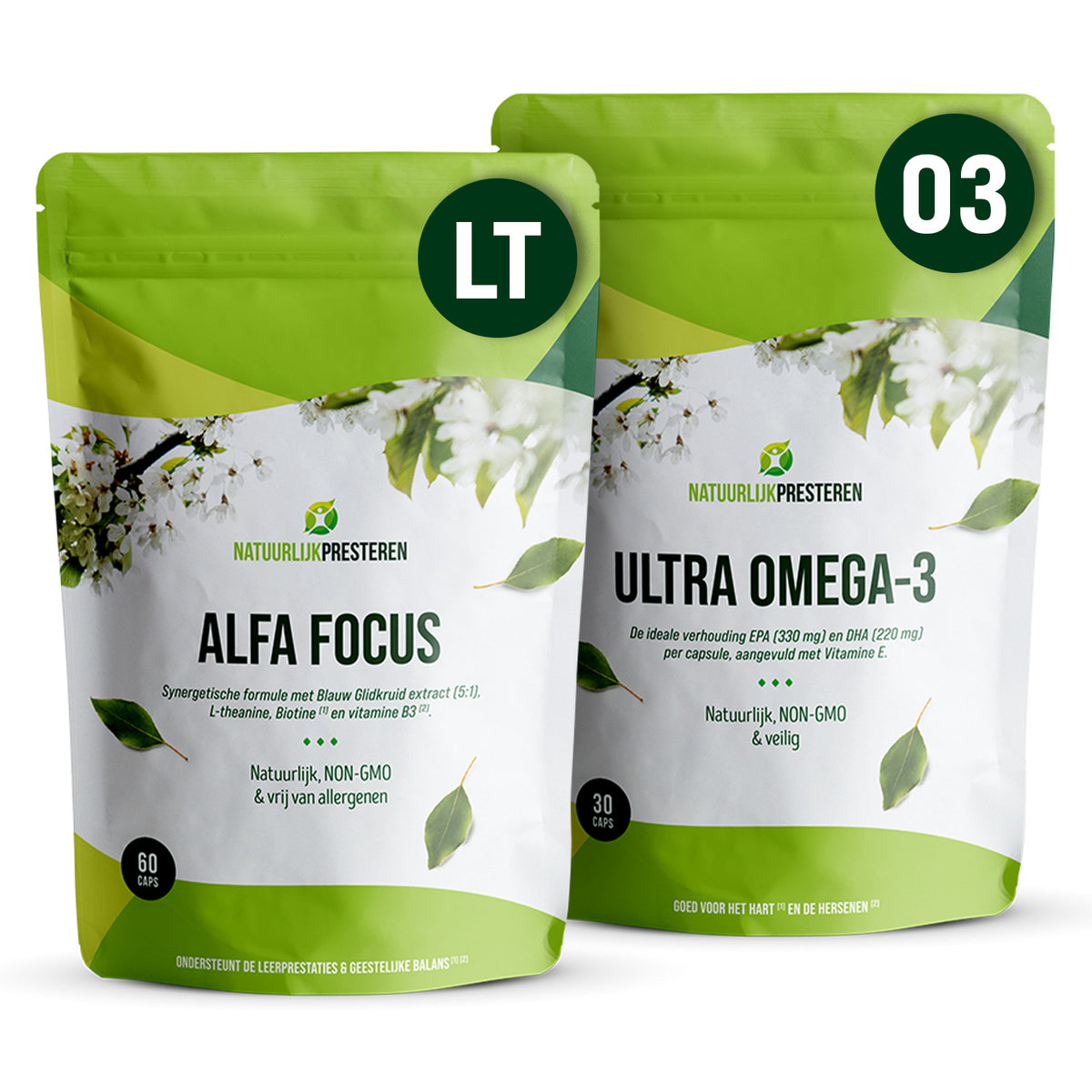
Natuurlijk Presteren capsules contain only natural ingredients that contribute to your focus and productivity in a gentle but effective way:
Caffeine with L-theanine
One of the most effective combinations is caffeine and L-theanine, a natural compound found in green tea. Scientific studies have shown that this combination is optimal in a 2:1 ratio. (1)
Caffeine helps you stay alert , and L-theanine helps prevent jittery or restless feelings . Together, they provide a safe and effective nootropic stack that helps you focus without side effects.
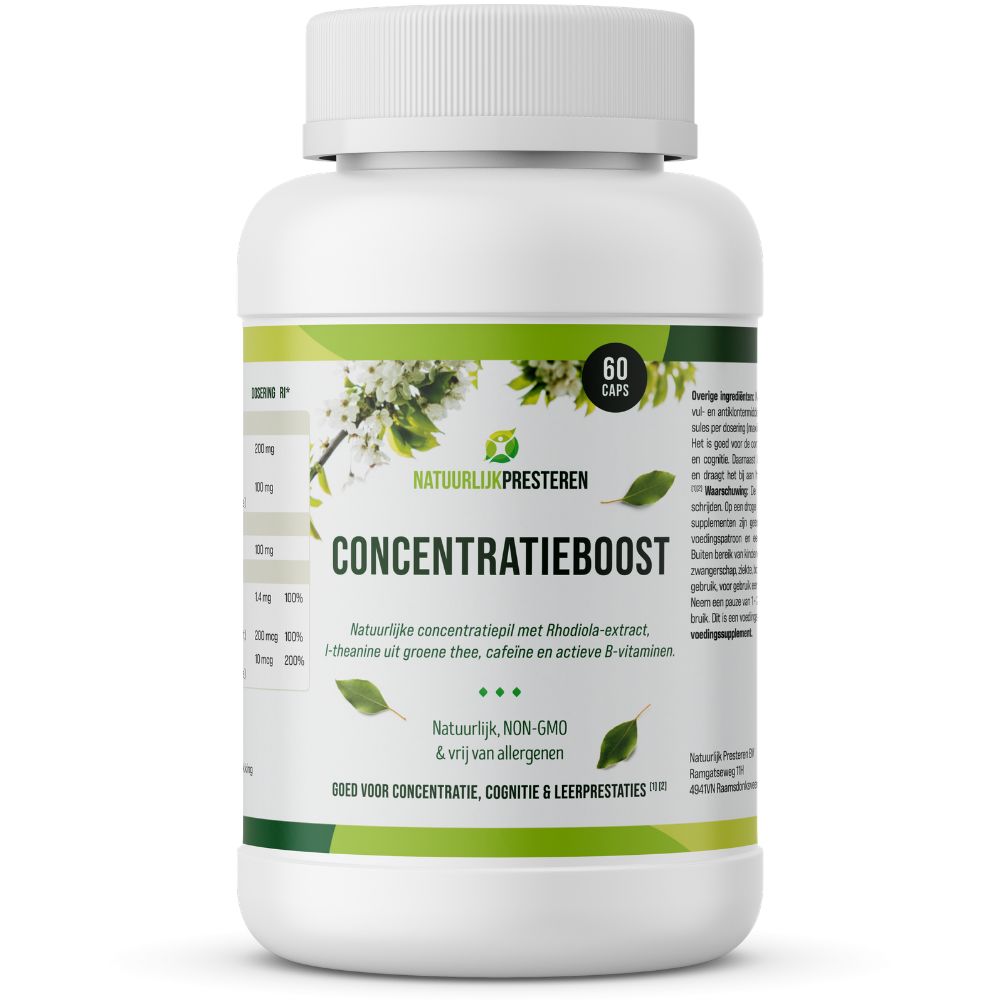
You will find this combination in Concentration Boost , with 150 mg caffeine and 300 mg L-theanine.
Rhodiola Rosea extract
The caffeine and L-theanine duo work synergistically with Rhodiola Rosea extract. This means they enhance each other's effects! Rhodiola Rosea is known for its adaptogenic properties, which support mental balance and energy .
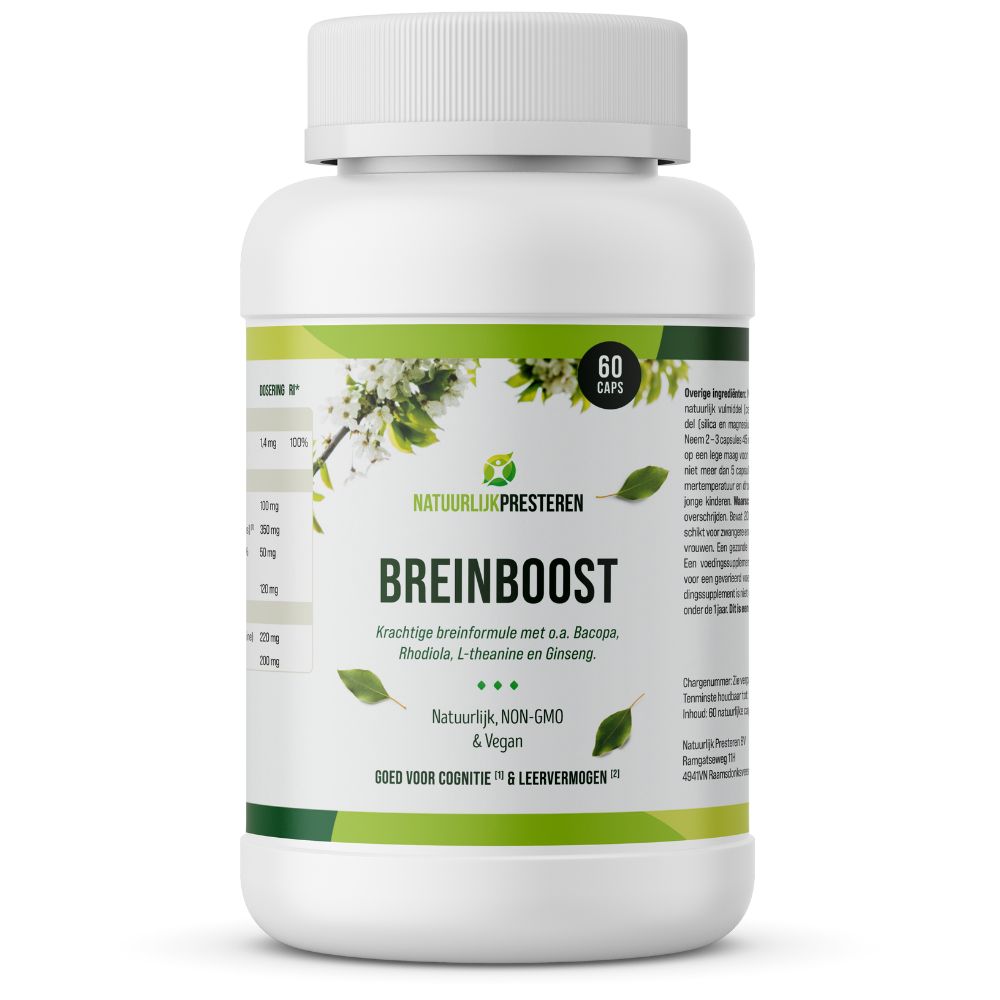
Concentration Boost and Brain Boost contain 50 mg of Rhodiola extract .
Bacopa Monnieri extract
One of the most well-known natural nootropics is Bacopa monnieri extract. It's a very powerful herb, also known as the "memory herb" because it supports your memory .
You will find this extract in Breinboost (350mg).
Blue Skullcap (for restless thoughts)
Blue skullcap, or Scutellaria, is a plant that grows wild in the Netherlands. The blue flowers and leaves of this plant contain flavonoids, natural substances with antioxidant properties.
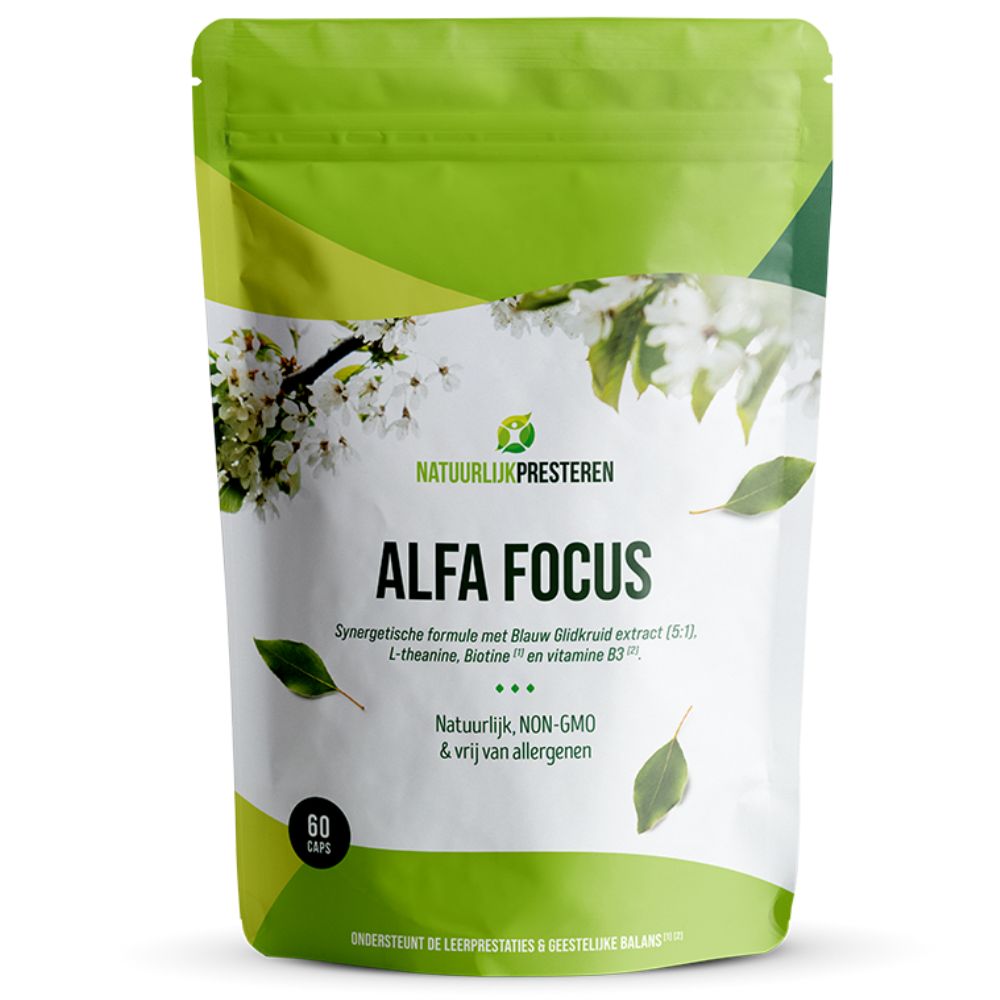
In supplements, blue skullcap is often combined with L-theanine for a synergistic effect that helps with mental clarity and relaxation. For example, in our product Alfa Focus , with 150 mg of blue skullcap and 300 mg of L-theanine.
Tips to improve concentration
When I had to give up my cup of coffee during my pregnancy, I initially found it quite confronting how difficult it was for me to concentrate on my work.
I tried everything to improve my focus naturally. This is what worked for me:
Tip 1: Work in blocks with short breaks (Pomodoro technique)
Work with concentration for 25 minutes, then take a 5-minute break. Repeat this, taking a longer break after four blocks.
Tip 2: Really take a break during your break
Taking a break? Don't do anything else during that time, like scrolling on your phone or processing new information.
Use your break time to relax and clear your head. I like to take a short walk or do a short relaxation exercise.
Tip 4: Keep blood sugar levels stable
Avoid junk food and sugary snacks. Choose nutritious meals and snacks to maintain energy and focus.
Tip 5: Get enough sleep
A good night's sleep is essential for a sharp and well-functioning brain. Aim for 7-9 hours of sleep per night.
Tip 6: Focus on one task at a time
Multitasking can decrease your productivity. Focus on one task and finish it before starting something else. For example, it helps me to put my phone (with notifications off) behind my laptop so I can't see it.
Sources Used
1. Owen, GN, Parnell, H., De Bruin, EA, & Rycroft, JA (2008). The combined effects of L-theanine and caffeine on cognitive performance and mood. Nutritional Neuroscience , 11 (4), 193–198. https://doi.org/10.1179/147683008x301513
Gerelateerde blogartikelen

Bacopa Monnieri: What is it and what are its benefits?
Bacopa monnieri is a plant that has been used for hundreds of years in Ayurveda, the traditional Indian medicine. It is a nootropic, a supplement that can support your mental well-being. Bacopa monnieri is a small ground-dwelling plant found throughout the world, growing in moist places like swamps and riverbanks. It's also known as Asiatic pennywort or Brahmi. It can be used to support your mental health. Research shows that it may be beneficial for brain function, mood, and memory, among other things. These benefits are due to the plant's richness in antioxidants (bacosides), which can protect and support the brain. Bacopa monnieri is primarily used to support memory, during stressful periods, and for mood. In this blog post, we list the 5 benefits of Bacopa monnieri. Bacopa Monnieri supports memory, mood, and cognitive function. It is often used in routines aimed at moments of focus and inner peace. Bacopa naturally contains antioxidants such as bacosides and is often chosen in formulas aimed at supporting balanced energy and relaxation. Bacopa is often used in nootropic supplements and is most effective when combined with ginseng, guarana, vitamin B6, and rhodiola for optimal brain support. Table of contents Supports memory Good for mood Helps protect brain cells Supports during stressful periods Good for cognitive skills Supplement with Bacopa Monnieri Supports memory Research shows that Bacopa monnieri may help maintain healthy memory. For example, research on mice showed that mice given an extract of this plant helped support learning and memory. The supportive properties of Bacopa monnieri have also been studied in humans. During a 12-week study period, 60 elderly people received 300 mg or 600 mg of Bacopa extract daily, or a placebo. Compared to the placebo, participants who received the extract showed a supportive effect on memory, attention and information processing [2] . Bacopa therefore helps to support memory. Good for the mood If you're feeling down, bacopa can help support your mood and well-being. In Ayurveda, Brahmi is one of the most commonly prescribed mood remedies. It supports your mood because it promotes neurotransmitter production. This effect may be due to the fact that Bacopa is good for the regulation of serotonin, dopamine and GABA [3] . Helps protect brain cells Another benefit of Bacopa monnieri is that it may help protect brain cells from free radicals (harmful substances). This is because it is rich in antioxidants. Long-term exposure to high doses of free radicals damages brain cells, causing you to age faster. Free radicals can be caused by an unhealthy diet, stress, insufficient sleep, and alcohol or drug use. When fat molecules come into contact with free radicals, a process called lipid peroxidation is initiated. This means that fat molecules begin to oxidize. Did you know? The oxidation of fat cells by free radicals is comparable to the "rusting" (oxidation) of iron. It damages the material, weakening its physical properties. Bacopa monnieri contains powerful antioxidants (bacosides), which help protect body tissues, including the brain. Supports during stressful periods Bacopa is also a useful supplement during stressful times. It helps you relax naturally. Brahmi is an adaptogen, meaning it adapts to your needs at any given moment. If you're going through a stressful time, it can help you calm down. But if you're feeling tired and listless, it can help boost your energy levels. The advantage of Brahmi is that it has a relaxing effect, without making you tired or sluggish. For this reason, it's often used in supplements for concentration, as well as in supplements for "mental relaxation." Good for cognitive skills Another benefit of Bacopa monnieri is its cognitive benefits. This means it can support information processing, memory, and concentration. This is also supported by scientific research. A review of several studies suggests that using Brahmi extracts in healthy participants supports cognitive function. Participants were tested on working memory and auditory-verbal skills, among other things. Bacopa can be particularly effective when combined with other plant extracts. [4 ] Supplement with Bacopa Monnieri After reading this blog, would you like to try Bacopa monnieri? You can with our Brain Boost. This supplement contains not only Bacopa but also six other natural nootropics that can help support your mental health. For example, Breinboost combines Bacopa with ginseng, guarana, bioactive vitamin B6, and rhodiola, among other ingredients . All these nootropics work synergistically to support productivity, learning ability, and memory. They also have a protective effect on your brain cells. Our supplement is safe to use and allergen-free. Miriam Mirjam felt a connection with nature from a young age. This has led to a deep passion for health, natural remedies, and healthy eating. She also loves reading, yoga, and writing. When the weather is nice, she enjoys exploring new hiking trails . Read more
Lees meer
Want to improve your memory? These 14 tips will help you quickly.
Improving memory might seem like something you'd consider complicated or demanding. The brain is arguably the most complex organ in the human body. It consists of a vast network of billions of interconnected nerve cells. The cells communicate with each other via electrical signals, which allow you to think, feel, and remember things. Memory is an important part of the brain. There are three types of memory: the sensory memory - which processes everything you perceive with your senses. the short-term memory - in which very recent information is briefly stored. the long-term memory - in which all important facts and experiences are stored for a long time Keeping your brain cells healthy is, of course, crucial. This means preventing inflammation and ensuring good blood flow to the brain. Your brain also needs sufficient nutrients. If you want a well-functioning memory, it's important to pay attention to these things. With the 14 tips below, you can improve your memory and keep your brain in top condition. Limit sugar and alcohol, eat anti-inflammatory foods, enjoy dark chocolate daily and get 7-9 hours of sleep. Meditate, read, train your memory, and learn new skills to strengthen brain connections. Do strength training, stay socially active, and get enough vitamins for healthy brain function. Table of contents 1 - Limit refined sugar 2 - Meditate daily 3 - Avoid nutritional deficiencies 4 - Read more for better memory 5 - Get enough sleep 6 - Lose excess weight 7 - Improve your memory by continuing to learn 8 - Limit alcohol 9 - Do a daily "brain dump" 10 - Take advantage of social contacts 11 - Train your memory 12 - Do weight training 13 - Eat anti-inflammatory foods 14 - Improve your memory with 85% dark chocolate 1 - Limit refined sugar It's a well-known fact that sugar is unhealthy. But not everyone realizes that it also has a negative effect on the brain. Sugar can damage your memory, impair your learning ability, and increase the risk of brain disorders like Alzheimer's and dementia. Research shows that a diet high in sugars can lead to poorer memory and a decrease in brain volume, the latter of which has a negative effect on the area of the brain used for short-term memory [1] . If you want to keep your brain healthy, it's important to limit your refined sugar intake. Also, limit carbohydrates in general if you're less active. 2 - Meditate every day Meditating daily is also a good way to improve your memory. Meditation isn't just relaxing (it can help lower blood pressure and reduce stress). While these effects are also beneficial, it appears that meditation can increase gray matter in the brain. Gray matter contains the cell bodies of neurons. As you age, the amount of gray matter decreases, which causes your memory to decline. Meditation and other relaxation techniques can contribute to healthy memory. Meditation has a positive effect on short-term memory in both young and old people. There are many different ways to meditate, so there's sure to be one that suits you. You can practice mindfulness meditation, focus on your breathing, or do a body scan. You can even meditate while moving, like while walking or dancing. Choose a form that works for you and make time for it every day. 3 - No nutrient deficiencies Human memory is incredibly complex. For your memory to function normally, you also need the right nutrients. Even if you eat a varied diet, you may still not get enough of some nutrients. For example, if you eat few animal products, you're at risk for zinc, iron, and B12 deficiencies . Conversely, you may have deficiencies in other vitamins if you eat too few fruits and vegetables. If you suspect that you are not eating a varied diet, a good quality multivitamin can help you get all the important vitamins and minerals in their active form. 4 - Read more often for a better memory Reading isn't such a popular activity these days, which is a shame. Because reading can have a positive effect on your brain, and especially your memory. Using MRI scans, scientists have discovered that reading involves a complex network of nerve cells. The more often you read and the better you become at reading, the more powerful and developed these networks become. Reading therefore creates more connections between brain cells, making it easier to recall stored information. Reading can prevent cognitive decline and memory loss with age. Did you know? When you read, you use much more than just your memory. To be able to read, you also need phonetic awareness, understanding connections, vocabulary, and your brain processes visual stimuli. So reading is a good way to keep your brain active. 5 - Adequate sleep Your sleep also affects your memory. A lack of sleep or disturbed sleep can cause poorer memory. This is because a good night's sleep is important for permanently storing information in long-term memory (a process called consolidation). Deep sleep is particularly important for this process. Therefore, if you often sleep poorly, it can negatively impact your memory. If you want to improve your memory, try to get 7 to 9 hours of sleep every night. Also, make sure you don't eat for at least 3 hours before bedtime so your deep sleep phase isn't disrupted by digestion. Also read our tips to improve your bedroom and what the causes of poor sleep can be. 6 - Lose excess pounds Research shows that being overweight affects your brain. Obesity is linked to an increased risk of cognitive impairment, primarily manifesting as impaired memory and concentration. An analysis of several studies found that when overweight people lost weight, it had a positive effect on their brains. Their memory and concentration improved, and there were also improvements in language and task performance [2] . So losing weight is a good idea if you want to improve your memory. However, do it in a healthy way. Avoid crash diets; they're unhealthy and almost always cause the yo-yo effect. Take your time losing weight and choose a healthy diet, consuming a maximum of 500 to 700 fewer calories per day. 7 - Improve your memory by continuing to learn Memory forms a network of connections in the brain. When you use your memory, different parts of this network are active, in both hemispheres of the brain. That's why it's important to keep learning, regardless of your age. By learning new things, your brain creates new connections and strengthens existing ones. If you don't use certain connections often, they weaken and eventually disappear. This is called brain plasticity. As we age, brain plasticity declines. That's why learning new skills later in life requires more energy. However, it's important to stay mentally active. By learning new things, you stimulate the brain and, in turn, its plasticity [3] . This may help improve your brain health and reduce the risk of brain damage. Learning is always possible, even as you get older. And there are plenty of interesting things to challenge you. Take advantage of the internet, where you'll find many great courses. For example, check out udemy.com, where you can find a course or training for just €10 to €20. 8 - Limit alcohol If you want to improve your memory, it's advisable to limit your alcohol consumption. Many people know that alcohol is unhealthy, but did you know it's one of the most damaging substances for the brain? Scientists recently discovered that even small amounts of alcohol are harmful to the brain. Just one drink a day is enough to cause brain shrinkage. This is because alcohol reduces the amount of gray and white matter in the brain. This makes it more difficult for the different parts of the brain to communicate with each other, which in turn causes both your memory and concentration to deteriorate. Therefore, try to limit your alcohol consumption. Save it for special occasions, for example, or only have a drink on the weekend. 9 - Daily "brain dumping" Are you familiar with the brain dumping technique? It's a very simple way to clear your head. When you have to work or study, you often have all sorts of distracting thoughts pop into your head, such as other tasks you still have to complete. It certainly makes it difficult for you to concentrate. If that's the case, do a brain dump. Take a pen and paper and write down everything that comes to mind. There's no censorship; you write down absolutely everything. By doing this, you free up space in your mind: you know you've put everything important on paper. As a result, these things won't bother you anymore. Your mind is less cluttered, and you have more capacity for optimal memory function. You can concentrate better and therefore absorb information effectively again. 10 - Take advantage of social contacts It might not be something you immediately think of, but social connections have a significant impact on maintaining a healthy brain and therefore on your memory. Maintaining social connections, especially later in life, can protect against cognitive decline. This is also evident from research on mice. Mice kept in groups showed less inflammation in their brains compared to mice living alone. As a result, the brains of the social mice appeared less aged. If you want to improve your memory, it's advisable to engage in regular social activities. Join a club (read books, go for a walk, play cards), exercise together, sing, or dance. Doing activities together helps you relax, reduce stress, and keep your brain young. 11 - Memory training Memory training is a fun and effective way to keep your memory sharp. The more you work on your memory, the stronger the connections between brain cells and areas within the brain become. Memory training can improve your mental performance, attention, and concentration. There are many different ways to train your memory. You can regularly try to remember all sorts of things. Think about which movies you've recently seen and which actors starred in them. Try to recall past events. What year was it, where were you, and what were you doing? This can help keep your brain sharp. But you can also use modern technology. You can download fun memory games via your smartphone or computer. Check Google Play or the Apple Store, or search online for games. 12 - Weight Training Regularly doing a muscle-strengthening workout also has positive effects on your memory. So you not only develop stronger muscles but also a better memory. Researchers at the University of Sydney conducted a study with a group of people aged 55 to 68. They had mild memory complaints. The study showed that strengthening the muscles was associated with an improvement in memory [4] . If you also want to benefit from this effect, it's important to train regularly, at least twice a week. The training should be sufficiently strenuous, at 80% of your maximum capacity. 13 - Eat anti-inflammatory foods Chronic inflammation can be linked to the development of brain disorders, such as depression and Alzheimer's disease. Several studies have shown that certain components in food and beverages have anti-inflammatory properties. Regularly including these foods in your diet can help reduce inflammation and thus reduce the risk of chronic illness and memory problems. The list of healthy foods includes: Blueberries Strawberries Eggs Green tea Coffee Green leafy vegetables, nuts, and olive oil can also be good for memory. All these foods are rich in antioxidants and polyphenols, substances that can help protect the body. So make sure you regularly include healthy fruit, nuts, vegetables, green tea or coffee on the menu. Did you know? The Mediterranean diet is a diet rich in anti-inflammatory foods. It's not so much a weight-loss diet, but rather a diet designed to support your overall health. 14 - Improve memory with 85% dark chocolate And finally, a tip that will make everyone happy: regularly eat chocolate with a cocoa content of 85% or more. Cocoa contains cocoa flavonols, substances that occur naturally in the cocoa bean. It has been scientifically proven that flavonols promote blood flow to the brain. They therefore have a positive effect on the brain, particularly on cognition, attention, information processing speed, and memory. If you love dark chocolate, you're in luck. You can enjoy a delicious piece of dark chocolate (85% or higher) every day to support your brain health. Just be aware that if you eat chocolate with a lower cacao percentage, you won't reap these health benefits. Miriam Mirjam felt a connection with nature from a young age. This has led to a deep passion for health, natural remedies, and healthy eating. She also loves reading, yoga, and writing. When the weather is nice, she enjoys exploring new hiking trails. Read more
Lees meer
Want to study faster? 15 tips to improve your learning!
Who wouldn't want to study faster? Working, learning, and absorbing information more quickly has many advantages. Not only can you achieve better results, you'll also have more time for fun things and increase your chances of pursuing higher education. Want to study faster? We've compiled 15 handy tips for you. Think about putting your phone away from the room, taking regular breaks, and testing yourself effectively. These 15 tips will give you the tools you need to study faster. Test your knowledge by asking yourself questions, summarizing the material in your own words, quizzing yourself, and explaining the material to others. Use pen and paper, visual aids and a quiet learning environment, and take regular short breaks to improve concentration. Make sure you get enough exercise, have a healthy sleep pattern and limit alcohol and caffeine to optimize your study performance. Table of contents 1 - Ask yourself questions about the material 2 - Study faster: summarize in your own words 3 - Write with pen and paper 4 - Study aloud 5 - Use pictures 6 - Test yourself regularly 7 - Take a 5-minute break every hour 8 - Explain information to someone else 9 - Use mnemonics 10 - Avoid alcohol 11 - Divide your study hours 12 - Put your phone on silent 13 - Study in a low-stimulus environment 14 - Do strength training before studying 15 - Sleep well after your study session 1 - Ask yourself questions about the material Most people study the material they need to know by reading it as often as possible. This way, you always see the text and the information in the same way. A good tip to help you study faster is to ask yourself questions about the material. This will help you look at the information differently and present it in your own words. You'll also learn to see more connections between different paragraphs and chapters. You'll look for solutions and answers that are important to the topic. By asking yourself questions, you actively engage with the material, which means you will remember it much better. 2 - Study faster: summarizing in your own words Similar to the tip above, summarizing in your own words is also a good way to get a better grasp on the material. You can easily skim through everything without fully understanding what you've read. By summarizing the information in your own words, you process it at a deeper level. This technique also involves actively engaging with the material. You'll structure it, reorganize it, and make connections. Keep your summary concise and simple. A summary provides the main points, so don't go into details. 3 - Write with pen and paper Many people use computers and laptops while studying. Typing and reading online is fast, but the information usually doesn't stick for long. If you want to ensure that what you're learning actually stays in your memory for a longer period of time, write with pen and paper, not on a computer. Research shows that information we write by hand is retained much better and longer than information we retain when we type it [1] . This is probably because different areas of the brain are involved when writing by hand. All the information stored while writing by hand gives your brain more tools to retrieve it later. It might take more time, but you'll gain that time back in the end, because you'll retain what you learn more effectively. Write your notes while reading or listening and review them afterward to help you remember everything. This way, you'll ultimately study faster. 4 - Learning aloud Anyone who wants to study effectively is well-advised to study aloud. If you read the key points of the material aloud to yourself, the information will come through multiple channels. This information is then stored not only in visual memory, but also in verbal and auditory memory. And the more places something is stored, the easier it is to remember and retrieve. Research has also been conducted on this. McLeod and Forrin studied 100 Canadian students. They had to learn 80 words, choosing between four ways to remember them: Reading in silence Listening to someone else Listening to a recording of oneself Read aloud They were then tested, and after two weeks, they were given a list of new words and had to indicate which of the words was already on the first list they had learned. Those who had read aloud performed best [2] . While reading aloud is a good way to learn, combining all four methods seems to yield the best results. So, alternate between the different methods to learn faster. 5 - Use images Using images can be a great way to absorb information more effectively and quickly. Draw a picture of what you've read, or try processing information in graphs or charts. Your brain can process images 60,000 times faster than words. Therefore, using images can dramatically accelerate the learning process. Presenting information visually can help you grasp new, complex concepts more quickly and connect topics. It also helps you remember your material better. If you first read something in text and then see it as an image, your brain stores the information in different places. It's not for nothing that we say a picture can tell a thousand words! So, harness the power of images while studying. 6 - Test yourself regularly A good way to learn faster is to test yourself. Once you've worked through the material, create a test for yourself. Use open-ended or multiple-choice questions, ask yourself to summarize something, or write down keyword definitions. Then close your books (or turn off the internet) and take your own test. Of course, do this without cheating. Afterward, review what you did well and what you didn't. This will quickly show you where your weaknesses are and where you need to spend more time. This will allow you to study faster and more effectively. 7 - 5 minutes break per hour It's important to give your brain regular breaks. This prevents mental exhaustion and keeps you sharp. A constant stream of information can prevent your brain from processing. A 5-minute break every hour is enough to help you unwind. Leave your work for a moment, get up, and do something else. Make sure you're not doing anything that requires you to process new information. So, don't watch TV, YouTube, or browse social media. This keeps your brain active and isn't a restful activity. Take a walk (without music or a podcast), look out the window, and drift off for a moment. You could also do some gentle physical exercise, like yoga or stretching. After this relaxing break, you'll find you can concentrate well again and have renewed energy for your studies. 8 - Explaining information to someone else Explaining what you've learned to someone else also helps you study effectively. Ask a friend to listen to you and try to explain what you've been learning. Try to do this in a clear and concise manner. Explain everything in a way they can understand. Ask the other person if they understood everything or if you need to explain something further. To explain a topic to someone, you need to be thoroughly familiar with the material and be able to recall all the key points. This way, you'll actively engage with the material and master it faster. You'll also get a clear picture of what you already know well and what you don't. If you don't have anyone to discuss your study material with, try writing down what you would tell someone else. 9 - Mnemonics Mnemonics are useful tools for remembering information more easily and studying faster. You can combine the first letters of words and sentences to easily memorize complex information. Or create a song, rhyme, or abbreviation for what you need to remember. This gives your brain more tools to store information, making it easier to retrieve. The information is also usually simpler, allowing you to learn it faster. Examples of mnemonics: The formula ab + c = E I'm Always Eating Cake Or to make it easier to remember the order of the animal kingdom, use the sentence: When Little Otters Go Steal Bicycles Department Class Order Family Gender Kind 10 - Avoid alcohol Studying hard for a test or quiz? Put alcohol aside for a while. Alcohol promotes neuroinflammation, which means it causes low-grade inflammation in the brain [3] . This can cause your brain to function less effectively, which you may notice as poorer concentration and reduced information retention. So it's a good idea to avoid alcohol on the days you have to study. This way, you ensure your brain can function optimally when you need to perform. Did you know? Alcohol not only negatively impacts your learning ability, but also the development of teenagers' brains. The brain continues to develop until the age of 26 (for men) and 24 (for women). Therefore, alcohol consumption can be harmful to your brain! 11 - Divide your study hours It's wise to distribute your study time throughout the day. You'll be able to store information better in your long-term memory if you practice regularly for short periods, ultimately allowing you to study faster. It's better to study five times for one hour than one time for eight hours straight. So, prolonged cramming isn't actually all that effective. Your brain becomes overloaded with information and doesn't absorb as much. Spread your studying over shorter periods; this is more efficient and helps you retain the material better. 12 - Put your phone on silent If you want to study faster, it's recommended to silence your phone and put it in a different room. Your phone is a major distraction, and many people are easily distracted if they leave it nearby. They want to check regularly to make sure they haven't missed anything, which interrupts their work. Research shows that your concentration is significantly reduced when your phone is in plain sight, even if it's turned off. Every interruption disrupts your focus and makes it harder to reengage with your studies. So make it easy on yourself, put your smartphone away, and enjoy the peace and quiet. Once you're done studying, you'll have plenty of time to catch up on what you missed (or didn't miss). 13 - Study in a low-stimulus environment We've already discussed disrupting your concentration. Studying works best in a low-stimulus environment. If possible, work in a space with minimal distractions. If your own study space isn't quiet enough, find a spot at school or in the library. The fewer distractions (think housemates, music, street noise, television, or computer), the better you can focus on your studies and absorb information. Choosing the right study space can significantly impact your performance. 14 - Strength Training Before Studying Physical exertion is also a very effective method for learning faster, especially if you do strength training. Doing muscle-strengthening exercises before studying increases the concentration of dopamine and acetylcholine in your blood. These neurotransmitters sharpen your concentration and help you remember what you learn better. So, exercise for an hour before you start studying: work out with dumbbells, kettlebells, a barbell, or your own body weight—there are many exercises you can do. Did you know? Strength training isn't just good for your muscles and mental performance. It also has a positive effect on your mood. That will definitely help you study faster! 15 - Sleep well after your study session Are you so happy you're done studying that you want to go out for a good night's sleep or have a long movie night? That's probably going to make for a short night, and unfortunately, that's not a good idea. While you sleep, your brain is busy processing and organizing all the information you've just absorbed. Especially if you get a good night's sleep (at least 8 hours), you'll remember what you've learned. Postpone the partying for a while and treat yourself to a good night's sleep. Make sure your bedroom is quiet, dark, and comfortable, so you can sleep undisturbed and your hard work during the day won't be in vain. Miriam Mirjam felt a connection with nature from a young age. This has led to a deep passion for health, natural remedies, and healthy eating. She also loves reading, yoga, and writing. When the weather is nice, she enjoys exploring new hiking trails. Read more
Lees meer