


What are homeopathic sleep aids?
Homeopathic sleep aids are natural supplements that are good for natural sleep. They are made from plant extracts and support your sleep in a safe way.
What types are there?
Homeopathic sleeping aids are available in different forms, such as tablets and drops.
These herbal extracts are often found in natural sleeping aids:
1. Griffonia extract (5-HTP)
The main source of 5-HTP is the seeds of the African plant Griffonia simplicifolia. Although other techniques have been developed to produce 5-HTP on an industrial scale, Griffonia remains the most common natural source. (1)
5-HTP is an amino acid that serves as a building block for the production of serotonin. Serotonin can then be converted into melatonin, the natural sleep hormone. By using 5-HTP, your body can produce more melatonin, which contributes to a healthy night's sleep.
2. Valerian
Valerian is a plant with a root that has been used for thousands of years for its calming properties. The plant grows in North America, Asia and Europe and has light pink, purple or white flowers.
The root helps promote a healthy night's sleep, makes it easier to fall asleep, and helps you relax during stressful periods. (2)
3. Passion flower
A common ingredient in homeopathic sleep aids is passion flower. The flowers and leaves of the passion flower are used in teas and supplements for their calming and anti-anxiety properties.
The active substances in passion flower are flavonoids and alkaloids, which influence the neurotransmitters in the brain and can have a calming effect. These substances help to calm the mind and reduce feelings of anxiety, thus supporting natural sleep. (3)
4. Chamomile
The flowers of the chamomile plant are often used in teas and supplements for their calming and relaxing properties. The active ingredient in chamomile is the antioxidant (apigenin). This substance helps to calm the mind and relax the muscles, making it easier to fall asleep.
5. Ashwagandha KSM-66
Ashwagandha KSM-66 is a powerful extract of the ancient ashwagandha root, used in traditional Ayurvedic medicine. This patented extract, Ashwagandha KSM-66®, is known for its consistent and high concentration of active ingredients.
Ashwagandha is best known for its adaptogenic properties that help with relaxation. In addition, the extract helps to keep cortisol levels stable.
Cortisol is the stress hormone. If your cortisol is out of balance, it affects your sleep. That is why ashwagandha is also good for natural sleep.
6. L-theanine (from green tea)
L-theanine is a substance from the leaves of green tea and gives the tea its bitter taste. It is often used in products aimed at relaxation and sleep, but due to legislation it is not permitted to provide complete information about its effects.
There are now quite a few studies that have investigated the effect of green tea extract on sleep. With promising results:
For example, an American study (2011) showed that the effects of L-theanine on the sleep quality of 98 boys. The researchers concluded that L-theanine is good for sleep and helps to relax. (4)
And this Japanese study (2019) suggests that L-theanine can have a beneficial effect during stressful periods and is good for mental performance. (5)
Our homeopathic sleeping aids
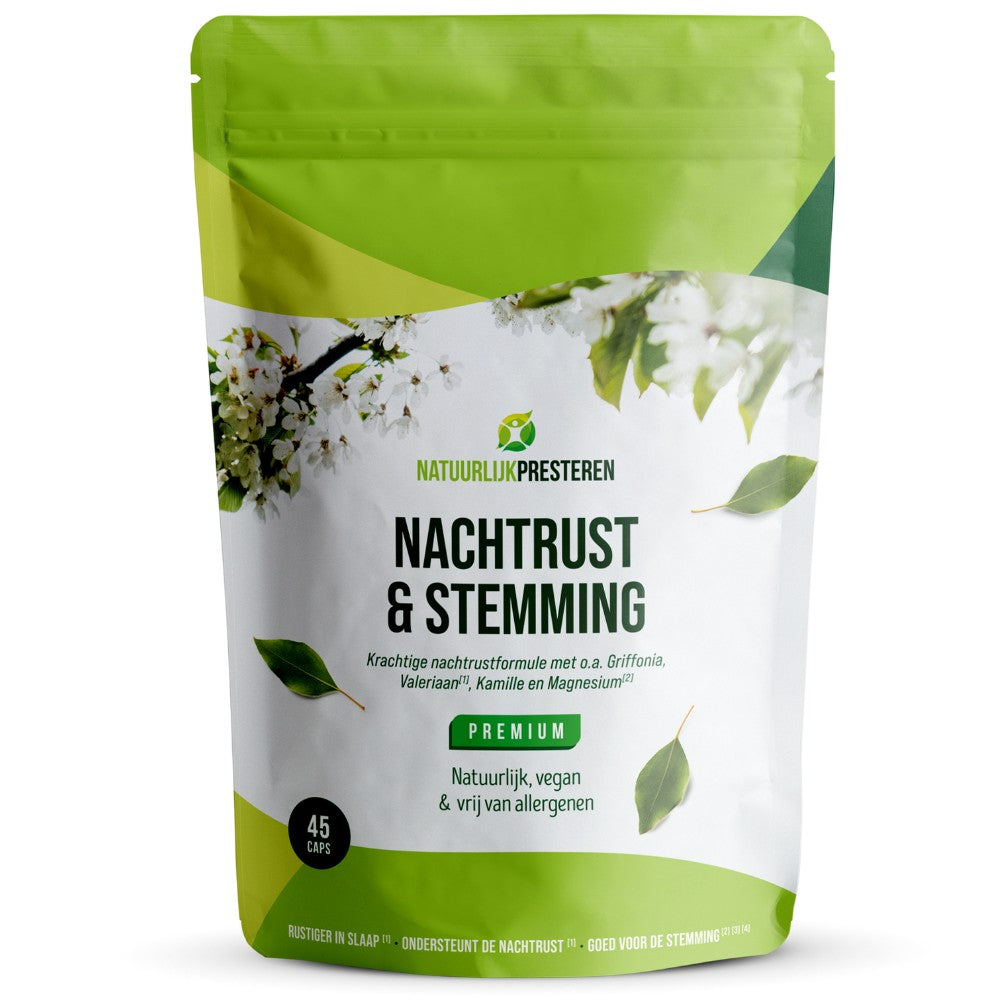
Our natural sleep aid, Night Rest and Mood, is by far the most popular. We also have Ashwagandha KSM-66® and a combination of the two.
Sleep & Mood
This natural sleeping aid supports a full night's sleep, helps you relax and is good for your mood and energy levels during the day.
The product contains:
● Valerian – 100 mg: Helps you relax and supports a natural night’s sleep.
● Griffonia – 150 mg: The natural form of 5-HTP, an important building block for serotonin and the sleep hormone melatonin, which contributes to a good night's sleep and a positive state of mind.
● Chamomile – 75 mg: Contains apigenin, an antioxidant that helps you relax and is good for your night's sleep.
This combination of natural ingredients has been carefully formulated to support your sleep quality as well as your daytime energy levels and mood.
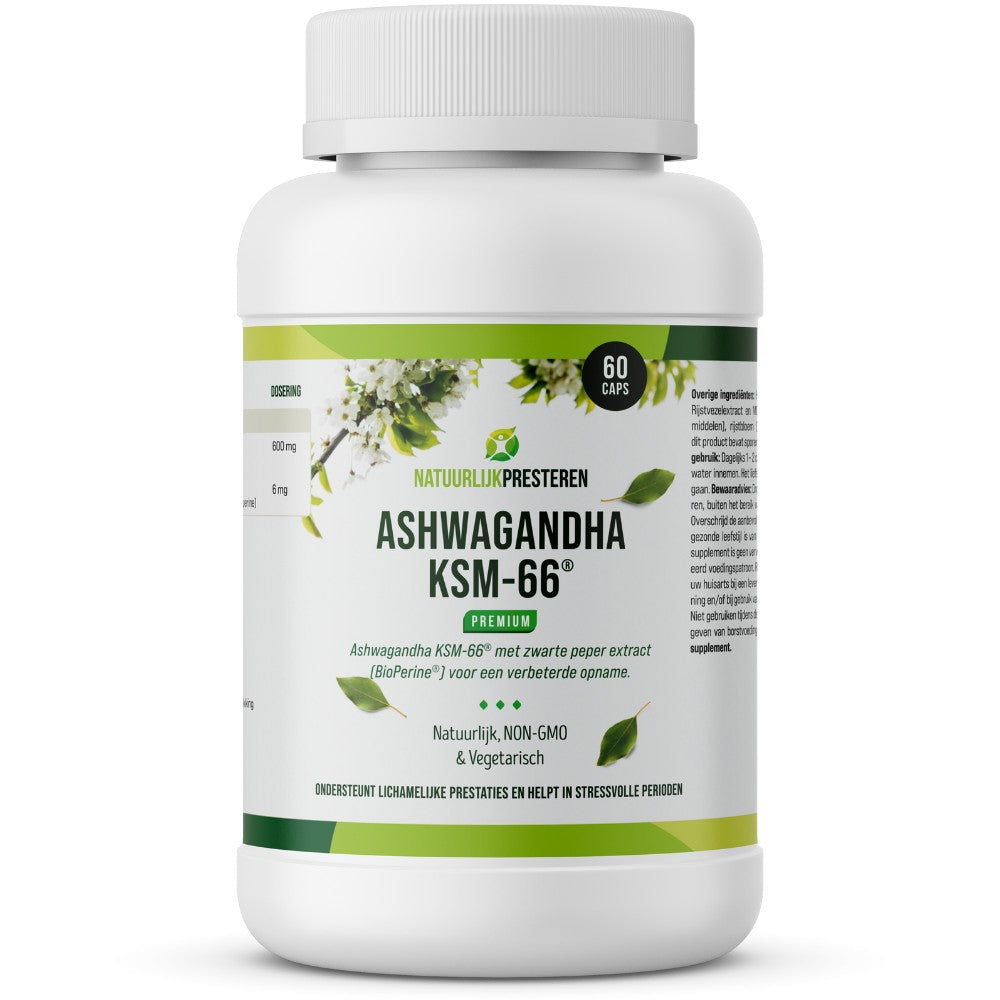
Ashwagandha KSM-66
Is the ideal choice if you have difficulty falling asleep due to a stressful period.
Ashwagandha KSM-66 is a premium dietary supplement based on a high-quality Ashwagandha extract. We use the purest, most standardized form. This way you can be sure that the quality is consistent.
● Ashwagandha KSM-66 – 600mg: Provides a standardized concentration of 5% withanolides, retains the full spectrum of active constituents, and has been clinically studied for safety and effectiveness.
Combination: Sleep & Mood + Ashwagandha KSM-66
For extra effective support of your night's sleep and mood, consider combining "Night Sleep & Mood" with Ashwagandha KSM-66.
● Take Ashwagandha KSM-66 in the early evening to help your body relax and reduce stress. This premium extract supports your energy, mood and helps with healthy sleep patterns.
● Then take Sleep & Mood approximately 45 minutes before bedtime . This unique blend of natural ingredients promotes relaxation and supports restful, restorative sleep.
Thanks to this combined effect, you not only support your sleep quality, but it is also good for your state of mind.
Used sources
- Maffei, M.E. (2020). 5-Hydroxytryptophan (5-HTP): Natural Occurrence, Analysis, Biosynthesis, Biotechnology, Physiology and Toxicology. International Journal Of Molecular Sciences , 22 (1), 181. https://doi.org/10.3390/ijms22010181
- Shinjyo, N., Waddell, G., & Green, J. (2020). Valerian Root in Treating Sleep Problems and Associated Disorders—A Systematic Review and Meta-Analysis. Journal Of Evidence-based Integrative Medicine , 25 , 2515690X2096732. https://doi.org/10.1177/2515690x20967323
- Harit, M. K., Mundhe, N., Tamoli, S., Pawar, V., Bhapkar, V., Kolhe, G., Mahadik, S., Kulkarni, A., & Agarwal, A. (2024). Randomized, Double-Blind, Placebo-Controlled, Clinical Study of Passiflora incarnata in Participants With Stress and Sleep Problems. Cureus . https://doi.org/10.7759/cureus.56530
- The effects of L-theanine (Suntheanine®) on objective sleep quality in boys with attention deficit hyperactivity disorder (ADHD): a randomized, double-blind, placebo-controlled clinical trial. (2011, December 1). PubMed. https://pubmed.ncbi.nlm.nih.gov/22214254/
- Hidese, N., Ogawa, N., Ota, N., Ishida, N., Yasukawa, N., Ozeki, N., & Kunugi, N. (2019). Effects of L-Theanine Administration on Stress-Related Symptoms and Cognitive Functions in Healthy Adults: A Randomized Controlled Trial. Nutrients , 11 (10), 2362. https://doi.org/10.3390/nu11102362
Gerelateerde blogartikelen
 te hoog testosteron
Better night's sleep: top 10 tips for the best sleep
When I sleep well, I notice it immediately: I'm sharper, happier, and more resilient. But after a restless night, everything feels harder, from my concentration to my mood. Sound familiar? A sleep tea, a helpful app, a supplement, or a good pillow can all help. But you'll usually only notice a real difference when you combine them with a few consistent habits you repeat every day. Good sleep rarely comes from a single trick, but from a structured approach. In this article, I'll take you through my best, science-backed tips that (when combined) can help you get a deeper, more restorative night's sleep. No complicated theory, just practical advice, so you fall asleep more easily, sleep more peacefully and wake up with more energy. The article shows that good sleep usually comes from a combination of daily habits, not one trick, with a focus on a doable, consistent sleep and evening routine. Important pillars are fixed sleeping and waking times, the 3–2–1 method, a cool, dark bedroom, nutritious food, daily exercise and limiting caffeine, alcohol, nicotine and heavy meals. Finally, the blog describes how short naps and relaxation routines can support well-being, and how a Sleep & Mood supplement can be a natural addition to a broader lifestyle approach. Table of contents My top tips for a deep, restorative night’s sleep 1. Stick to regular times 2. Wind down your evening with the 3–2–1 method 3. Make sure your bedroom is cool, dark and quiet 4. Eat a nutritious and varied diet during the day 5. Avoid caffeine in the afternoon 6. Exercise daily, but not intensively just before bed 7. Use relaxation routines: small, but effective 8. Limit alcohol, nicotine and heavy meals in the evening 9. Make your bedroom a place for rest 10. Short afternoon naps? Fine, but with care A natural addition to your evening routine My best tips for a deep, restorative night's sleep These are the tips that make the most difference for me, and according to research: 1. Stick to fixed times Here's how to do it: Choose one fixed time to get up on weekdays. Also, try not to deviate by more than about 1 hour during the weekend. Go to bed when you feel sleepy, preferably within a fixed time block (for example, between 10:30 and 11:30 PM). Why this helps Your body thrives on predictability. By keeping to roughly the same hours, your internal clock will "work forward": you'll get sleepy around the same time, your body temperature will drop at the right time, and you'll wake up at a more natural time. I notice very strongly that I have less of a “Monday morning feeling” when my weekend rhythm isn't going in all directions. What does science say? Research shows that you sleep better if you go to bed and get up at roughly the same times. People who change their sleeping times a lot (for example, getting up early during the week and going to bed and getting out of bed very late at the weekend) on average have more sleep problems and feel less fit during the day. (1)(2) 2. Finish your evening with the 3-2-1 method Here's how to do it: 3 hours before bedtime: no more heavy meals. Choose easily digestible foods if you do eat. 2 hours before bedtime: no more large drinks. Small sips when thirsty are fine. 1 hour before bedtime: Turn off screens, dim bright lights, and avoid work emails and intense conversations. If necessary, you can mark these times in your calendar or set a reminder on your phone. After a few days, it will become more natural. Why this helps You gradually let your body know: "We're going to finish." Your digestion gets a rest, your bladder doesn't overfill, and your brain receives less stimulation and light. This makes the transition from "day mode" to "night mode" much more gradual. What does science say? Research shows that bright light, and especially blue light, in the evening can shift your biological clock later. Your body then produces melatonin later, making it harder to fall asleep. Avoiding screens and bright lights in the last hour before bed helps your body get sleepy on time. (3)(4) What does science say? Biochemical research has clearly shown that tryptophan is the direct precursor of 5-HTP and serotonin. Without tryptophan, your body simply cannot produce serotonin. We also see this in studies: if people get enough tryptophan through food or supplements, this can help to support their normal mood and emotional balance. (2) 3. Ensure a cool, dark and quiet bedroom Here's how to do it: Turn down the heating or open the window slightly to about 16–19 °C . Use blackout curtains or a sleep mask. Use earplugs or a white noise app if you live in a busy environment. Put your phone on silent or in another room. Why this helps Your body sleeps more easily when it can cool down a bit, when there's little light, and when there are no unexpected noises. The fewer stimuli, the less chance you'll be jolted out of your deep or dreamy sleep. What does science say? Reviews and meta-analyses (large overview studies) show that you sleep worse in an overly warm and noisy environment. Warm nights and excessive nighttime noise generally cause people to sleep shorter, wake up more often, and experience their sleep as less restorative. A cool, quiet bedroom therefore reduces the chance of restless, interrupted sleep. (5)(6) 4. Eat a nutritious and varied diet during the day Here's how to do it: Include a combination of fruits/vegetables, protein, healthy fats, and fiber at every meal . Eat regularly throughout the day so your blood sugar doesn't constantly spike and crash. Cut back on caffeine and sugary snacks, especially later in the day. Why this helps More stable energy during the day makes it easier to unwind in the evening. Your hormones, brain, and muscles use nutrients as building blocks all day long. When that foundation is in order, your body has fewer "fires to put out" at night. What does science say? Large-scale reviews show that people who eat a lot of processed foods, sugar, and little fiber report poorer sleep quality on average. People who eat primarily vegetables, fruit, whole grains, nuts, legumes, and fish, on the other hand, are more likely to report better sleep. These are correlations (and therefore no hard conclusions yet), but the picture is clear: a nutritious, varied diet usually leads to better sleep.(7)(8) 5. Avoid caffeine after noon Here's how to do it: Make a deal with yourself : no more caffeine after 2 p.m. If you (like me) are sensitive to caffeine, I recommend moving this to noon. Alternate or switch to decaffeinated coffee, herbal tea, or water. Also watch out for “hidden” caffeine in cola and energy drinks. Why this helps Caffeine blocks a substance (adenosine) that makes you drowsy. This is nice in the morning, but inconvenient if you want to fall asleep peacefully in the evening. Especially if you're sensitive, a cup of coffee late in the afternoon can keep you awake for a long time. What does science say? Research with large groups of people shows that caffeine can significantly disrupt sleep, especially if you drink it later in the day. People who consume coffee, cola, or energy drinks in the afternoon or evening generally have more difficulty falling asleep and sleep for shorter, more restless hours. That's why it helps to take your last caffeine dose well before bedtime. (9)(10) 6. Exercise daily, but not intensively just before bed Here's how to do it: Plan at least 20–30 minutes of exercise every day : walking, cycling, gym or home workout – whatever suits you. Do intensive training preferably during the day or at the end of the afternoon . Late evening: Opt for light exercise, such as a leisurely evening walk or a gentle yoga session. Why this helps Exercise helps your body release tension and promotes natural fatigue at the end of the day. But if you work out hard right before bed, your heart rate and adrenaline will stay elevated for longer. Then your body still feels "on" while your mind is already trying to shut down. What does science say? Large-scale reviews show that people who exercise regularly sleep better and experience less insomnia on average. However, it appears that intense exercise right before bedtime can actually make it harder for some people to fall asleep. Therefore, exercising during the day or in the early evening is best suited to a quiet night. (11)(12) 7. Use relaxation routines: small, but effective Here's how to do it: Choose one or two small rituals and repeat them every night, for example: A warm shower 5–10 minutes of breathing exercises Soothing music Briefly write down what's on your mind A few gentle stretches You don't have to do everything: it's better to have one small ritual that you stick with than a perfect routine that you abandon after three days. Personally, this is a very important one for me. Why this helps You're sending your nervous system clear signals: "It's okay to relax." By doing something gentle and calm, your body shifts from "action mode" to recovery mode. If you repeat this daily, your brain will associate that routine with sleep. What does science say? Research into relaxation exercises, such as mindfulness, breathing, and other mind-body techniques, shows that these often help people sleep better. People who regularly do these kinds of exercises in the evening, on average, fall asleep faster, worry less in bed and experience sleep as more restful. (13)(14) 8. Limit alcohol, nicotine and heavy meals in the evening Here's how to do it: It is best not to drink alcohol every day , and preferably not in the last hours before going to sleep. Do you smoke? Try having your last cigarette earlier in the evening. Choose a lighter meal in the evening , especially if it is late. Why this helps Alcohol can make you a bit drowsy at first, but later in the night, your sleep often becomes more restless. Nicotine, on the other hand, has a stimulating effect. And when your digestive system is still working at full capacity, your body has a harder time slipping into a deep recovery mode. What does science say? Several studies show that while alcohol can help you fall asleep faster, it actually disrupts your sleep later in the night. You'll experience less deep sleep and REM sleep, and you'll wake up more often. Nicotine is also regularly linked to shorter and restless sleep. And heavy, late meals are more likely to cause stomach upset, making it harder to fall asleep or making sleep lighter. (15)(16) 9. Make your bedroom a place for rest Here's how to do it: Don't work in your bedroom if you don't have to. No TV on in bed, no scrolling sessions on your phone. Use soft lighting, preferably warm light. Keep your bedroom as tidy and simple as possible. Why this helps Your brain makes associations: if you often lie in bed scrolling, working, or worrying, your body turns on at the mere sight of your bed. By reserving your bedroom for sleep and intimacy, you build the opposite association: bed = rest. What does science say? In research into treatments for insomnia, the same picture emerges consistently: cognitive behavioral therapy for insomnia is one of the most effective approaches. A key part of this is stimulus control: you only use your bed for sleeping (or for intimacy), not for working, scrolling, or worrying. This way, your brain learns again: I'm supposed to get sleepy in bed, not lie wide awake. (17)(18) 10. Short afternoon naps? Fine, but with care Here's how to do it: Keep naps short : about 10–20 minutes. Preferably plan them between 1:00 PM and 3:00 PM. Do you feel like naps are disrupting your night? Then it's better to skip them temporarily. Why this helps A short power nap can refresh you a bit without taking away your sleep pressure for the evening. Long naps or naps in the late afternoon take away too much sleep pressure, leaving you feeling less tired in the evening. What does science say? Research on naps shows that short power naps during the day can improve your concentration and alertness without significantly disrupting your sleep. Naps of about 10–20 minutes seem to be the most effective for this. Longer naps or naps taken late in the day are more often associated in studies with more difficulty falling asleep in the evening and a less favorable health pattern. (19)(20) A natural addition to your evening routine. You can read above how much influence your daily rhythm, diet and evening routine have on what your night looks like. Some people also choose to link a fixed time to a supplement as part of that routine. Our Night Sleep & Mood supplement combines 12 natural ingredients in one formula, including 5-HTP from griffonia, chamomile and valerian extract, magnesium, zinc and B vitamins. It has been developed based on scientific insights and is intended to fit into a broader, lifestyle-oriented approach to sleep, in addition to the practical habits in this article. Ebrina van der Bijl Ebrina is a nutritionist with a deep commitment to healthy eating and a sustainable lifestyle, based in beautiful Portugal. Her passion for natural and organic products is at the heart of her work. With a background in Nutrition & Dietetics and experience in product development and writing, she translates complex scientific information into practical advice for a balanced lifestyle. Read more Sources used Chaput, J., Dutil, C., Featherstone, R., Ross, R., Giangregorio, L., Saunders, T. J., Janssen, I., Poitras, V. J., Kho, M. E., Ross-White, A., Zankar, S., & Carrier, J. (2020). Sleep timing, sleep consistency, and health in adults: a systematic review. Applied Physiology Nutrition And Metabolism, 45(10 (Suppl. 2)), S232–S247. https://doi.org/10.1139/apnm-2020-0032 Arab, A., Karimi, E., Garaulet, M., & Scheer, FAJL (2023). Social jetlag and obesity: A systematic review and meta‐analysis. Obesity Reviews, 25(3), e13664. https://doi.org/10.1111/obr.13664 Tähkämö, L., Partonen, T., & Pesonen, A. (2018). Systematic review of light exposure impact on human circadian rhythm. Chronobiology International, 36(2), 151–170. https://doi.org/10.1080/07420528.2018.1527773 Cajochen, C., Stefani, O., Schöllhorn, I., Lang, D., & Chellappa, S. (2022). Influence of evening light exposure on polysomnographically assessed night-time sleep: A systematic review with meta-analysis. Lighting Research & Technology, 54(6), 609–624. https://doi.org/10.1177/14771535221078765 Chevance, G., Minor, K., Vielma, C., Campi, E., O'Callaghan-Gordo, C., Basagaña, X., Ballester, J., & Bernard, P. (2024). A systematic review of ambient heat and sleep in a warming climate. Sleep Medicine Reviews, 75, 101915. https://doi.org/10.1016/j.smrv.2024.101915 Basner, M., & McGuire, S. (2018). WHO Environmental Noise Guidelines for the European Region: A Systematic Review on Environmental Noise and Effects on Sleep. International Journal Of Environmental Research And Public Health, 15(3), 519. https://doi.org/10.3390/ijerph15030519 Godos, J., Grosso, G., Castellano, S., Galvano, F., Caraci, F., & Ferri, R. (2021). Association between diet and sleep quality: A systematic review. Sleep Medicine Reviews, 57, 101430. https://doi.org/10.1016/j.smrv.2021.101430 Huang, L., Jiang, Y., Sun, Z., Wu, Y., Yao, C., Yang, L., Tang, M., Wang, W., Lei, N., He, G., Chen, B., Huang, Y., & Zhao, G. (2024). Healthier Dietary Patterns Are Associated with Better Sleep Quality among Shanghai Suburban Adults: A Cross-Sectional Study. Nutrients, 16(8), 1165. https://doi.org/10.3390/nu16081165 Gardiner, C., Weakley, J., Burke, L.M., Roach, G.D., Sargent, C., Maniar, N., Townshend, A., & Halson, S.L. (2023). The effect of caffeine on subsequent sleep: A systematic review and meta-analysis. Sleep Medicine Reviews, 69, 101764. https://doi.org/10.1016/j.smrv.2023.101764 Temple, J. L., Bernard, C., Lipshultz, S. E., Czachor, J. D., Westphal, J. A., & Mestre, M. A. (2017b). The Safety of Ingested Caffeine: A Comprehensive Review. Frontiers in Psychiatry, 8, 80. https://doi.org/10.3389/fpsyt.2017.00080 Kredlow, M. A., Capozzoli, M. C., Hearon, B. A., Calkins, A. W., & Otto, M. W. (2015). The effects of physical activity on sleep: a meta-analytic review. Journal Of Behavioral Medicine, 38(3), 427–449. https://doi.org/10.1007/s10865-015-9617-6 Zhou, X., Kong, Y., Yu, B., Shi, S., & He, H. (2024). Effects of exercise on sleep quality in general population: Meta-analysis and systematic review. Sleep Medicine, 125, 1–13. https://doi.org/10.1016/j.sleep.2024.10.036 Rusch, H. L., Rosario, M., Levison, L. M., Olivera, A., Livingston, W. S., Wu, T., & Gill, J. M. (2018). The effect of mindfulness meditation on sleep quality: a systematic review and meta‐analysis of randomized controlled trials. Annals Of The New York Academy Of Sciences, 1445(1), 5–16. https://doi.org/10.1111/nyas.13996 Wang, X., Li, P., Pan, C., Dai, L., Wu, Y., & Deng, Y. (2019). The Effect of Mind-Body Therapies on Insomnia: A Systematic Review and Meta-Analysis. Evidence-based Complementary And Alternative Medicine, 2019, 1–17. https://doi.org/10.1155/2019/9359807 Gardiner, C., Weakley, J., Burke, L.M., Roach, G.D., Sargent, C., Maniar, N., Huynh, M., Miller, D.J., Townshend, A., & Halson, S.L. (2024). The effect of alcohol on subsequent sleep in healthy adults: A systematic review and meta-analysis. Sleep Medicine Reviews, 80, 102030. https://doi.org/10.1016/j.smrv.2024.102030 Chan, J. K. M., Trinder, J., Andrewes, H. E., Colrain, I. M., & Nicholas, C. L. (2013). The Acute Effects of Alcohol on Sleep Architecture in Late Adolescence. Alcoholism Clinical And Experimental Research, 37(10), 1720–1728. https://doi.org/10.1111/acer.12141 Trauer, J. M., Qian, M. Y., Doyle, J. S., Rajaratnam, S. M. W., & Cunnington, D. (2015). Cognitive behavioral therapy for chronic insomnia: A systematic review and meta-analysis. Annals of Internal Medicine, 163(3), 191–204. https://doi.org/10.7326/M14-2841 Furukawa, Y., Sakata, M., Yamamoto, R., Nakajima, S., Kikuchi, S., Inoue, M., Ito, M., Noma, H., Takashina, H.N., Funada, S., Ostinelli, E.G., Furukawa, T.A., Efthimiou, O., & Perlis, M. (2024). Components and Delivery Formats of Cognitive Behavioral Therapy for Chronic Insomnia in Adults. JAMA Psychiatry, 81(4), 357. https://doi.org/10.1001/jamapsychiatry.2023.5060 Shang, X. (2015). Meta-Analysis of Self-Reported Daytime Napping and Risk of Cardiovascular or All-Cause Mortality. Medical Science Monitor, 21, 1269–1275. https://doi.org/10.12659/msm.893186 Dutheil, F., Danini, B., Bagheri, R., Fantini, M. L., Pereira, B., Moustafa, F., Trousselard, M., & Navel, V. (2021). Effects of a Short Daytime Nap on the Cognitive Performance: A Systematic Review and Meta-Analysis. International Journal Of Environmental Research And Public Health, 18(19), 10212. https://doi.org/10.3390/ijerph181910212
Lees meer
Sleep Restriction: What Is It and What Are Its Benefits?
Sleeping is complex because you seem to have little control over it. When you sleep poorly, you might worry, which actually makes your sleep worse. In short, sleep restriction is a method in which you avoid sleeping during the hours you normally spend awake . This article explains sleep restriction: what are its benefits and how it works. Sleep restriction reduces the association between bed and insomnia by reducing time spent in bed and increasing sleep pressure. The method works by sleeping for less time, following a fixed wake-up schedule and gradually extending sleep time as improvement occurs. Perseverance, not taking naps and an active morning routine will help to implement sleep restriction effectively and improve sleep quality. Table of contents What is Sleep Restriction? Benefits of Sleep Restriction as Sleep Therapy Increasing Sleep Pressure Better Bedtime Adoption Getting into a Good Rhythm How Does Sleep Restriction Work? Sleep Diary Shorter Bedtime Less Control Adjustment Tips for Sleep Restriction Natural Remedy for a Good Night's Sleep What is Sleep Restriction? When you restrict sleep, you spend less time in bed. If you sleep poorly, you might be used to spending a large portion of your time in bed awake. You'll unlearn this by restricting your sleep and thus reducing the association between bed and insomnia. When you spend less time in bed, you'll actually sleep relatively more hours in bed. This actually trains your body's association between bed and sleep. Sleep restriction has been shown in research to be effective for people with primary insomnia and no serious conditions[ 1 ]. If other insomnia tips don't work, you can try this. Benefits of Sleep Restriction as Sleep Therapy There are several benefits to sleep restriction, with the major overarching benefit being that you will sleep better again. Increasing sleep pressure Sleep restriction increases your sleep pressure. Think of this as your body's need to sleep. When you're allowed to spend fewer hours in bed, you might initially get fewer hours of sleep. This increases sleep pressure, or your body's need for sleep the following night. Spending less time in bed also makes you more active. This also increases sleep pressure. The more active you are, the more tired you become during the day. This increases your sleep pressure at the end of the day. Better association with the bed As mentioned earlier, sleep restriction teaches your body a different association with your bed. While your bed might remind you of not sleeping and lying awake during sleepless periods, this association will likely diminish during sleep restriction. You spend your waking hours outside of your bed, and those few hours of sleep inside your bed. This helps you develop a positive association between bed and sleep. Getting into a good rhythm With sleep restriction, you always get up at the same time. You don't stay in bed longer or go to bed earlier than necessary. This will hopefully help you get into a routine, which will benefit your sleep schedule. How does sleep restriction work? If you're considering giving sleep restriction a try, you can follow these steps[ 2 ]. If you're experiencing severe sleep problems, consult a doctor first. Sleep diary During the first week, you'll keep a sleep diary. In it, you'll record how long you spent in bed and which hours you slept, and which hours you didn't. Shorter in bed In the second week, you'll apply this data to your sleep time. This week, you won't sleep in bed more than half an hour longer than you actually slept in the previous week. So if you spent an average of 9 hours in bed last week, but only slept 6.5 hours, you'll now spend 7 hours in bed every night. Regardless of whether you sleep or not. It's important, however, that you never spend less than 5 hours in bed. Maintain the same wake-up time throughout the entire sleep restriction period, for example, 8:00 AM. If you start going to bed at 7:00 AM, then don't actually go to bed until 1:00 AM. If you then increase your sleep time by fifteen minutes, add this to the beginning of the night. So you'll go to bed at a quarter to one, and you'll still get up at 7 a.m. Less control You also try to loosen your control over your sleep. You stay in bed for a set number of hours, and stick to it. Every night, you go to bed at a certain time and get up at a certain time. You surrender to this, whether you're asleep or not. You also don't constantly check the clock during the night. To adjust Do this for a week and then take stock. Keep in mind that sleeping 80% of the time you spend in bed is already good enough. Are you sleeping less than 80% of the time? Continue with the shorter sleep times for a while and then reassess. Are you sleeping about 80% of the time? Try extending your bedtime a bit. For example, gradually extend your bedtime by fifteen minutes. Are you sleeping more than 80% of the time? That's perfectly fine! You can also gradually increase your bedtime by fifteen minutes. If staying in bed for a shorter period has no effect at all, discuss this with your doctor. Tips for sleep restriction Some more tips when implementing sleep restriction: Don't give up immediately - Initially, you'll probably feel tired during the day and think it's not working. However, it might take some time to get through this, and afterward, it will help you sleep better, which will actually make you feel more refreshed. Don't give in to fatigue - Don't take naps, don't sleep in, and don't go to bed extra early. This disrupts your rhythm and can cause your brain to associate bed with not sleeping or difficulty sleeping. Measuring is knowing - Keep track of how many hours you're in bed and how many you're sleeping. This will help you determine whether your condition is improving or if it's having little effect. Start the day actively - It's tempting to snooze, but to signal to your body that the day has begun and to get into a good rhythm, actively getting up is important. So get up immediately, go outside, or take a shower. Work on your rhythm - For example, read more tips to improve your day and night rhythm! Natural remedy for a good night's sleep A lack of the right nutrients can also negatively impact sleep. The natural sleep aid, Night Rest & Mood, contains a unique combination of 12 natural ingredients that support natural sleep, help you relax, and reduce daytime fatigue. Lauressa Lauressa studied Nutrition & Dietetics and also works as an editor. She enjoys delving deeply into topics related to healthy eating, mental well-being, and hormone balance. When she's not pursuing her passion for health, she enjoys being creative. Read more
Lees meer
Improve your REM sleep? These 9 tips will help you stay in REM sleep longer.
Are you looking for ways to improve your REM sleep ? Poor sleep significantly impacts how you feel during the day. You need your sleep to rest well, recover, and process the day's events. After a sleepless night, you may experience difficulty concentrating, fatigue, and low mood. REM sleep, the periods of nighttime dreaming, is crucial for how you feel. If you want to improve your REM sleep without medication, check out these 9 tips to help you stay in REM sleep longer. Factors such as stress, caffeine, alcohol, an irregular sleep pattern, late dinner, bright light, smoking, medications, and a new sleep environment can disrupt REM sleep. A regular sleep pattern, avoiding caffeine, alcohol and nicotine, daily exercise, an optimized sleep environment and relaxation before bedtime can promote REM sleep. Meditation, a calming sleep routine, and the 4-7-8 breathing technique can help you fall asleep faster and sleep more deeply. Table of contents The Causes of a Lack of REM Sleep Improve REM Sleep with These 9 Tips 1. As Strict a Sleep Schedule as Possible 2. No Caffeine After 12 Noon 3. Quit Smoking 4. Avoid Alcohol 5. A Relaxing Sleep Routine 6. Exercise Every Day 7. Optimize Your Bedroom 8. Meditation Before Bed 9. 4-7-8 Breathing Technique Questions About REM Sleep The causes of a lack of REM sleep REM sleep is part of a healthy sleep pattern. Once you fall asleep, you go through several sleep stages. The first and second stages are light sleep, where you transition from wakefulness to sleep. Then comes deep sleep, where your body recovers and rests. Then comes the fourth stage, REM sleep. This is the sleep stage where you dream. After these four sleep stages, the cycle begins again. Each stage is important to experience. It's crucial to stay in a sleep stage long enough to recover optimally. How long and deep you remain in REM sleep is partly determined by your own biological clock. This regulates your body temperature and your sleep-wake rhythm, among other things. However, there are also external factors that can negatively impact your REM sleep. These include: Stress - Under the influence of stress, your body produces stress hormones, which can disrupt your sleep pattern. Eating late at night – eating late at night, especially spicy, fatty, or sugary foods, speeds up your metabolism and raises your body temperature. This can make it harder to fall asleep. Too much light in the evening – light affects the production of sleep hormones. Too much light can cause melatonin production to slow down, preventing you from feeling sleepy at bedtime. Sleeping in a new place - Where you sleep also affects your sleep. If you sleep in an unfamiliar place, you'll feel more restless and less able to relax. Drinking alcohol - Alcohol disrupts your sleep pattern and can make you sleep less well. Medications - Certain medications can negatively impact sleep. Think of Ritalin and modafinil, as well as sleeping pills. Stimulants such as coffee and tobacco - These substances make you active both physically and mentally and make sleeping more difficult. Poor sleep rhythm - Do you sometimes go to bed early and other times late? A poor sleep rhythm creates a lack of regularity, making it harder to fall asleep. Sleep is influenced by countless factors and it is wise to look at this very critically on an individual basis. Besides REM sleep, your deep sleep phase is also very important. If you don't get enough deep sleep, I recommend reading our article on improving deep sleep . Improve REM sleep with these 9 tips Want to sleep better and stay in REM sleep longer? You don't need to take sleeping pills; all it takes are a few small adjustments to your habits. Use these 9 tips, and before you know it, you'll be enjoying a healthy, undisturbed night's sleep. 1. As strict a sleep pattern as possible A strict sleep schedule is a powerful support for your body and mind. If you go to bed and wake up the next day at the same time every day (even on weekends), your body can adjust to that rhythm. Falling asleep and sleeping through the night will then be easier. A longer REM sleep period coincides with a drop in body temperature, which usually occurs early in the morning. This is regulated by your sleep-wake cycle. If your sleep times fluctuate frequently, this can disrupt the regulation of REM sleep. 2. No caffeine after 12 noon Do you drink coffee late in the day or even in the evening? This can disrupt the normal progression through the sleep stages. Caffeine is a stimulant, and consuming it after noon will prevent you from feeling tired when it's time to sleep [1] . In fact, caffeine disrupts healthy sleep patterns. If you want to improve your REM sleep, it's a good idea to avoid caffeine after noon. Try it for a while and see how you feel. 3. Stop smoking Nicotine is also a stimulant. It increases your heart rate and raises your blood pressure. If you smoke before bed, the nicotine will prevent you from relaxing. Falling asleep will therefore be more difficult. Anyone who smokes and wants to sleep better should at least not smoke in the evening or simply stop smoking altogether. 4. Avoid alcohol Many people enjoy a glass of alcohol, often in the evening. But alcohol can disrupt sleep cycles. As mentioned, you go through several sleep cycles every night: deep sleep (NREM) and dream sleep (REM). Each cycle lasts between 90 and 120 minutes. Alcohol causes an imbalance between NREM and REM sleep. If you drink alcohol before going to bed, you will not experience REM sleep during the first two sleep cycles. This means you will have more NREM than REM sleep [2] . For a healthy night's sleep, it's advisable to avoid alcohol. If you still want to enjoy it, save it for special occasions. Did you know? Another reason alcohol can disrupt your sleep is that it causes dehydration. People who enjoy a drink before bed often wake up in the middle of the night because they're so thirsty. 5. A relaxing sleep routine A relaxing sleep routine can help improve your REM sleep. A sleep routine includes all the activities you do before bed, such as showering, brushing your teeth, writing in a journal, or meditating. It's important to do something calming and relaxing. So, no heated discussions before bed, and preferably no exercise. You can do yoga, read a book, listen to soothing music, take a bath, or do visualizations. All these calming activities signal to your body and mind that it's time to sleep. If you suspect that anxiety and stress are factors that negatively affect your sleep, I recommend our article about not being able to sleep due to anxiety . 6. Exercise every day Exercise is also very important for the quality of your sleep. By moving every day, your body produces more endorphins and dopamine. These calming neurotransmitters ensure you sleep better. Exercise also optimizes metabolism and lowers your heart rate. People who get enough exercise sleep more deeply and longer. There's no need to exercise intensively. Any form of exercise is good, so choose something you enjoy. 7. Optimize your bedroom Is your bedroom a comfortable place to sleep? It could be contributing to your sleep problems. Make sure your room is dark and quiet when you go to sleep. The room shouldn't be too warm or too cold either; around 18 degrees Celsius is an ideal temperature for sleeping. It's also wise not to look at smartphones or tablets right before bed. The blue light from screens disrupts your sleep pattern. Anyone who wants better REM sleep should avoid using smartphone screens for an hour before bed [3] . 8. Meditation before bed Another way to improve your REM sleep is to meditate. Meditation is suitable for everyone, and there are many different ways to do it. So you can definitely find one that works for you. Meditation can help reduce stress and promote physical and mental relaxation. This can help you fall asleep faster and sleep better through the night. When you meditate, you can focus on your breathing. If thoughts arise, you let them go. You distance yourself from worry and focus solely on the here and now. If you're new to meditation, start simple and keep your meditation short. Use an app to try out different forms of meditation. 9. 4-7-8 breathing technique The 4-7-8 breathing technique is also a great way to achieve deep relaxation and improve your REM sleep. By following a specific breathing rhythm, you can calm your nervous system and mind. The breathing is simple: inhale for a count of 4, hold for a count of 7, and exhale for a count of 8. This might be too intense. Try doing a few more repetitions or adjusting the count. Questions about REM sleep What is REM sleep? REM sleep (Rapid Eye Movement) is a stage of sleep during which your eyes move rapidly, your brain is active, and you experience vivid dreams. It typically occurs in cycles of about 90 minutes. Why is REM sleep important? REM sleep helps process emotions, consolidate memories, and stimulate creativity. It's essential for mental and emotional recovery. How much REM sleep do I need? On average, adults need 20-25% of their total sleep time (about 1.5-2 hours per night) for REM sleep, depending on age and individual differences. What happens during REM sleep? Your brain is almost as active as when you are awake, your eyes move rapidly, you dream, and your muscles are temporarily paralyzed (except for your breathing and eye muscles). How can I improve my REM sleep? Maintain a consistent bedtime, avoid alcohol and caffeine before bed, create a calm sleep environment, and get enough sleep (7-9 hours). Why do I only dream in REM sleep? That's not entirely true; dreams can occur in other phases as well, but they are more vivid and better remembered during REM sleep due to the high brain activity. What are the consequences of too little REM sleep? Too little REM sleep can lead to concentration problems, mood swings, weakened memory and an increased risk of stress or anxiety. Miriam Mirjam felt a connection with nature from a young age. This has led to a deep passion for health, natural remedies, and healthy eating. She also loves reading, yoga, and writing. When the weather is nice, she enjoys exploring new hiking trails. Read more
Lees meer