What are skin supplements?
Skin supplements are nutritional supplements that support your skin from within. They often contain a blend of vitamins, minerals, and other nutrients that keep your skin healthy.
Unlike creams and lotions, which you apply to your skin, skin supplements work from within your body to nourish your skin.
Which vitamin is good for your skin?
If you eat a healthy and varied diet, you're already getting many of the nutrients that are good for your skin, hair, and nails. You might know vitamin C as a well-known "skin vitamin," but there are more minerals and vitamins that are good for your skin!
These are some important nutrients that contribute to healthy skin:
Skin vitamins
- Vitamin C – helps care for the skin from within
- Vitamin A - helps maintain normal skin
- Vitamins B2, B3 and B8 contribute to keeping the skin healthy
Skin minerals
- Iodine – nourishes the skin from within
- Buy – supports normal skin pigmentation (your skin color)
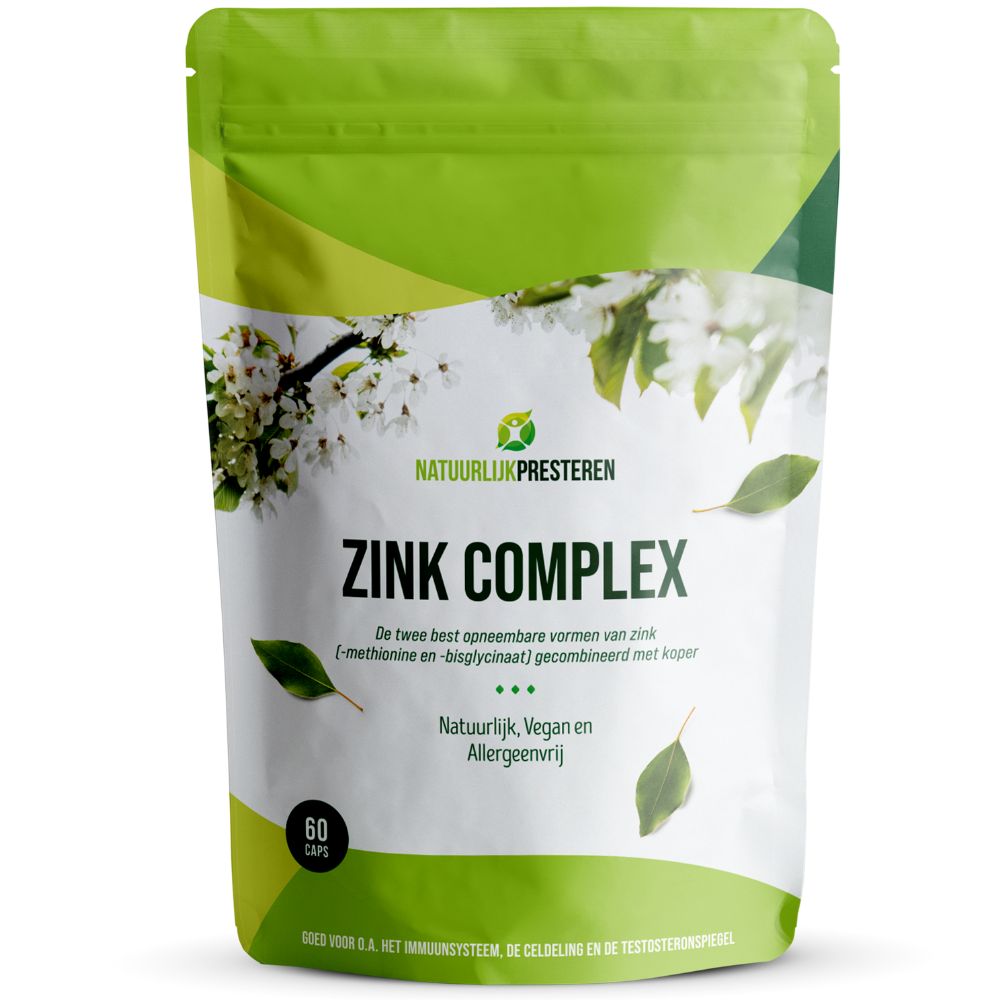
- Zinc – good for internal skin care
Buy skin supplements
Besides vitamins and minerals, many skin supplements also contain other powerful ingredients like collagen, fish oil (omega-3), and resveratrol. These substances help improve skin elasticity and keep it hydrated, contributing to a healthy appearance.
If you're considering buying skin supplements, look for products with these effective ingredients:
Collagen
Collagen is an important protein that makes up 80% of the skin's dry weight and plays a vital role in maintaining its elasticity and firmness. It's often called the glue that holds our bodies together. As we age, collagen production decreases, which can lead to loss of skin elasticity and hydration, and the development of wrinkles.
Collagen supplements are becoming increasingly popular because of their proven effect in supporting the skin from within. (1)
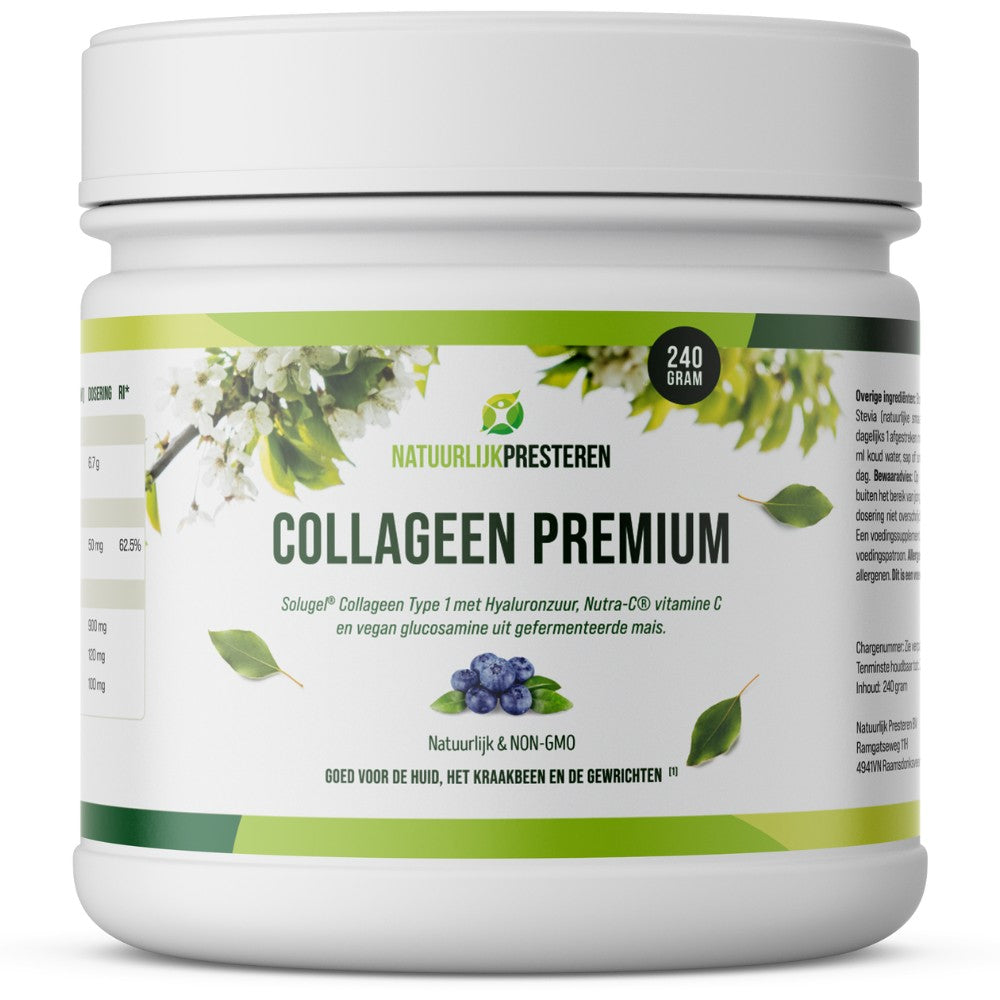
Our Collagen Premium supplement contains collagen from grass-fed cattle, combined with hyaluronic acid, glucosamine and vitamin C, for optimal skin care.
Omega-3
Red spots or dry patches on the skin are often caused by allergic reactions or irritation, but skin conditions like eczema and psoriasis can also play a role. Omega-3 supplements, such as our Ultra Omega-3 , can provide effective support for these skin problems. They help strengthen the skin barrier and protect the skin from UV damage. (2)(3)
Disclaimer: It is always advisable to consult a dermatologist for a proper diagnosis and treatment in case of persistent or severe complaints.
Resveratrol
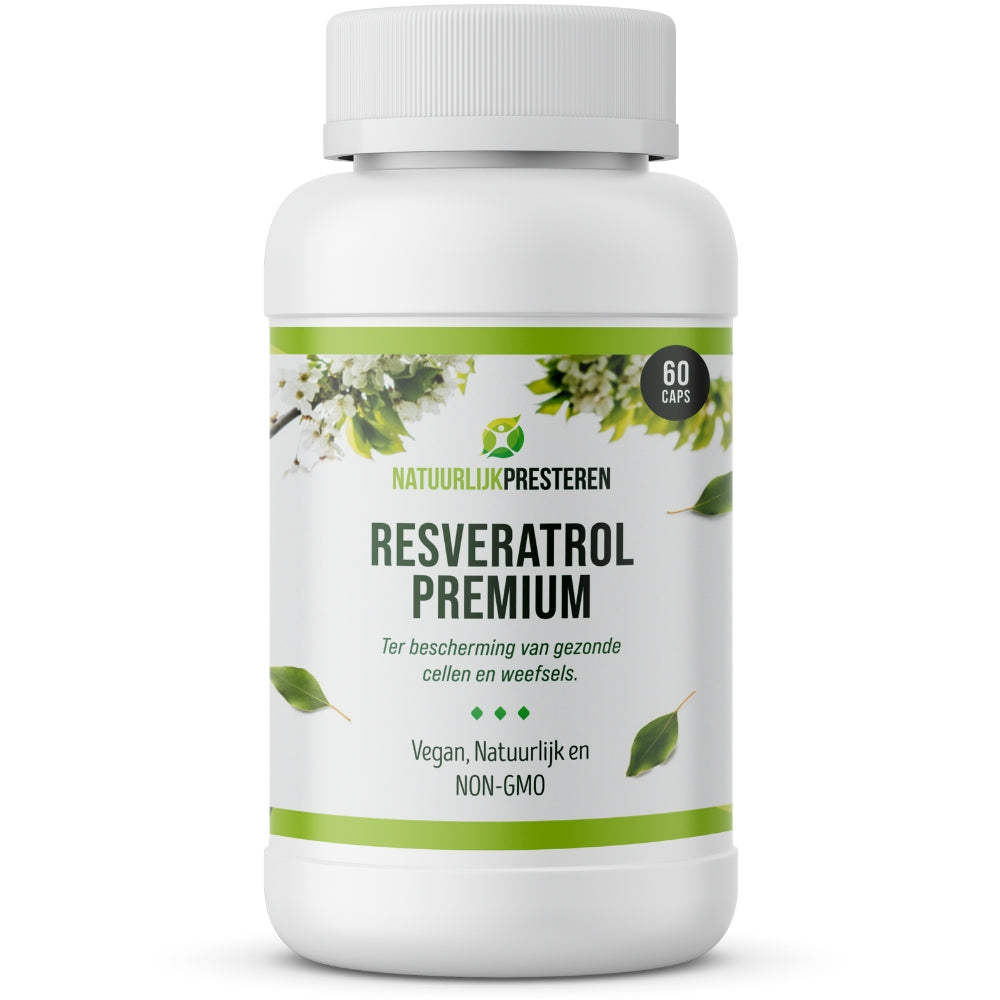
Resveratrol is a natural component found in certain plants, particularly the skins of grapes, berries, and peanuts. It is an antioxidant, meaning it protects cells, including skin cells, from free radical damage.
Due to this cell-protective effect, resveratrol can help in a healthy aging process and support optimal skin cell health.
My tips for healthy skin
My mother used to tell me every day how important it is to take good care of my skin. As I get older, I understand that more and more. Over time, I've discovered what, in addition to the above, works best for me to care for my skin naturally:
Here are some tips from my own experience:
- Face Yoga : Yes, I laughed at it at first, but now it's a regular part of my morning and evening routine. Besides the difference I see, it's also wonderfully relaxing.
- Use only natural products : Many skincare products contain chemical additives that can dry out your skin. Choosing natural alternatives keeps my skin soft and hydrated.
- Reduce stress : Stress has a direct impact on your skin. By reducing stress, I notice that my skin stays calmer and healthier.
With these simple steps I keep my skin radiant and healthy naturally!
Sources Used
- Pu, S., Huang, Y., Pu, C., Kang, Y., Hoang, K. D., Chen, K., & Chen, C. (2023). Effects of Oral Collagen for Skin Anti-Aging: A Systematic Review and Meta-Analysis. Nutrients , 15 (9), 2080. https://doi.org/10.3390/nu15092080
- Thomsen, B.J., Chow, E.Y., & Sapijaszko, M.J. (2020). The Potential Uses of Omega-3 Fatty Acids in Dermatology: A Review. Journal Of Cutaneous Medicine And Surgery , 24 (5), 481–494. https://doi.org/10.1177/1203475420929925
- Pilkington, S. M., Watson, R. E. B., Nicolaou, A., & Rhodes, L. E. (2011). Omega ‐ 3 polyunsaturated fatty acids: photoprotective macronutrients. Experimental Dermatology , 20 (7), 537–543. https://doi.org/10.1111/j.1600-0625.2011.01294.x
Gerelateerde blogartikelen
 biotine
Biotine voor je huid en haar: wat zegt de wetenschap?
Vraag mensen welke vitamine ze associëren met haar en huid, en de kans is groot dat ze biotine noemen. Je ziet het op de verpakking van beautyproducten, in supplementen en in artikelen over gezonde haren en huid. Maar klopt dat beeld eigenlijk wel? Want in de basis is biotine gewoon een B-vitamine die je lichaam dagelijks nodig heeft voor allerlei processen. Je krijgt het al binnen via je voeding, en een echt tekort komt bij gezonde mensen niet vaak voor. Toch kiezen veel mensen ervoor om extra biotine te gebruiken, soms in hoge doseringen. Maar wat kun je daar eigenlijk van verwachten? In dit artikel lees je wat biotine precies is, wat het in je lichaam doet en wat de wetenschap zegt over biotine voor je haar en huid. Ook ga ik in op de dagelijkse behoefte, het gebruik van supplementen en een belangrijk aandachtspunt dat vaak over het hoofd wordt gezien: de invloed van hoge doseringen biotine op bepaalde bloedonderzoeken. Biotine (vitamine B8) is een B-vitamine die bijdraagt aan de instandhouding van normaal haar en een normale huid. Een biotinetekort komt bij gezonde mensen relatief weinig voor. Bij een tekort kan extra biotine zinvol zijn. Krijg je al voldoende biotine via je voeding binnen? Dan is het op dit moment niet duidelijk of een supplement nog iets toevoegt. Hoge doseringen biotine kunnen de uitslag van bepaalde bloedtesten beïnvloeden. Meld het gebruik van een biotinesupplement daarom altijd vóór een bloedafname. Inhoudsopgave Wat is biotine eigenlijk? Waar is biotine goed voor? Wat zegt onderzoek over biotine? 1. Onderzoek naar biotine en haar 2. Onderzoek naar biotine en huid 3. Onderzoek naar biotine en nagels Wat kun je hier praktisch van meenemen? Voeding met biotine Hoeveel biotine heb je per dag nodig? Waarom bevatten supplementen vaak veel hogere doseringen? Biotine en bloedonderzoek: dit moet je weten Waarom kan biotine laboratoriumtesten beïnvloeden? Let hier op bij bloedonderzoek Bijwerkingen van biotine: wat kun je verwachten? Wanneer moet je extra voorzichtig zijn met biotine? Wanneer kan je biotinestatus te laag worden? Wanneer is het risico op een lage biotinestatus groter? Hoe herken je een mogelijk biotinetekort? Haar en huid: biotine is niet het hele verhaal Hoe kies je een goed biotinesupplement? Biotine combineren met andere supplementen Veelgestelde vragen over biotine Tot slot Wat is biotine eigenlijk? Biotine is een in water oplosbare B-vitamine. In Nederland staat het bekend als vitamine B8, terwijl het internationaal meestal vitamine B7 wordt genoemd. Het gaat om dezelfde vitamine, alleen de naamgeving verschilt per land. Je lichaam maakt zelf nauwelijks biotine aan. Daarom ben je voor een groot deel afhankelijk van voeding om voldoende biotine binnen te krijgen. De vorm die van nature voorkomt in voeding én die in supplementen wordt gebruikt, is D-biotine. Dit is de biologisch actieve vorm die door het lichaam kan worden benut. Goed om te weten: Kijk je naar het etiket van een supplement? Dan zie je vaak simpelweg "biotine" staan. Soms wordt specifiek vermeld dat het om D-biotine gaat. Dat is de natuurlijke vorm die ook in voedingsmiddelen voorkomt. Waar is biotine goed voor? Biotine (vitamine B8) speelt een rol bij verschillende processen in het lichaam. Het werkt als co-enzym bij de stofwisseling van koolhydraten, vetten en eiwitten. Biotine draagt bij aan: een normaal energiemetabolisme de instandhouding van normaal haar de instandhouding van een normale huid een normale werking van het zenuwstelsel een normale psychologische functie Wat zegt onderzoek over biotine? Kijk je naar supplementen voor je haar en huid? Dan is de kans groot dat je biotine op het etiket tegenkomt. Maar hoe sterk is het wetenschappelijke bewijs eigenlijk? Onderzoekers kijken al jaren naar de relatie tussen biotine en haar en huid. De resultaten lopen echter uiteen. Het maakt bijvoorbeeld uit welke doelgroep werd onderzocht en hoeveel biotine iemand al binnenkrijgt via voeding (de biotinestatus). Hieronder zet ik de belangrijkste bevindingen voor je op een rij. 1. Onderzoek naar biotine en haar Biotine staat bekend als de 'haarvitamine'. Dat is niet zonder reden: biotine houdt je haar sterk en draagt bij aan normale haargroei. Maar wat weten we over extra biotine uit supplementen? Veel onderzoeken zijn gedaan bij mensen met een biotinetekort of bij mensen met een aandoening die de biotineopname verstoort. Die resultaten hoeven niet te gelden voor mensen die al genoeg biotine binnenkrijgen via voeding. Op dit moment is er weinig overtuigend bewijs dat extra biotine een voordeel biedt voor haargroei of de kwaliteit van het haar. Verschillende reviewstudies noemen het beschikbare bewijs dan ook beperkt (1, 2, 3). Kort samengevat: biotine is goed voor je haren. Of extra biotine voordelen biedt bij een normale biotinestatus (wanneer je geen tekort hebt) is op basis van de huidige wetenschap nog onduidelijk. 2. Onderzoek naar biotine en huid Voor de huid geldt eigenlijk hetzelfde verhaal. Biotine helpt bij het gezond houden van de huid, dat staat vast. Maar ook hier richt het meeste onderzoek zich op mensen met een lage biotinestatus. Voor mensen die al voldoende biotine binnenkrijgen via voeding, zijn de gegevens beperkt. De meeste studies tonen geen zichtbaar voordeel voor de huid bij mensen zonder tekort (4, 5, 6). Kort samengevat: biotine ondersteunt de normale huid. Of extra biotine daarbovenop nog iets toevoegt, is op dit moment niet duidelijk. 3. Onderzoek naar biotine en nagels Bij nagels is het verhaal anders. Hier zijn geen goedgekeurde claims, en dat heeft een reden. Er is wel onderzoek gedaan. Vooral naar broze of splijtende nagels zijn enkele kleine studies uitgevoerd. In sommige daarvan werden veranderingen gezien in bijvoorbeeld de dikte of stevigheid van de nagel. Maar het gaat vaak om studies met weinig deelnemers, waardoor harde conclusies lastig te trekken zijn (7, 8). De EFSA heeft op basis van het beschikbare bewijs dan ook geen gezondheidsclaim voor biotine en nagels goedgekeurd. Wat kun je hier praktisch van meenemen? Biotine houdt je haar sterk en is belangrijk voor de huid. Maar het meeste onderzoek is gedaan bij mensen met een lage biotinestatus. Voor mensen die al genoeg biotine binnenkrijgen via voeding, is het op dit moment niet duidelijk of extra biotine nog iets toevoegt (9). Zie een supplement met biotine dan ook als aanvulling op je voeding, niet als garantie. Voeding met biotine Biotine komt voor in verschillende voedingsmiddelen. Voor de meeste mensen is voeding dan ook de belangrijkste bron van biotine. Biotine zit onder andere in: eieren (vooral de dooier) lever en ander orgaanvlees noten, zoals amandelen en walnoten zaden peulvruchten zalm en andere vissoorten volkorenproducten champignons De hoeveelheid biotine verschilt per voedingsmiddel. Ook de bereidingswijze kan invloed hebben op het uiteindelijke gehalte. Goed om te weten: rauw eiwit bevat avidine. Deze stof bindt zich aan biotine, waardoor je lichaam biotine minder goed kan opnemen. Dit is vooral een aandachtspunt als je langere tijd veel rauwe eieren eet. Kook of bak je je eieren? Dan verdwijnt dit effect grotendeels. Hoeveel biotine heb je per dag nodig? Biotine haal je vooral uit voeding. Daarnaast kunnen darmbacteriën ook biotine aanmaken. Waarschijnlijk levert dit een bijdrage aan de hoeveelheid biotine die je lichaam kan gebruiken, maar hoe groot die bijdrage precies is, is nog niet bekend. Voor volwassenen geldt een adequate inname van ongeveer 40 microgram (mcg) per dag (10, 11, 12). Met een gevarieerd voedingspatroon krijgen de meeste mensen deze hoeveelheid voldoende binnen. Ter vergelijking gelden de volgende richtwaarden: Volwassenen: 40 mcg per dag Tijdens de zwangerschap: 40 mcg per dag Tijdens borstvoeding: 45 mcg per dag Kinderen: 5 tot 25 mcg per dag, afhankelijk van de leeftijd Waarom bevatten supplementen vaak veel hogere doseringen? Wanneer je naar biotinesupplementen kijkt, valt op dat de doseringen vaak veel hoger liggen dan de dagelijkse behoefte. Zo bevatten supplementen regelmatig 1000, 2500 of soms wel 5000 mcg per capsule. Dat is dus tientallen tot honderden keren meer dan de hoeveelheid die dagelijks wordt aanbevolen. Op basis van de huidige wetenschap is niet duidelijk of zulke hoge doseringen extra voordelen bieden voor mensen die al voldoende biotine via voeding binnenkrijgen. Goed om te weten: voor biotine is geen officiële veilige bovengrens vastgesteld. Omdat het een wateroplosbare vitamine is, wordt een overschot meestal via de urine uitgescheiden. Toch betekent dit niet dat meer automatisch beter is. Later in dit artikel leg ik uit waarom hoge doseringen een aantal belangrijke aandachtspunten met zich mee kunnen brengen, waaronder de invloed op bepaalde bloedonderzoeken. Biotine en bloedonderzoek: dit moet je weten Gebruik je een biotinesupplement? Dan is het verstandig om dit altijd te melden aan je arts of laboratorium voordat er bloed wordt afgenomen. Vooral bij hooggedoseerde supplementen kan biotine namelijk invloed hebben op de uitslag van bepaalde bloedtesten. Veel mensen zijn zich daar niet van bewust. Waarom kan biotine laboratoriumtesten beïnvloeden? Sommige laboratoriumtesten gebruiken biotine om stoffen in het bloed te meten. Als er op het moment van bloedafname veel biotine in je bloed zit, kan dit de uitslag beïnvloeden. Daardoor kunnen bepaalde waarden hoger of lager uitvallen dan ze werkelijk zijn. In sommige gevallen kan dat leiden tot een verkeerde interpretatie van de uitslag. Dit kan voorkomen bij verschillende laboratoriumtesten, waaronder: schildklierwaarden (TSH, vrij T4 en vrij T3) troponine (een marker die wordt gebruikt bij een mogelijk hartinfarct) vitamine D vitamine B12 parathormoon (PTH) bepaalde geslachtshormonen Vooral bij onderzoek naar de schildklier kan dit belangrijk zijn. In sommige gevallen kunnen de uitslagen wijzen op een te snel werkende schildklier, terwijl dat niet daadwerkelijk zo is. Let hier op bij bloedonderzoek Ga je bloed laten prikken? Meld dan altijd dat je een biotinesupplement gebruikt, ook als het onderdeel is van een haar- en huidsupplement. Bij hogere doseringen kan een arts of laboratorium adviseren om tijdelijk te stoppen vóór de bloedafname. Hoe lang dit nodig is, hangt af van de dosering, het type test en je persoonlijke situatie. Volg daarom altijd het advies van je arts of laboratorium. Goed om te weten: biotine heeft geen bekende directe wisselwerking met schildkliermedicatie, maar kan bij hogere doseringen wel invloed hebben op bepaalde bloedtesten. Bijwerkingen van biotine: wat kun je verwachten? Biotine wordt over het algemeen goed verdragen. Omdat het een wateroplosbare vitamine is, scheidt je lichaam een overschot meestal weer uit via de urine. Bij gebruikelijke doseringen worden in onderzoeken weinig bijwerkingen gemeld. Ook bij hogere innames worden doorgaans weinig klachten gezien. Toch zijn er incidenteel meldingen van: misselijkheid lichte maag- of darmklachten huiduitslag hoofdpijn Wel is het zo dat het niet altijd duidelijk is of deze klachten daadwerkelijk door biotine worden veroorzaakt. Zoals ik eerder in dit artikel heb uitgelegd, is het belangrijkste aandachtspunt bij biotine niet zozeer het risico op bijwerkingen, maar de invloed die hoge doseringen kunnen hebben op bepaalde laboratoriumtesten. Goed om te weten: biotine wordt bij normaal gebruik door de meeste mensen goed verdragen. Gebruik je een hooggedoseerd supplement of krijg je binnenkort bloedonderzoek? Dan is het verstandig om hier extra aandacht aan te besteden. Wanneer moet je extra voorzichtig zijn met biotine? Wees extra voorzichtig met biotine in de volgende situaties: Tijdens zwangerschap of borstvoeding - in deze periode verandert de behoefte aan verschillende voedingsstoffen. Overleg daarom bij voorkeur met een arts, verloskundige of andere zorgverlener voordat je een hooggedoseerd supplement gebruikt. Bij medicijngebruik of een medische behandeling - gebruik je medicijnen of krijg je medische begeleiding? Overleg dan met je arts of behandelaar voordat je een supplement gaat gebruiken. Bij gepland bloedonderzoek - hoge doseringen biotine kunnen de uitslag van bepaalde bloedtesten beïnvloeden. Heb je binnenkort bloedonderzoek? Meld dan dat je een biotinesupplement gebruikt. Wanneer kan je biotinestatus te laag worden? Zoals ik eerder al uitlegde, komt een tekort aan biotine niet vaak voor bij een gevarieerd en gezond eetpatroon. Toch zijn er situaties waarin je biotinestatus lager kan zijn dan optimaal. Bijvoorbeeld wanneer: de opname van voedingsstoffen verstoord is je lichaam meer nodig heeft bepaalde medicijnen invloed hebben op de beschikbaarheid van biotine Wanneer is het risico op een lage biotinestatus groter? Bij sommige mensen is de kans op een tekort groter dan bij anderen (13), zoals bij: Darmproblemen - bepaalde darmziekten of aandoeningen die de opname van voedingsstoffen verstoren, kunnen ervoor zorgen dat je minder biotine opneemt. Langdurig bepaalde medicijnen gebruiken - van sommige medicijnen is bekend dat ze de biotinestatus kunnen beïnvloeden. Dit geldt bijvoorbeeld voor bepaalde anti-epileptica. Zwangerschap en borstvoeding - in deze periodes verandert de behoefte aan verschillende voedingsstoffen. Daarom is een gevarieerd en volwaardig voedingspatroon extra belangrijk. Langdurig gebruik van grote hoeveelheden rauw eiwit - rauw eiwit bevat avidine, een stof die zich aan biotine bindt. Daardoor kan je lichaam biotine minder goed opnemen. Bij verhitting verdwijnt dit effect vrijwel volledig. Mensen met een zeldzame erfelijke aandoening - bij biotinidase-deficiëntie kan het lichaam biotine minder goed hergebruiken. Hierdoor neemt de kans op een lage biotinestatus toe. In Nederland wordt deze zeldzame aandoening standaard opgespoord via de hielprik. Hoe herken je een mogelijk biotinetekort? Bij een tekort aan biotine kunnen verschillende klachten optreden (13). Hoewel deze klachten ook andere oorzaken kunnen hebben, worden ze regelmatig genoemd bij een biotinetekort. Denk bijvoorbeeld aan: Haaruitval verspreid over de hoofdhuid Broze of splijtende nagels Een droge, rode of schilferige huid, vooral rond de ogen, neus en mond Een gevoelige of gladde tong Vermoeidheid Spierzwakte Tintelingen in handen of voeten Heb je één of meerdere van deze klachten of behoor je tot een risicogroep? Dan betekent dat dus niet automatisch dat je een lage biotinestatus hebt. De klachten kunnen ook andere oorzaken hebben. Bespreek je situatie daarom met je huisarts. Die kan beoordelen of aanvullend onderzoek zinvol is en of er mogelijk andere oorzaken meespelen. Haar en huid: biotine is niet het hele verhaal Biotine is niet de enige voedingsstof die een rol speelt bij haar en huid. Het totaalplaatje telt en dat begint bij je voeding. Dit zijn de voedingsstoffen waar je ook aan kunt denken: Eiwitten - je haar bestaat voor een groot deel uit keratine, een eiwit. Zorg daarom voor voldoende eiwitrijke voeding, zoals vis, eieren, zuivel, peulvruchten, noten en vlees. IJzer - een lage ijzerstatus komt regelmatig voor. In onderzoek wordt een lage ijzerstatus soms in verband gebracht met haaruitval. Heb je hier vragen over? Laat dan je ijzerstatus of ferritinewaarde controleren via je huisarts. Zink - zink draagt bij aan de instandhouding van normaal haar, een normale huid en normale nagels. Je vindt zink onder andere in vlees, schaal- en schelpdieren, zuivel, noten en zaden. Vitamine D - je lichaam maakt vitamine D aan onder invloed van zonlicht. Daarnaast krijg je vitamine D binnen via voeding, zoals vette vis en eieren. Een goede vitamine D-status is belangrijk voor verschillende processen in het lichaam. Vitamine C - vitamine c draagt bij aan de normale collageenvorming voor de normale functie van de huid. Goede bronnen zijn paprika, citrusvruchten, broccoli en aardbeien. Hoe kies je een goed biotinesupplement? Een biotinesupplement kan een praktische aanvulling zijn als je extra biotine wilt gebruiken naast je voeding. Met deze checklist vergelijk je producten makkelijker en zie je minder snel belangrijke details over het hoofd. Kies een vorm die je prettig vindt om te gebruiken - biotine is verkrijgbaar als capsules, tabletten, gummies, kauwtabletten en druppels. Welke vorm het beste is, verschilt per persoon. Kies vooral een variant die je gemakkelijk dagelijks kunt gebruiken. Controleer de hoeveelheid biotine per dosering - biotine wordt meestal vermeld in microgram (mcg). Bij hogere doseringen gebruiken fabrikanten soms milligram (mg). Vergelijk producten daarom altijd in dezelfde eenheid. Handig om te weten: 1 mg staat gelijk aan 1.000 mcg. Bekijk de volledige ingrediëntenlijst - kijk niet alleen naar de hoeveelheid biotine. Sommige supplementen bevatten ook andere vitamines, mineralen of plantenextracten. Controleer of deze ingrediënten aansluiten bij jouw voorkeuren. Kies voor een transparant etiket - een goed supplement vermeldt duidelijk welke ingrediënten het bevat en hoeveel je daarvan per dosering binnenkrijgt. Dat maakt vergelijken een stuk eenvoudiger. Let op toegevoegde stoffen - controleer of het product veel toegevoegde suikers, kleurstoffen of andere hulpstoffen bevat. Dit is vooral relevant bij gummies en kauwtabletten. Gebruik je al een multivitamine of B-complex? - biotine zit vaak ook in multivitamines en vitamine B-complexen. Controleer daarom hoeveel biotine je al gebruikt voordat je een extra supplement toevoegt. Met deze checklist kun je biotinesupplementen beter vergelijken en een keuze maken die past bij jouw wensen en situatie. Biotine combineren met andere supplementen In de meeste supplementen voor haar en huid zie je biotine gecombineerd met andere voedingsstoffen. Maar waarom eigenlijk? Dit zijn de meest voorkomende combinaties: Biotine met zink - biotine draagt bij aan de instandhouding van normaal haar en een normale huid. Zink draagt bij aan de instandhouding van normaal haar, een normale huid én normale nagels. Biotine met selenium - selenium draagt bij aan de instandhouding van normaal haar en aan de normale schildklierfunctie. Biotine met collageen - collageen is een lichaamseigen eiwit dat van nature voorkomt in onder andere de huid. Je ziet het daarom vaak terug in haar- en huidsupplementen. Biotine met keratine - keratine is het eiwit waaruit je haar grotendeels is opgebouwd. Daarom wordt het regelmatig toegevoegd aan supplementen voor haarverzorging. Biotine met ijzer - ijzer wordt soms toegevoegd aan haar- en huidsupplementen. Vermoed je een tekort? Bespreek dit eerst met je huisarts, want te veel ijzer is ook niet goed. Biotine met vitamine B-complex - biotine is zelf ook een B-vitamine. Gebruik je al een B-complex? Dan zit er waarschijnlijk al biotine in. Check de samenstelling voor je een extra biotinesupplement toevoegt, want meer is niet altijd beter. Veelgestelde vragen over biotine 1. Wat is biotine precies? Biotine is een in water oplosbare B-vitamine. In Nederland wordt het meestal vitamine B8 genoemd, terwijl internationaal vaak de naam vitamine B7 wordt gebruikt. Het gaat om dezelfde vitamine. 2. Is biotine hetzelfde als vitamine B8 of B7? Ja. Vitamine B8 en vitamine B7 zijn twee namen voor dezelfde vitamine: biotine. 3. Waar is biotine goed voor? Biotine speelt een rol bij verschillende processen in je lichaam. Het draagt bij aan een normaal energiemetabolisme, houdt je haar sterk, is belangrijk voor je huid, en ondersteunt een normale werking van het zenuwstelsel en een normale psychologische functie. 4. Helpt biotine tegen haaruitval? Biotine houdt je haar sterk en draagt bij aan normale haargroei. Veel onderzoek naar biotine en haar is uitgevoerd bij mensen met een lage biotinestatus. Krijg je al voldoende biotine via voeding binnen? Dan is het op dit moment niet duidelijk of extra biotine iets toevoegt. 5. Hoe snel merk je iets van biotine? Dat verschilt per persoon. Factoren zoals voeding, leefstijl, de biotinestatus en de reden van gebruik kunnen hierbij een rol spelen. 6. Hoeveel biotine heb je per dag nodig? Voor volwassenen geldt een adequate inname van ongeveer 40 microgram (mcg) per dag. De meeste mensen krijgen deze hoeveelheid via een gevarieerd voedingspatroon voldoende binnen. 7. Is meer biotine altijd beter? Niet per se. Op dit moment is niet duidelijk of hoge doseringen extra voordelen bieden voor mensen die al voldoende biotine binnenkrijgen. 8. Kan biotine de uitslag van bloedonderzoek beïnvloeden? Ja. Hoge doseringen biotine kunnen invloed hebben op bepaalde laboratoriumtesten, waaronder sommige schildklierwaarden. Meld het gebruik van een biotinesupplement daarom altijd vóór een bloedafname. 9. Wat zijn mogelijke bijwerkingen van biotine? Biotine wordt over het algemeen goed verdragen. Het belangrijkste aandachtspunt is de mogelijke invloed van hoge doseringen op bepaalde bloedtesten. 10. Mag je biotine gebruiken tijdens zwangerschap of borstvoeding? Tijdens zwangerschap en borstvoeding verandert de behoefte aan verschillende voedingsstoffen. Overleg daarom bij voorkeur met een arts, verloskundige of andere zorgverlener voordat je een hooggedoseerd supplement gebruikt. 11. In welke voeding zit biotine? Biotine komt onder andere voor in eieren, lever, noten, zaden, peulvruchten, vis, volkorenproducten en champignons. 12. Hoe herken je een mogelijk lage biotinestatus? Een lage biotinestatus kan samengaan met verschillende klachten, zoals haaruitval, broze nagels of huidklachten. Deze klachten kunnen echter ook andere oorzaken hebben. Bespreek aanhoudende klachten daarom altijd met een arts. 13. Werkt biotine shampoo ook? Biotine wordt soms toegevoegd aan shampoos en haarverzorgingsproducten. Op dit moment is niet duidelijk of biotine via deze route invloed heeft op het haar. Eventuele effecten lijken vooral cosmetisch van aard. 14. Helpt biotine bij baardgroei? Er is op dit moment onvoldoende bewijs om te concluderen dat extra biotine invloed heeft op de baardgroei bij mensen die al voldoende biotine binnenkrijgen. Tot slot Biotine is een vitamine die je lichaam elke dag nodig heeft. Het helpt bij het behoud van normaal haar en een normale huid. Daarnaast speelt het een rol in je energiestofwisseling en ondersteunt het een normale werking van het zenuwstelsel. Een lage biotinestatus komt bij gezonde mensen niet vaak voor. Daarom is het niet duidelijk of extra biotine voordelen biedt voor je haar of huid als je al voldoende biotine via voeding binnenkrijgt. Het is ook goed om te beseffen dat haar en huid van meer afhangen dan alleen biotine. Je voeding, leefstijl en algemene gezondheid spelen daarbij een belangrijke rol. Een gevarieerd voedingspatroon blijft daarom de basis. Gebruik je een biotinesupplement? Meld dit dan altijd voordat je bloed laat prikken. Hoge doseringen kunnen namelijk invloed hebben op bepaalde laboratoriumtesten. Wil je meer weten? Bekijk dan onze collectie haar - en huidsupplementen of lees verder over haaruitval, een zinktekort of een vitamine D-tekort. Ebrina van der Bijl Ebrina is voedingsdeskundige met een diepe toewijding aan gezonde voeding en een duurzame levensstijl, gevestigd in het prachtige Portugal. Haar passie voor natuurlijke en biologische producten vormt de kern van haar werk. Met een achtergrond in Voeding & Diëtetiek en ervaring in productontwikkeling en tekstschrijven, vertaalt ze complexe wetenschappelijke informatie naar praktische adviezen voor een gebalanceerde levensstijl. Lees meer Gebruikte bronnen Patel, D. P., Swink, S. M., & Castelo-Soccio, L. (2017). A Review of the Use of Biotin for Hair Loss. Skin Appendage Disorders, 3(3), 166–169. https://doi.org/10.1159/000462981 Moltó-Balado, P., Simeó-Monzo, A., & Del Barrio-Gonzalez, A. (2026). Effectiveness of Biotin Supplementation for Hair Growth in Patients with Alopecia: A Systematic Review. Dermato, 6(2), 17. https://doi.org/10.3390/dermato6020017 Yelich, A., Jenkins, H., Holt, S., & Miller, R. (2024). Biotin for Hair Loss: Teasing Out the Evidence. Journal of Clinical and Aesthetic Dermatology, 17(8), 56–61. PMID: 39148962; PMCID: PMC11324195. Güder, H., & Eker, P. (2023). A Retrospective Evaluation of the Laboratory Findings of Dermatology Patients Whose Biotin Levels Were Checked. Cureus, 15(7), e41482. https://doi.org/10.7759/cureus.41482 Jiang, N., Quan, T., Li, R., Chen, Y., & Gao, T. (2025). Role of Nutritional Elements in Skin Homeostasis: A Review. Biomolecules, 15(6), 808. https://doi.org/10.3390/biom15060808 Lipner, S. (2020). Update on Biotin Therapy in Dermatology: Time for a Change. Journal of Drugs in Dermatology, 19(12), 1264–1265. https://doi.org/10.36849/jdd.2020.4946 Lipner, S. R., & Scher, R. K. (2017). Biotin for the treatment of nail disease: what is the evidence? Journal of Dermatological Treatment, 29(4), 411–414. https://doi.org/10.1080/09546634.2017.1395799 Curtis, K. L., & Lipner, S. R. (2023). Vitamins for the Management of Nail Disease: A Literature Review. Skin Appendage Disorders, 10(2), 104–122. https://doi.org/10.1159/000534972 Shing, V., Sierra, A. A., & Shah, A. A. (2025). Benefits and risks of hair, skin, and nail supplements in older adults. International Journal of Women's Dermatology, 11(4), e236. https://doi.org/10.1097/jw9.0000000000000236 Gezondheidsraad. (2018). Voedingsnormen voor vitamines en mineralen voor volwassenen. Gezondheidsraad. https://www.gezondheidsraad.nl/documenten/adviezen/2018/09/18/voedingsnormen-voor-vitamines-en-mineralen-voor-volwassenen Voedingscentrum. (z.d.). Biotine (vitamine B8). Voedingscentrum. Geraadpleegd op 2 juni 2026, van https://www.voedingscentrum.nl/encyclopedie/biotine-vitamine-b8.aspx European Food Safety Authority (EFSA) Panel on Dietetic Products, Nutrition and Allergies (NDA). (2014). Scientific opinion on dietary reference values for biotin. EFSA Journal, 12(2), 3580. https://doi.org/10.2903/j.efsa.2014.3580 Cervantes, A., & Daley, S. F. (2025, 14 september). Biotin deficiency. In StatPearls. NCBI Bookshelf. https://www.ncbi.nlm.nih.gov/books/NBK547751/
Lees meer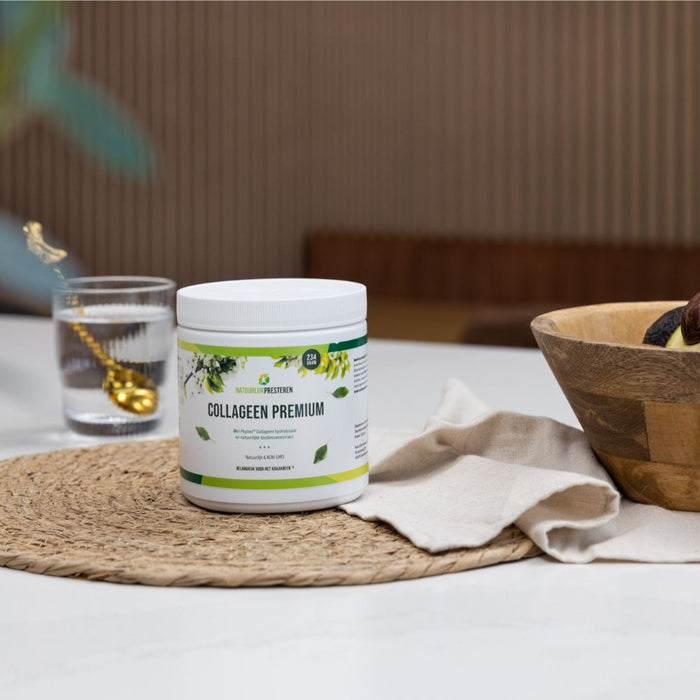
The best collagen powder? Check out these 3 supplements.
Collagen is a protein that occurs naturally in your body and provides strength and elasticity to your skin, joints, bones and other tissues. As we age, collagen production decreases, leading to wrinkles, less elastic skin and painful joints. A good collagen supplement can help you replenish your body's own collagen. But what should you look out for? In this article I will explain everything to you and give you my top 3 best collagen powders of the moment. Choose a hydrolyzed collagen supplement with vitamin C for better absorption and peptides such as Peptan® or Solugel® for optimal quality. Marine and bovine collagen are the best options, with bovine collagen (grass-fed) being versatile and fish collagen being absorbed faster. Avoid artificial additives and opt for natural ingredients, such as hyaluronic acid and biotin, which enhance the effect of collagen. Table of contents What to look for when buying collagen powder? The 5 best collagen powder supplements More about the best collagen powder 1. Hydrolyzed collagen or not? 2. The quality of the collagen peptides 3. Ingredients that support the function of collagen 4. The solubility of the collagen powder 5. Unnecessary additives in collagen supplements 6. The taste (and flavorings) in collagen powder 7. What is collagen powder good for? 8. What types of collagen are there? 9. What is collagen powder made of? 10. Is there plant-based or vegetarian collagen powder? 11. What is the best collagen powder? What should you pay attention to when buying collagen powder? If you're looking for the best collagen powder supplement, I advise you to pay attention to the following criteria: The best collagen supplement contains: Hydrolyzed collagen – this is the most absorbable form and is also the most effective. A patented form of collagen – these are standardized so the quality is consistent: peptan® and solugel® Vitamin C as a supplement - this is good for the body's own production of collagen. Sustainable Collagen - Collagen from grass-fed cattle or cold-water fish Natural flavors – many brands use cheap synthetic fragrances, colors, and flavors. The 3 best collagen powder supplements #1. Collagen Premium - Natural Performance Naturally Performing Collagen Premium offers hydrolyzed collagen from patented Peptan®. With added vitamin C, hyaluronic acid, allergen-free glucosamine from fermented corn and natural berry flavour. Collagen Premium stands out for its sustainable and high-quality collagen source. Its complete and well-thought-out composition makes it a favorite among collagen supplements. Our collagen has also been rated as one of the best collagen products in the Netherlands by leefpuurnatuur.nl #2. Beauty Collagen - Vitals Protein Vitals Protein Beauty Collagen is also hydrolyzed, but the peptides are not from a patented brand. The product contains biotin in addition to hyaluronic acid. The benefits: Hydrolyzed Collagen Contains Hyaluronic Acid Contains Biotin With natural aromas Disadvantages: No vitamin C No Glucosamine Not sustainably produced Peptides are not patented This product is available at Bol.com, among others. Beauty Collagen earns the second spot in my top 3 thanks to its powerful combination of collagen, hyaluronic acid, and biotin. These ingredients work together to support healthy skin and hair. #3. Marine Collagen Blend - Mattisson Mattisson's Marine Collagen Blend is perfect for those who want to avoid beef and beef products. This collagen powder, derived from fish skin and scales, offers a unique amino acid composition and is also patented. The benefits: Hydrolyzed Collagen from patented Peptan® Marine collagen is often perceived as easier to digest than bovine collagen Contains Vitamin C Contains Hyaluronic Acid Disadvantages The smell is perceived as unpleasant by some users This product is available at Bol.com, among others. Mattisson's Marine Collagen Blend rightfully earns a top spot because of its high-quality fish collagen source. Thanks to its unique amino acid composition, this collagen is ideal for those who do not want or cannot eat beef (beef products). 1. Hydrolyzed collagen or normal collagen? Hydrolyzing collagen causes the collagen protein to be cut into smaller pieces by enzymes. The smaller pieces of collagen dissolve more easily in water and are better absorbed by your body. When collagen is fully hydrolyzed, you get so-called collagen peptides, also called the building blocks of collagen. Raw collagen is not hydrolyzed and therefore does not dissolve well in water and is also less well absorbed by your body, because it must first be broken down. So if you want to start using a collagen supplement, I always recommend using a product with hydrolyzed collagen (collagen peptides). 2. The quality of the collagen peptides The quality of collagen peptides (the cut-up pieces of collagen) determines how well your body can use the collagen. How to recognize a high-quality collagen supplement: Source - Consider the type of collagen you're using. Ideally, you want collagen from legitimate manufacturers like Peptan® or Solugel®. Sustainably grown – choose a brand that is environmentally friendly: Peptan® and Solugel® are also good examples. Contains collagen peptides - Smaller peptides are better absorbed by your body. The smaller, the more effective. Hydrolysis Process - Good products also specify the method of hydrolysis (e.g., enzymatic hydrolysis) to indicate that the process is well controlled. Amino Acids - A quality supplement contains the following 3 amino acids: Glycine (20-30%), Proline (10-20%) and Lysine (2-4%). 3. Ingredients that support collagen function The best collagen powders also contain ingredients that support collagen function, so you can get more out of your supplement. The most effective and well-known is vitamin C: Vitamin C – supports collagen formation. It helps repair and rejuvenate the skin by fighting damage and repairing damaged cells. Ideally, a collagen supplement should contain at least 50 mg of vitamin C, so you can supplement the recommended 75 mg daily with a healthy diet. (2) (3) (4) In addition, there are also some other additions that can be valuable in a good collagen powder: Hyaluronic acid – helps the skin retain moisture, which can contribute to hydration and elasticity, and can therefore support the function of collagen. Glucosamine - is an important building block of cartilage. Zinc - plays a role in the production and maintenance of collagen. Biotin - Supports healthy skin, hair and nails and may contribute to proper collagen absorption. 4. The solubility of the collagen powder Collagen powder that has been hydrolyzed (also known as collagen hydrolysate) is more soluble in water than raw collagen, even in cold liquids. This is due to the hydrolysis process, which breaks down the long collagen chains into small pieces that dissolve more easily. And that is very practical, because lumps in your drink are of course not tasty. Good to know: Some collagen powders contain lecithin (from soy or sunflower) to prevent clumping, but this is usually unnecessary, as hydrolyzed collagen dissolves well in cold water. This additive often comes from genetically modified soy, especially in non-organic products. 5. Unnecessary additives in collagen supplements If you want to take good care of your body, go for a collagen supplement that is free from unnecessary additives, such as: Added sugars , fructose, glucose, and artificial sweeteners such as sucralose or aspartame Artificial flavors Fillers and binders (maltodextrin, silicone dioxide, magnesium stearate) 6. The taste (and flavorings) in collagen powder Choose collagen powder with a natural flavoring to enhance the taste. Pure collagen powder often has an unpleasant taste, which can range from fishy or meaty to "chemical" or "grassy," especially with lower quality or poorly mixed powder. If the collagen powder has glucosamine from shellfish added, that can also leave an unpleasant aftertaste. Look for collagen powder with glucosamine from fermented corn, which usually has a more neutral flavor! 7. What is collagen powder good for? Much research is being done into the effects of collagen on health and more and more is becoming clear. There are currently indications that collagen can contribute to: Maintaining the normal structure, elasticity and appearance of the skin.* (5) (6) Supporting the formation of cartilage in the joints.* (7) Is good for the blood vessels, because collagen plays a role in the strength of the blood vessel walls. 8. What types of collagen are there? Collagen comes in different types, each with its own functions and applications. But the most important is Type I. Five types of collagen are found in our bodies: Type I collagen - In our body, this type makes up 90% of all collagen in our body, especially in the skin, bones, tendons and connective tissues. Type II collagen - Found primarily in elastic cartilage and plays a role in joint health. This type is often used to support cartilage. Type III collagen - Found in the skin, blood vessels, and organs. It is often present in tissues that require high levels of stretch and elasticity, such as the skin. Type IV collagen - It is a key component of the basement membrane, a thin layer that surrounds and supports the cells of various tissues. This type is best visualized as a network structure. Type V collagen - This type of collagen is found in the placenta, the strata of the skin, hair, and the outer layers of the cornea (eye). It supports the structure and function of these tissues. 9. What is collagen powder made of? Because collagen occurs naturally in the skin, bones, tendons, and cartilage of animals, collagen powder is always made from animal sources such as cattle, pigs, and fish. Bovine collagen Made from cattle. Always choose grass-fed collagen, as it's less exposed to pesticides and more animal-friendly. Type - mainly type 1 with sometimes type 3 included. Benefits – perfectly absorbable for humans and high quality amino acids. Marine collagen Collagen powder derived from the skin or scales of fish, such as cod or halibut. Type - Predominantly type I, but some type II may be present. Benefits - Often praised for its high bioavailability, as it is absorbed by the body faster than bovine or porcine collagen. Pig collagen Made from pig bones and/or skin. Type - Usually type I and type III. Benefits - Supports skin, joints, and tendons. Often used in powders and supplements for general health. Chicken collagen This type of collagen is primarily derived from chicken cartilage and is often used for joint support. Type - Predominantly Type II. Benefits - Helps support joint health. Eggshell collagen This collagen comes from the eggshell. Type - Mixture of type I, II, and V collagen, as well as other building blocks such as hyaluronic acid. Benefits - Supports joint health and may help with joint pain and joint flexibility. 10. Is there plant-based or vegetarian collagen powder? No, plant-based collagen does not exist, because collagen is a protein that only occurs naturally in animals. Plants do not contain collagen, but there are herbal supplements that contain substances that can support collagen production in the body. Vitamin C – good for collagen production Proline - supports collagen production Glycine - supports collagen production 11. What is the best collagen powder? The best type of collagen powder for you depends on your goal: Skin and general support - Choose hydrolyzed collagen, usually type I. This supports the health of your skin, hair, and nails. Joints and cartilage - Choose type II collagen. This type is ideal for supporting supple joints and cartilage. The best sources of collagen are: Grass-fed bovine collagen (types I and III) - This is the best choice if you want to benefit from the advantages of different collagen types. Grass-fed bovine collagen also contains these essential amino acids and is therefore a high-quality source of collagen. Fish collagen (type I, sometimes also II) - Works just as well as bovine collagen. This is because it is rich in the three essential amino acids essential for collagen formation. Fish collagen is also quickly absorbed, ensuring its effectiveness. Additionally, fish collagen often has a higher bioavailability, meaning it is absorbed by the body faster and more efficiently. (6) Ebrina van der Bijl Ebrina is a nutritionist with a deep commitment to healthy eating and a sustainable lifestyle, based in beautiful Portugal. Her passion for natural and organic products is at the heart of her work. With a background in Nutrition & Dietetics and experience in product development and writing, she translates complex scientific information into practical advice for a balanced lifestyle. Read more Sources Used Khatri, M., Naughton, R. J., Clifford, T., Harper, L. D., & Corr, L. (2021). The effects of collagen peptide supplementation on body composition, collagen synthesis, and recovery from joint injury and exercise: a systematic review. Amino Acids , 53 (10), 1493–1506. https://doi.org/10.1007/s00726-021-03072-x Rocha, MS, De Aquino, LL, Barbosa, LL, De Souza, IL, De Carvalho, EM, Brítez, LEO, De Oliveira Gonçalves, G., Lopes, VB, & Silva, JNF (2024). Clinical studies and meta-analysis on the effects of collagen, vitamin, and nutrient supplementation for the rejuvenation of collagenic fibers: a systematic review. International Journal Of Nutrology , 17 (1). https://doi.org/10.54448/ijn24102 DePhillipo, N. N., Aman, Z. S., Kennedy, M. I., Begley, J., Moatshe, G., & LaPrade, R. F. (2018). Efficacy of Vitamin C Supplementation on Collagen Synthesis and Oxidative Stress After Musculoskeletal Injuries: A Systematic Review. Orthopedic Journal Of Sports Medicine , 6 (10), 232596711880454. https://doi.org/10.1177/2325967118804544 Hujoel, P. P., & La Hujoel, M. (2021). Vitamin C and scar strength: analysis of a historical trial and implications for collagen-related pathologies. American Journal Of Clinical Nutrition , 115 (1), 8–17. https://doi.org/10.1093/ajcn/nqab262 De Miranda, R.B., Weimer, P., & Rossi, R.C. (2021b). Effects of hydrolyzed collagen supplementation on skin aging: a systematic review and meta‐analysis. International Journal Of Dermatology , 60 (12), 1449–1461. https://doi.org/10.1111/ijd.15518 Pu, S., Huang, Y., Pu, C., Kang, Y., Hoang, K. D., Chen, K., & Chen, C. (2023). Effects of Oral Collagen for Skin Anti-Aging: A Systematic Review and Meta-Analysis. Nutrients , 15 (9), 2080. https://doi.org/10.3390/nu15092080 García-Coronado, J.M., Martínez-Olvera, L., Elizondo-Omaña, R.E., Acosta-Olivo, C.A., Vilchez-Cavazos, F., Simental-Mendía, L.E., & Simental-Mendía, M. (2018). Effect of collagen supplementation on osteoarthritis symptoms: a meta-analysis of randomized placebo-controlled trials. International Orthopedics , 43 (3), 531–538. https://doi.org/10.1007/s00264-018-4211-5
Lees meer
The best zinc tablets? Here are our top 3
Do you want to know which zinc tablets are the most effective? Find out what to look for when choosing the best zinc supplements for your health. Choose a zinc supplement with organically bound zinc, such as zinc bisglycinate or zinc methionine, for better absorption and less chance of stomach upset. A safe dosage is between 9-25 mg per day, and prolonged use above 50 mg can lead to a copper deficiency. Avoid unnecessary additives and choose a clean-label supplement, ideally with copper to maintain absorption balance in the body. Table of contents How to recognize the best zinc tablets? The 5 best zinc tablets of the moment More about the best zinc tablets 1. Which form of zinc is in zinc supplements? Organic forms (easily absorbed) Inorganic forms (less easily absorbed) 2. Why are copper in zinc tablets? 3. The best zinc dosage 4. No unnecessary additives 5. What are zinc tablets good for? 6. How do you know if you have a zinc deficiency? 7. Zinc tablet side effects How do you recognize the best zinc tablets? To find the best zinc tablets, look for the following features: Contains organically bound zinc – such as zinc bisglycinate and zinc methionine Copper has been added – to prevent your copper reserves from running out (which can happen when you take large amounts of zinc for a long period of time) Contains a safe and effective dosage – maximum 25 mg per dose to prevent copper deficiency Is free from unnecessary additives – recognizable by, for example, the Clean Label Is easy to swallow – capsules are easier to swallow Top 3 best zinc tablets of the moment #1. Zinc Complex - Natural Performance Natural Performance's Zinc Complex contains two easily absorbed forms of zinc (bisglycinate and methionine). Copper has also been added, also in the form of bisglycinate. My number 1 in this top 3 is the Zinc Complex from Natuurlijk Presteren because of its carefully selected composition: The 2 most absorbable types of zinc plus added copper. In addition, the tablets are completely natural and clean label (free from unnecessary additives). #2. 536 Zinc Bisglycinate - AOV AOV offers zinc supplements in the form of zinc bisglycinate and a vegetable capsule, but without added copper. The benefits: Contains Zinc bisglycinate Safe dosage: 15 mg per tablet Vegetable capsule Disadvantage: No Buyer This product is available at Bol.com, among others. Although the copper is missing, AOV's zinc tablets earn second place due to the conscious choice of the capsule and the excipients and fillers. #3. Zinc 15 mg - Vitals Vitals zinc tablets stand out because of TRAACS® ( The Real Amino Acid Chelate System), a specific patented method of binding zinc to amino acids. This may help your body absorb zinc. The benefits: Contains Zinc bisglycinate Safe dosage: 15 mg per tablet Possibly better absorption through the TRAACS® method Disadvantages: No Buyer Not produced clean label This product is available at Bol.com, among others. 1. What form of zinc is in zinc supplements? The best choice is zinc biglycinate , an organically bound form of zinc. It is better absorbed by the body than inorganic forms, such as zinc oxide, and is therefore more effective.(1) These are all forms of zinc: Organic forms (easily absorbed) Zinc bisglycinate – Highly absorbable, bound to the amino acid glycine. Easily digestible and gentle on the stomach. Zinc methionine – Also excellently absorbable, bound to the amino acid methionine. Zinc picolinate – Easily absorbable, bound to picolinic acid. Zinc citrate – Good absorption, bound to citric acid. Inorganic forms (less easily absorbed) Zinc gluconate – Fairly absorbable, often used in supplements. Zinc oxide – Lowest absorption, poorly soluble and may cause stomach upset. Zinc sulfate – Cheap and reasonably absorbable, but can cause stomach upset. 2. Why is there copper in zinc tablets? Your body absorbs zinc and copper in the same way. This means that if you consume a lot of zinc, it can affect your copper absorption. If you use high doses of more than 50 mg of zinc for a longer period of time , your copper balance can be disrupted, possibly resulting in a deficiency.(2)(3) To prevent this, manufacturers often add a small amount of copper to zinc tablets. This keeps your copper levels up, even if you use a lot of zinc. Tip : Preferably take zinc and copper at different times to avoid competition during absorption. 3. The best dosage of zinc The ideal amount of zinc in a supplement is between 9 and 25 mg per day . For adults, the daily requirement for zinc is: Women: 7 mg Men: 9 mg According to the European Food Safety Authority (EFSA), 25 mg per day is the maximum safe amount for long-term use. Why you shouldn't simply exceed your dosage Zinc supplements are more easily absorbed by your body than zinc from food.(4) This means you can easily get too much zinc. Please note: If you temporarily need more zinc, you can take a higher dose, as long as you do not do this for a longer period and always in consultation with a doctor or expert. 4. Zinc supplement without unnecessary additives Choose zinc tablets without unnecessary additives, such as artificial flavors and fillers. This is less taxing on your body. The Clean label on the packaging is a good sign. You can then assume that this product doesn't contain any artificial ingredients. Instead, natural alternatives are chosen, such as: Natural anti-caking agents , such as rice fibre extract and MCT powder from coconut. Natural capsule , using HPM cellulose, a plant-based material. It is soluble, stable, and free of animal ingredients, making it a good alternative to gelatin capsules. 5. What are zinc tablets good for? Zinc is a versatile mineral that is essential for your body. It contributes to: The health of skin, hair, nails, bones and vision The construction and renewal of tissue A healthy immune system Normal testosterone levels and sperm production The metabolism of macronutrients and vitamin A Memory, concentration and stress resistance The protection of cells against oxidative damage (6) In short, zinc is crucial for growth, repair and a healthy functioning body. 6. How do you know if you have a zinc deficiency? When your body doesn't have enough zinc, it's less able to control certain cell functions. You can recognize a zinc deficiency by these symptoms. Short term Skin problems Mucous membrane inflammation Weakened immune system Trouble seeing in the dark Long term Skeletal abnormalities Altered sense of smell and taste Growth retardation Delayed sexual development Tip: To be on the safe side, always have your blood tested to confirm whether there is a zinc deficiency. 7. Zinc tablets side effects The use of organic zinc tablets, such as zinc bisglycinate and zinc methionine, usually carries little risk of side effects. Inorganic zinc supplements, on the other hand, can cause gastrointestinal complaints such as nausea and diarrhea. Tip: If you feel nauseous after taking zinc tablets, take them after a meal. This can help reduce your symptoms and make you feel better. Disturbed copper absorption at high doses Too high an intake of zinc (more than 50 mg per day, over a longer period) can disrupt the absorption of copper (see earlier in this article). In the long term, this can lead to a copper deficiency, which can cause symptoms such as anemia, weakened bones and neurological problems. That is why it is important to take a zinc supplement to which copper has been added, such as the Natuurlijk Presteren formula. Ebrina van der Bijl Ebrina is a nutritionist with a deep commitment to healthy eating and a sustainable lifestyle, based in beautiful Portugal. Her passion for natural and organic products is at the heart of her work. With a background in Nutrition & Dietetics and experience in product development and writing, she translates complex scientific information into practical advice for a balanced lifestyle. Read more Sources used: Ośko, J., Pierlejewska, W., & Grembecka, M. (2023). Comparison of the Potential Relative Bioaccessibility of Zinc Supplements—In Vitro Studies. Nutrients , 15 (12), 2813. https://doi.org/10.3390/nu15122813 Fischer, P. W., Giroux, A., & L'Abb纯, M. R. (1984). Effect of zinc supplementation on copper status in adult men. American Journal Of Clinical Nutrition, 40(4), 743–746. https://doi.org/10.1093/ajcn/40.4.743 Duncan, A., Yacoubian, C., Watson, N., & Morrison, I. (2015). The risk of copper deficiency in patients prescribed zinc supplements. Journal Of Clinical Pathology, 68(9), 723–725. https://doi.org/10.1136/jclinpath-2014-202837 Hambidge, K. M., Miller, L. V., Westcott, J. E., Sheng, X., & Krebs, N. F. (2010). Zinc bioavailability and homeostasis. American Journal Of Clinical Nutrition , 91 (5), 1478S-1483S. https://doi.org/10.3945/ajcn.2010.28674i Mohammadi, H., Talebi, S., Ghavami, A., Rafiei, M., Sharifi, S., Faghihimani, Z., Ranjbar, G., Miraghajani, M., & Askari, G. (2021). Effects of zinc supplementation on inflammatory biomarkers and oxidative stress in adults: A systematic review and meta-analysis of randomized controlled trials. Journal Of Trace Elements In Medicine And Biology, 68, 126857. https://doi.org/10.1016/j.jtemb.2021.126857
Lees meer