What is a non-prescription sleeping pill?
Many prescription sleep aids can have unpleasant side effects. That's why more and more people are looking for natural alternatives, such as supplements.
These tablets or capsules contain ingredients that occur naturally on earth and can contribute to a good night's sleep in a gentle but effective way.
Types of over-the-counter sleep aids
Natural over-the-counter sleep aids are popular in the Netherlands and worldwide and offer various ways to support sleep.
These resources can be divided into three main categories:
1. Sleepers
For those who spend hours staring at the ceiling before falling asleep, there are natural sleep aids. The active ingredients in these supplements are often naturally occurring in the body, such as melatonin, the natural sleep hormone that contributes to a natural sleep-wake rhythm.
2. Peacemakers
As support during busy or stressful times, natural tranquilizers can aid relaxation. Commonly used herbs and plant extracts in tranquilizers include valerian, chamomile, and passionflower.
3. Support
Supplements containing B vitamins (such as B3, B6 and B12), magnesium and zinc can contribute to a better night's sleep by providing the body with essential nutrients that support the sleep rhythm.
The best over-the-counter sleep aid
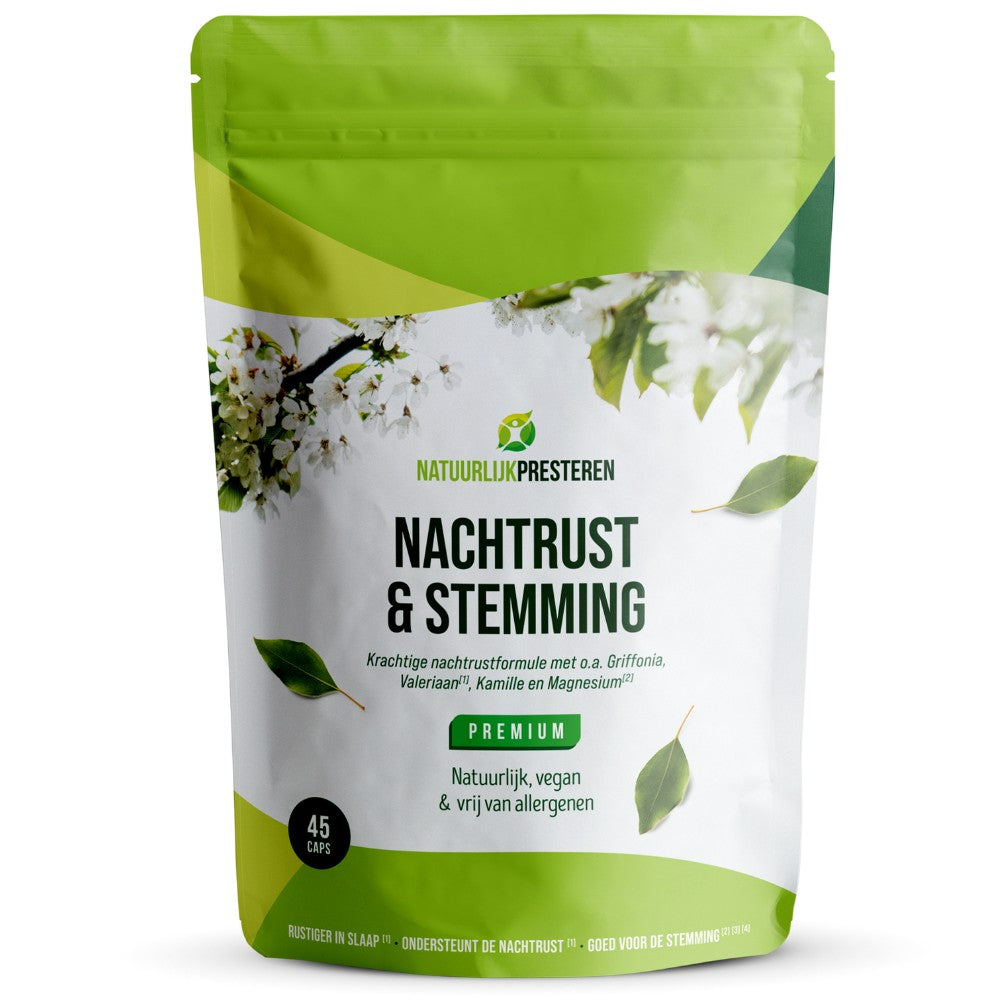
Our natural sleep aid, Night Rest and Mood Premium, offers a multifaceted approach. This unique formula combines the benefits of natural tranquilizers, sleep aids, and essential nutrients in a single supplement.
With 12 powerful ingredients in one tablet, it not only helps you fall asleep, but also helps you relax before bed and wake up refreshed.
The product is now popular with thousands of satisfied customers in the Netherlands and Belgium, and has an average rating of an impressive 9.3/10.
Disclaimer : Our natural, non-prescription sleep aids are nutritional supplements and support natural sleep.
Tips for better sleep
For those who have trouble falling asleep, I have a few more helpful tips. Try these techniques before, or while, taking over-the-counter natural sleep aids:
Tip 1: Try the 4-7-8 Breathing Technique
This simple yet powerful breathing technique can help you relax and fall asleep faster.
Inhale through your nose for 4 seconds, hold your breath for 7 seconds, and then exhale slowly through your mouth for 8 seconds. Repeat this a few times to slow your heart rate and prepare your body for rest.
Tip 2: Write down your worries
Keep a notebook next to your bed and write down everything that's bothering you or on your mind before bed. This can help clear your mind and let go of worries, making it easier to fall asleep. Putting your thoughts on paper creates mental calm and reduces worry.
Tip 3: Use a reverse to-do list
Instead of making a list of things you still need to do, make a list of what you've already accomplished that day. This gives you a sense of satisfaction and helps you end the day on a positive note, allowing you to fall asleep relaxed and with peace of mind.
Gerelateerde blogartikelen
 melatonine
Melatonine: alles wat je moet weten
Melatonine is inmiddels een van de meest gebruikte middelen rondom slaap. Toch bestaan er veel vragen. Wanneer neem je het precies? Hoeveel heb je nodig? En misschien wel het belangrijkste: is het veilig? Wat mij opvalt is dat veel mensen op zoek zijn naar geruststelling. Ze willen weten of melatonine verslavend is, of het schadelijk kan zijn en of langdurig gebruik verstandig is. Dat zijn logische en terechte vragen. In dit artikel krijg je een helder en eerlijk overzicht, zodat je zelf een goed geïnformeerde keuze kunt maken over het gebruik van melatonine. Melatonine helpt vooral je biologische klok af te stemmen en kan de tijd tot inslapen verkorten, vooral bij gebruik kort voor bedtijd. Een lage dosering is meestal voldoende; hogere doseringen geven niet vanzelf meer effect en vergroten vooral de kans op bijwerkingen. Melatonine is meestal veilig bij tijdelijk gebruik, maar lost niet elk slaapprobleem op; ook licht, stress en ritme spelen een belangrijke rol. Inhoudsopgave Wat is melatonine en wat doet het? Wanneer en hoe laat melatonine innemen? Hoeveel melatonine heb je nodig? Dosering voor volwassenen Dosering voor kinderen Vanaf welke leeftijd? Hoe snel werkt melatonine? Verschil tussen snelle en vertraagde afgifte Is melatonine veilig? Bijwerkingen en risico’s Bijwerkingen Kan je te veel melatonine nemen? Is melatonine verslavend? Hoe lang mag je melatonine gebruiken? Waar zit melatonine in? Voeding als bron Melatonine vs. andere natuurlijke slaapmiddelen Wat past bij jouw situatie? Bijzondere situaties Melatonine bij kinderen Melatonine bij de overgang Melatonine bij jetlag Veelgestelde vragen over melatonine 1. Wanneer moet ik melatonine innemen? 2. Hoeveel melatonine mag een kind van 10 jaar? 3. Is melatonine verslavend? 4. Wat als melatonine niet werkt? 5. Hoe lang duurt het voordat melatonine werkt? 6. Kan je elke dag melatonine nemen? 7. Wat gebeurt er als je te veel melatonine neemt? Belangrijk om te onthouden Wat is melatonine en wat doet het? Melatonine is een hormoon dat je lichaam zelf aanmaakt in de pijnappelklier, een klein kliertje diep in je hersenen (1). Dit hormoon geeft je lichaam het signaal dat het nacht is en helpt zo je slaap-waakritme aan te sturen. De aanmaak van melatonine wordt sterk beïnvloed door licht en donker (1, 2): Bij daglicht blijft de productie laag In het donker neemt de productie toe Je kunt melatonine daarom zien als een biologisch signaal dat je lichaam voorbereidt op de nacht (2). In tegenstelling tot klassieke slaapmiddelen helpt het je vooral om je biologische klok beter af te stemmen op het moment waarop je wilt slapen. Wanneer je melatonine als supplement gebruikt, draagt het bij aan de vermindering van de tijd die nodig is om in slaap te vallen. Dit effect is vastgesteld bij een inname van minimaal 1 mg kort voor het slapengaan (3, 4). Goed om te weten: omdat melatonine zo sterk samenhangt met licht en ritme, is het slim om ook naar je leefstijl te kijken. Denk aan lichtblootstelling overdag, schermgebruik in de avond en een vaste avondroutine, allemaal factoren die bijdragen aan een betere nachtrust. Wanneer en hoe laat melatonine innemen? Als je melatonine gebruikt om makkelijker in slaap te vallen, neem je het meestal kort voor het slapengaan. Het precieze moment verschilt per product en situatie, maar ligt meestal ergens tussen 30 minuten en 2 uur voor het slapengaan (3, 5). Dat sluit aan op hoe melatonine werkt: het helpt je lichaam zich alvast voor te bereiden op de nacht. Neem je het te laat, bijvoorbeeld pas als je al in bed ligt, dan sluit het signaal mogelijk minder goed aan op het gewenste slaapmoment en heeft het vaak minder effect op het inslapen. Tip: naast timing kan ook je voeding in de avond invloed hebben op hoe makkelijk je in slaap valt. In voeding voor beter inslapen en doorslapen lees je daar meer over. Hoeveel melatonine heb je nodig? Er is geen vaste dosering die voor iedereen optimaal is (3, 5). Dat komt doordat factoren zoals je leeftijd, leefstijl en het type slaapprobleem een rol spelen in wat voor jou goed werkt. Om het overzichtelijk te maken, leg ik hieronder uit welke doseringen het meest worden gebruikt en waar je op kunt letten. Dosering voor volwassenen Bij melatonine geldt vaak: minder is meer. Vaak wordt begonnen met een lage dosering, bijvoorbeeld 0,3 tot 1 mg (3, 6). Veel supplementen bevatten hogere hoeveelheden, maar die zijn niet altijd nodig. Goed om te weten: hogere doseringen (zoals 2 tot 5 mg of meer) worden ook gebruikt, maar geven niet automatisch meer effect en vergroten de kans op bijwerkingen (6, 7). Begin daarom bij voorkeur laag en kijk wat voor jou het beste werkt. Dosering voor kinderen Bij kinderen wil je extra voorzichtig zijn met melatonine. Slaapproblemen hebben vaak te maken met ritme, gedrag of schermgebruik. Daarom is het belangrijk om eerst naar de basis te kijken, zoals een vast slaapritme en voldoende rust in de avond. Blijven de klachten bestaan? Bespreek het dan altijd met een arts. Die kan beoordelen of melatonine passend is en zo ja, in welke dosering. Goed om te weten: als een arts melatonine voorschrijft aan kinderen, gebeurt dat meestal in lage doseringen en onder begeleiding (8, 9). Zelf experimenteren zonder overleg wordt daarom afgeraden. Vanaf welke leeftijd? Er is geen vaste leeftijd vanaf wanneer melatonine wordt gebruikt. In de praktijk geldt: hoe jonger het kind, hoe terughoudender artsen zijn met het inzetten van melatonine. Bij oudere kinderen wordt het soms overwogen wanneer slaapproblemen blijven bestaan, maar de afweging en dosering verschillen per situatie. Goed om te weten: lage doseringen (meestal tot ongeveer 0,5 mg en soms tot 1 mg) zijn vrij verkrijgbaar als supplement. Hogere doseringen (vanaf circa 2 mg) vallen meestal onder de geneesmiddelenwet en zijn bedoeld voor gebruik via de apotheek, soms op recept. Hoe snel werkt melatonine? Veel mensen merken het effect binnen ongeveer 30 tot 60 minuten (3, 5). Het effect kan echter wel verschillen per persoon en situatie (4, 10). Sommige mensen vallen sneller in slaap, terwijl het bij anderen subtieler is of iets langer duurt voordat het effect goed merkbaar is. Ook de vorm van melatonine die je gebruikt speelt hierbij een rol. Verschil tussen snelle en vertraagde afgifte Er zijn twee vormen van melatonine, die vooral verschillen in hoe snel ze in je lichaam vrijkomen. Snelle afgifte – deze vorm wordt snel opgenomen, waardoor de melatoninespiegel snel stijgt en wordt daarom vaak gekozen door mensen die moeite hebben met inslapen (3). Je herkent deze vorm meestal aan ‘gewone’ tabletten of druppels zonder speciale aanduiding. Vertraagde afgifte – deze vorm geeft melatonine geleidelijk af over meerdere uren (5). Op de verpakking zie je vaak termen als ‘retard’, ‘time release’ of ‘controlled release’. Kijk daarom vooral naar je slaapritme en waar je tegenaan loopt om te bepalen wat bij je past. Goed om te weten: blijf je ondanks melatonine onrustig slapen? Dan kan het helpen om ook te kijken naar je slaapkwaliteit. Daar ga ik dieper op in bij diepe slaap verbeteren. Is melatonine veilig? Bijwerkingen en risico’s In lage doseringen en bij kortdurend gebruik wordt melatonine over het algemeen goed verdragen (6, 10). Gebruik je het regelmatig of voor een langere periode, dan is het goed om stil te staan bij mogelijke bijwerkingen en hoe je het gebruikt. Bijwerkingen Vooral bij hogere doseringen worden de volgende bijwerkingen genoemd (6, 7): slaperigheid overdag levendige dromen hoofdpijn duizeligheid misselijkheid Kan je te veel melatonine nemen? Ja, je kunt te veel melatonine nemen. Het risico daarbij is vooral dat je meer kans hebt op bijwerkingen, niet dat het beter werkt. Deze bijwerkingen zijn meestal mild en verdwijnen vaak weer als je stopt of de dosering verlaagt. Is melatonine verslavend? Melatonine wordt niet gezien als een klassiek verslavend middel, zoals sommige slaapmedicatie (11). Dat wil zeggen: je lichaam raakt er niet op dezelfde manier fysiek afhankelijk van. Wel kan het gebruik een gewoonte worden. Sommige mensen merken dat ze het gevoel krijgen het ‘nodig te hebben’ om in slaap te vallen. Daarom is het goed om bewust te blijven van hoe en hoe vaak je het gebruikt. Hoe lang mag je melatonine gebruiken? Melatonine wordt vaak kortdurend gebruikt, bijvoorbeeld bij een verstoord slaapritme of tijdelijke slaapproblemen (12). Denk aan enkele dagen tot een paar weken. Dat komt omdat melatonine vooral een signaal geeft aan je biologische klok. Slaapproblemen worden vaak door meerdere factoren beïnvloed, zoals stress, licht, voeding en ritme. Melatonine alleen is dan niet altijd voldoende om de oorzaak aan te pakken. Blijven je slaapproblemen bestaan en wil je melatonine langer gebruiken? Dan is het verstandig om dit te bespreken met een arts. De effecten op de lange termijn zijn namelijk nog niet volledig duidelijk (6, 7). Goed om te weten: gebruik je het langere tijd, dan is het goed om jezelf af en toe af te vragen: waar ligt de oorzaak van mijn (door)slaapproblemen en wat kan ik daarin verbeteren? Waar zit melatonine in? Voeding als bron Melatonine komt in kleine hoeveelheden voor in voeding, zoals: kersen (vooral zure kersen) walnoten bananen tomaten haver Toch speelt voeding hierin een kleinere rol dan je misschien denkt. De hoeveelheden melatonine in voeding zijn namelijk erg laag en niet te vergelijken met supplementen. Je lichaam maakt melatonine vooral zelf aan. Dat gebeurt via een proces waarbij serotonine een belangrijke tussenstap is. Simpel gezegd: tryptofaan → serotonine → melatonine Tryptofaan is een aminozuur dat je via voeding binnenkrijgt, vooral uit eiwitrijke producten zoals zuivel, noten, zaden en peulvruchten (13). Kortom: voeding levert dus vooral de bouwstoffen, maar bepaalt niet direct hoeveel melatonine je aanmaakt. Factoren zoals licht, ritme en je biologische klok spelen daarin een veel grotere rol. Wil je daar meer over weten? Bekijk dan ook voeding voor beter inslapen en doorslapen. Melatonine vs. andere natuurlijke slaapmiddelen Melatonine werkt anders dan natuurlijke slaapmiddelen. Dit is het belangrijkste verschil: Melatonine - helpt je lichaam vooral om op het juiste moment in de ‘slaapstand’ te komen. Daarom wordt het vaak gebruikt als je moeite hebt om op tijd in slaap te vallen (4, 5). Natuurlijke slaapmiddelen (supplementen) - werken minder op je biologische klok en richten zich meer op ontspanning in de avond. Vaak vragen mensen: wat is beter, valeriaan of melatonine? Die vraag is eigenlijk niet helemaal juist gesteld. Het gaat niet om wat beter is, maar om wat jij nodig hebt. Wat past bij jouw situatie? Er is namelijk geen standaardoplossing die voor iedereen werkt. Het helpt om eerst scherp te krijgen waar jouw slaapprobleem vandaan komt: Val je moeilijk in slaap op het juiste tijdstip? Dan kan melatonine helpen om je biologische klok bij te sturen. Het draagt bij aan het sneller in slaap vallen (bij 1 mg kort voor het slapengaan). Blijft je hoofd actief in de avond (piekeren, onrust)? Dan ligt de focus minder op timing en meer op ontspanning. Je kunt in dat geval kijken naar supplementen die passen binnen een rustgevende avondroutine, zoals GABA & Theanine met B6 *. Zoek je ondersteuning bij zowel inslapen als ontspannen in de avond*? Nachtrust & Stemming combineert melatonine met magnesium, B-vitaminen en ingrediënten zoals 5-HTP en valeriaan, die passen binnen een rustgevende avondroutine. Hangt je slaapprobleem samen met stress of spanning? Dan kan het helpen om te kijken naar je stressniveau en hoe je ontspant in de avond. Ashwagandha KSM-66 is een formule die vaak wordt gekozen in zulke situaties *. Twijfel je wat bij jou past? Begin dan bij de oorzaak van je slaapprobleem. Van daaruit kun je gerichter kiezen wat je echt helpt. (*) Goed om te weten: deze claim wordt op dit moment nog beoordeeld door de EFSA. Hij is dus nog niet goedgekeurd, maar ook niet afgekeurd. Wil je meer opties bekijken? Zie ook beste slaapmiddel zonder recept of onze collecties natuurlijke slaapmiddelen en natuurlijke inslapers voor als je meer informatie zoekt over specifieke (in)slaapproblemen. Bijzondere situaties In sommige situaties werkt melatonine net iets anders of wordt het om een andere reden gebruikt. Melatonine bij kinderen Zoals eerder benoemd wordt melatonine bij kinderen terughoudend ingezet. Het kan soms worden overwogen bij aanhoudende slaapproblemen of een verstoord slaapritme, maar gebeurt bij voorkeur altijd in overleg met een arts (8, 9). Melatonine bij de overgang Tijdens de overgang verandert je hormoonbalans, wat invloed kan hebben op je slaap. Veelvoorkomende klachten zijn: moeilijker inslapen vaker wakker worden in de nacht lichter slapen Melatonine kan helpen wanneer vooral het inslapen lastiger wordt of je slaapritme verschuift. Heb je juist last van nachtelijk wakker worden door opvliegers of zweten? Dan ligt de oorzaak vaak ergens anders en is melatonine niet altijd de oplossing (14, 15). Kijk daarom goed waar jouw slaapprobleem zit: bij het inslapen of juist bij het doorslapen. Wil je hier meer over weten? Bekijk dan ook slecht slapen in de overgang. Melatonine bij jetlag Bij jetlag raakt je biologische klok tijdelijk uit balans, bijvoorbeeld na een lange reis door meerdere tijdzones. Hierdoor kun je moeite hebben met inslapen op het juiste moment. In deze situatie wordt melatonine vaak gebruikt om je biologische klok sneller aan te passen aan de nieuwe tijdzone. Melatonine draagt bij aan het verlichten van subjectieve gevoelens van jetlag bij een inname van minimaal 0,5 mg rond het gewenste slaapmoment (16). Veelgestelde vragen over melatonine 1. Wanneer moet ik melatonine innemen? Meestal neem je melatonine kort voor het slapengaan, ongeveer 30 tot 60 minuten van tevoren. 2. Hoeveel melatonine mag een kind van 10 jaar? Dit verschilt per situatie en leeftijd. Bespreek dit daarom altijd met een arts. 3. Is melatonine verslavend? Melatonine wordt niet gezien als een klassiek verslavend middel. Je lichaam raakt er niet op dezelfde manier afhankelijk van als bij sommige slaapmedicatie. Wel kan het gebruik een gewoonte worden. 4. Wat als melatonine niet werkt? Dan speelt je biologische klok mogelijk niet de grootste rol in je slaapprobleem. Het kan helpen om ook te kijken naar factoren zoals stress, ritme en slaapgewoonten. 5. Hoe lang duurt het voordat melatonine werkt? Veel mensen merken effect binnen ongeveer 30 tot 60 minuten na inname. 6. Kan je elke dag melatonine nemen? Melatonine wordt soms dagelijks gebruikt, maar is daar niet altijd voor bedoeld. Gebruik het bij voorkeur tijdelijk en kijk bij langer gebruik ook naar de oorzaak van je slaapprobleem. 7. Wat gebeurt er als je te veel melatonine neemt? Je hebt dan vooral meer kans op bijwerkingen, zoals slaperigheid overdag, hoofdpijn of duizeligheid. Belangrijk om te onthouden Melatonine is een lichaamseigen hormoon dat je lichaam het signaal geeft dat het tijd is om te slapen. Het werkt anders dan klassieke slaapmiddelen: het draait niet om verdoving, maar om timing. Daarom zijn het juiste moment van inname en een lage dosering vaak belangrijker dan de hoeveelheid die je neemt. Melatonine kan een waardevol hulpmiddel zijn, maar het is geen oplossing voor alle slaapproblemen. Je slaap wordt namelijk door meer bepaald dan alleen melatonine, zoals licht, stress en je dag- en nachtritme. Zie melatonine als ondersteuning, niet als oplossing. Begin laag, let op timing en kijk altijd naar het grotere geheel van je slaap. Ebrina van der Bijl Ebrina is voedingsdeskundige met een diepe toewijding aan gezonde voeding en een duurzame levensstijl, gevestigd in het prachtige Portugal. Haar passie voor natuurlijke en biologische producten vormt de kern van haar werk. Met een achtergrond in Voeding & Diëtetiek en ervaring in productontwikkeling en tekstschrijven, vertaalt ze complexe wetenschappelijke informatie naar praktische adviezen voor een gebalanceerde levensstijl. Lees meer Gebruikte bronnen Zisapel, N. (2018). New perspectives on the role of melatonin in human sleep, circadian rhythms and their regulation. British Journal Of Pharmacology, 175(16), 3190–3199. https://doi.org/10.1111/bph.14116 Peuhkuri, K., Sihvola, N., & Korpela, R. (2012). Diet promotes sleep duration and quality. Nutrition Research, 32(5), 309–319. https://doi.org/10.1016/j.nutres.2012.03.009 Ferracioli-Oda, E., Qawasmi, A., & Bloch, M. H. (2013). Meta-Analysis: Melatonin for the Treatment of Primary Sleep Disorders. PLoS ONE, 8(5), e63773. https://doi.org/10.1371/journal.pone.0063773 Baglioni, C., Bostanova, Z., Bacaro, V., Benz, F., Hertenstein, E., Spiegelhalder, K., Rücker, G., Frase, L., Riemann, D., & Feige, B. (2020). A Systematic Review and Network Meta-Analysis of Randomized Controlled Trials Evaluating the Evidence Base of Melatonin, Light Exposure, Exercise, and Complementary and Alternative Medicine for Patients with Insomnia Disorder. Journal Of Clinical Medicine, 9(6), 1949. https://doi.org/10.3390/jcm9061949 Cruz‐Sanabria, F., Bruno, S., Crippa, A., Frumento, P., Scarselli, M., Skene, D. J., & Faraguna, U. (2024). Optimizing the Time and Dose of Melatonin as a Sleep‐Promoting Drug: A Systematic Review of Randomized Controlled Trials and Dose−Response Meta‐Analysis. Journal Of Pineal Research, 76(5), e12985. https://doi.org/10.1111/jpi.12985 Schrire, Z. M., Phillips, C. L., Chapman, J. L., Duffy, S. L., Wong, G., D’Rozario, A. L., Comas, M., Raisin, I., Saini, B., Gordon, C. J., McKinnon, A. C., Naismith, S. L., Marshall, N. S., Grunstein, R. R., & Hoyos, C. M. (2021). Safety of higher doses of melatonin in adults: A systematic review and meta‐analysis. Journal Of Pineal Research, 72(2), e12782. https://doi.org/10.1111/jpi.12782 Valiensi, S. M., Vera, V. A., Folgueira, A. L., Caporale, S., De León, M. P., Fernández, I. P., Vigo, D. E., & Cardinali, D. P. (2025). Rethinking Melatonin Dosing: Safety and Efficacy at Higher-than-Usual Levels in Aged Patients with Sleep Disturbances and Comorbidities. Brain Sciences, 15(10), 1040. https://doi.org/10.3390/brainsci15101040 Van Geijlswijk, I. M., Korzilius, H. P. L. M., & Smits, M. G. (2010). The Use of Exogenous Melatonin in Delayed Sleep Phase Disorder: A Meta-analysis. SLEEP, 33(12), 1605–1614. https://doi.org/10.1093/sleep/33.12.1605 Shenoy, P., Etcheverry, A., Ia, J., Witmans, M., & Tablizo, M. A. (2024). Melatonin Use in Pediatrics: A Clinical Review on Indications, Multisystem Effects, and Toxicity. Children, 11(3), 323. https://doi.org/10.3390/children11030323 Salanitro, M., Wrigley, T., Ghabra, H., De Haan, E., Hill, C. M., Solmi, M., & Cortese, S. (2022). Efficacy on sleep parameters and tolerability of melatonin in individuals with sleep or mental disorders: A systematic review and meta-analysis. Neuroscience & Biobehavioral Reviews, 139, 104723. https://doi.org/10.1016/j.neubiorev.2022.104723 Andersen, L. P. H., Gögenur, I., Rosenberg, J., & Reiter, R. J. (2015). The Safety of Melatonin in Humans. Clinical Drug Investigation, 36(3), 169–175. https://doi.org/10.1007/s40261-015-0368-5 Riemann, D., Baglioni, C., Bassetti, C., Bjorvatn, B., Groselj, L. D., Ellis, J. G., Espie, C. A., Garcia‐Borreguero, D., Gjerstad, M., Gonçalves, M., Hertenstein, E., Jansson‐Fröjmark, M., Jennum, P. J., Leger, D., Nissen, C., Parrino, L., Paunio, T., Pevernagie, D., Verbraecken, J., . . . Spiegelhalder, K. (2017). European guideline for the diagnosis and treatment of insomnia. Journal Of Sleep Research, 26(6), 675–700. https://doi.org/10.1111/jsr.12594 Sutanto, C., Loh, W. W., & Kim, J. E. (2021). The Impact of Tryptophan Supplementation on Sleep Quality: A Systematic Review, Meta-Analysis and Meta-Regression. Current Developments in Nutrition, 5, 373. https://doi.org/10.1093/cdn/nzab037_083 Yi, M., Wang, S., Wu, T., Zhang, X., Jiang, L., & Fang, X. (2021). Effects of exogenous melatonin on sleep quality and menopausal symptoms in menopausal women: a systematic review and meta-analysis of randomized controlled trials. Menopause The Journal Of The North American Menopause Society, 28(6), 717–725. https://doi.org/10.1097/gme.0000000000001757 Du, J., & Tan, Y. (2026). A systematic review and meta-analysis of randomized controlled trials investigated the effects of melatonin supplementation on bone mineral density, quality of life, and sleep in menopausal women. Frontiers in Nutrition, 13, 1687221. https://doi.org/10.3389/fnut.2026.1687221 Herxheimer, A., & Petrie, K. J. (2002). Melatonin for the prevention and treatment of jet lag. Cochrane Database Of Systematic Reviews, 2010(1), CD001520. https://doi.org/10.1002/14651858.cd001520
Lees meer te hoog testosteron
Better night's sleep: top 10 tips for the best sleep
When I sleep well, I notice it immediately: I'm sharper, happier, and more resilient. But after a restless night, everything feels harder, from my concentration to my mood. Sound familiar? A sleep tea, a helpful app, a supplement, or a good pillow can all help. But you'll usually only notice a real difference when you combine them with a few consistent habits you repeat every day. Good sleep rarely comes from a single trick, but from a structured approach. In this article, I'll take you through my best, science-backed tips that (when combined) can help you get a deeper, more restorative night's sleep. No complicated theory, just practical advice, so you fall asleep more easily, sleep more peacefully and wake up with more energy. The article shows that good sleep usually comes from a combination of daily habits, not one trick, with a focus on a doable, consistent sleep and evening routine. Important pillars are fixed sleeping and waking times, the 3–2–1 method, a cool, dark bedroom, nutritious food, daily exercise and limiting caffeine, alcohol, nicotine and heavy meals. Finally, the blog describes how short naps and relaxation routines can support well-being, and how a Sleep & Mood supplement can be a natural addition to a broader lifestyle approach. Table of contents My top tips for a deep, restorative night’s sleep 1. Stick to regular times 2. Wind down your evening with the 3–2–1 method 3. Make sure your bedroom is cool, dark and quiet 4. Eat a nutritious and varied diet during the day 5. Avoid caffeine in the afternoon 6. Exercise daily, but not intensively just before bed 7. Use relaxation routines: small, but effective 8. Limit alcohol, nicotine and heavy meals in the evening 9. Make your bedroom a place for rest 10. Short afternoon naps? Fine, but with care A natural addition to your evening routine My best tips for a deep, restorative night's sleep These are the tips that make the most difference for me, and according to research: 1. Stick to fixed times Here's how to do it: Choose one fixed time to get up on weekdays. Also, try not to deviate by more than about 1 hour during the weekend. Go to bed when you feel sleepy, preferably within a fixed time block (for example, between 10:30 and 11:30 PM). Why this helps Your body thrives on predictability. By keeping to roughly the same hours, your internal clock will "work forward": you'll get sleepy around the same time, your body temperature will drop at the right time, and you'll wake up at a more natural time. I notice very strongly that I have less of a “Monday morning feeling” when my weekend rhythm isn't going in all directions. What does science say? Research shows that you sleep better if you go to bed and get up at roughly the same times. People who change their sleeping times a lot (for example, getting up early during the week and going to bed and getting out of bed very late at the weekend) on average have more sleep problems and feel less fit during the day. (1)(2) 2. Finish your evening with the 3-2-1 method Here's how to do it: 3 hours before bedtime: no more heavy meals. Choose easily digestible foods if you do eat. 2 hours before bedtime: no more large drinks. Small sips when thirsty are fine. 1 hour before bedtime: Turn off screens, dim bright lights, and avoid work emails and intense conversations. If necessary, you can mark these times in your calendar or set a reminder on your phone. After a few days, it will become more natural. Why this helps You gradually let your body know: "We're going to finish." Your digestion gets a rest, your bladder doesn't overfill, and your brain receives less stimulation and light. This makes the transition from "day mode" to "night mode" much more gradual. What does science say? Research shows that bright light, and especially blue light, in the evening can shift your biological clock later. Your body then produces melatonin later, making it harder to fall asleep. Avoiding screens and bright lights in the last hour before bed helps your body get sleepy on time. (3)(4) What does science say? Biochemical research has clearly shown that tryptophan is the direct precursor of 5-HTP and serotonin. Without tryptophan, your body simply cannot produce serotonin. We also see this in studies: if people get enough tryptophan through food or supplements, this can help to support their normal mood and emotional balance. (2) 3. Ensure a cool, dark and quiet bedroom Here's how to do it: Turn down the heating or open the window slightly to about 16–19 °C . Use blackout curtains or a sleep mask. Use earplugs or a white noise app if you live in a busy environment. Put your phone on silent or in another room. Why this helps Your body sleeps more easily when it can cool down a bit, when there's little light, and when there are no unexpected noises. The fewer stimuli, the less chance you'll be jolted out of your deep or dreamy sleep. What does science say? Reviews and meta-analyses (large overview studies) show that you sleep worse in an overly warm and noisy environment. Warm nights and excessive nighttime noise generally cause people to sleep shorter, wake up more often, and experience their sleep as less restorative. A cool, quiet bedroom therefore reduces the chance of restless, interrupted sleep. (5)(6) 4. Eat a nutritious and varied diet during the day Here's how to do it: Include a combination of fruits/vegetables, protein, healthy fats, and fiber at every meal . Eat regularly throughout the day so your blood sugar doesn't constantly spike and crash. Cut back on caffeine and sugary snacks, especially later in the day. Why this helps More stable energy during the day makes it easier to unwind in the evening. Your hormones, brain, and muscles use nutrients as building blocks all day long. When that foundation is in order, your body has fewer "fires to put out" at night. What does science say? Large-scale reviews show that people who eat a lot of processed foods, sugar, and little fiber report poorer sleep quality on average. People who eat primarily vegetables, fruit, whole grains, nuts, legumes, and fish, on the other hand, are more likely to report better sleep. These are correlations (and therefore no hard conclusions yet), but the picture is clear: a nutritious, varied diet usually leads to better sleep.(7)(8) 5. Avoid caffeine after noon Here's how to do it: Make a deal with yourself : no more caffeine after 2 p.m. If you (like me) are sensitive to caffeine, I recommend moving this to noon. Alternate or switch to decaffeinated coffee, herbal tea, or water. Also watch out for “hidden” caffeine in cola and energy drinks. Why this helps Caffeine blocks a substance (adenosine) that makes you drowsy. This is nice in the morning, but inconvenient if you want to fall asleep peacefully in the evening. Especially if you're sensitive, a cup of coffee late in the afternoon can keep you awake for a long time. What does science say? Research with large groups of people shows that caffeine can significantly disrupt sleep, especially if you drink it later in the day. People who consume coffee, cola, or energy drinks in the afternoon or evening generally have more difficulty falling asleep and sleep for shorter, more restless hours. That's why it helps to take your last caffeine dose well before bedtime. (9)(10) 6. Exercise daily, but not intensively just before bed Here's how to do it: Plan at least 20–30 minutes of exercise every day : walking, cycling, gym or home workout – whatever suits you. Do intensive training preferably during the day or at the end of the afternoon . Late evening: Opt for light exercise, such as a leisurely evening walk or a gentle yoga session. Why this helps Exercise helps your body release tension and promotes natural fatigue at the end of the day. But if you work out hard right before bed, your heart rate and adrenaline will stay elevated for longer. Then your body still feels "on" while your mind is already trying to shut down. What does science say? Large-scale reviews show that people who exercise regularly sleep better and experience less insomnia on average. However, it appears that intense exercise right before bedtime can actually make it harder for some people to fall asleep. Therefore, exercising during the day or in the early evening is best suited to a quiet night. (11)(12) 7. Use relaxation routines: small, but effective Here's how to do it: Choose one or two small rituals and repeat them every night, for example: A warm shower 5–10 minutes of breathing exercises Soothing music Briefly write down what's on your mind A few gentle stretches You don't have to do everything: it's better to have one small ritual that you stick with than a perfect routine that you abandon after three days. Personally, this is a very important one for me. Why this helps You're sending your nervous system clear signals: "It's okay to relax." By doing something gentle and calm, your body shifts from "action mode" to recovery mode. If you repeat this daily, your brain will associate that routine with sleep. What does science say? Research into relaxation exercises, such as mindfulness, breathing, and other mind-body techniques, shows that these often help people sleep better. People who regularly do these kinds of exercises in the evening, on average, fall asleep faster, worry less in bed and experience sleep as more restful. (13)(14) 8. Limit alcohol, nicotine and heavy meals in the evening Here's how to do it: It is best not to drink alcohol every day , and preferably not in the last hours before going to sleep. Do you smoke? Try having your last cigarette earlier in the evening. Choose a lighter meal in the evening , especially if it is late. Why this helps Alcohol can make you a bit drowsy at first, but later in the night, your sleep often becomes more restless. Nicotine, on the other hand, has a stimulating effect. And when your digestive system is still working at full capacity, your body has a harder time slipping into a deep recovery mode. What does science say? Several studies show that while alcohol can help you fall asleep faster, it actually disrupts your sleep later in the night. You'll experience less deep sleep and REM sleep, and you'll wake up more often. Nicotine is also regularly linked to shorter and restless sleep. And heavy, late meals are more likely to cause stomach upset, making it harder to fall asleep or making sleep lighter. (15)(16) 9. Make your bedroom a place for rest Here's how to do it: Don't work in your bedroom if you don't have to. No TV on in bed, no scrolling sessions on your phone. Use soft lighting, preferably warm light. Keep your bedroom as tidy and simple as possible. Why this helps Your brain makes associations: if you often lie in bed scrolling, working, or worrying, your body turns on at the mere sight of your bed. By reserving your bedroom for sleep and intimacy, you build the opposite association: bed = rest. What does science say? In research into treatments for insomnia, the same picture emerges consistently: cognitive behavioral therapy for insomnia is one of the most effective approaches. A key part of this is stimulus control: you only use your bed for sleeping (or for intimacy), not for working, scrolling, or worrying. This way, your brain learns again: I'm supposed to get sleepy in bed, not lie wide awake. (17)(18) 10. Short afternoon naps? Fine, but with care Here's how to do it: Keep naps short : about 10–20 minutes. Preferably plan them between 1:00 PM and 3:00 PM. Do you feel like naps are disrupting your night? Then it's better to skip them temporarily. Why this helps A short power nap can refresh you a bit without taking away your sleep pressure for the evening. Long naps or naps in the late afternoon take away too much sleep pressure, leaving you feeling less tired in the evening. What does science say? Research on naps shows that short power naps during the day can improve your concentration and alertness without significantly disrupting your sleep. Naps of about 10–20 minutes seem to be the most effective for this. Longer naps or naps taken late in the day are more often associated in studies with more difficulty falling asleep in the evening and a less favorable health pattern. (19)(20) A natural addition to your evening routine. You can read above how much influence your daily rhythm, diet and evening routine have on what your night looks like. Some people also choose to link a fixed time to a supplement as part of that routine. Our Night Sleep & Mood supplement combines 12 natural ingredients in one formula, including 5-HTP from griffonia, chamomile and valerian extract, magnesium, zinc and B vitamins. It has been developed based on scientific insights and is intended to fit into a broader, lifestyle-oriented approach to sleep, in addition to the practical habits in this article. Ebrina van der Bijl Ebrina is a nutritionist with a deep commitment to healthy eating and a sustainable lifestyle, based in beautiful Portugal. Her passion for natural and organic products is at the heart of her work. With a background in Nutrition & Dietetics and experience in product development and writing, she translates complex scientific information into practical advice for a balanced lifestyle. Read more Sources used Chaput, J., Dutil, C., Featherstone, R., Ross, R., Giangregorio, L., Saunders, T. J., Janssen, I., Poitras, V. J., Kho, M. E., Ross-White, A., Zankar, S., & Carrier, J. (2020). Sleep timing, sleep consistency, and health in adults: a systematic review. Applied Physiology Nutrition And Metabolism, 45(10 (Suppl. 2)), S232–S247. https://doi.org/10.1139/apnm-2020-0032 Arab, A., Karimi, E., Garaulet, M., & Scheer, FAJL (2023). Social jetlag and obesity: A systematic review and meta‐analysis. Obesity Reviews, 25(3), e13664. https://doi.org/10.1111/obr.13664 Tähkämö, L., Partonen, T., & Pesonen, A. (2018). Systematic review of light exposure impact on human circadian rhythm. Chronobiology International, 36(2), 151–170. https://doi.org/10.1080/07420528.2018.1527773 Cajochen, C., Stefani, O., Schöllhorn, I., Lang, D., & Chellappa, S. (2022). Influence of evening light exposure on polysomnographically assessed night-time sleep: A systematic review with meta-analysis. Lighting Research & Technology, 54(6), 609–624. https://doi.org/10.1177/14771535221078765 Chevance, G., Minor, K., Vielma, C., Campi, E., O'Callaghan-Gordo, C., Basagaña, X., Ballester, J., & Bernard, P. (2024). A systematic review of ambient heat and sleep in a warming climate. Sleep Medicine Reviews, 75, 101915. https://doi.org/10.1016/j.smrv.2024.101915 Basner, M., & McGuire, S. (2018). WHO Environmental Noise Guidelines for the European Region: A Systematic Review on Environmental Noise and Effects on Sleep. International Journal Of Environmental Research And Public Health, 15(3), 519. https://doi.org/10.3390/ijerph15030519 Godos, J., Grosso, G., Castellano, S., Galvano, F., Caraci, F., & Ferri, R. (2021). Association between diet and sleep quality: A systematic review. Sleep Medicine Reviews, 57, 101430. https://doi.org/10.1016/j.smrv.2021.101430 Huang, L., Jiang, Y., Sun, Z., Wu, Y., Yao, C., Yang, L., Tang, M., Wang, W., Lei, N., He, G., Chen, B., Huang, Y., & Zhao, G. (2024). Healthier Dietary Patterns Are Associated with Better Sleep Quality among Shanghai Suburban Adults: A Cross-Sectional Study. Nutrients, 16(8), 1165. https://doi.org/10.3390/nu16081165 Gardiner, C., Weakley, J., Burke, L.M., Roach, G.D., Sargent, C., Maniar, N., Townshend, A., & Halson, S.L. (2023). The effect of caffeine on subsequent sleep: A systematic review and meta-analysis. Sleep Medicine Reviews, 69, 101764. https://doi.org/10.1016/j.smrv.2023.101764 Temple, J. L., Bernard, C., Lipshultz, S. E., Czachor, J. D., Westphal, J. A., & Mestre, M. A. (2017b). The Safety of Ingested Caffeine: A Comprehensive Review. Frontiers in Psychiatry, 8, 80. https://doi.org/10.3389/fpsyt.2017.00080 Kredlow, M. A., Capozzoli, M. C., Hearon, B. A., Calkins, A. W., & Otto, M. W. (2015). The effects of physical activity on sleep: a meta-analytic review. Journal Of Behavioral Medicine, 38(3), 427–449. https://doi.org/10.1007/s10865-015-9617-6 Zhou, X., Kong, Y., Yu, B., Shi, S., & He, H. (2024). Effects of exercise on sleep quality in general population: Meta-analysis and systematic review. Sleep Medicine, 125, 1–13. https://doi.org/10.1016/j.sleep.2024.10.036 Rusch, H. L., Rosario, M., Levison, L. M., Olivera, A., Livingston, W. S., Wu, T., & Gill, J. M. (2018). The effect of mindfulness meditation on sleep quality: a systematic review and meta‐analysis of randomized controlled trials. Annals Of The New York Academy Of Sciences, 1445(1), 5–16. https://doi.org/10.1111/nyas.13996 Wang, X., Li, P., Pan, C., Dai, L., Wu, Y., & Deng, Y. (2019). The Effect of Mind-Body Therapies on Insomnia: A Systematic Review and Meta-Analysis. Evidence-based Complementary And Alternative Medicine, 2019, 1–17. https://doi.org/10.1155/2019/9359807 Gardiner, C., Weakley, J., Burke, L.M., Roach, G.D., Sargent, C., Maniar, N., Huynh, M., Miller, D.J., Townshend, A., & Halson, S.L. (2024). The effect of alcohol on subsequent sleep in healthy adults: A systematic review and meta-analysis. Sleep Medicine Reviews, 80, 102030. https://doi.org/10.1016/j.smrv.2024.102030 Chan, J. K. M., Trinder, J., Andrewes, H. E., Colrain, I. M., & Nicholas, C. L. (2013). The Acute Effects of Alcohol on Sleep Architecture in Late Adolescence. Alcoholism Clinical And Experimental Research, 37(10), 1720–1728. https://doi.org/10.1111/acer.12141 Trauer, J. M., Qian, M. Y., Doyle, J. S., Rajaratnam, S. M. W., & Cunnington, D. (2015). Cognitive behavioral therapy for chronic insomnia: A systematic review and meta-analysis. Annals of Internal Medicine, 163(3), 191–204. https://doi.org/10.7326/M14-2841 Furukawa, Y., Sakata, M., Yamamoto, R., Nakajima, S., Kikuchi, S., Inoue, M., Ito, M., Noma, H., Takashina, H.N., Funada, S., Ostinelli, E.G., Furukawa, T.A., Efthimiou, O., & Perlis, M. (2024). Components and Delivery Formats of Cognitive Behavioral Therapy for Chronic Insomnia in Adults. JAMA Psychiatry, 81(4), 357. https://doi.org/10.1001/jamapsychiatry.2023.5060 Shang, X. (2015). Meta-Analysis of Self-Reported Daytime Napping and Risk of Cardiovascular or All-Cause Mortality. Medical Science Monitor, 21, 1269–1275. https://doi.org/10.12659/msm.893186 Dutheil, F., Danini, B., Bagheri, R., Fantini, M. L., Pereira, B., Moustafa, F., Trousselard, M., & Navel, V. (2021). Effects of a Short Daytime Nap on the Cognitive Performance: A Systematic Review and Meta-Analysis. International Journal Of Environmental Research And Public Health, 18(19), 10212. https://doi.org/10.3390/ijerph181910212
Lees meer
These 4 types of food will help you fall asleep better and sleep longer.
There are four types of food that can help you fall asleep and stay asleep. Everything you eat affects your body and your sleep pattern. So it's no wonder that what you eat throughout the day matters, especially what you eat right before bed. Some foods actually help you relax. If you have trouble sleeping, you should eat foods that have a positive effect on sleep. That's why in this blog post, I'll explain which foods are good to eat and why they promote sleep. Omega-3 and unprocessed fats help stabilize blood sugar and support the brain in falling asleep. Fiber-rich foods and nuts (B vitamins, magnesium, tryptophan) help optimize hormones and contribute to relaxation, which supports sleeping through the night. Raw honey contains enzymes and antioxidants, stimulates melatonin production and contributes to a good night's sleep by supporting falling asleep and sleeping through the night. Table of contents My 4 Favorite Foods for Better Sleep 1 - Omega-3 and Unprocessed Fats 2 - Fiber-Rich Foods 3 - Nuts for Healthy Sleep B Vitamins Tryptophan Magnesium 4 - Raw Honey My 4 Favorite Foods for a Better Night's Sleep In this article, I'll share my four favorite foods for a good night's sleep. These foods contain calming substances, essential minerals, and are a source of energy for both body and mind. So try to get enough of these types of food every day for an optimal night's sleep. 1 - Omega-3 and unprocessed fats Eating foods rich in omega-3 fatty acids can help you fall asleep and sleep through the night. Omega-3 fatty acids are essential, meaning your body cannot produce them on its own. These healthy fats are a source of energy for your brain. During sleep, your body is busy repairing itself. Your brain also needs energy to manage all its processes and process all the day's impressions. If you don't have enough of these omega-3 fatty acids, you may have more difficulty falling asleep and may sleep more restlessly. Did you know? Your brain is made up of 60% fat, so it needs fat to function. Fats help keep blood sugar levels stable and can therefore have a positive effect on sleep. A lack of omega-3, especially DHA, is linked to lower melatonin levels [1] . Omega-3 fatty acids are found primarily in oily fish (eel, herring, salmon) and also in various types of nuts. However, the omega-3 in nuts (ALA) is less effective than the EPA and DHA from oily fish. Monounsaturated fats are also pure gold for your health. Want to eat more of these healthy fats? They're found in extra virgin olive oil, eggs, almonds, and avocado. It's recommended to choose organic meat from grass-fed cows. The healthier the cows live, the healthier (and more nutrient-rich) their meat will be. 2 - Fiber-rich diet If you want to fall asleep more easily and sleep through the night better, it's recommended to eat more fiber-rich foods. Fiber (which can be water-soluble or insoluble) is mainly found in plant products. It's a carbohydrate, but it can't be digested, or only partially so. When you eat fiber, it enters the stomach and intestines. Only a portion is then fermented, or broken down, by bacteria. Fiber isn't essentially a source of energy for humans, but it is important as a food source for the beneficial bacteria in your intestines. How can fiber contribute to a good night's sleep? Research from 2016 shows a link between fiber consumption and deep sleep. It turned out that those who ate a lot of fiber fell asleep faster and slept more deeply than people who ate a lot of sugar and saturated fats. Their sleep was often restless and lighter, which meant they were less rested [2] . It's recommended to eat at least 30 to 40 grams of fiber every day. Most people don't get that amount, so try to eat fresh vegetables every day. If you enjoy pasta or rice, choose the whole-wheat variety, which is higher in fiber. 3 - Nuts for a healthy sleep Nuts are also a great aid for a restful night's sleep. They contain several important substances that support sleep, such as B vitamins, tryptophan, and magnesium. B vitamins There are eight different B vitamins, almost all of which play a role in the body's energy metabolism and proper nerve function. They help convert food into energy. Getting enough B vitamins makes you more resilient to stress and helps you feel more mentally balanced. In this way, a diet rich in B vitamins can significantly contribute to falling asleep faster and sleeping well through the night. Many of the B vitamins are also important in the production of the substances needed for good sleep [3] . Tryptophan Another substance that indirectly plays a role in sleep is tryptophan. This is an essential amino acid that your body cannot produce on its own. You must therefore obtain what you need from your diet. Tryptophan is converted into 5-HTP in the liver, a building block for serotonin. This neurotransmitter is important for a good mood. Serotonin is then converted into melatonin, the hormone that plays a role in the sleep-wake cycle [4] . Nuts and seeds are a good source of tryptophan and can therefore contribute to falling asleep more easily and sleeping through the night. Recommended options include pumpkin seeds, cashews, sesame seeds, and almonds. Enjoy a handful in the evening as a snack or sprinkle pumpkin seeds on your salad. Magnesium Magnesium is also a mineral important for sleep. Like tryptophan, it's involved in the production of the substances needed to fall asleep and stay asleep, such as melatonin and serotonin. Magnesium is also an important mineral for your nerves; you need it to relax properly. Getting enough magnesium often helps you sleep more deeply and soundly. Research shows that magnesium can help with insomnia and can also provide relief if you have restless legs. If you want to get more magnesium, you can try eating nuts more often. Almost all nuts are a good source, but cashews, Brazil nuts, and almonds are definitely a good choice. A 30-gram handful of cashews contains 82 mg of magnesium, which is already 20% of the RDI. 4 - Raw honey The final food that can contribute to better sleep onset and sleep quality is raw honey. Raw honey is unprocessed: the beekeeper extracts the honey directly from the comb (by spinning it) and it is not heated. However, supermarket honey is still processed, and as a result, many nutrients are lost. Raw honey contains about 30 bioactive plant compounds, such as enzymes, vitamins, and polyphenols. All of these compounds can support your health and sleep. Did you know? Research also shows that raw honey is more nutritious than regular honey. It contains over 4.3 times as many antioxidants![5] The compounds in raw honey can help you relax better and fall asleep faster. It's no wonder the old saying goes: drink a cup of warm milk with honey before bed. Research also shows that this works. In 2018, 68 people were hospitalized for heart problems. They participated in a sleep study, in which they were given milk and honey twice a day. It turned out that after three days, the group that was given this tasty drink slept better than those who did not [6] . So you can safely take a tablespoon of raw honey before going to bed or add some honey to a cup of (chamomile) tea. Eating the right foods can promote healthy sleep patterns. However, there are also foods that can significantly disrupt your sleep pattern. Think of alcohol, caffeine, and tyramine, for example. By paying a little more attention to what you eat and drink, you can prevent many sleep problems. Frequently Asked Questions Which foods help you fall asleep better and sleep longer? A diet rich in omega-3 and other healthy fats, fiber-rich foods, nuts, and a small amount of raw honey in the evening can all support a pleasant sleep pattern. They provide energy for the brain, support more stable blood sugar levels, and promote relaxation. What are good sources of omega-3 for better sleep? Good sources of omega-3 are oily fish like salmon, herring, and eel, and to a lesser extent, nuts and seeds. In addition, foods like extra virgin olive oil, eggs, and avocado provide valuable fats that support stable energy throughout the night. How does a high-fiber diet help you sleep better? Fiber-rich foods like vegetables, fruit, legumes, and whole grains nourish gut bacteria and are linked to deeper, more restful sleep. Try to get about 30 to 40 grams of fiber per day by adding some vegetables or whole grains to each meal. Which nuts are suitable to eat in the evening if I want to sleep better? Nuts like almonds, cashews, Brazil nuts, and pumpkin seeds provide B vitamins, magnesium, and tryptophan, among other nutrients. A small handful of nuts in the evening can easily be incorporated into a diet that supports relaxation and a good night's sleep. Is raw honey better for sleep than regular honey from the supermarket? Raw honey is less processed and usually contains more natural ingredients like enzymes and antioxidants than standard honey. A teaspoon of raw honey in herbal tea, for example, is a natural part of a relaxing evening ritual for many people. What is best to eat in the evening if I often wake up during the night? In the evening, choose a meal with plenty of fiber, healthy fats, and some protein, such as vegetables with whole grains and oily fish or legumes. Avoid very sugary and highly processed foods, as these can cause fluctuations in energy and disturb sleep. Which foods can actually disrupt my sleep? Foods and drinks high in caffeine, alcohol, sugar, or substances like tyramine are often cited as disruptive to sleep. Especially late at night, they can cause restlessness, waking, and less deep sleep. When is the best time to take raw honey if I want to sleep better? Many people take a small amount of raw honey one to two hours before bedtime, for example, in lukewarm milk or herbal tea. It's important to consider it part of a relaxing evening routine and not the only solution. Besides a healthy diet, do I also need nutritional supplements to sleep better? For many people, improving the foundation with nutrition, exercise, and sleep hygiene is the most important first step. If you're considering a nutritional supplement, consult a doctor or health professional and view supplements as a complement to, not a replacement for, a healthy diet. Miriam Mirjam felt a connection with nature from a young age. This has led to a deep passion for health, natural remedies, and healthy eating. She also loves reading, yoga, and writing. When the weather is nice, she enjoys exploring new hiking trails. Read more
Lees meer