


What are vegetarian supplements?
Vegetarian supplements are dietary supplements that do not contain ingredients derived from meat or fish. They are suitable for those following a vegetarian diet or choosing products without meat or fish for other reasons.
If you also don't want to consume ingredients derived from animals, such as eggs, dairy, or bee products (e.g., honey or beeswax), then vegan supplements are a better choice.
What ingredients should you look out for?
Most supplements are made from herbal ingredients and are therefore suitable for vegetarians and vegans.
However, some supplements contain animal ingredients. It's important to always check the ingredients list of a supplement to ensure it doesn't contain any animal ingredients.
Not everyone has the same views on a vegetarian diet, and everyone decides for themselves what feels comfortable for them.
For your convenience, I've compiled a list of common ingredients derived directly or indirectly from animals. I've also included plant-based alternatives so you can easily see if an ingredient suits your preferences.
Fish oil and krill oil
Fish oil is extracted from the tissues of oily fish, such as salmon, mackerel, and sardines, while krill oil comes from krill, tiny crustaceans that live in the oceans.
Alternatives : Algal oil is a plant-based alternative that provides the same omega-3 fatty acids (EPA and DHA).
Gelatin
Gelatin is obtained by boiling animal collagen, derived from the skin, bones and connective tissue of cattle, pigs or fish.
Alternatives : Agar-agar, pectin, and carrageenan are plant-based gelling agents that can be used as substitutes.
Collagen
Collagen is primarily extracted from the skin, bones, and connective tissue of animals such as cattle, pigs, or fish. It is widely used in cosmetics and nutritional supplements.
Alternatives : Plant-based products do not contain collagen, but ingredients such as silicon, vitamin C, and amino acids can support collagen production in the body.
Glucosamine
Often derived from the shells of crustaceans such as shrimp, crabs and lobsters.
Alternatives : A vegetable variant can be obtained from fermented corn.
Hyaluronic acid
Traditionally derived from animal sources such as rooster combs.
Alternatives : Today, hyaluronic acid is increasingly produced via microbial fermentation, which uses bacteria to make hyaluronic acid without animal ingredients.
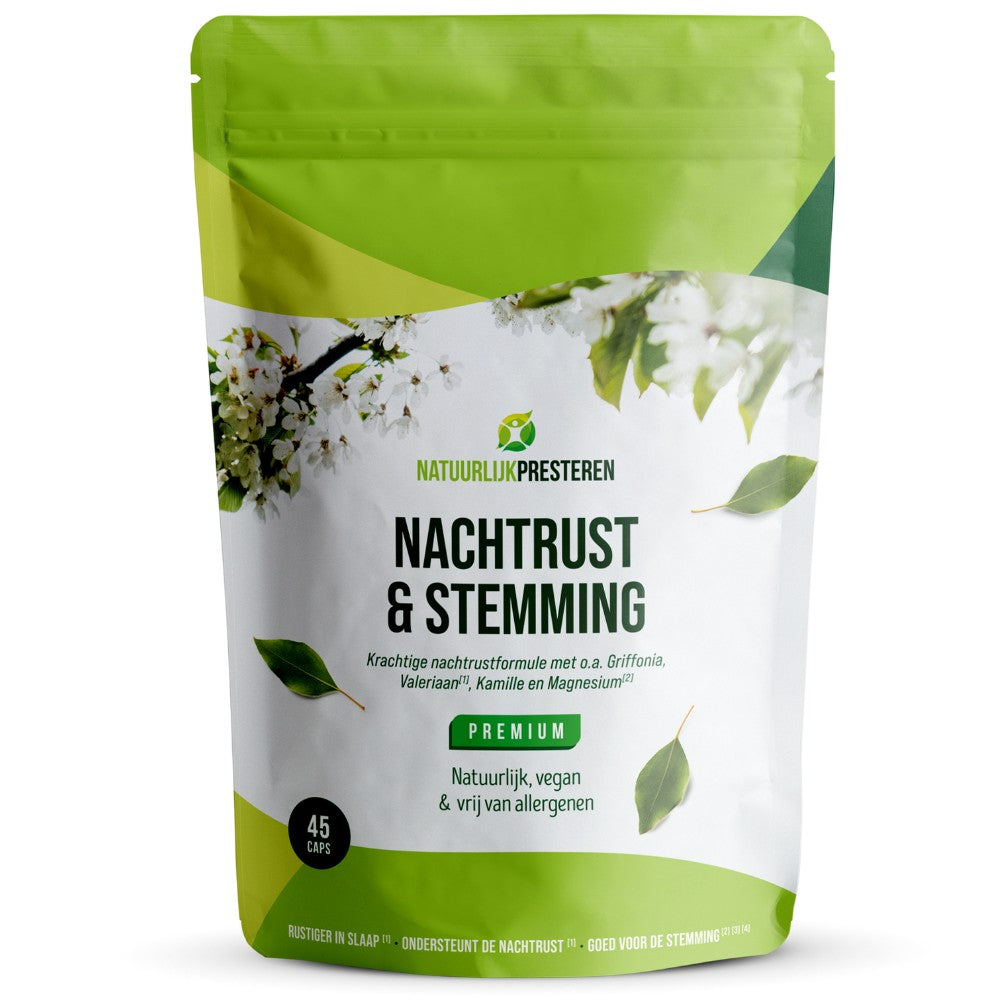
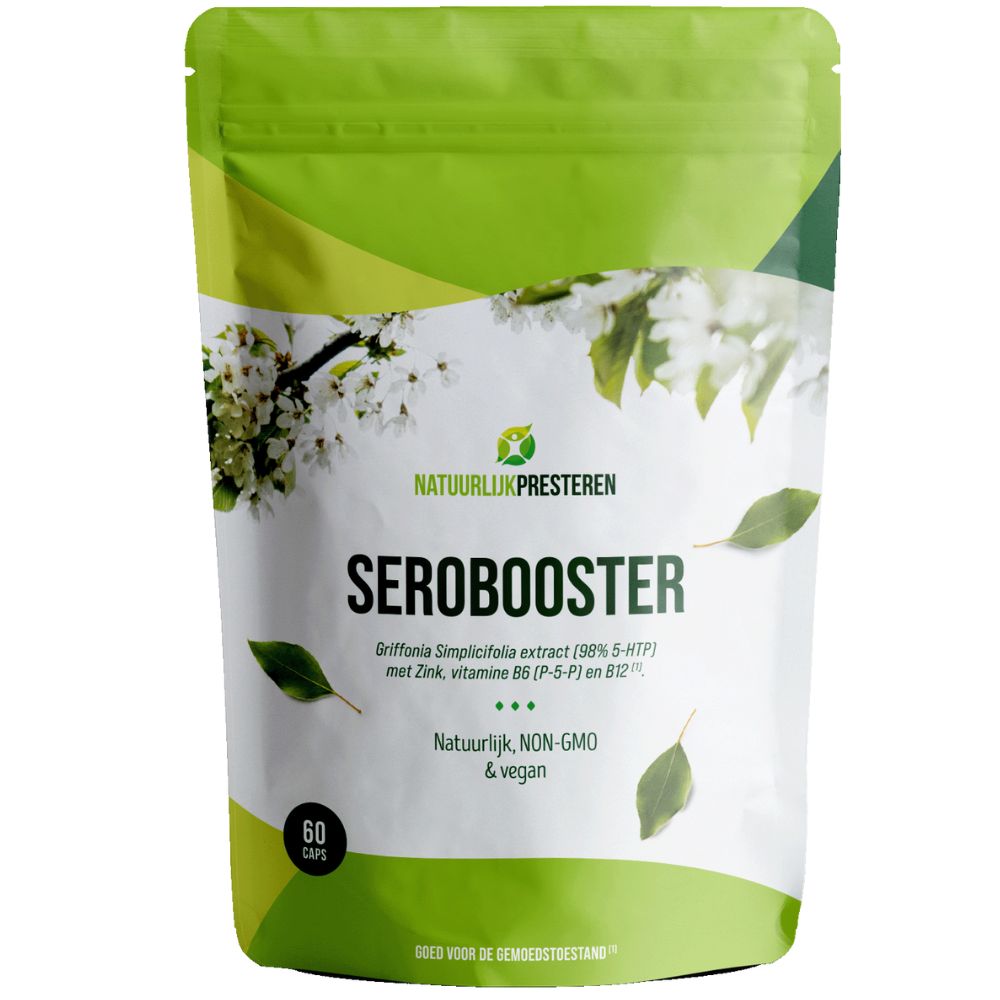
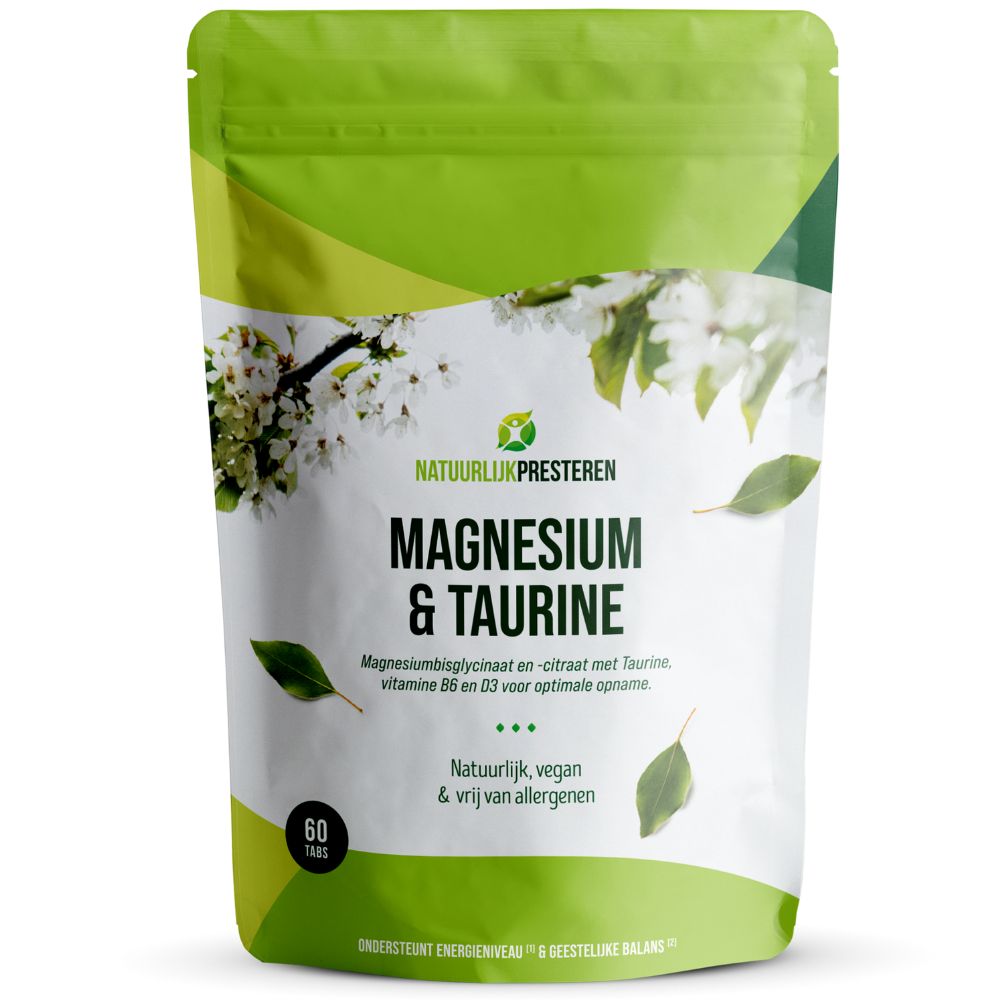
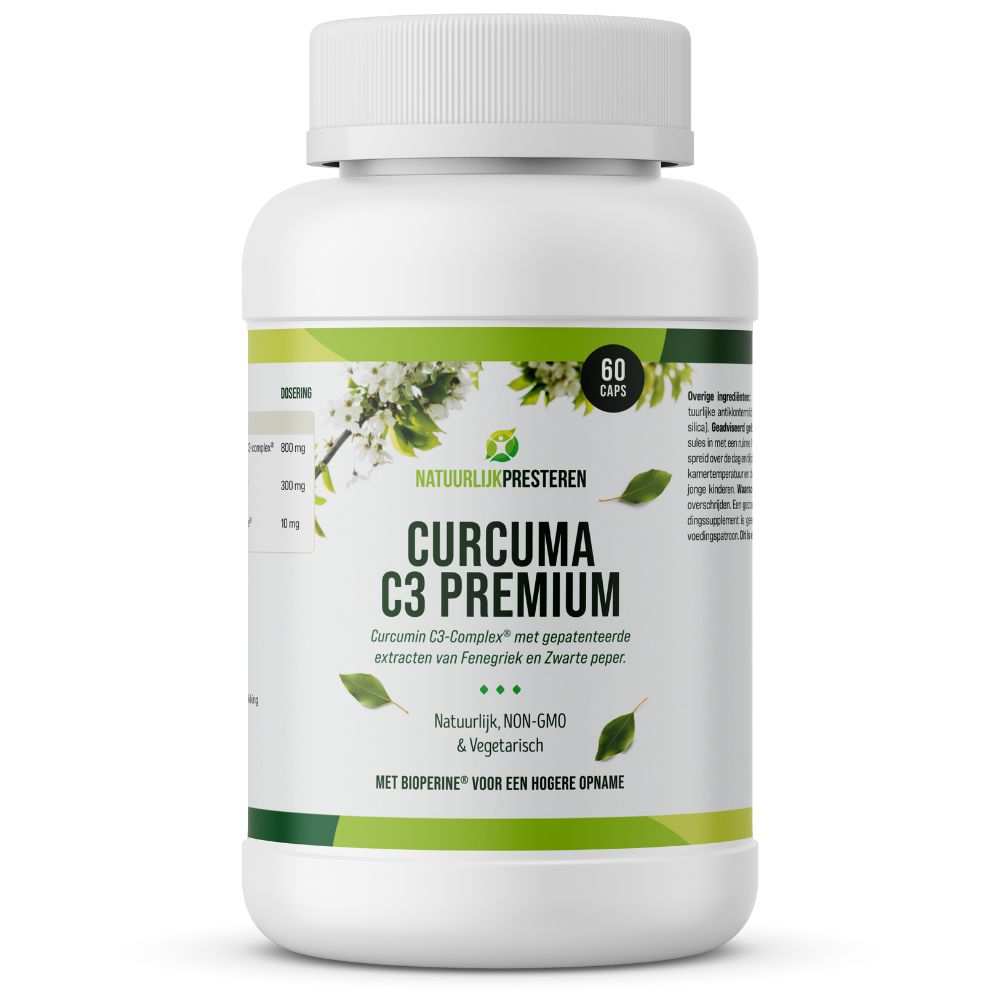
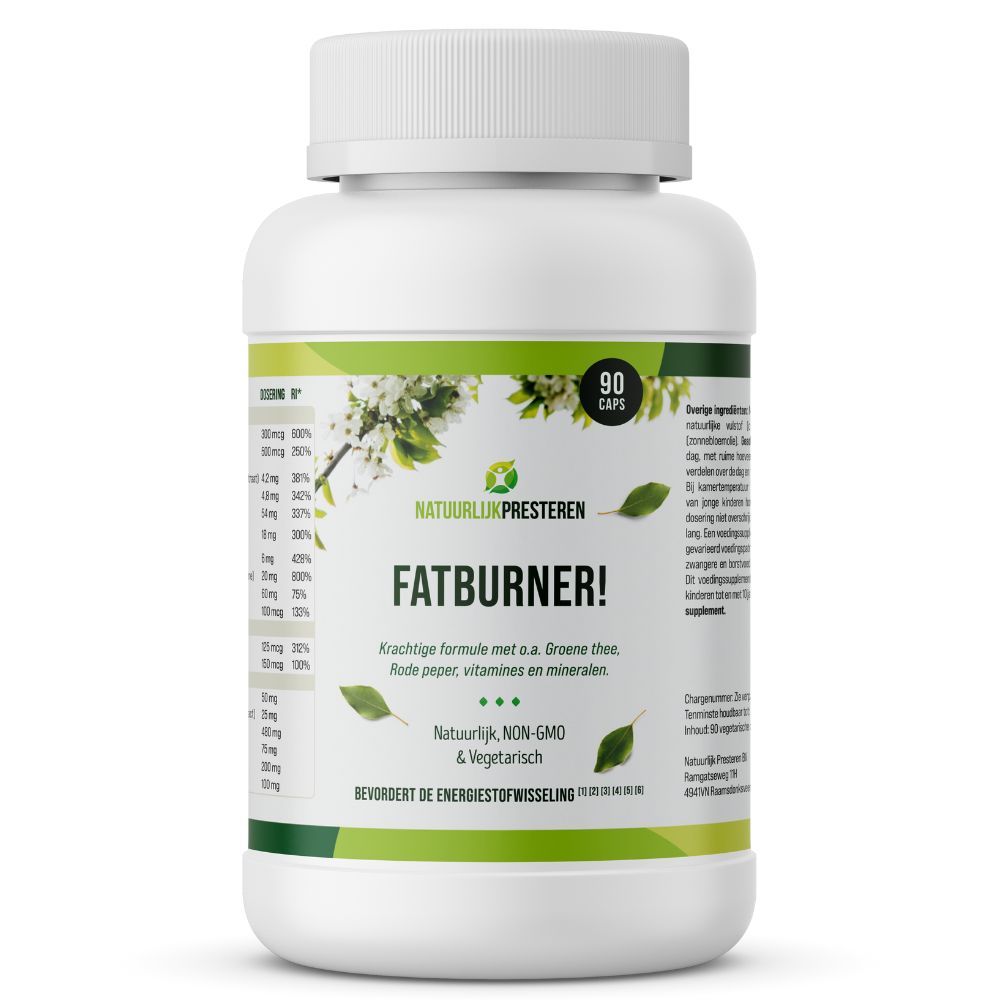
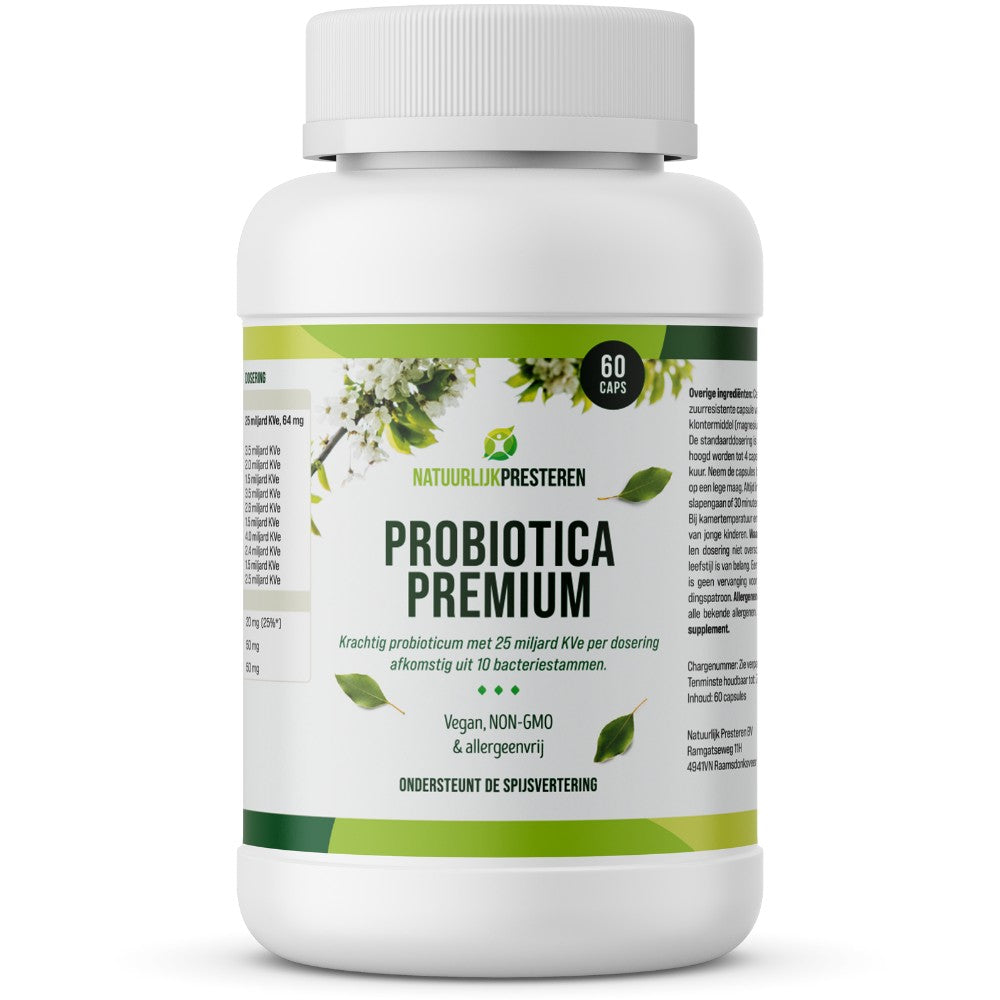
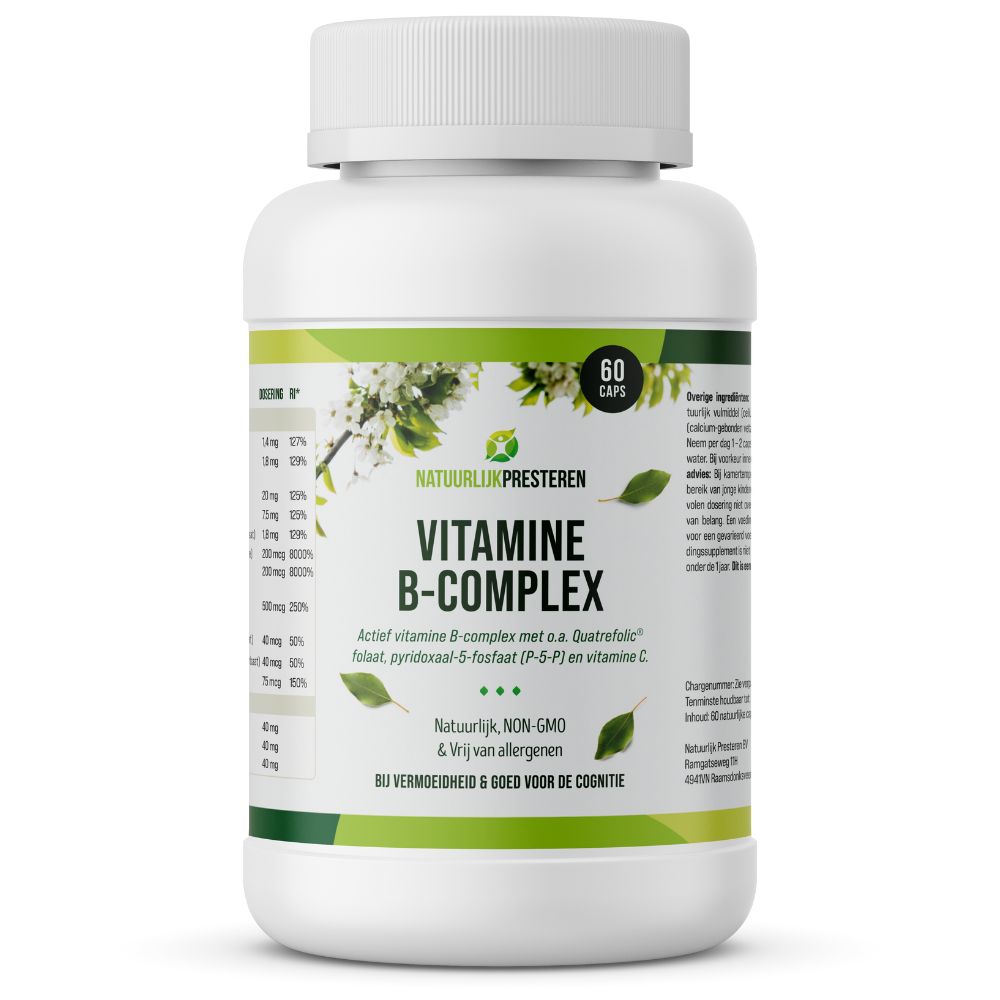
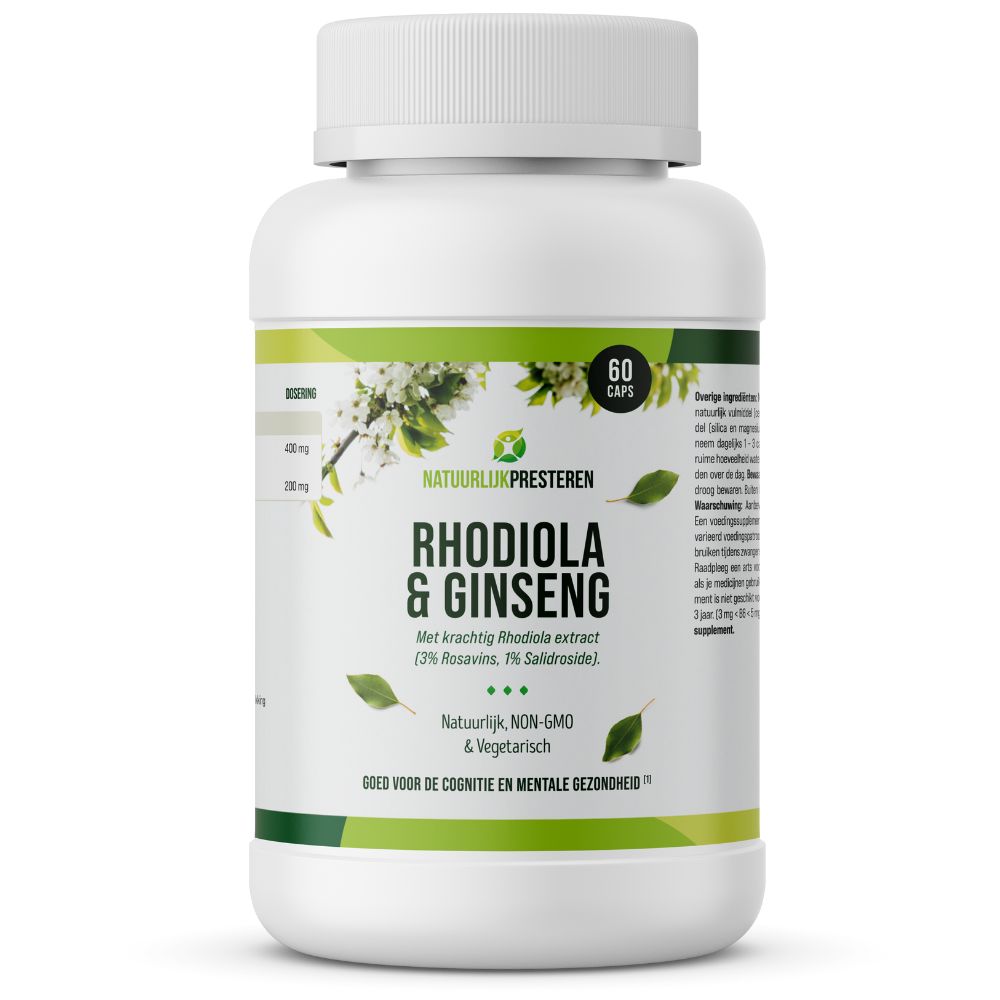
Vegetarian supplements from Natural Performance
On this collection page, you'll find a clear overview of all our vegetarian supplements. If you can't find the supplement you're looking for here, use the search button on our website and check the product's ingredient list.
Because the definition of vegetarianism can vary from person to person, we cannot guarantee that every product on this page will meet your specific standards.
For example, softgels containing gelatin are not included in this collection. Gelatin may be considered non-vegetarian by some vegetarians, while others may tolerate it.
So always check the ingredients list to ensure a product meets your personal vegetarian guidelines.
Gerelateerde blogartikelen
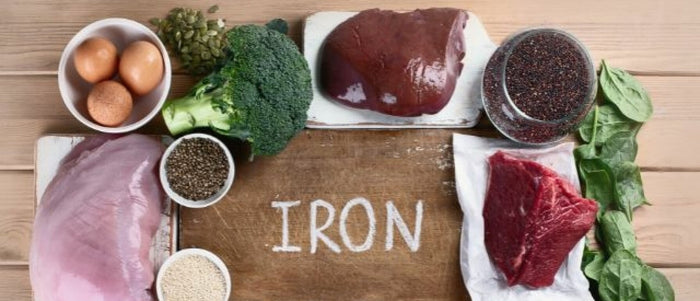
Iron in Food and Supplements: The Complete Guide
Iron is found in food and is also often used in nutritional supplements. In this comprehensive article, you'll learn all about the benefits of iron, its effects on your body, and how to recognize a deficiency. You will also learn which foods contain the most iron and which blood values are important to determine whether you have sufficient (or too much) iron available in your body. Iron is essential for oxygen transport, energy production and the immune system; it occurs as heme iron (animal) and non-heme iron (plant). Iron deficiency leads to fatigue, pale skin and restless legs; causes include blood loss, poor absorption or insufficient iron-rich food. Iron absorption is improved by vitamin C and inhibited by calcium and tea; too much iron can be harmful. Table of contents What is Iron? What Types of Iron are There? Types of Non-Heme Iron Increased Absorption of Heme Iron The Best Iron Supplement The Functions of Iron in the Body Regulating and Storing Iron How Much Iron Do You Need Per Day? Symptoms of Iron Deficiency Causes of Iron Deficiency Menstrual Bleeding in Women (Cause 1) Increased Iron Needed During Pregnancy (Cause 2) Too Little Iron in Breast Milk in Infants (Cause 3) Low Iron Absorption from Food (Cause 4) Too Little Iron-Rich Food (Cause 5) Increase Iron Absorption Getting Sufficient Iron Blood Values in Relation to Iron in Your Body Iron (Deficiency) and Anemia Hemoglobin in Your Blood Test What to Do with a Low Hemoglobin Level (Hb Level)? What to Do with a High Hemoglobin Level (Hb Level)? Ferritin What to Do with a Low Ferritin Level? What to do about high ferritin levels? Which foods contain iron? Side effects of too much iron. What is too much iron? Symptoms of too much iron. What is iron? Iron is an essential mineral that plays a vital role in the body, particularly in the production of hemoglobin, the protein that carries oxygen in red blood cells. A dietary iron deficiency can lead to fatigue and a weakened immune system. In this article, you'll discover the functions of iron, how the body regulates and stores iron, the recommended daily amounts, and the causes and consequences of iron deficiency. We also discuss iron supplements and how to optimize iron absorption from your diet, as well as the risks of iron overload. Read on to learn all about this essential mineral and how to ensure you get enough iron for optimal health. What types of Iron are there? There are two types of iron in our diet: heme iron and non-heme iron. Heme iron - Found in muscles and blood, heme iron is only found in animal products , such as meat, poultry, and seafood. It is more easily absorbed by the body than non-heme iron. Non-heme iron - Found in plant foods such as leafy greens, whole grains, nuts, cocoa, seeds, and legumes. Non-heme iron is also found in animal products. This is easy to remember when you consider that animals eat the plants that contain non-heme iron! Types of non-heme iron Iron supplements almost always use a form of non-heme iron. Some examples of common forms of non-heme iron are: Iron fumarate (ferrous fumarate) Iron bisglycinate Iron citrate Iron sulfate Iron lactate Iron gluconate Iron picolinate In general, these forms of iron differ mainly in their chemical composition, bioavailability (absorbability), and potential side effects. Increased absorption of heme iron Absorption (how well a substance moves from the digestive tract into the bloodstream): 25% of all heme iron in your diet is absorbed, but only 17% of non-heme iron. This means you need to consume about 1.5 times as much non-heme iron as heme iron! Bioavailability (the complete process, from absorption to final availability for use by the body): The bioavailability of heme iron is estimated to be 14% to 18% while it is only 5% to 12% for non-heme iron. Heme iron vs. non-heme iron Although heme iron only makes up 10% to 15% of total iron intake in Western countries, its improved absorption makes it approximately 40% of the total iron absorbed.(1) Another important difference between heme and non-heme iron is that the body absorbs more non-heme iron when your iron stores are low. Heme iron, on the other hand, is always well absorbed, regardless of your iron intake. Adding animal products (containing heme iron) to your diet can increase your absorption of non-heme iron by 2-3 times. The best iron supplement It's important to choose a form of iron that is well-tolerated and effectively absorbed by your body. This can vary depending on individual factors and any specific recommendations from a doctor or nutritionist. For supplements, iron fumarate (ferrous fumarate) is preferred for the following reasons: Bioavailability - Iron fumarate generally has good bioavailability, meaning it can be easily absorbed by the body. This can result in an effective supplement for iron deficiencies. Tolerability - For many people, iron fumarate is well tolerated and causes fewer side effects compared to some other forms of iron, especially with long-term use. The functions of iron in the body The best-known function of iron is the transport of oxygen, but this mineral also plays a crucial role in many other processes in our body. (2) This is why it is so important to get enough iron: Transport of oxygen - Iron is an essential component of hemoglobin, the protein in red blood cells that binds and transports oxygen from the lungs to tissues throughout the body. Energy production - Iron plays a role in the production of adenosine triphosphate (ATP), the body's main energy source. It is involved in various enzymatic reactions essential for metabolism and energy production. The immune system - Iron is essential for healthy immune system function. It plays a role in the production and activity of white blood cells, which protect the body from infection and disease. How the brain works - Iron is involved in the synthesis of neurotransmitters, such as dopamine and serotonin, which are important for communication between nerve cells and the regulation of mood, emotions and cognitive functions. DNA synthesis - Iron is essential for the synthesis of DNA, the genetic material of cells. It is necessary for the growth, development, and repair of tissues in the body. Regulating and storing iron Our body has a fascinating system for regulating iron levels. This system ensures the body has enough iron to perform essential functions and prevents excessive iron accumulation, which can be harmful to health. Storage - When more iron is ingested than we immediately need, the excess iron is stored as ferritin, a protein that can bind iron and store it in cells (more on this later). This occurs primarily in the liver, spleen, and bone marrow. Absorption - When iron stores in the body are low, iron absorption from the intestines increases. This is regulated by a complex system of proteins and hormones. Recycling - When a red blood cell dies, it is broken down in the spleen and liver. This process releases the iron, which is then reused to make new red blood cells or stored for future use. How much iron do you need per day? How much iron you need daily depends on your age and individual needs. These are the guidelines from the Health Council and the Nutrition Center.(3) Age / need Quantity Children (6 months - 5 years) 8 mg per day Children (6-8 years) 9 mg per day Men (ages 9 and up) 11 mg per day Women (9-13 years and after menopause) 11 mg per day Women (14-17) 15 mg per day Women who are breastfeeding 15 mg per day Women (over 18 until menopause) 16 mg per day Pregnant women 16 mg per day Symptoms of Iron Deficiency When your body doesn't have enough iron, it will first draw on its reserves. But if even those are depleted, you can develop an iron deficiency. You can recognize an iron deficiency by the following symptoms: Fatigue - Iron is needed to transport oxygen. Less oxygen means you can produce less energy, which can lead to fatigue. Quickly out of breath - The less oxygen your blood can carry, the faster you have to breathe and therefore quickly become out of breath. Pale skin - An iron deficiency causes poor blood circulation. This can lead to pale skin. Restless legs - An iron deficiency can affect dopamine production, which can trigger restless legs. These are the most common symptoms recognized by the Nutrition Center.(4) Causes of iron deficiency Because the body can recycle iron and store it relatively easily, an iron deficiency doesn't develop overnight. It's a gradual process. You're therefore at risk of a deficiency if, over a prolonged period of time, you: Blood loss (menstruation, stomach ulcer, blood donation, tumors) Have a higher need for iron (pregnancy, breastfeeding) Reduced ability to absorb iron (intestinal problems, gastric reduction surgery) Not getting enough iron (diet) Menstrual bleeding in women (cause 1) Women who experience heavy menstrual bleeding (menorrhagia) are at increased risk of iron deficiency. Iron deficiency symptoms can also occur in women with lighter periods. Sudden blood loss , such as during a blood donation or surgery, causes the body to lose a large number of red blood cells in a short period of time, along with valuable iron molecules. Producing new blood therefore requires an especially high iron intake. Similarly, iron deficiency can also occur with gradual blood loss , for example, from a stomach ulcer or tumor. Increased iron requirement during pregnancy (cause 2) Pregnant women have a increased need iron. This is because the body then produces more blood to supply the baby and placenta with sufficient oxygen and nutrients. The iron regulation system cleverly adapts to this by absorbing more iron from your diet. However, it is important to eat extra iron-rich foods during pregnancy, because the need for iron increases even more in the 2nd and 3rd trimesters .(5) A well-stocked iron supply is also necessary for childbirth due to the blood loss and the breastfeeding period during which the baby is dependent on breast milk for its iron supply. Low Iron in Breast Milk in Infants (Cause 3) Because breast milk is not very rich in iron and infants are completely dependent on milk for their iron intake, babies can also develop iron deficiency. The same applies to older children who are still growing. During a growth spurt, more blood is needed in a short period of time to supply the growing body with sufficient oxygen. Low iron absorption from food (cause 4) Sometimes it is not the extra need for iron that causes an iron deficiency. The cause can also be due to a Lower or less efficient absorption of iron in the small intestine. Examples of situations in which iron absorption is less efficient include: Bowel problems such as Crohn's disease or ulcerative colitis (IBD); A recent dissertation by Roberta Loveikyte (April 2024) discovered that 1 in 5 outpatients with IBD has anemia, often due to an iron deficiency. (6) Gastric bypass (stomach reduction surgery) Celiac disease (gluten allergy) or gluten intolerance Too little iron-rich food (cause 5) Because non-heme iron (plant-based foods) is less well absorbed than heme iron (animal products), it can be included in a vegetarian or vegan diet. it can be a challenge to get enough iron. It's therefore important to eat more of these foods and pay attention to how they're eaten to improve absorption . This can be done by combining certain foods in a meal: Increase Iron Absorption Vitamin C supports the absorption of non-heme iron. Combining foods rich in vitamin C, such as fruit, with iron-rich foods improves iron absorption. A glass of orange juice with a meal is a good example.(7),(8) These substances inhibit the absorption of iron Calcium (including in dairy products) Phytic acid (found in grains and legumes) Polyphenols (eg in tea and coffee) That's good to know, of course, but how do you apply that in practice? Getting enough iron Try to eat foods rich in calcium, phytic acid, and polyphenols separately from your meal if they contain iron. For example, have your cup of coffee an hour after your meal instead of right after. Do you like a bowl of yogurt after your meal? Eat it as a snack or wait a bit longer. To get you started, try this simple recipe . This dish will give your iron levels a significant boost. It combines foods rich in non-heme iron with ingredients rich in vitamin C. The Iron-Boost Salad - In a large bowl, combine diced fresh tomatoes, raw baby spinach, pumpkin seeds and/or sunflower seeds, and dried chopped apricots and/or figs. Drizzle with a simple lemon vinaigrette made with 2 tablespoons lemon juice, 1/2 teaspoon Dijon mustard, 3 tablespoons olive oil, and 1 teaspoon honey (optional). Stir well and let sit for at least 15 minutes to allow the flavors to meld. Serve with a piece of (grass-fed and organic) beef and, if desired, a boiled egg (or, for a vegetarian option, use sprouted lentils and a piece of tofu instead of the meat). Blood values in relation to iron in your body Do you suspect your iron levels are too low? Then you can have your blood tested by your GP. These blood values together provide a good picture of your iron status and help identify an iron deficiency or anemia: Hemoglobin (Hb) - Indicates whether sufficient oxygen can be transported by the blood. Hematocrit (Ht) - To measure the ratio of red blood cells to total blood volume. Ferritin - Indicates how much iron is available for the body to use (iron stores). Transferrin – To determine iron status. Iron (deficiency) and anemia You suffer from anemia if you have too little hemoglobin or too few red blood cells. in your blood. Anemia can be temporary or chronic (e.g., due to a hereditary condition). Although iron deficiency is the most common cause of anemia, it is possible for a person to have an iron deficiency without having low hemoglobin levels. Other factors, such as a vitamin B12 or folic acid deficiency , can also cause anemia, as can underlying conditions that break down red blood cells. Therefore, an iron deficiency is not the same as anemia! Anemia: decreased hemoglobin level Iron deficiency: decreased serum* ferritin level (*) Serum is a clear, jelly-like fluid that remains after blood has clotted and the blood cells have settled. Serum contains various components, including proteins, hormones, nutrients, waste products, and other dissolved substances. Hemoglobin in your blood test The hemoglobin value (Hb value) indicates how much hemoglobin is present in the blood and therefore how much oxygen the blood can carry. A healthy Hb value varies by age(9) Age / need Blood value Men 8.5 – 11.0 mmol/L Women 7.5 – 10.0 mmol/L Babies and children up to 6 years old 6.0 – 9.0 mmol/L Children over 6 years old 6.5 – 10.0 mmol/L What to do in case of low hemoglobin (Hb) levels? A low Hb level can lead to anemia, which results in insufficient oxygen transport in the blood. You can increase your iron levels by taking the following steps: Choose more iron-rich foods (see overview below) Combine animal products (heme iron) with plant products (heme iron) Mix iron-rich meals with ingredients that contain a lot of vitamin C Eat calcium-rich products separately Don't drink your coffee immediately after your meal What to do in case of a high hemoglobin (Hb) value? On the other hand, a high Hb level can indicate sufficient oxygen in the blood, but the blood can become thicker and more viscous than normal. You may be consuming too much iron, for example, by overdosing on iron supplements. You can lower your iron levels in the following ways: Limit red meat consumption Choose vegetable protein sources Avoid iron-rich foods Moderate the consumption of iron-rich vegetables Combine meals with dairy products (or other foods rich in calcium) Ferritin Iron is stored in the body as ferritin and is distributed throughout the body by transferrin (a protein in the blood that binds to iron). Measuring your ferritin levels, therefore, provides insight into your iron stores. Men 25-250 ug/L Premenopausal women 20-150 ug/L Postmenopausal women 20-250 ug/L Men and women 65+ 45-250 ug/L What to do about low ferritin levels? Because your ferritin levels are largely genetically determined, you don't have much control over how they change. However, you can try a few things yourself to increase your ferritin levels: Choose more iron-rich foods (see overview below) Combine animal products (heme iron) with plant products (heme iron) Mix iron-rich meals with ingredients that contain a lot of vitamin C Eat calcium-rich products separately Don't drink your coffee immediately after your meal What to do about high ferritin levels? If your blood test shows high ferritin levels, this doesn't necessarily mean you have too much iron. An infection or a (hereditary) condition, for example, can increase the presence of the protein ferritin in your blood. You can try to lower your ferritin levels yourself by taking the following steps: Limit red meat consumption Choose vegetable protein sources Avoid iron-rich foods Moderate the consumption of iron-rich vegetables Combine meals with dairy products (or other foods rich in calcium) Which foods contain iron? Heme iron is mainly found in (red) meat, poultry, and fish. Non-heme iron is found in whole grains, cocoa, dried fruit, nuts, and leafy greens. These are examples of iron-rich foods that will help you get your daily iron intake: Food Total iron per 100 gr Heme iron per 100 gr Non-heme iron per 100 g Apple syrup 13.2 mg 0 mg 13.2 mg Cocoa powder 10.5 mg 0 mg 10.5 mg Sunflower seeds 8.0 mg 0 mg 8.0 mg Chia seeds 7.0 mg 0 mg 7.0 mg Sunflower seeds 5.0 mg 0 mg 4.9 mg Dried apricots 4.0 mg 0 mg 4.0 mg Cooked mussels 3.9 mg 1.0 mg 3.0 mg Beef 3.0 mg 2.0 mg 1.0 mg Cooked brown/green lentils 2.9 mg 0 mg 2.9 mg Boiled egg 2.4 mg 0 mg 2.4 mg Tofu 2.4 mg 0 mg 2.4 mg Whole wheat bread coarse 2.0 mg 0 mg 2.0 mg Raw spinach 2.0 mg 0 mg 2.0 mg Smoked mackerel 1.2 mg 0.9 mg 0.3 mg Source: Nevo table online, 2023 Side effects of too much iron An excess of iron, also known as iron overload (medical term: hemochromatosis) can be dangerous. However, you generally don't need to worry about eating too much iron. In most cases, the cause is one of the following: Genetic factors Excessive use of iron supplements Repeated blood transfusions Liver diseases What is too much iron? In the Netherlands, the upper limit for iron intake has been set at 45 mg per day for adults and 40 mg per day for children up to 14 years of age (Health Council and the European Food Safety Authority EFSA). This means that if you consume more than 40 or 45 mg of iron per day, you will experience symptoms of iron poisoning can experience. (source) Symptoms of too much iron Iron overload can lead to unpleasant symptoms. These can range from mild to severe, depending on the degree of iron accumulation and the organs affected. Common symptoms include: Yield Nausea Stomach ache If iron overload (hemochromatosis) is left untreated, further complications may occur including: Joint pain Liver function disorders (such as liver enlargement) Skin discoloration (bronze or gray tint) Heart problems (such as heart rhythm disturbances and heart failure) Diabetes Hormone disruptions If iron overload is suspected, it is important to seek medical help for diagnosis and treatment. Ebrina van der Bijl Ebrina is a nutritionist with a deep commitment to healthy eating and a sustainable lifestyle, based in beautiful Portugal. Her passion for natural and organic products is at the heart of her work. With a background in Nutrition & Dietetics and experience in product development and writing, she translates complex scientific information into practical advice for a balanced lifestyle. Read more Reference list https://www.ncbi.nlm.nih.gov/books/NBK540969/ https://www.ncbi.nlm.nih.gov/pmc/articles/PMC9219084/ https://www.voedingscentrum.nl/encyclopedie/ijzer.aspx#blokhoe-neemt-het-lichaam-ijzer-op https://www.voedingscentrum.nl/encyclopedie/ijzer.aspxVoedingscentrum https://www.ncbi.nlm.nih.gov/pmc/articles/PMC7123805/ https://research.rug.nl/en/publications/iron-deficiency-in-inflammatory-bowel-disease-the-underestimated https://www.ncbi.nlm.nih.gov/pmc/articles/PMC7607440/ https://www.ncbi.nlm.nih.gov/books/NBK448204/ https://richtlijnen.nhg.org/landelijke-eerstelijns-samenwerkingsafspraken/laboratoriumdiagnostiek#volledige-tekst-referentiewaarden
Lees meer omega 3 in plantaardige voeding
Beste plantaardige omega-3 bronnen
Omega-3-vetzuren zijn belangrijk voor je gezondheid, maar niet iedereen wil of kan vis eten. Misschien eet je plantaardig, vind je duurzaamheid belangrijk of zoek je simpelweg naar alternatieven. Gelukkig zijn er verschillende plantaardige omega-3-bronnen. Al is het goed om te weten dat ze niet allemaal hetzelfde doen in je lichaam. In dit artikel neem ik je stap voor stap mee langs de beste plantaardige omega-3-bronnen, wat ze je lichaam kunnen bieden en wanneer aanvulling met algenolie zinvol is. Plantaardige voeding levert vooral ALA, terwijl de belangrijkste gezondheidseffecten gekoppeld zijn aan EPA en DHA, die je lichaam maar beperkt uit ALA kan omzetten. Belangrijke plantaardige omega-3-bronnen zijn lijnzaad(olie), chiazaad, walnoten, hennepzaad en raapzaadolie, waarmee je bij gevarieerd gebruik meestal eenvoudig aan je dagelijkse ALA-behoefte komt. Voor wie geen vis eet of extra DHA nodig heeft, is algenolie een volwaardige plantaardige bron van direct opneembare DHA (en soms EPA). Inhoudsopgave De belangrijkste punten op een rij Wat is plantaardige omega-3 precies? De beste plantaardige omega-3-bronnen uit voeding 1. Lijnzaad (en lijnzaadolie) 2. Chiazaad 3. Walnoten 4. Hennepzaad 5. Raapzaadolie (koolzaadolie) Hoeveel ALA heb je per dag nodig? En hoe zit het met EPA en DHA? Wat betekent dit concreet voor omega-3 uit plantaardige bronnen? Algenolie: de meest complete plantaardige omega-3 Wanneer is alleen plantaardige voeding voldoende? Kun je de omzetting van ALA verbeteren? De belangrijkste punten op een rij Geen tijd om deze blog tot het einde te lezen? Geen probleem, dit is waar het om gaat: Plantaardige voeding levert vooral het omega-3-vetzuur ALA. De andere twee belangrijke omega-3-vetzuren EPA en DHA komen in de voeding vrijwel alleen rechtstreeks uit algen (en via de voedselketen in vis). Uit plantaardige producten krijg je deze twee vetzuren doorgaans niet of nauwelijks direct binnen. Je lichaam kan ALA wel omzetten naar EPA en DHA, maar die omzetting is meestal laag. Daarom krijg je met plantaardige voeding vaak wel voldoende ALA, maar niet altijd genoeg DHA (en EPA) voor de effecten die aan deze vetzuren zijn gekoppeld. Zoek je een volledig plantaardige, directe bron van DHA (en soms ook EPA)? Dan is algenolie de logische keuze. Wat is plantaardige omega-3 precies? Omega-3 is een verzamelnaam voor verschillende vetzuren. De belangrijkste drie die je moet onthouden zijn: ALA – alfa-linoleenzuur (alpha-linolenic acid) DHA – docosahexaeenzuur (docosahexaenoic acid) EPA – eicosapentaeenzuur (eicosapentaenoic acid) In plantaardige voeding gaat het vrijwel altijd om ALA (alfa-linoleenzuur). Dit is een essentieel vetzuur: je lichaam kan het niet zelf aanmaken. Je lichaam kan ALA deels omzetten in EPA en DHA, maar dit proces is inefficiënt. Gemiddeld wordt: minder dan 10% omgezet naar EPA slechts 1–5% naar DHA (1) Daarom is het belangrijk om niet alleen te kijken of je omega-3 binnenkrijgt, maar ook welke vorm. De beste plantaardige omega-3-bronnen uit voeding Je kunt plantaardige omega-3 in de eerste plaats binnenkrijgen via je voeding. Dit zijn de beste plantaardige bronnen van omega-3 uit voeding: 1. Lijnzaad (en lijnzaadolie) Lijnzaad is een van de rijkste plantaardige bronnen van ALA (alfa-linoleenzuur), vooral gemalen lijnzaad (2, 3). 1 volle eetlepel gemalen lijnzaad (10 g) levert ongeveer 2,3 g ALA 1 volle eetlepel lijnzaadolie (15 ml) levert ongeveer 7 g ALA lijnzaad is ook rijk aan vezels gemalen lijnzaad wordt beter verteerd, waardoor je lichaam de omega-3-vetzuren (ALA) daadwerkelijk kan opnemen hele lijnzaadjes leveren deze voordelen veel minder effectief Let op: lijnzaadolie is zeer gevoelig voor oxidatie. Bewaar het daarom altijd koel en donker. 2. Chiazaad Chiazaad levert eveneens ALA en is makkelijk toe te voegen aan je voeding (4). 1 eetlepel chiazaad (ongeveer 12 g) levert circa 2,1 g ALA het is een goede plantaardige omega-3-bron chiazaad heeft een neutrale smaak hierdoor is het makkelijk te mengen in bijvoorbeeld je ontbijt, salade of smoothie 3. Walnoten Walnoten zijn uniek onder noten vanwege hun omega-3 gehalte (5). 1 handje walnoten (ongeveer 30 g) levert circa 2,5 g ALA walnoten eet je makkelijk als tussendoortje of verwerkt in een salade bijvoorbeeld 4. Hennepzaad Hennepzaad bevat ALA en omega-6 in een gunstige verhouding (6). 1 eetlepel hennepzaad (ongeveer 10 g) levert circa 0,9 g ALA hennepzaad heeft een licht nootachtige smaak is geschikt voor onder andere salades en yoghurt hoewel hennepzaad lager is in ALA dan lijnzaad, heeft het wel een gunstige vetzuurverhouding 5. Raapzaadolie (koolzaadolie) Een vaak onderschatte, maar praktische bron van plantaardige omega-3 (7). 1 eetlepel (ongeveer 15 ml) levert circa 1,4 g ALA Raapzaadolie is geschikt voor koude en warme bereiding hoewel het een goede bron van ALA is, bevat het per portie wel minder omega-3 dan zaden Hoeveel ALA heb je per dag nodig? Hoeveel gram ALA je per dag nodig hebt, hangt af van hoeveel je per dag eet. De EFSA (European Food Safety Authority) geeft als richtwaarde 0,5% van je energie-inname. Bij 2000 kcal is dat dus ongeveer 1,1 g ALA per dag (8). Daar kom je dus eenvoudig aan met een halve eetlepel gemalen chiazaad of gebroken lijnzaad. Goed om te weten: de ALA-waarden per voedingsproduct en per portie kunnen variëren door teelt, oogst en verwerking (9, 10). En hoe zit het met EPA en DHA? Hier wordt het belangrijk: ALA uit plantaardige voeding levert wel omega-3, maar de bekende gezondheidseffecten zijn gekoppeld aan EPA en DHA. EPA en DHA dragen bij aan de normale werking van het hart. Het gunstige effect wordt verkregen bij een dagelijkse inname van 250 mg EPA+DHA. DHA draagt bij aan de instandhouding van een normale hersenfunctie en een normaal gezichtsvermogen. Het gunstige effect wordt verkregen bij een dagelijkse inname van 250 mg DHA. Voor ALA geldt een aparte toegestane claim: ALA draagt bij tot de instandhouding van normale cholesterolgehalten in het bloed bij een inname van 2 g ALA per dag. Daarom is het dus belangrijk dat je niet alleen voldoende ALA binnenkrijgt, maar ook EPA en DHA. Wat betekent dit concreet voor omega-3 uit plantaardige bronnen? Je kunt DHA en EPA direct binnenkrijgen (zoals uit vis), of via de omzetting van ALA naar EPA/DHA (uit plantaardige voeding, als je geen vis eet). Maar zoals ik al eerder benoemde: van de ingenomen ALA wordt gemiddeld minder dan 10% omgezet naar EPA en vaak slechts 1–5% naar DHA. Dat ziet er zo uit: als je bijvoorbeeld 2 g ALA uit lijnzaad binnenkrijgt, kan dit in de praktijk neerkomen op ongeveer 0,02–0,2 g EPA en minder dan 0,01–0,1 g DHA, terwijl voor de EFSA-goedgekeurde effecten op de hartfunctie een inname van 250 mg EPA+DHA per dag nodig is. Dit verklaart waarom plantaardige voeding wel ALA levert, maar in de praktijk vaak onvoldoende DHA (en EPA). En juist die twee vetzuren zijn zo belangrijk. Daarom adviseer ik mensen die voornamelijk plantaardig eten vaak om ook te kijken naar een aanvulling met omega-3-vetzuren die DHA (en soms EPA) direct leveren, zoals algenolie (11). Kortom: plantaardige bronnen leveren vooral ALA (cholesterol: 2 g/dag), terwijl effecten op hart (≥250 mg EPA+DHA/dag) en hersenen/zicht (≥250 mg DHA/dag) aan EPA/DHA zijn gekoppeld. Eet ALA-rijk (lijnzaad/olie, chia, walnoten) en als je geen vis eet, overweeg algenolie als directe EPA/DHA-bron. Algenolie: de meest complete plantaardige omega-3 Algen zijn de oorspronkelijke bron van EPA en DHA in de voedselketen. Vissen krijgen hun omega-3 namelijk binnen doordat ze algen eten. Algenolie: bevat DHA, en soms ook EPA is volledig plantaardig is geschikt voor veganisten en vegetariërs wordt doorgaans goed opgenomen* (*) Uit onderzoeken blijkt dat de beschikbaarheid van DHA/EPA uit algenolie vergelijkbaar kan zijn met die uit visolie bij gelijke doseringen en productkwaliteit. Voor mensen die geen vis eten, is algenolie daarom de meest directe en effectieve plantaardige omega-3-bron (12, 13). Wanneer is alleen plantaardige voeding voldoende? Plantaardige omega-3 uit voeding kan voldoende zijn: als je gevarieerd eet als je geen verhoogde behoefte hebt als je vooral focust op algemene voedingskwaliteit Aanvulling met algenolie is zinvol: bij een volledig plantaardig dieet bij zwangerschap of borstvoeding* bij weinig omzetting van ALA wanneer je zeker wilt zijn van voldoende DHA (*) Tijdens zwangerschap en borstvoeding helpt DHA van de moeder bij de normale ontwikkeling van hersenen en ogen van de baby. Dit effect krijg je bij 200 mg extra DHA per dag, naast de 250 mg EPA+DHA voor volwassenen. Overleg supplementen met je verloskundige/arts. Kun je de omzetting van ALA verbeteren? Je kunt de omzetting van ALA (alfa-linoleenzuur) naar EPA (eicosapentaeenzuur) en DHA (docosahexaeenzuur) in beperkte mate ondersteunen, maar niet volledig optimaliseren. Dit zijn de belangrijkste factoren die invloed hebben: Beperk omega-6-vetzuren – een hoge inname van omega 6 (zoals uit zonnebloem-, maïs- en sojaolie) remt de omzetting van ALA. Kies vaker voor olijfolie of raapzaadolie. Zorg voor voldoende micronutriënten – mineralen en vitamines zoals zink, ijzer, magnesium en vitamine B6 zijn nodig voor de enzymen die ALA omzetten. Houd je voeding in balans – extreem vetarme of sterk caloriebeperkte diëten kunnen de omzetting verminderen. Leefstijl speelt mee – roken en overmatig alcoholgebruik kunnen de omzetting verder beperken. Vrouwen zetten iets efficiënter om dan mannen – door hormonale factoren is de omzetting bij vrouwen gemiddeld iets hoger, al blijft de vorming van DHA ook dan beperkt. Maar het is belangrijk om daaraan toe te voegen dat zelfs onder gunstige omstandigheden de omzetting van ALA naar DHA bij de meeste mensen laag is. Daarom kiezen veel mensen met een plantaardig voedingspatroon voor algenolie als directe plantaardige bron van DHA (en soms EPA) (14). Ebrina van der Bijl Ebrina is voedingsdeskundige met een diepe toewijding aan gezonde voeding en een duurzame levensstijl, gevestigd in het prachtige Portugal. Haar passie voor natuurlijke en biologische producten vormt de kern van haar werk. Met een achtergrond in Voeding & Diëtetiek en ervaring in productontwikkeling en tekstschrijven, vertaalt ze complexe wetenschappelijke informatie naar praktische adviezen voor een gebalanceerde levensstijl. Lees meer Gebruikte bronnen Brenna, J. T., Salem, N., Sinclair, A. J., & Cunnane, S. C. (2009). α-Linolenic acid supplementation and conversion to n-3 long-chain polyunsaturated fatty acids in humans. Prostaglandins Leukotrienes And Essential Fatty Acids, 80(2–3), 85–91. https://doi.org/10.1016/j.plefa.2009.01.004 Austria, J. A., Richard, M. N., Chahine, M. N., Edel, A. L., Malcolmson, L. J., Dupasquier, C. M., & Pierce, G. N. (2008). Bioavailability of Alpha-Linolenic Acid in Subjects after Ingestion of Three Different Forms of Flaxseed. Journal Of The American College Of Nutrition, 27(2), 214–221. https://doi.org/10.1080/07315724.2008.10719693 Al-Madhagy, S., Ashmawy, N. S., Mamdouh, A., Eldahshan, O. A., & Farag, M. A. (2023). A comprehensive review of the health benefits of flaxseed oil in relation to its chemical composition and comparison with other omega-3-rich oils. European Journal Of Medical Research, 28(1), 240. https://doi.org/10.1186/s40001-023-01203-6 Muñoz, L. A., Cobos, A., Diaz, O., & Aguilera, J. M. (2013). Chia Seed (Salvia hispanica): An Ancient Grain and a New Functional Food. Food Reviews International, 29(4), 394–408. https://doi.org/10.1080/87559129.2013.818014 Petrović-Oggiano, G., Debeljak-Martačić, J., Ranković, S., Pokimica, B., Mirić, A., Glibetić, M., & Popović, T. (2020). The effect of walnut consumption on n-3 fatty acid profile of healthy people living in a non-Mediterranean West Balkan country: A small-scale randomized study. Nutrients, 12(1), 192. https://doi.org/10.3390/nu12010192 Callaway, J. C. (2004). Hempseed as a nutritional resource: An overview. Euphytica, 140(1–2), 65–72. https://doi.org/10.1007/s10681-004-4811-6 Lin, L., Allemekinders, H., Dansby, A., Campbell, L., Durance-Tod, S., Berger, A., & Jones, P. J. (2013). Evidence of health benefits of canola oil. Nutrition Reviews, 71(6), 370–385. https://doi.org/10.1111/nure.12033 Allergies, E. P. O. D. P. N. A. (2010). Scientific Opinion on Dietary Reference Values for fats, including saturated fatty acids, polyunsaturated fatty acids, monounsaturated fatty acids, trans fatty acids, and cholesterol. EFSA Journal, 8(3). https://doi.org/10.2903/j.efsa.2010.1461 RIVM. (2021). NEVO-online: Nederlands Voedingsstoffenbestand. Rijksinstituut voor Volksgezondheid en Milieu. https://nevo-online.rivm.nl USDA FoodData Central. (z.d.). https://fdc.nal.usda.gov/ Dempsey, M., Rockwell, M. S., & Wentz, L. M. (2023b). The influence of dietary and supplemental omega-3 fatty acids on the omega-3 index: A scoping review. Frontiers in Nutrition, 10, 1072653. https://doi.org/10.3389/fnut.2023.1072653 Liu, Y., Ren, X., Fan, C., Wu, W., Zhang, W., & Wang, Y. (2022c). Health Benefits, Food Applications, and Sustainability of Microalgae-Derived N-3 PUFA. Foods, 11(13), 1883. https://doi.org/10.3390/foods11131883 Bailey, E., Wojcik, J., Rahn, M., Roos, F., Spooren, A., & Koshibu, K. (2025b). Comparative Bioavailability of DHA and EPA from Microalgal and Fish Oil in Adults. International Journal Of Molecular Sciences, 26(19), 9343. https://doi.org/10.3390/ijms26199343 Plourde, M., & Cunnane, S. C. (2007). Extremely limited synthesis of long chain polyunsaturates in adults: implications for their dietary essentiality and use as supplements. Applied Physiology Nutrition And Metabolism, 32(4), 619–634. https://doi.org/10.1139/h07-034
Lees meer
Buying the best vitamin B12 tablets? Pay attention to these 4 points.
Vitamin B12 is one of the most popular supplements and for good reason. More and more people are noticing the consequences of a B12 deficiency, such as fatigue, concentration problems or memory loss. But how do you choose the best vitamin B12 tablets? In this article I explain what you should pay attention to when choosing the right B12 supplements. Choose B12 tablets with bioactive forms such as methylcobalamin and adenosylcobalamin, which are absorbed directly by the body and work more effectively. Melting tablets are better absorbed because they are absorbed directly through the oral mucosa, which is particularly beneficial for intestinal problems. Vitamin B6 and folic acid improve absorption, allowing B12 to be better utilised and contributing to a healthy nervous system and energy levels. Table of contents How to recognize the best B12 tablets The best vitamin B12 melt tablets More about vitamin B12 tablets 1. The best vitamin B12 tablets contain active forms of B12 2. Why are B12 melt tablets better than regular B12 tablets? 3. Why vitamin B6 is needed for better absorption 4. Choose B12 tablets with only natural ingredients 5. What does vitamin B12 do? 6. When do you need vitamin B12 tablets? 7. The symptoms of a B12 deficiency 8. How much B12 do the best B12 tablets contain? 9. Can you take too much vitamin B12? 10. Vitamin B12 injection or tablets? How to recognize the best B12 tablets To find the best B12 tablets, I recommend you look for the following features: Bioactive forms of vitamin B12 – methylcobalamin and adenosylcobalamin – are best absorbed Melting tablet or sublingual tablet – for fast and effective absorption Contains substances that improve absorption – such as the active form of vitamin B6 Natural fragrances, colours and flavours – for example Stevia instead of sugars The top 3 best vitamin B12 melt tablets #1. B12 Premium - Natural Performance B12 Premium melt tablets from Natuurlijk Presteren contain the two best forms of vitamin B12. These are even more effective thanks to the added vitamins (the active form of folic acid and active B6). The strawberry flavor comes from real strawberries. The benefits: Contains the 2 best forms of B12 in an effective dosage: 1000 mcg per tablet (50% Methylcobalamin and 50% Adenosylcobalamin) Contains the active forms of vitamin B6 (Pyridoxal 5-phosphate) and folic acid ( Quatrofolic® 5-MTHF Folate) Pleasant strawberry flavour, made from natural strawberry aroma More information Natuurlijk Presteren melt tablets earn the top spot because they contain the best forms of B12 and the beneficial vitamins B6 and folic acid. This ensures optimal effectiveness. The dosage is also ideal: effective and safe. In addition, the natural strawberry flavour is very pleasant, which makes them suitable for children as well. #2.B12 Combi 6000® - Vitakruid Vitakruid's B12 combination melt tablets also contain the two easily absorbed forms of B12 and the active forms of B6 and folic acid to enhance their effectiveness. The strawberry flavor is derived from natural aromas. The benefits: Contains the easily absorbable forms of B12: Methylcobalamin (50%) and Adenosylcobalamin (50%) Contains the active forms of vitamin B6 (Pyridoxal 5-phosphate) and folic acid ( Quatrofolic® 5-MTHF Folate) Natural strawberry and lemon flavouring The disadvantage The dosage of B12 is very high: 6000 mcg per tablet This product is available at bol.com, among others. The B12 melt tablets from Vitakruid are similar to my number 1 from Natuurlijk Presteren, but contain 6000 mcg per tablet. Because B12 is water-soluble, you pee out any excess, but your body must first process it. Such a high dose can be helpful for severe deficiencies, but is usually unnecessary. #3. B12 lozenges - Vitals Vitals B12 melt tablets provide an effective and safe dose of methylcobalamin, but without the fortifying B6 and folic acid. The cherry flavor of these tablets is striking (most B12 tablets taste like strawberry). The benefits: Contains methylcobalamin in an effective and safe dosage: 1000 mcg per lozenge Original cherry flavor Disadvantages No adenosylcobalamin No B6 and folic acid This product is available at bol.com, among others. The Vitals lozenges are in third place in my top 3 because they contain a good dose of methylcobalamin, one of the two most absorbable forms of vitamin B12. However, it's a shame there aren't any added fortifying vitamins. 1. The best forms of vitamin B12 in tablets Vitamin B12 comes in different forms, but not all forms are absorbed equally well by your body. The best vitamin B12 tablets contain the active and natural forms : Methylcobalamin – highly effective, immediately absorbable and important for supporting the nervous system. Adenosylcobalamin – also directly absorbable and essential for the conversion of fatty acids and amino acids into energy. These forms can be used directly by your body, making them work faster and more efficiently. There are two other, synthetic forms of vitamin B12. These are less active and must be converted in the body to methylcobalamin or adenosylcobalamin (the active forms) before they can be used: Cyanocobalamin – often used because it is cheap and stable, but your body has a harder time absorbing it. Hydroxocobalamin – Mainly used in injections because of its longer lasting effect, but less suitable in supplements. Summary: Choose methylcobalamin or adenosylcobalamin for best results, as your body can use these forms directly. 2. Why are B12 melt tablets better than regular B12 tablets? A melt tablet or sublingual tablet has several advantages over regular B12 tablets. When you place B12 melt tablets under your tongue, they dissolve slowly and are absorbed directly into your bloodstream through the mucous membranes of your mouth. This way, B12 bypasses digestion, making it more readily available to the body. (1) (2) This is especially useful for people who have difficulty absorbing nutrients through the intestines. In addition, it is ideal for people who have difficulty swallowing tablets, such as the elderly and children. Summary: Buy a B12 supplement in the form of a melt tablet so that the B12 can be easily absorbed through your mouth. 3. Why vitamin B6 is necessary for better absorption Vitamin B6 is important for the proper functioning of vitamin B12 in your body. B12 must first be converted into an active form before it can work properly. Vitamin B6 helps with this conversion. In addition, B6 and B12 work together to lower the amount of homocysteine in your blood, which contributes to a healthy heart. Without enough B6, B12 may be less effective, even if you are getting enough B12. . Summary: B6 helps B12 do its job better by supporting conversion to active forms and working together in important processes. 4. Choose B12 tablets with only natural ingredients Choose vitamin B12 melt tablets without artificial fragrances, flavors, or fillers. The manufacturer often indicates this on the packaging. Check the ingredients list. Many B12 melt tablets contain synthetic additives to improve taste and texture, but these can reduce the effectiveness of the B12. For best results, choose supplements with only natural ingredients like stevia or natural flavors. This way, you're guaranteed a safe and effective product. 5. What does vitamin B12 do? Vitamin B12 plays a role in your energy metabolism and nervous system: Helps reduce fatigue Supports the nervous system and contributes to concentration and memory Plays a role in the production of cells, including red blood cells Supports the immune system and homocysteine metabolism * (*) Homocysteine is a substance that occurs naturally in your body. Too much homocysteine can be bad for your heart. Vitamin B12 helps convert homocysteine into other substances, preventing excessive levels from remaining in your blood. This helps keep your heart healthy. 6. When do you need vitamin B12 tablets? People who often suffer from vitamin B12 deficiency include: Vegetarians and vegans - Because vitamin B12 is mainly found in animal products. (3) Elderly - The body often has difficulty absorbing B12 as you age. People with stomach or intestinal problems - Such as Crohn's disease or celiac disease, which can interfere with B12 absorption. People taking certain medications – such as antacids or diabetes medications – that can affect B12 absorption. More information 7. The symptoms of a B12 deficiency A vitamin B12 deficiency can cause anemia , which manifests itself in: Fatigue Dizziness Heart palpitations Tinnitus You may also experience neurological complaints, such as: Tingling in the fingers Memory loss Coordination problems Muscle weakness in the legs Good to know: Your body has a storehouse of B12. Because of this, it can take months or even a year before you notice you're not getting enough B12. 8. How much B12 do the best B12 tablets contain? As an adult, you need 2.8 mcg of vitamin B12 daily . But if you have a B12 deficiency, you need a higher dose so your body can replenish its reserves. That's why supplements contain a higher dose. The best B12 tablets contain a safe and effective dose between 500 and 1000 micrograms. (4) This is significantly more than the RDA, but is often recommended in case of a deficiency to achieve faster results. Please note: The best dose for you depends on your individual situation and is best discussed with a doctor, especially if you suspect you have a deficiency. 9. Can you also take too much vitamin B12? The risk of having too much vitamin B12 is very small. Your body only absorbs what it needs, and any excess is excreted in urine. And because there are no known harmful effects from long-term high intake, no maximum safe amount has been established. In general, vitamin B12 is well tolerated, and toxicity is rare. 10. Vitamin B12 injection or tablets? If you have a vitamin B12 deficiency, it's usually wise to try melt tablets first. These tablets dissolve in your mouth and bypass the gastrointestinal tract, making them often effective, even if absorption is difficult. Melting tablets are easy to use and have few risks. Only if melting tablets are not effective enough or are not suitable should you consider B12 injections together with your doctor. Injections are often a last resort because they are administered directly into the muscles and the vitamin becomes fully available. This may be necessary in the following cases: Stomach or intestinal problems , such as celiac disease or Crohn's disease A lack of intrinsic factor , for example in pernicious anemia Elderly people with reduced stomach acid production In short: Start with melting tablets and consult your doctor if your symptoms persist. Injections are effective, but only necessary for severe deficiencies or specific medical conditions. Ebrina van der Bijl Ebrina is a nutritionist with a deep commitment to healthy eating and a sustainable lifestyle, based in beautiful Portugal. Her passion for natural and organic products is at the heart of her work. With a background in Nutrition & Dietetics and experience in product development and writing, she translates complex scientific information into practical advice for a balanced lifestyle. Read more Sources used: Bensky, M.J., Ayalon-Dangur, I., Ayalon-Dangur, R., Naamany, E., Gafter-Gvili, A., Koren, G., & Shiber, S. (2019). Comparison of sublingual vs. intramuscular administration of vitamin B12 for the treatment of patients with vitamin B12 deficiency. Drug Delivery And Translational Research , 9 (3), 625–630. https://doi.org/10.1007/s13346-018-00613-y Tuğba-Kartal, A., & Çağla-Mutlu, Z. (2020b). Comparison of Sublingual and Intramuscular Administration of Vitamin B12 for the Treatment of Vitamin B12 Deficiency in Children. Revista de Investigacion clinica , 72 (6). https://doi.org/10.24875/ric.20000208 Niklewicz, A., Hannibal, L., Warren, M., & Ahmadi, K. R. (2024). A systematic review and meta‐analysis of functional vitamin B12 status among adult vegans. Nutrition Bulletin , 49 (4), 463–479. https://doi.org/10.1111/nbu.12712 Del Bo, C., Riso, P., Gardana, C., Brusamolino, A., Battezzati, A., & Ciappellano, S. (2018). Effect of two different sublingual dosages of vitamin B12 on cobalamin nutritional status in vegans and vegetarians with a marginal deficiency: A randomized controlled trial. Clinical Nutrition , 38 (2), 575–583. https://doi.org/10.1016/j.clnu.2018.02.008 Abdelwahab, O.A., Abdelaziz, A., Diab, S., Khazragy, A., Elboraay, T., Fayad, T., Diab, R.A., & Negida, A. (2024). Efficacy of different routes of vitamin B12 supplementation for the treatment of patients with vitamin B12 deficiency: A systematic review and network meta-analysis. Irish Journal Of Medical Science (1971 -) , 193 (3), 1621–1639. https://doi.org/10.1007/s11845-023-03602-4
Lees meer